
What if the biggest risk with mail-order aligners isn’t the trays, but what may go unseen before and during treatment? That’s central to understanding why mail-order aligners can be dangerous: remote screening may not reveal every concern affecting your teeth, gums, bite, or jaw.
It’s understandable to be drawn to a convenient way to straighten your teeth, and using mail-order aligners doesn’t mean you’ll necessarily experience a problem. But moving teeth safely takes more than a series of trays. A thorough evaluation and ongoing professional oversight can help determine whether aligners suit your case and address concerns if treatment isn’t progressing as planned.
In this guide, you’ll learn where remote treatment can fall short, what meaningful orthodontic monitoring involves, and which signs deserve professional attention. We’ll also explain how an orthodontic evaluation can help you compare options, whether you’re considering aligners or already wearing them.
At Mountain West Dental Specialists, orthodontic care begins with understanding your individual needs. An evaluation in Las Vegas can help you protect your smile while deciding what’s right for you.
Key Takeaways
- Understanding why mail-order aligners can be dangerous starts with looking beyond the trays to the assessment and follow-up behind treatment.
- Progress checks help a clinician notice when tooth movement or bite changes don’t match the treatment plan.
- Remote care may be convenient, but it doesn’t automatically make aligners suitable for every person or dental concern.
- If you’re considering treatment, arrange an orthodontic assessment before starting and bring any records you have.
- If you’re already using aligners, seek professional advice about persistent pain, a worsening fit, or changes in your bite.
Why mail-order aligners can be risky when treatment starts without a full assessment
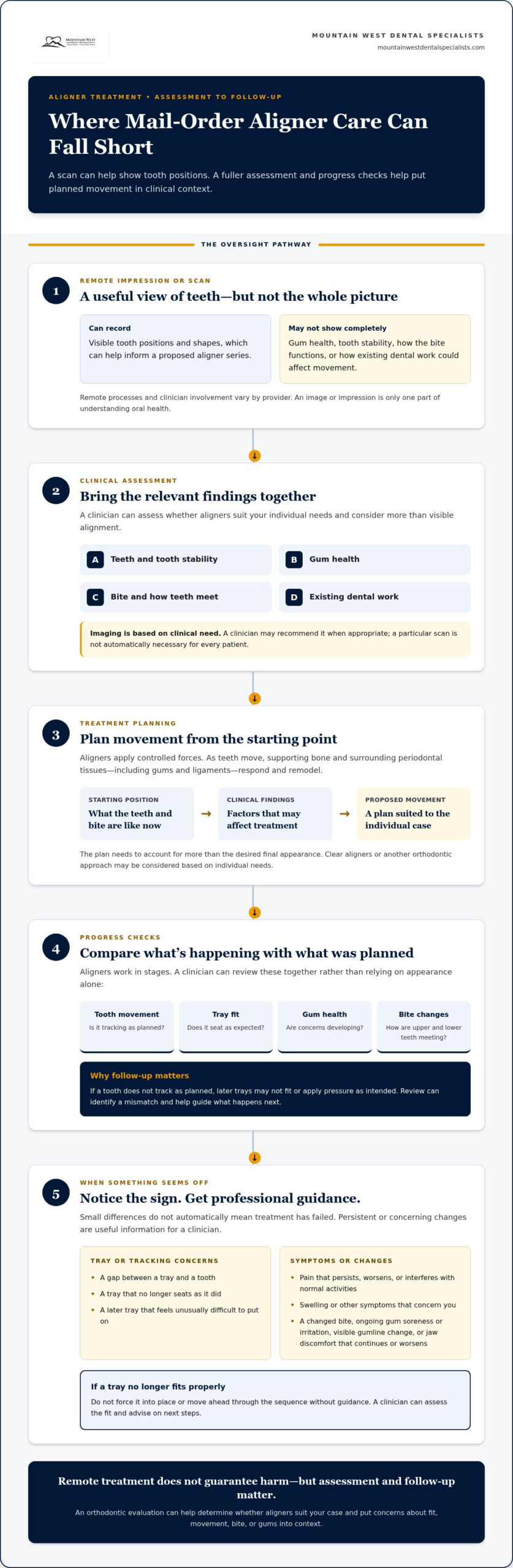
Mail-order aligners are clear trays provided through a remote treatment model. Depending on the provider, impressions or scans, treatment planning, and progress check-ins may happen remotely, with varying levels of clinician involvement. Clear aligners are orthodontic devices designed to move teeth gradually. The concern isn’t simply that the trays are clear plastic. It’s whether treatment begins with an appropriate assessment and includes follow-up to evaluate how your teeth are responding.
That distinction matters. Mail-order treatment doesn’t guarantee harm, and a remote image may capture useful information about tooth alignment. But an image or impression is only one part of understanding your oral health. A complete assessment helps a clinician consider your teeth and gums, bite, existing dental work, and other factors that could affect treatment planning.
What can a remote impression or scan show, and what may it miss?
A scan or impression can record the visible positions and shapes of teeth, helping inform a proposed series of aligners. By itself, it may not provide a complete picture of gum health, tooth stability, how your upper and lower teeth meet, or how your bite functions. Existing dental work can also affect how teeth respond to planned movement.
Those details can change the clinical picture. For instance, a proposed movement may look straightforward in an image, while an examination raises questions about gum health or how the bite fits together. The appropriate evaluation varies by person. A clinician may recommend imaging when it’s clinically appropriate, but a particular scan isn’t automatically necessary for every patient.
Why a treatment plan needs an appropriate starting point
Aligners apply controlled forces to teeth. As teeth move, the supporting bone and surrounding periodontal tissues, including the gums and ligaments that help hold teeth in place, respond and remodel. That’s why a plan needs to account for more than the desired final appearance. The proposed movements should make sense for your starting position and clinical findings.
If the initial assessment doesn’t identify a relevant concern, the planned movement or expected result may not fit your needs. A tray might feel uncomfortable, fit differently than expected, or fail to address a bite concern. These outcomes aren’t inevitable, but they help explain why why mail-order aligners can be dangerous is best answered by looking at diagnosis and follow-up, not by assuming every aligner causes damage.
A dental clinician can assess your individual concerns and determine whether aligner treatment is suitable. An orthodontic evaluation brings relevant findings together, explains the movements being considered, and helps you understand whether clear aligners or another orthodontic approach fits your needs.
How limited orthodontic monitoring can affect teeth, gums, and bite
Progress checks give a clinician a chance to compare how your teeth are moving with how the treatment plan expects them to move. That comparison matters because aligners work in stages. If a tooth doesn’t track as planned, later trays may not fit or apply pressure as intended. Regular review can identify a mismatch and guide what to do next, rather than leaving you to judge progress by appearance alone.
Clinical review can assess tooth movement, tray fit, gum health, and bite changes together, then respond to concerns. The American Dental Association has cautioned about direct-to-consumer dental services because inadequate professional supervision may risk harm. That doesn’t mean everyone using remote aligners will have a complication. It does mean there should be a clear path to professional assessment when something seems off.
What can happen when tooth movement does not follow the plan?
Sometimes a tooth doesn’t move as predicted. You might notice a gap between a tray and a tooth, a tray that no longer seats as it did, or a later set that feels unusually difficult to put on. Small differences don’t automatically mean treatment has failed, but a persistent fit problem can make it harder to know whether the next planned step is appropriate.
Some pressure or tenderness may occur as teeth adjust to a new tray. Pain that persists, worsens, or interferes with normal activities deserves professional advice, as do swelling or other symptoms that concern you. If a tray no longer fits properly, don’t force it into place or move ahead through the sequence without guidance. A clinician can assess the fit and advise on next steps.
Why bite and gum changes deserve attention
Moving teeth can change how upper and lower teeth meet. A bite that begins to feel different, difficulty bringing teeth together comfortably, or new contact between teeth may warrant review. These changes aren’t necessarily evidence of lasting damage, but they’re useful information for a clinician assessing whether treatment is progressing as intended.
Pay attention to your gums, too. Mild, short-lived tenderness can have different explanations, while ongoing soreness, irritation, or a visible change in the gumline should be assessed rather than dismissed. Gum recession is a possible concern to discuss, not an inevitable result of aligner treatment. Jaw discomfort also has several potential causes. If it continues or worsens during treatment, tell a dental professional so they can evaluate it in context.
This is one reason why mail-order aligners can be dangerous is a question about oversight as much as the trays. Without a reliable way to review fit, movement, and symptoms, it may be harder to respond promptly when treatment doesn’t feel right. If you’re concerned about your progress, an in-person orthodontic evaluation can put those changes in context. Orthodontic care in Las Vegas gives you a chance to discuss aligners, braces, and your individual concerns with a clinician.
Mail-order aligners vs. orthodontist-supervised care: what oversight changes
Both remote and in-person approaches may use digital records and clear trays, but the level and timing of clinical involvement can differ. Remote care may offer convenience, such as completing some steps from home. That convenience alone can’t show whether aligners fit your dental needs. The practical difference is how your case is assessed, who makes treatment decisions, and what happens if your progress or symptoms raise a concern.
| Aspect of care | Mail-order model | Orthodontist-supervised care |
|---|---|---|
| Assessment | May rely on remote records, with the process varying by provider. | An orthodontist can evaluate your teeth, bite, and individual concerns in person. |
| Treatment planning | A plan may be developed from submitted records and remote review. | Recommendations can reflect clinical findings and be discussed with you. |
| Progress checks | May use remote check-ins; the frequency and format can vary. | Progress can be reviewed clinically, with recommendations adjusted when appropriate. |
| Clinical advice | How to raise concerns and receive guidance depends on the provider’s process. | You can discuss fit, discomfort, or unexpected changes with the treating orthodontic team. |
This comparison isn’t a guarantee that one approach will suit everyone. It shows why understanding the oversight model matters. With supervised care, an orthodontist can review your findings and adapt recommendations when the clinical picture calls for it. Remote tools may support communication or monitoring, but they don’t determine on their own whether a treatment plan is right for you.
Which questions help you understand the level of clinical oversight?
Before beginning treatment, understand who reviews your records and who is responsible for treatment decisions. Ask how progress is assessed, what happens if trays stop fitting well, and how to raise concerns about pain or unexpected changes. Clear answers help you understand the care process, not just the proposed sequence of trays.
When an in-person orthodontic evaluation may be especially useful
An in-person assessment can be valuable if you have a complex bite concern, previous orthodontic treatment, dental restorations, or symptoms you’re already trying to understand. These details don’t automatically rule out aligners. They help an orthodontist weigh options based on your needs and clinical findings.
Mountain West Dental Specialists provides orthodontic care, including braces and clear aligners, in Las Vegas. If you’re weighing the level of guidance you want, this guide to choosing an orthodontist in Las Vegas can help you think through what matters in your care. Understanding why mail-order aligners can be dangerous often comes down to knowing who assesses your case and how concerns are handled along the way.
Before starting or using mail-order aligners
A few steady steps can help you move from uncertainty to a clear plan. If you haven’t started treatment, arrange an orthodontic assessment before beginning. If you’re already using aligners, share any changes or concerns with a dental professional rather than trying to adjust the treatment plan yourself. Understanding why mail-order aligners can be dangerous includes knowing when to seek guidance and what information can make that conversation more useful.
- Before starting, hold off on beginning the trays until you’ve had an orthodontic assessment and understand whether the proposed approach suits your needs. Discuss your goals, dental history, and questions about the plan.
- Arrange an evaluation so a clinician can review your teeth, bite, and oral health in context. The examination and any imaging are chosen according to clinical need. A particular scan isn’t necessary for every person.
- Gather available records before the appointment. Bring your trays, proposed treatment plan, progress photos, and notes about symptoms or questions.
How to prepare for an orthodontic assessment
Share any previous orthodontic or dental treatment, including restorations, and describe changes you’ve noticed while wearing trays. Be specific about when a symptom began, whether it is improving or worsening, and whether a tray’s fit has changed. You don’t need to diagnose the problem yourself. Clear details help the clinician understand your experience and decide what to examine.
If you’re already in treatment, bring the aligners you’re currently using and any records provided by the company. Progress photos can help tell the story, but they don’t replace an examination. Ask what the findings mean for your next steps, and don’t change the sequence or stop wearing trays without individualized professional guidance.
Which symptoms should prompt timely professional advice?
Routine questions about comfort or fit can be raised with your treating dental professional. Seek timely assessment if you have persistent or severe pain, swelling, bleeding, a loose tooth, or a sudden change in how your teeth meet. These signs don’t identify a cause on their own, but a clinician can assess them and recommend what to do next.
If symptoms affect breathing or swallowing, seek urgent medical evaluation. For other concerns, explain what has changed and when it started. Don’t force a poorly fitting tray or make treatment decisions based on guesswork while waiting for guidance.
If you’re considering aligners or have questions about your current treatment, arrange an orthodontic evaluation with Mountain West Dental Specialists in Las Vegas. A personalized review can help you understand your options and discuss concerns with an orthodontic team.
Choose a safer aligner path with orthodontic guidance in Las Vegas
A safer orthodontic decision starts with three clear points: whether aligners suit your individual needs, what movements the treatment plan proposes, and how progress or concerns will be reviewed. The trays matter, but so does the care around them. With orthodontist-supervised treatment, you can discuss clear aligners, braces, and other considerations with an orthodontist who can assess your case and explain the options.
This is the heart of understanding why mail-order aligners can be dangerous: treatment needs an appropriate clinical starting point and a way to respond when your experience doesn’t match expectations. That doesn’t mean remote care always leads to problems, or that aligners are right for every person. It means you deserve to understand how your needs are assessed and how questions will be handled before deciding on a path.
What to expect from an individualized orthodontic conversation
An orthodontic discussion can begin with your goals and concerns, then consider your oral-health history, bite, and any previous treatment or dental work. Ask what the proposed tooth movements are intended to address, how progress will be reviewed, and what alternatives may be appropriate. These details help you understand the reasoning behind a recommendation instead of choosing based only on how the trays look or how treatment is delivered.
The clinician can use examination findings to determine whether clear aligners or another orthodontic approach, such as braces, better fits your case. Imaging is considered according to your clinical needs. Mountain West Dental Specialists uses Cone Beam CT technology when clinically appropriate. It isn’t a required scan for every patient, and the clinician determines whether it would be useful for an individual evaluation.
How to take a calm next step in Las Vegas
Bring your questions, any aligners you’re currently using, and available treatment information to an appointment. If you’ve noticed a change in fit, discomfort, or how your teeth meet, describe what changed and when. You don’t need to arrive with a conclusion about the cause. Sharing the details gives the orthodontic team a practical starting point for discussing your concerns and options.
Mountain West Dental Specialists is a family-owned Las Vegas practice led by Dr. Keaton Tomlin and Dr. Allison Tomlin. An evaluation is a chance to understand your needs and discuss possibilities; it doesn’t obligate you to begin treatment. Take the time you need to consider what you learn.
If you’re ready to discuss a personalized orthodontic plan, schedule an orthodontic evaluation with Mountain West Dental Specialists.
Make your next orthodontic decision with confidence
Choosing how to straighten your teeth is personal. The goal isn’t to rush into the most convenient option or assume one approach suits everyone. It’s to have enough clinical insight to make an informed decision that fits your needs. Understanding why mail-order aligners can be dangerous can help you focus on the care behind treatment, not just the trays themselves.
You deserve space to talk through your priorities, understand the reasoning behind recommendations, and consider your options without pressure. A thoughtful conversation can turn uncertainty into a clearer path, whether you’re exploring orthodontic treatment for the first time or reconsidering your current approach.
Mountain West Dental Specialists is a family-owned practice led by Dr. Keaton Tomlin and Dr. Allison Tomlin. If you’re ready to discuss your orthodontic needs, schedule an orthodontic evaluation. Taking that first step can help you move forward with greater clarity and confidence.
Frequently Asked Questions
Are mail-order aligners dangerous for everyone?
No, mail-order aligners don’t cause problems for everyone, but remote treatment may not suit every case. The question of why mail-order aligners can be dangerous often comes down to whether a person’s dental needs are fully understood and how concerns are handled during treatment. For example, someone with previous orthodontic work may need an individualized review before starting. An orthodontist can assess your circumstances and explain which options may be appropriate.
Can mail-order aligners damage your teeth or gums?
They can be associated with problems in some cases, but damage isn’t inevitable. If tooth movement doesn’t suit your starting condition or a concern goes unassessed, teeth, gums, or bite may be affected. Soreness alone doesn’t prove harm. If you notice ongoing gum irritation, a change in how your teeth meet, or a tooth that feels loose, arrange a dental assessment rather than trying to identify the cause yourself.
What should I do if my mail-order aligners hurt?
Contact a dental professional if pain is severe, persistent, or getting worse. Brief pressure when changing trays can occur, but pain that disrupts eating or daily activities deserves attention. Describe when it began, where you feel it, and whether anything else has changed. Don’t force a tray that feels wrong or change your treatment sequence on your own. A clinician can assess your symptoms and guide your next step.
Do mail-order aligners require X-rays or an in-person dental exam?
There isn’t one imaging requirement that applies to every person, and an X-ray isn’t automatically needed for every aligner assessment. A clinician decides whether an examination or imaging is appropriate based on your history and oral-health findings. A digital scan or impression records tooth shape and position, but it doesn’t show every aspect of dental health. If you’re unsure what your remote screening covered, an orthodontist can evaluate your individual situation.
Can teenagers use mail-order aligners?
A teenager’s suitability for aligners should be assessed individually. Ongoing growth, teeth that are still erupting, and the stage of dental development may affect what treatment is appropriate and how it should be planned. A parent or guardian can help gather dental history and discuss concerns, but a clinician needs to assess the teenager’s teeth and bite. Don’t assume that an option designed for adults will fit a teen’s needs.
What happens if my teeth stop tracking with mail-order aligners?
“Not tracking” means a tooth may not appear to fit the position expected for that stage of treatment. Don’t try to correct the mismatch by skipping ahead, doubling up, or forcing a tray. Contact a dental professional and explain what you’ve noticed. Photos and the aligner sequence may help provide context. Ask for guidance about the current tray and next steps before making changes to the plan.
Can an orthodontist assess me after I have started mail-order aligners?
Yes. You can seek an orthodontic assessment after beginning treatment, whether you have a specific concern or simply want a clearer understanding of your progress. Bring the aligners, treatment plan, and any records or messages you received, along with notes about changes you’ve noticed. In Las Vegas, Mountain West Dental Specialists can discuss your orthodontic needs and available options. Having started treatment doesn’t prevent you from asking for a professional review.