
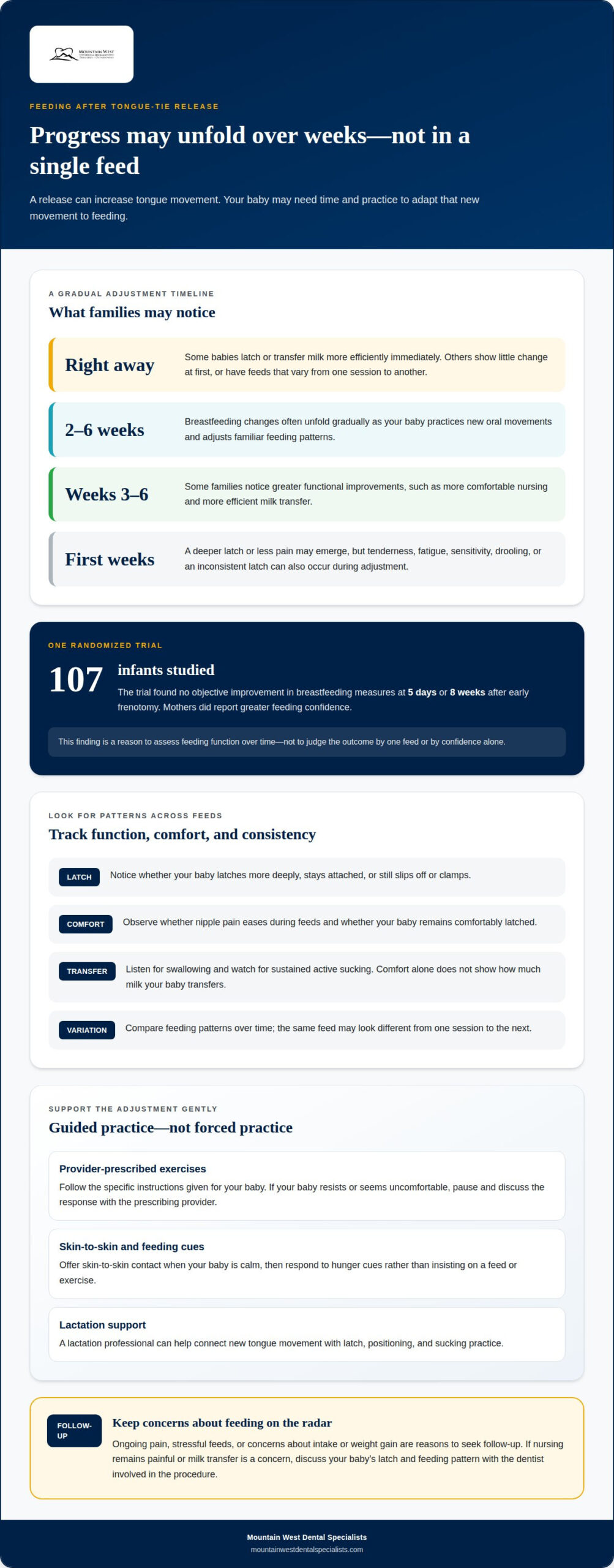
Feeding improvement after tongue tie release may begin right away, but breastfeeding changes often unfold gradually over 2 to 6 weeks. Your baby’s latch, comfort, and milk transfer may not improve at the same pace, and feeding can feel inconsistent as your baby adapts to new tongue movement.
If you’re hoping feeds will become easier after a tongue tie release, it’s understandable to watch closely for signs of progress. A slower start doesn’t automatically mean the release hasn’t helped. Feeding may change in latch depth, nursing comfort, or milk transfer, but familiar patterns can take time to shift. Here’s what to watch for, how gentle, responsive support can help, and when ongoing pain, feeding stress, or concerns about intake or weight gain call for follow-up.
Key Takeaways
- Notice how your baby’s tongue movement, feeding rhythm, and oral comfort evolve, rather than judging progress by one feed.
- Pay attention to changes in latch depth, nursing comfort, and how effectively your baby feeds.
- Learn how provider-guided exercises, skin-to-skin time, and responsive feeding can support your baby’s adjustment.
- Recognize signs that feeding may need follow-up, including ongoing pain, stressful feeds, or concerns about intake and weight gain.
What Changes After a Tongue Tie Release?
A release increases the tongue’s potential movement, but feeding patterns may take time to adapt. Changes can appear immediately or develop gradually as your baby practices new oral movements.
Tongue Mobility and Oral Function Changes
A release frees tongue movement restricted by the tight tissue beneath it. Greater tongue mobility may help your baby lift, extend, and move the tongue during sucking, supporting a deeper latch and better seal. However, new movement doesn’t instantly replace familiar patterns. Jaw tension may persist after release, and changes in the lips or face aren’t guaranteed. Watch how your baby uses the tongue during feeding, not just how it looks at rest.
Feeding Responses After Release
Feeding responses range from an immediate change to gradual adjustment. Some babies latch or transfer milk more efficiently right away; others have an inconsistent latch, fatigue, drooling, or sensitivity to oral sensations as they learn. Breastfeeding changes often unfold over 2 to 6 weeks. Before surgery, supportive feeding positions and attention to your baby’s cues can help make feeds more manageable, though these steps don’t ensure a particular outcome. After release, the same feed may look different from one session to another.
Maternal Nipple Pain Changes
Nipple pain may lessen when a deeper latch reduces friction and compression during breastfeeding. It may not change immediately, especially if your baby continues using an old tongue movement pattern or feels tender after the release. Notice whether pain eases during feeds and whether your baby stays latched comfortably. A change in pain is useful to track, but it doesn’t by itself show how much milk your baby transfers.
Factors Affecting Feeding Improvement
Timing and the type of feeding change vary with your baby’s adjustment, oral sensitivity, and established movement patterns. Some families notice progress right away; others see it build over weeks. A randomized trial of 107 infants found no objective improvement in breastfeeding measures five days or eight weeks after early frenotomy, although mothers reported greater feeding confidence. Possible short-term responses include fatigue, sensitivity, drooling, or an inconsistent latch. These changes merit attention alongside comfort and feeding function.
Latch depth, nursing pain, and milk transfer
A deeper latch can reduce nipple compression and support more effective sucking, but patterns may take time to change. During weeks three to six, some families notice greater functional breastfeeding improvements, including more comfort and efficient milk transfer.
Latch depth and nursing comfort
A deeper latch places more breast tissue in your baby’s mouth, which may reduce pressure on the nipple. That can make nursing more comfortable for you and help your baby stay attached while feeding. After the procedure, soreness may temporarily affect sucking, and tenderness can make a new latch harder to maintain. Notice whether pain eases across feeds rather than judging comfort from one nursing session.
Adjusting latch and sucking patterns
Your baby may keep using familiar tongue movements even after greater mobility becomes possible. For example, a baby who previously clamped or slipped off may need practice coordinating the tongue, jaw, and seal around the breast. During the first couple of weeks, you may notice a deeper latch or less pain, though changes can vary between feeds. If repositioning helps your baby stay latched, note which position supports comfort and steady sucking.
Milk transfer changes
Milk transfer depends on how well your baby latches, seals, and coordinates sucking and swallowing. A more comfortable latch may support more efficient feeding, but comfort alone doesn’t show how much milk your baby takes. Listen for swallowing and observe whether your baby sustains active sucking instead of repeatedly slipping off. Pumping after feeds during the adjustment period can help protect milk supply while feeding becomes more efficient.
If nursing remains painful or milk transfer is a concern, discuss the latch and your baby’s feeding pattern with the dentist involved in the procedure. Learn more about tongue and feeding care.
Post-operative exercises and skin-to-skin time
After a release, greater tongue movement gives your baby new ranges to learn. Gentle aftercare, lactation support, and skin-to-skin time can help make feeding practice feel more connected.
Gentle oral stretches and tongue exercises
Provider-prescribed oral stretches are gentle movements intended to help prevent tissue reattachment after a release. Follow the specific instructions given for your baby rather than creating a routine from general advice. The tongue may move more freely, but muscles and the nervous system still need experience coordinating that range. An exercise plan should fit your baby’s recovery and observed feeding function.
Exercises support practice, not an instant change in feeding. Pairing the prescribed stretches with a calm moment can make it easier to focus on your baby’s cues. If your baby resists or seems uncomfortable, pause and discuss the response with the prescribing provider. The goal is gentle, guided movement, not forcing the tongue into position.
Recovery exercises and aftercare
Aftercare brings prescribed exercises together with feeding support and opportunities for comfortable oral movement. A lactation professional can help connect your baby’s new tongue mobility with latch and sucking practice. Skin-to-skin time supports closeness and gives you a chance to notice feeding cues before your baby becomes unsettled. These approaches support adjustment; they don’t replace the provider’s specific aftercare directions.
Keep practice responsive. For example, offer skin-to-skin contact when your baby is calm, then follow hunger cues rather than insisting on a feed or exercise. Ongoing lactation support can help identify whether positioning or latch needs attention as your baby learns new movements. Recovery is an active learning process, so familiar feeding patterns may take time to change. A steady, gentle approach gives your baby room to build coordination without turning each feed into a test.
When to seek follow-up or re-evaluation
Measure progress through feeding comfort, latch, swallowing, and intake, not tongue movement alone. Seek professional support if feeds remain painful or stressful, or if you’re concerned about intake or weight gain.
Professional feeding evaluation
A professional feeding evaluation looks at how your baby coordinates oral movement with feeding. Restricted tongue movement is only one part of the feeding picture. Before treatment, an assessment can consider latch, sucking patterns, your pain, and milk transfer. After release, an IBCLC can observe a feed and help identify whether positioning or familiar movement patterns are affecting progress.
Families should arrange follow-up with the IBCLC and any bodywork practitioners already involved in their baby’s care. If progress seems slow after the first week, a lactation consultant can assess feeding and help plan appropriate support. Persistent pain, stressful feeds, or concerns about intake or weight gain also warrant professional attention. Bottle feeds lasting longer than 30 minutes with little intake are another reason to seek evaluation.
Measuring feeding improvement
Feeding improvement after tongue tie release is measured by comparing practical signs over time: latch stability, comfort during feeds, audible swallowing, feeding efficiency, and your baby’s intake and weight gain. These observations help show whether new tongue movement is supporting function, rather than simply appearing different. Note patterns across feeds, such as repeated slipping off or continued pain, and share them during follow-up.
Progress can take weeks, so one difficult feed doesn’t describe the whole picture. If there’s no feeding improvement by 3 to 4 weeks after release, contact the provider for re-evaluation. A review can consider persistent tension, oral sensitivity, and whether old feeding patterns remain. Pediatric dental care can also include checking oral function as your baby grows. Choose follow-up that considers both the release site and everyday feeding.
Arrange a pediatric dental checkup to discuss your child’s oral function and feeding concerns.
Mountain West Dental Specialists: Tongue-Tie Release
Mountain West Dental Specialists provides tongue-tie release for families in Las Vegas when a baby’s restricted tongue movement may be affecting feeding. If latch, nursing comfort, or milk transfer remains a concern, a conversation about oral function can help you understand whether release may be appropriate. The procedure can increase the tongue’s potential range of movement, while feeding patterns may still take time and practice to adapt. Afterward, follow-up with your baby’s feeding professionals can help you track comfort, latch, and intake without relying on one feed as the measure of progress.
Every family’s feeding concerns deserve thoughtful attention and a clear next step. Contact Mountain West Dental Specialists in Las Vegas to discuss tongue-tie release and your baby’s feeding concerns.
Take the Next Step Toward Feeding Clarity
Your next step doesn’t have to be deciding everything at once. It can be making space to talk through what you’re noticing and what support may help your baby. Feeding improvement after tongue tie release describes a process, not a standard every family must match. Your observations about feeding can help shape a thoughtful conversation about your child’s needs.
Mountain West Dental Specialists offers tongue-tie release and pediatric dental checkups for Las Vegas families, providing a place to discuss oral function and care. If questions about your baby’s tongue movement or feeding are still on your mind, contact the practice to talk through your concerns. A calm conversation can help you consider the next step with greater clarity.
Contact Mountain West Dental Specialists to discuss your child’s care. You deserve support that respects your family’s pace and helps you move forward with confidence.
Frequently Asked Questions
How long does it take for breastfeeding to improve after a release?
Breastfeeding changes often develop over 2 to 6 weeks after a release. The timeline for feeding improvement after tongue tie release can vary because your baby is learning to coordinate new tongue movement with sucking and swallowing. You may notice a small change first, such as staying latched longer, before feeds feel consistently different. Track the pattern across several feeds rather than judging progress from one session.
Is it normal for the latch to feel different but not perfect after a release?
Yes, a latch can feel different without becoming comfortable or consistent right away. Your baby may be exploring new movement while still relying on familiar feeding habits. For example, the latch might feel deeper at the start, then become shallow as your baby tires. Keep track of what changes during a feed and share those observations with a feeding professional if the latch remains uncomfortable.
What can parents do at home to support progress?
Follow the aftercare plan provided for your baby, and keep feeding responsive to their cues. Use only the oral stretches or exercises specifically recommended for your child. You can also note practical observations, such as when your baby seems most settled or which feeding position helps them stay engaged. These details give your care team a clearer picture than a general impression that feeds are going better.
When should I seek additional feeding support?
Seek additional support if feeding remains painful or stressful, or if you’re concerned about intake or weight gain. Contact a lactation consultant if progress seems slow after the first week. Bottle feeds lasting more than 30 minutes with little intake also warrant attention. If feeding hasn’t improved by 3 to 4 weeks after release, arrange a follow-up to review your baby’s feeding function and needs.
Who Should Evaluate a Tongue-Tied Baby’s Feeding?
A lactation consultant, such as an IBCLC, can observe a feed and assess latch, sucking, and milk transfer. The dentist evaluating a possible tongue tie can assess oral function and discuss whether a release is appropriate. A pediatric clinician can help address concerns about intake or weight gain. Together, these perspectives help families consider feeding function, not just the appearance of the tissue beneath the tongue.
Why isn’t my baby nursing better immediately after the release?
A release creates more potential tongue movement, but your baby still needs practice coordinating that movement during nursing. Temporary tenderness, fatigue, or sensitivity may also make early feeds feel unsettled. For instance, your baby may briefly latch differently, then return to a familiar sucking pattern. Follow the aftercare plan and seek feeding support if nursing remains painful, stressful, or difficult to sustain.