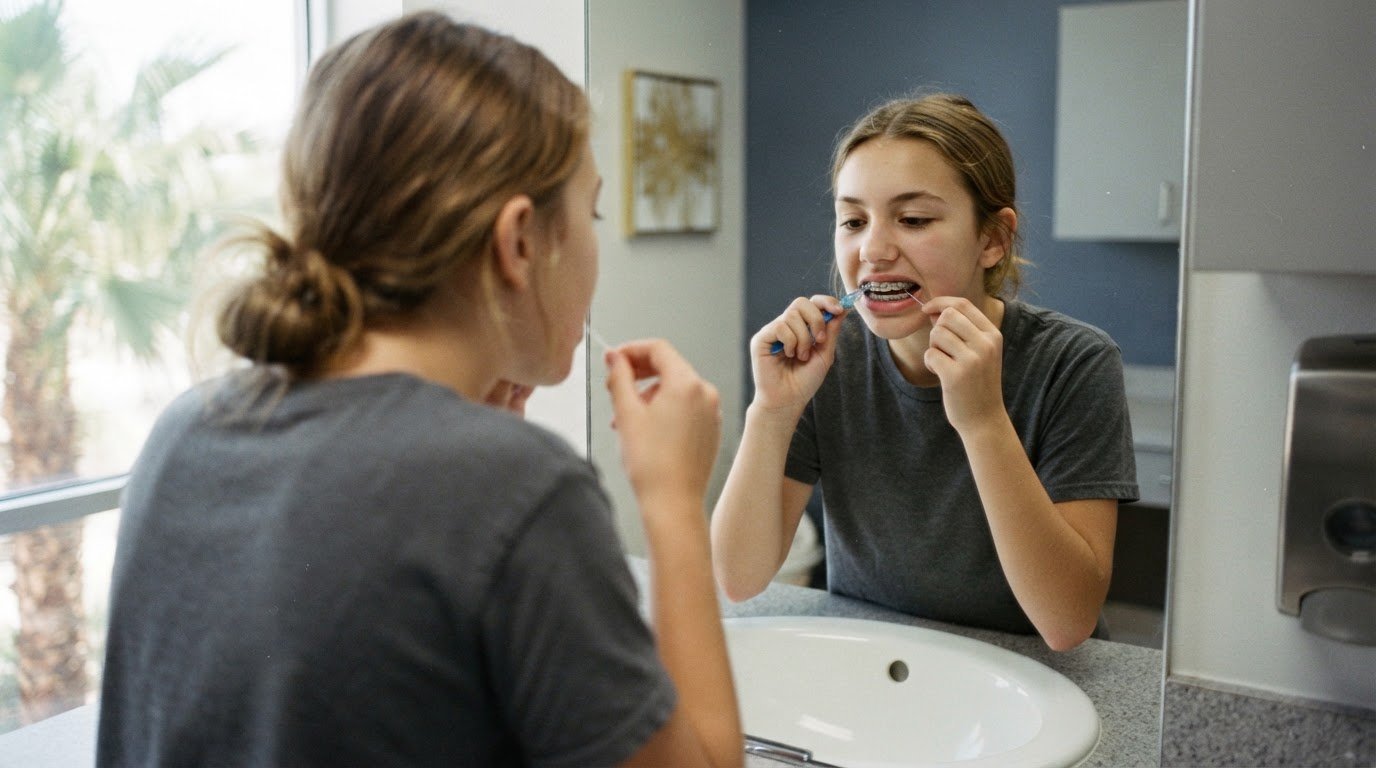
Flossing with braces shouldn’t hurt, and learning how to floss with braces starts with guiding waxed floss beneath each wire and gently cleaning between your teeth. A floss threader can help you reach behind brackets; begin with an 18- to 24-inch piece of waxed floss. Some tenderness or bleeding may happen when gums are inflamed, especially if flossing hasn’t been part of your routine, but gentle, consistent cleaning can make the process more comfortable.
It’s understandable if wires and brackets make flossing feel awkward at first. This guide explains how to floss with braces, build a practical routine, and use water flossers and interdental brushes to clean around your appliance. You’ll also learn what to do if your gums feel sore and why cleaning between teeth matters during orthodontic treatment. With the right technique and a little patience, daily care can feel more manageable.
Key Takeaways
- Thread floss beneath each brace wire and clean gently along the gumline, using a fresh section between teeth.
- Use an interproximal brush to reach around brackets and beneath the wire, but don’t force it into tight spaces.
- Clean between teeth before brushing to clear trapped food and plaque and help fluoride reach more areas.
- Make daily flossing part of your braces routine; a water flosser can help, but it doesn’t replace regular dental floss.
Does flossing with braces hurt more?
Flossing shouldn’t hurt, but inflamed gums may feel tender or bleed when you resume cleaning. Use gentle, regular strokes to clean around brackets, without pressing the floss into your gums.
Common mistakes include snapping floss down, skipping the gumline, and reusing a dirty section. Move gently, clean between every tooth, and use a fresh section of floss for each gap.
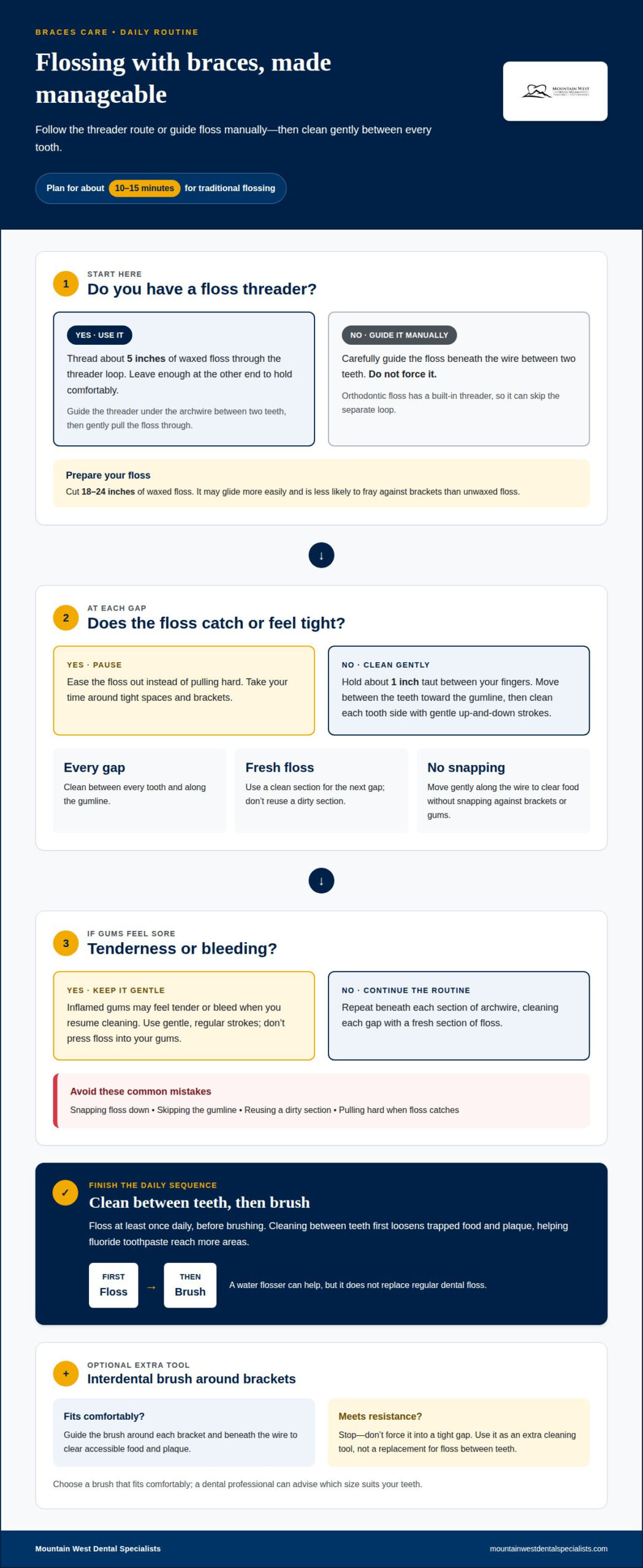
Traditional flossing with braces can take 10 to 15 minutes. A threader, a steady routine, and preparing your floss before you begin can make each step easier.
- Cut 18 to 24 inches of waxed floss. Waxed floss may glide more easily and is less likely to fray against brackets than unwaxed floss.
- Thread about five inches of floss through a floss threader’s loop. Leave enough floss at the other end to hold comfortably as you clean.
- Guide the threader beneath the archwire between two teeth, then gently pull the floss through. To thread it manually, guide the floss under the wire without forcing it.
- Hold a taut section of about an inch between your fingers. Move the floss between the teeth toward the gumline, then clean the side of each tooth with gentle up-and-down strokes.
- Use a clean section of floss for the next gap. Gently move the floss along the wire to clear food, taking care not to snap it against brackets or gums.
- Repeat beneath each section of archwire. Orthodontic floss has a built-in threader, combining the floss and guiding tip so you can skip threading a separate loop.
- Take your time around tight spaces and brackets. If floss catches, ease it out instead of pulling hard. Waxed floss and an orthodontic threader can make cleaning easier.
Interproximal brushes
An interproximal brush, also called an interdental brush, can reach around brackets and beneath the archwire. Use it as an extra cleaning tool, not as a replacement for flossing between teeth.
Use an interdental brush
- Choose an interdental brush that fits comfortably, then guide it around each bracket and beneath the wire. Ask a dental professional which size suits your teeth. The right fit helps you clean without forcing the bristles.
- Gently move the brush through accessible spaces to clear food and plaque. If it meets resistance in a tight gap, stop instead of pushing it through. Interdental brushes clean around brackets but don’t replace floss for cleaning between teeth.
Choose between interdental brushes and floss picks
- Use an interdental brush around brackets and beneath the wire, where its small bristled head can reach. Choose a size that passes comfortably, and never force it into a tight space.
- Choose a floss pick if its handle makes floss easier to hold and guide. With braces, you still need to pass floss beneath the archwire to clean between teeth, so a pick may not reach every gap easily. Waxed floss with a threader is another option.
Clean between teeth before brushing to loosen trapped food and plaque, so fluoride toothpaste can reach more areas. After brushing, a proxy brush or water flosser can help remove loosened food around your teeth and braces.
- Start by cleaning between your teeth with traditional floss or an interdental brush wherever it fits comfortably.
- Brush afterward, then use a proxy brush or water flosser to clear loosened particles around brackets. If you’re helping a child build a healthy routine, pediatric dental checkups can support their oral care.
Why flossing matters during orthodontic treatment
Brackets and wires create extra places for food and plaque to collect. Learning how to floss with braces helps you clean between teeth and along the gumline, where a toothbrush may not reach easily.
- Clean between teeth before brushing. This helps remove trapped food and plaque first, allowing fluoride toothpaste to reach more areas as you brush.
- Pay attention to the spaces beside brackets and beneath the archwire. A toothbrush may miss narrow gaps, so flossing helps clean where braces make access harder.
- Move floss gently along the gumline, not just through the visible space between teeth. Clean both sides of each gap so debris isn’t left against either tooth.
- Use a fresh section of floss as you move between gaps. This carries loosened particles away instead of moving them from one space to another.
- Keep your routine manageable and thorough. If cleaning your whole mouth feels difficult, work through one section at a time until you’ve flossed between all your teeth.
- After flossing, brush to clear loosened residue and spread fluoride toothpaste across your teeth. Floss first to dislodge trapped material, then brush around your braces.
- Continue seeing your general dentist for regular cleanings while wearing braces. Professional cleaning complements daily care by reaching areas that can be difficult to access around brackets and wires.
- Orthodontic care involves more than moving teeth. Food trapped between teeth and clear aligners can interfere with tooth movement, so remove debris before putting aligners back in.
The takeaway is simple: braces make some areas harder to reach, so your routine should include brushing and cleaning between teeth. Knowing how to floss with braces helps you care for those spaces while your appliance does its work.
How often should you floss when you have braces?
Floss between your teeth at least once daily, even if you also use a water flosser. Make it part of your regular braces-care routine.
- Choose a consistent time each day, such as before your evening brushing. A set routine makes it easier to remember every gap, including spaces around brackets where food can collect.
- Floss after meals and snacks if food gets trapped around your teeth or braces. If you can’t floss right away, clean those spaces as soon as your routine allows.
- Use regular dental floss at least once daily, even if you also use a water flosser. A water stream can help clean around braces, but it doesn’t replace floss’s contact between teeth.
- Brush each morning and night, and after eating when practical. If you’re away from home after lunch, return to your usual cleaning routine when you can rather than skipping the day entirely.
- If you miss one day, resume your routine the next day instead of giving up. One missed day isn’t a disaster, but regularly skipping flossing leaves food and plaque between teeth.
- Allow enough time to clean carefully, especially while you’re building the habit. Work through each gap in sequence, and use a water flosser as an extra tool if it suits your routine.
A steady daily habit supports cleaner teeth throughout orthodontic treatment. If braces make that routine challenging, explore orthodontic care for guidance tailored to your treatment.
Mountain West Dental Specialists: Orthodontic Braces and Aligners
Mountain West Dental Specialists offers orthodontic braces and aligners for patients considering treatment to move their teeth. If you’re weighing these options or already have braces and find daily cleaning challenging, our orthodontic team can help you discuss your care. Your treatment plan and appliance affect how you clean around your teeth, brackets, and wires, so bring your questions to your orthodontic visit.
For children, pediatric dental checkups support oral health as their teeth develop. Seek orthodontic guidance when you’re exploring braces or aligners, or want to discuss your current treatment and cleaning routine. Contact Mountain West Dental Specialists to talk about orthodontic braces and aligners.
Build a Braces-Care Routine That Works for You
Knowing how to floss with braces gives you a steadier starting point as orthodontic care continues. Your routine may need to adapt as your appliance or schedule changes. Bring questions about cleaning tools or hard-to-reach areas to your next orthodontic visit, so you can keep home care practical and comfortable.
For families with broader dental needs, Mountain West Dental Specialists also offers pediatric dental checkups and tongue-tie release. Each person’s care journey is different, and having a trusted place to discuss the next step can make it easier to stay engaged with your oral health.
Contact Mountain West Dental Specialists to talk about your orthodontic care. Keep building a routine that feels manageable, one day at a time.
Frequently Asked Questions
What does it mean if my gums bleed when flossing?
Bleeding can happen when gums are inflamed, especially if flossing hasn’t been part of your routine. Keep your movements gentle rather than stopping or pressing harder. Guide the floss carefully along each tooth instead of snapping it into the gumline. If bleeding continues despite gentle, regular cleaning, mention it at a dental visit so your gums can be assessed.
How do you floss with braces step by step?
Start with waxed floss and guide it beneath the archwire, then clean between each pair of teeth. Curve the floss around one tooth and gently move it along the side before cleaning the neighboring tooth. Use a fresh section as you move across your mouth. Finish by brushing to clean both the spaces between teeth and the surfaces around brackets.
What tools work best for flossing with braces: floss threaders, orthodontic floss, or water flossers?
The right tool depends on which part of your braces you’re cleaning. A floss threader guides regular floss beneath the wire, while orthodontic floss combines these in a built-in threader. A water flosser directs a stream around braces and along the gumline. Use it as an extra cleaning aid, and use threadable floss to clean between teeth.
How do you use a floss threader to clean under braces wires?
Pass the floss through the threader’s loop, then guide its tip beneath the archwire between two teeth. Pull the floss through without tugging the wire, and hold both ends securely. Clean the gap before moving to the next one. If the threader catches near a bracket, ease it back and reposition it rather than pulling against the appliance.
Can you use a water flosser instead of string floss with braces?
A water flosser can help clean around brackets and along the gumline, but it shouldn’t replace regular dental floss. If it works for your routine, use both: direct the water stream around your braces, then floss between your teeth. To reduce splashing, lean over the sink and start at a comfortable pressure before guiding the stream around your mouth.
How do you floss around brackets and under the archwire without damaging braces?
Carefully guide floss beneath the archwire, then move it between teeth without snapping it against brackets. Keep the floss controlled and use gentle up-and-down strokes along each tooth. If it catches, pause and ease it free instead of yanking. An interproximal brush can clear accessible debris around brackets, but don’t force it into a tight space.