
Full healing after a baby’s tongue-tie release takes a few weeks. The wound itself usually takes about two weeks to heal, sometimes longer. Tongue tie release recovery week by week can vary from baby to baby, with soreness and feeding changes often most noticeable early on.
It’s understandable to watch every change in your baby’s mouth and wonder whether it’s part of healing. A white or yellow patch can form over the release site as new tissue develops; by itself, it doesn’t mean something is wrong.
Learn what recovery may look like from the first days through the following weeks, how feeding can change, and which signs warrant a call to your baby’s doctor. Knowing what to expect can help you care for your little one with confidence and recognize when they need extra support.
Key Takeaways
- Track changes in feeding and the healing site over time; recovery can include ups and downs rather than steady day-by-day progress.
- Follow the care team’s instructions for stretches and aftercare, since the routine should be gentle and specific to your baby.
- Fussiness or muscle soreness may affect feeding temporarily, so notice whether your baby’s comfort and feeding patterns are changing.
- Contact your baby’s provider promptly for trouble breathing, heavy bleeding, fever, a foul odor, or thick, pus-like discharge.
What Does Recovery Look Like After Your Child Undergoes a Tongue Tie Frenectomy?
Healing changes over days and weeks, and the wound’s appearance can shift as new tissue forms. A tongue tie release recovery week by week timeline can help you recognize typical changes and notice when your baby’s progress may need attention.
Oral Wound Healing Stages
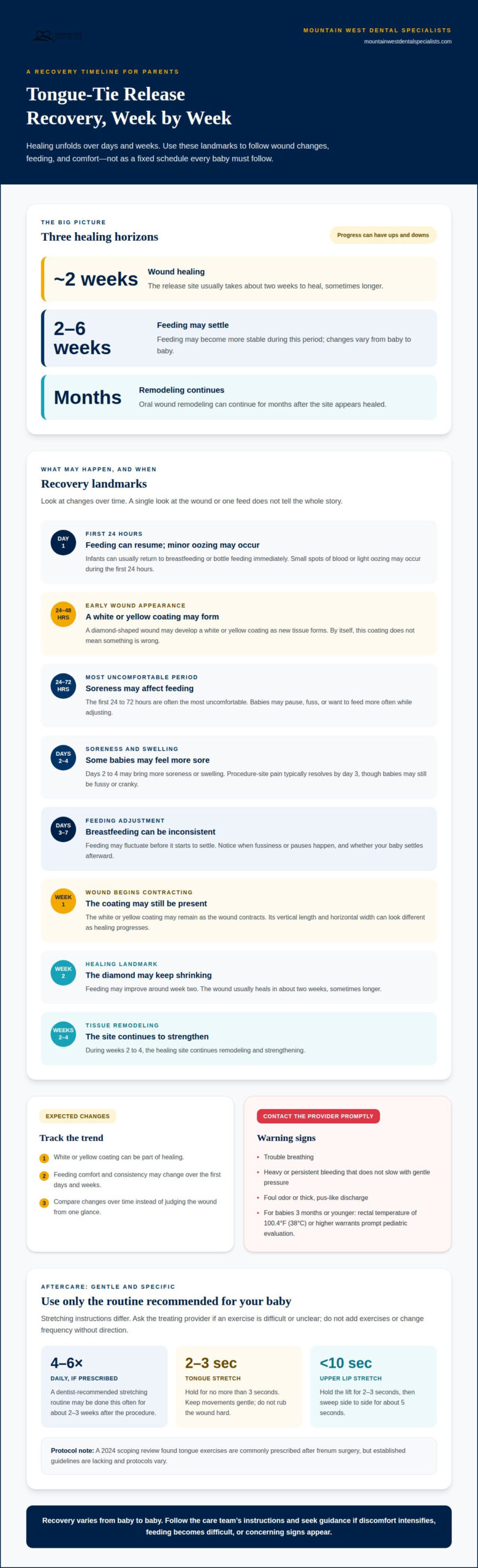
Oral wound healing is the process of forming new tissue and gradually closing the release site. In the first 24 to 48 hours, a diamond-shaped wound may develop a white or yellow coating. This can be part of healing, not proof of infection. As the wound contracts, its vertical length and horizontal width can look different. Watch for changes over time rather than judging the site from one glance.
First-Week Healing and Feeding
First-week recovery includes wound changes alongside possible feeding adjustments. Small spots of blood or light oozing may occur during the first 24 hours. Soreness may make feeding uncomfortable, and the first 24 to 72 hours are often the most uncomfortable. Days 2 to 4 may bring more soreness or swelling. During days 3 to 7, breastfeeding can be inconsistent before it starts to settle. Infants can usually resume breastfeeding or bottle feeding immediately after release.
Recovery by Release Method
Scissors, laser, and surgical release are different ways to divide restrictive tissue, but the method alone doesn’t establish a reliable recovery timetable. Wound appearance and feeding changes are useful signs to track after any approach. There’s no single cost for tongue-tie release in the United States; the amount depends on the care and setting. Insurance coverage varies by plan and benefits, so your out-of-pocket amount depends on your coverage.
Week-by-Week Recovery Timeline
A week-by-week timeline offers landmarks, not a schedule every baby must follow. During week one, a white or yellow coating may remain as the wound begins contracting. Around week two, the diamond may continue shrinking, and feeding may improve. Full wound healing takes about two weeks, sometimes longer. During weeks 2 to 4, the site continues remodeling and strengthening. Feeding may become more stable during weeks 2 to 6, while oral wound remodeling continues for months after the site appears healed. This tongue tie release recovery week by week outline helps put those changes in context.
When should I call my doctor after tongue tie release?
Follow the aftercare plan provided for your baby’s procedure, because stretching routines can differ. Contact the treating provider for clarification if an exercise is difficult or the instructions are unclear. This helps keep the routine gentle and suited to your baby’s healing.
A provider may recommend gentle upward tongue lifts for infants and toddlers. With clean hands, lift the tongue upward and back to expose the healing wound. Don’t rub the wound hard. If the care plan includes both lip and tongue stretches, start with the lip stretch. Keep each movement gentle instead of forcing a wider range of motion.
For an upper lip stretch, hold the lift for 2-3 seconds, then sweep side to side for about 5 seconds. The full stretch should take less than 10 seconds. A tongue stretch should be held for no more than 3 seconds. These brief movements are different from vigorous rubbing or trying to reopen the site.
Use only the routine recommended for your child. A dentist-recommended frenectomy stretching routine may be done 4-6 times daily for about 2-3 weeks after the procedure. A 2024 scoping review found that tongue exercises are commonly prescribed after frenum surgery, but established guidelines are lacking and protocols vary. The prescribed movements and duration matter, so don’t add exercises or adjust frequency without direction.
Call the provider right away for heavy or persistent bleeding that doesn’t slow with gentle pressure, trouble breathing, foul odor, or thick, pus-like discharge. For babies 3 months or younger, the American Academy of Pediatrics advises prompt pediatric evaluation for a rectal temperature of 100.4°F (38°C) or higher. These signs need attention, unlike an expected healing coating.
For support with your child’s procedure and aftercare, explore tongue-tie release care.
Pain, fussiness, and muscle soreness
After release, your baby may show discomfort through feeding changes, crying, or restlessness. Their pattern over the first few days can help you understand what comfort and support they need.
Infant Pain and Muscle Soreness
Infant pain after frenectomy is temporary soreness around the release site, sometimes affecting feeding. Babies may be sore for a day or two, and procedure-site pain typically resolves by day 3. Days 2-3 can still bring fussiness, frequent feeding, or a cranky mood. Those behaviors matter because they can make it harder to judge whether feeding feels comfortable or tongue function is changing.
Notice what happens during a breast or bottle feed. Your baby may pause, fuss, or want to feed more often while adjusting. These signs don’t measure healing on their own. Note when they happen and whether your baby settles afterward. This gives the clinician useful context if discomfort persists or worsens.
Pain Relief and Comfort Measures
Comfort measures can support your baby while soreness eases without disturbing the healing site. Offer breast or bottle feeds as usual, allowing pauses if your baby needs them. Familiar holding and a calm feeding environment can help you respond to cues without rushing. Avoid rubbing the wound or using a remedy that isn’t included in the care instructions.
For pain medicine, follow the treating clinician’s directions for the specific product and dose. Don’t estimate a dose from another child’s plan. A yellow or white healing patch can appear at the wound, so color alone doesn’t explain discomfort. Contact the clinician if pain seems to intensify, feeding becomes difficult, or your baby remains unusually unsettled beyond the expected early recovery period.
As the first few days pass, compare your baby’s feeding comfort and behavior with their earlier pattern. Changes in eating or tongue movement can take time to interpret; the timing and persistence of symptoms can help guide your next conversation with the care team.
Warning signs requiring provider contact
Changes in breathing, bleeding, temperature, and wound appearance can help you decide when to seek help. Trouble breathing after release needs immediate contact with the provider. Don’t wait for a routine follow-up if your baby is struggling to breathe.
Small spots of blood or light oozing may occur during the first 24 hours. Heavy bleeding, or bleeding that continues and doesn’t slow with gentle pressure, warrants a prompt call to the treating provider. Follow the aftercare instructions for pressure, and avoid rubbing the tissue or repeatedly touching the wound.
Contact the provider right away if the site develops a foul odor or thick, pus-like discharge. A white or yellow coating can form during normal healing, so color alone doesn’t establish infection. Concerning discharge, odor, or worsening symptoms matter more than the coating’s appearance by itself.
For babies 3 months or younger, the American Academy of Pediatrics advises that a rectal temperature of 100.4°F (38°C) or higher needs immediate pediatric evaluation. Contact your pediatrician right away at that threshold rather than waiting to see whether the fever starts to settle.
A new frenulum, the tissue band under the tongue, can appear after release and doesn’t necessarily mean reattachment. Feeding challenges or tongue-tie symptoms may reappear around week 3, so report a persistent or concerning change to the treating clinician instead of diagnosing reattachment from appearance alone. The clinician can assess the wound and tongue function.
Arrange a pediatric dental checkup if you need an examination of your child’s mouth or help interpreting changes during healing. For breathing difficulty or heavy bleeding, contact the treating provider promptly rather than waiting for a scheduled appointment.
Schedule a pediatric dental checkup to have your child’s mouth and recovery concerns assessed.
Mountain West Dental Specialists: Tongue-Tie Release
Mountain West Dental Specialists provides tongue-tie release for families considering treatment or seeking guidance about their child’s oral function. If feeding concerns led you to explore release, a pediatric dental checkup can help assess your child’s mouth and discuss whether this care may suit their needs. After treatment, contact the treating provider with concerns about healing, feeding, or the aftercare routine.
Recovery can involve changes in wound appearance and temporary feeding discomfort, so a clear care plan helps you know what to watch for and when to seek guidance. If you’re considering treatment or have questions about your child’s recovery, contact Mountain West Dental Specialists in Las Vegas.
Make your next step a confident one
Following your baby’s tongue tie release recovery week by week can help you notice patterns, but you don’t need to interpret every change alone. Keep a simple note of questions or observations that matter to you, such as feeding changes or concerns about your baby’s comfort. This gives you a focused starting point for a conversation with a dental professional.
Care needs change as your child grows. Mountain West Dental Specialists offers pediatric dental checkups and orthodontic braces and aligners, as well as tongue-tie release. Discuss which care best fits your child’s needs and what questions to bring to the next appointment.
Whenever you’re ready to talk through a concern or possible next step, contact Mountain West Dental Specialists. You’re taking a thoughtful step for your baby, and support is here as you move forward.
Frequently Asked Questions
How long does it take a baby to heal from tongue tie release?
A baby’s release wound usually takes about two weeks to heal, sometimes longer. The surface can look closed before deeper remodeling is finished, and oral wound remodeling continues for months after the wound appears gone. A lingering pale mark or tissue change alone doesn’t establish a problem. Consider how the appearance changes over time alongside feeding and comfort, and raise new or worsening symptoms with the treating clinician.
How long does it take for latch to improve after tongue tie release?
Latch may feel different during the first couple of days, and some families notice more comfortable nursing during the first two weeks. Improvement isn’t always steady: feeds can be inconsistent during the first week, then settle as your baby adjusts. Notice changes such as less clicking or a more comfortable latch, and share those observations during follow-up care.
What are the worst days after tongue tie release?
Days two through four are often the most challenging, with soreness and swelling sometimes peaking during this period. The broader first 24 to 72 hours can also be uncomfortable, so a difficult second day doesn’t necessarily mean recovery is off track. Look at the pattern across several feeds and periods of rest. Contact the provider if symptoms worsen or concerning warning signs appear.
What symptoms are normal in the first few days after a tongue-tie release?
In the early days, babies can have temporary soreness, mild swelling, and small spots of blood or light oozing during the first day. A white or yellow coating can develop over the wound as new tissue forms. Feeding may feel uncomfortable or change temporarily. Consider these signs alongside your baby’s overall condition. Trouble breathing, persistent heavy bleeding, or foul-smelling discharge calls for prompt medical attention.
How long does pain last after infant frenotomy, and what pain relief is safe?
Procedure-site pain typically resolves by day three, though babies can remain sore for a day or two and may be fussy. For pain relief, use only medication and dosing instructions given specifically for your baby by their clinician. Don’t estimate a dose from another child’s treatment or use an unapproved remedy. If pain intensifies, feeding becomes difficult, or your baby remains unusually unsettled, contact the treating provider.
What feeding changes and improvements can happen week by week after infant tongue-tie release?
During the first days, latch may feel different, and feeds can be uneven during the first week. Over the following weeks, some families notice more comfortable nursing and fewer clicking sounds, while feeding patterns may become steadier during weeks two through six. Keep a simple record of which feeds feel easier, any clicking, and whether your baby seems comfortable. Those details can make progress easier to discuss at follow-up.