A straighter smile isn’t worth risking the health of your teeth and gums. The risks of DIY teeth straightening include unintended tooth movement, gum and root damage, bite problems, and, in severe cases, tooth loss. DIY methods range from mail-order aligners to improvised braces made with household materials, without the safeguards of professional supervision.
An at-home option may seem simple and convenient, but moving teeth safely takes more than applying pressure. Your teeth, gums, bite, and jaw all matter. A poor fit or uncontrolled force can cause harm that isn’t obvious at first.
This article explains what DIY teeth straightening involves, why mail-order aligners attract attention, and how rubber bands and homemade devices can put teeth at risk. It also covers why professional assessment and monitoring matter before teeth are moved.
Key Takeaways
- Learn why tooth movement needs professional monitoring and adjustments throughout treatment, not just an initial plan.
- Understand why photos or tooth impressions alone may miss issues that affect whether aligners are appropriate.
- See why rubber bands can damage the tissues and support around teeth rather than safely closing a gap.
- Recognize how improvised braces can apply uncontrolled pressure, and what warning signs make professional assessment important.
What Is DIY Teeth Straightening?
DIY teeth straightening means trying to move teeth with at-home aligners or other devices without ongoing professional supervision. Unlike orthodontist-supervised treatment, it lacks regular assessments and adjustments to track tooth movement, bite alignment, and oral health. The American Dental Association says professional supervision is necessary throughout orthodontic treatment.
A safe treatment plan assesses more than the visible position of your teeth. An orthodontist evaluates your teeth, gums, jaw, and bite, and may use X-rays to assess the teeth and supporting bone. This can reveal conditions that affect tooth movement, such as gum problems or jaw misalignment. A photo or impression alone cannot provide the same clinical assessment.
Monitoring matters because teeth may not move as a plan predicts. Regular orthodontic check-ups let the clinician assess progress and adjust treatment when needed. An at-home aligner sequence, by contrast, may continue without anyone checking whether the trays fit or your bite is changing as intended. The risks of DIY teeth straightening include creating new alignment or bite problems.
DIY methods also have limits. A cosmetic plan focused on front teeth may not address crowding, jaw misalignment, or a bite problem. Orthodontic treatment considers how teeth fit together and function, not just whether they look straighter. Extensive dental concerns call for an assessment of the whole bite.
If unsupervised aligner use causes problems, corrective care may involve new aligners, fixed braces, and retainers. The right approach depends on how the teeth and bite have changed. Repairing damage from DIY treatment may require more complex and costly care than supervised treatment from the outset, with additional appointments and a longer path to a functional result.
Why Are Mail Order Braces Trending?
Mail-order clear aligners appeal to people seeking a home-based alternative to traditional braces. Online ordering and at-home impressions can seem convenient, and a sequence of trays may look straightforward to follow. These services are generally intended for mild to moderate cases, and DIY aligners often focus on cosmetic changes to the front teeth.
Convenience doesn’t replace an in-person specialist assessment. Photos or tooth scans can show visible alignment, but they don’t fully assess gum health, jaw function, tooth roots, or supporting bone. If gum disease or a bite problem affects tooth movement, an online plan may miss an important concern. An orthodontist considers these factors when planning movement and monitoring treatment.
Are mail-order clear aligners legal and regulated in the United States? Dental aligners are classified as prescription devices by the FDA. State laws may also govern who can take bite casts or deliver prescription appliances, so legal requirements depend on the service and applicable state rules.
Home-made 3D-printed aligners raise a separate concern: the material must be suitable for use in the mouth. If it isn’t biocompatible or safe for oral use, it may pose a health risk. A poor fit can also apply force unevenly, making tooth movement ineffective or unintended. Printing a tray doesn’t make it a professionally designed orthodontic appliance.
Mail-order treatment has limits when teeth need more than cosmetic straightening. A tray sequence may not address a complex bite, jaw misalignment, or underlying dental condition; those issues can require a different treatment plan. Without regular follow-up, a problem such as unexpected movement may go unnoticed during treatment. For guidance on professionally planned orthodontic braces and aligners, an in-person assessment can help identify what your teeth and bite need.
Can I close a gap in my teeth with rubber bands?
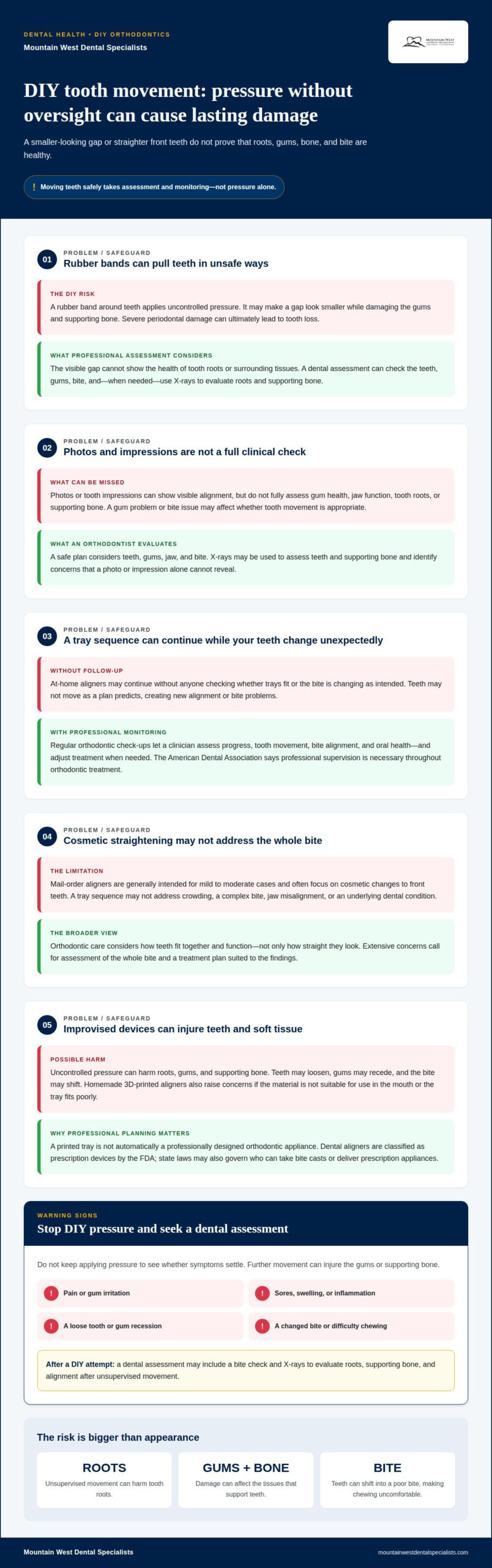
No. A rubber band applies uncontrolled pressure and can damage the gums and supporting bone instead of moving teeth safely. The visible gap doesn’t reveal the health of the roots or surrounding tissues, so tooth movement needs professional assessment.
Closing Gaps with Elastic Bands
Closing a tooth gap with an elastic band means placing a small rubber band around teeth to pull them closer together. The gap may look smaller, but that visible change doesn’t show whether the teeth remain stable. The American Association of Orthodontists warns against using rubber bands this way. The pressure can cause severe periodontal damage and, ultimately, tooth loss.
Damage to Teeth, Gums, and Bite
Unsupervised tooth movement can harm roots, gums, and the bone supporting each tooth. A tooth may become loose as its support is damaged, and gum recession can expose more of its surface. Pressure may also shift teeth into a poor bite, changing how the upper and lower teeth meet. These changes can cause pain and make chewing uncomfortable.
DIY methods can injure soft tissues, too. Gum irritation, sores, inflammation, or infection are warning signs, not evidence that a band is working. Enamel damage can raise the risk of cavities, while altered tooth positions may create lasting bite problems. Orthodontic care considers tooth movement as well as the structures that keep teeth stable.
When to Stop and See a Dentist
Stop using a rubber band or other DIY device if you develop pain, gum irritation, sores, swelling, or a loose tooth. A changed bite or difficulty chewing also needs attention. Don’t keep applying pressure to see whether symptoms settle, since further movement can injure the gums or supporting bone.
If you’ve tried a DIY fix, arrange a dental assessment that may include a bite check and X-rays. These help evaluate tooth roots, supporting bone, and alignment after unsupervised movement. The American Association of Orthodontists warns that moving teeth without a thorough examination of the teeth and gums can lead to permanent tooth loss and lifelong dental problems.
Risks of DIY braces and improvised materials
Rubber bands, mail-order aligners, and online braces can all cause harm when tooth movement lacks appropriate assessment and monitoring. Improvised devices also risk soft-tissue injuries, enamel damage, infection, and uncontrolled pressure.
Hazards of Improvised Braces Materials
DIY braces made from household items such as paper clips, dental floss, or glue aren’t designed to move teeth safely. A paper clip can cut the gums, while glue or rough materials can irritate soft tissues and damage enamel. These injuries may lead to infection or cavities. The American Dental Association strongly discourages do-it-yourself teeth straightening because of safety concerns.
Risks Across Online Straightening Methods
Online braces and mail-order aligners may rely on photos or impressions without a comprehensive dental evaluation. An inaccurate impression can produce a poorly fitting tray, causing unintended movement or failing to guide teeth as planned. Rubber bands pose a different danger: concentrated pressure can injure the gums and supporting bone. Complications across these methods may include misalignment, gum irritation, tooth damage, or a bite that no longer fits comfortably.
Another concern is what happens after the active trays end. Some DIY systems omit a retention stage, so teeth may shift back and misalignment can return. Correcting the resulting changes may require additional orthodontic treatment, making the overall process more involved and costly than expected. This is especially relevant when a device addresses visible tooth positions but not the bite and supporting tissues.
If you’ve used an improvised device or online aligners, an orthodontic assessment can help identify changes to your teeth and bite. Arrange an orthodontic assessment to discuss a professionally planned approach.
Mountain West Dental Specialists
Mountain West Dental Specialists can assess your teeth and bite after DIY straightening or before you consider treatment. An orthodontic evaluation can identify concerns such as unexpected tooth movement, gum irritation, or changes in how your teeth fit together, and help determine the next step.
For people considering supervised tooth movement, Mountain West Dental Specialists offers orthodontic braces and aligners in Las Vegas. An assessment helps determine whether orthodontic treatment fits your dental needs, rather than relying on an online impression or improvised device. If you’ve already tried a DIY method, describe what you used and any discomfort, looseness, or bite changes so these concerns can be considered.
Contact Mountain West Dental Specialists to discuss your concerns and possible next steps.
Choose a Thoughtful Next Step for Your Smile
Your next step can be simple. If you’ve considered moving your teeth at home or already tried a device, pause before continuing and talk with an orthodontic professional. Understanding the risks of DIY teeth straightening can help you put long-term dental health ahead of a quick cosmetic change.
Describe what you used, how your teeth feel, and whether your bite has changed. These details give an orthodontic professional a useful starting point for discussing your concerns and possible care. You deserve clear information and a plan based on your dental needs, not pressure to choose a particular treatment.
For a supportive conversation about your next step, contact Mountain West Dental Specialists. Taking time to understand your options is a positive step toward caring for your smile.
Frequently Asked Questions
Are DIY braces safe?
No. DIY braces made with household items can injure your mouth and move teeth unpredictably. A paper clip or piece of floss may press against soft tissue, while glue can irritate gums or damage tooth surfaces. The American Dental Association strongly discourages do-it-yourself teeth straightening. Before applying pressure to your teeth, get an orthodontic assessment.
Can at-home aligners damage your teeth?
Yes. A tray that doesn’t fit correctly can put force on the wrong teeth or fail to guide movement as intended. This may contribute to tooth damage, gum irritation, or a bite that feels different. For example, forcing a tray that won’t seat fully may worsen discomfort. Don’t keep using an ill-fitting aligner without professional guidance.
What Are DIY Clear Aligners?
DIY clear aligners are removable plastic trays provided through an at-home teeth-straightening service, often based on photos, scans, or dental impressions. A series of trays is intended to move teeth gradually. The key question is whether a dental professional examines your oral health and supervises treatment. An online preview of predicted tooth movement isn’t a clinical evaluation.
Can at-home teeth straightening cause permanent tooth or gum damage?
It can. Unsupervised pressure may harm gums, tooth roots, or the bone supporting teeth. Severe damage can cause lasting problems or tooth loss. The risks of DIY teeth straightening are greater when an underlying condition goes unnoticed. Gum recession, persistent soreness, or a loose-feeling tooth warrants professional evaluation, not continued tray use.
Who should not use at-home teeth straightening products?
People with gum disease, significant crowding, bite problems, or jaw misalignment shouldn’t start at-home tooth movement without a clinical assessment. These conditions can affect how teeth respond to pressure and may need care beyond cosmetic alignment. A photo-based screening can miss concerns beneath the visible tooth surfaces. An orthodontist can assess your teeth, gums, and bite before treatment begins.
What should I do if DIY teeth straightening has caused pain, loose teeth, or bite changes?
Stop using the aligner, rubber band, or improvised device, and arrange an evaluation with a dentist or orthodontist. Don’t try to correct the movement by switching trays or adding pressure. Note when symptoms began and bring the device or its packaging to your appointment. Pain, tooth mobility, or a changed bite can help the clinician assess what happened.