
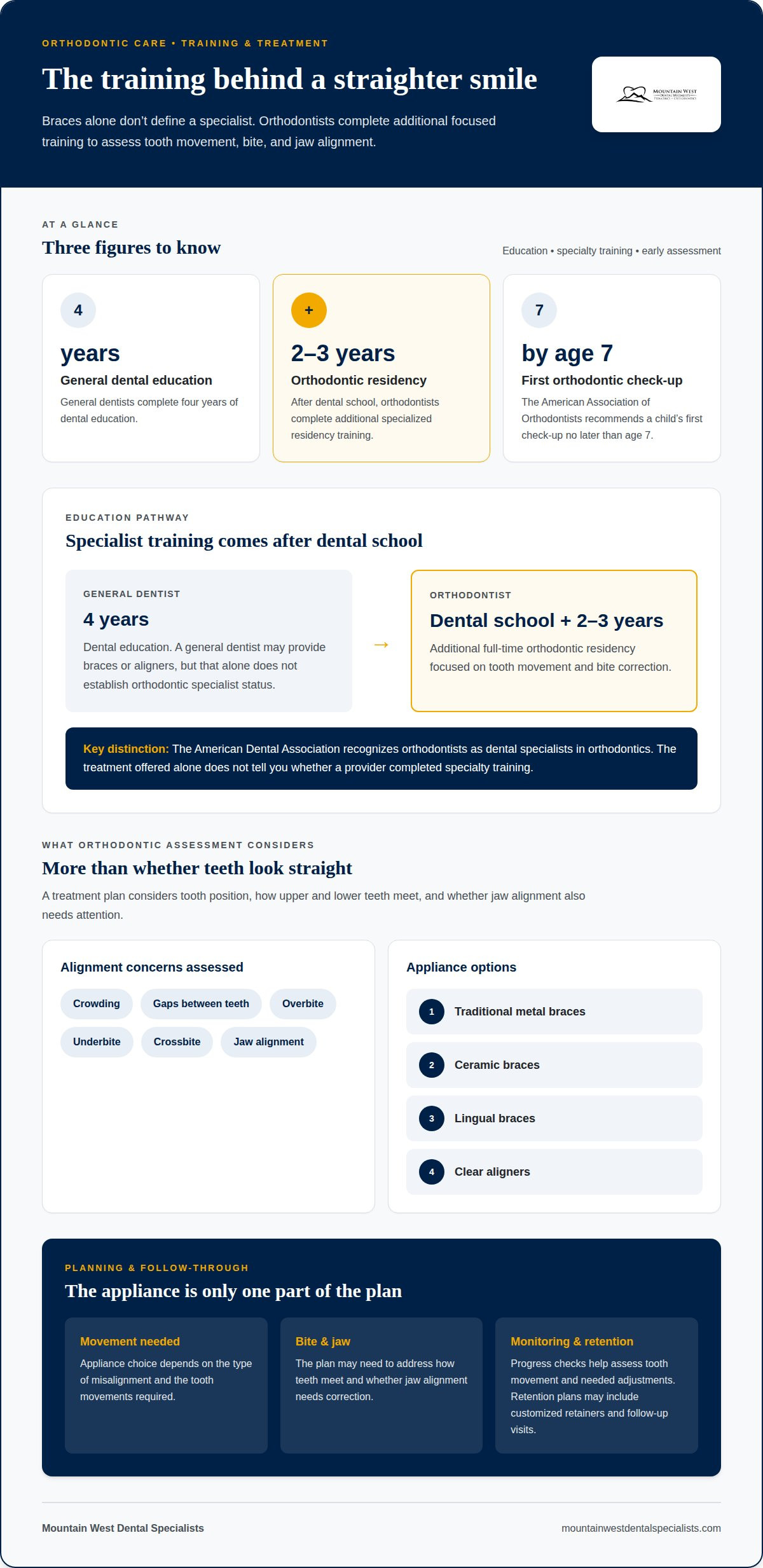
A dentist who offers braces isn’t necessarily an orthodontist. When comparing an orthodontist vs. a general dentist for braces, the key difference is specialized training: orthodontists complete dental school followed by an additional two to three years of orthodontic residency. General dentists complete four years of dental education, but are not orthodontic specialists unless they also complete specialty training.
It’s understandable to assume that anyone who provides braces has the same background. Both general dentists and orthodontists may offer braces or clear aligners, but orthodontists specialize in diagnosing and treating misaligned teeth, bite problems, and jaw alignment.
This guide explains how their training differs, why expertise in bite and tooth alignment matters, and how that knowledge informs appliance selection. You’ll come away with a clearer sense of which provider’s role best fits your orthodontic needs.
Key Takeaways
- Learn which bite and alignment concerns may benefit from orthodontic assessment, including crowded teeth and crossbites.
- See why appliance choice depends on the movement needed and whether the bite or jaw also needs correction.
- Understand how progress checks and a retention plan support treatment from braces or aligners through the next stage.
- Clarify how orthodontic care differs from general dental care, and where the two roles can complement each other.
Is My Dentist Also an Orthodontist?
A dentist who offers braces isn’t automatically an orthodontist. The distinction is specialized education and a focus on correcting tooth and jaw alignment.
Orthodontic Specialist Recognition
The American Dental Association (ADA) recognizes orthodontists as dental specialists in orthodontics. A dentist who provides braces may be a general dentist, so the treatment offered alone doesn’t establish specialist status. This distinction matters when your concern involves more than crooked teeth. Orthodontists focus on diagnosing, preventing, and treating irregularities in teeth, jaws, and facial alignment, considering both appearance and function.
Education and Specialty Training
Orthodontists complete dental school, then pursue additional full-time education in orthodontics. General dentists complete four years of dental education; orthodontists then complete an additional two to three years of specialized residency training. Dental specialists study their specialty full-time for two or more years after dental school. This added preparation focuses on tooth movement and bite correction, providing specialized training for planning orthodontic treatment.
That focus applies to several alignment concerns. Orthodontists treat crowding, gaps between teeth, overbites, underbites, and crossbites. They also assess jaw alignment and irregularities that affect facial balance. For example, crowded teeth may overlap, while a crossbite occurs when upper and lower teeth meet out of alignment. These conditions can affect how teeth fit together, not just how a smile looks.
General dentists may identify early signs of misalignment and provide braces or aligners, but that doesn’t make them orthodontists. In some U.S. states, general dentists may provide specialty care without formal post-dental-school training in that specialty. The American Association of Orthodontists recommends that children have their first orthodontic check-up no later than age 7. An early assessment can identify developing alignment concerns while a child’s teeth and jaws are still growing.
Orthodontists’ focus on bite and teeth alignment
Braces straighten teeth, but a treatment plan also considers how the upper and lower teeth meet. Orthodontists assess the bite and the movements needed to improve alignment, not just whether teeth look straight. A general dentist may also provide braces or clear aligners, but offering these options doesn’t make someone an orthodontist.
Bite concerns can affect function as well as appearance. An overbite may cause excessive wear on the front teeth and damage gum tissue. An underbite may place extra stress on the jaw and facial joints. A crossbite can worsen over time and make chewing difficult. Orthodontic planning considers how the teeth fit together, including jaw alignment and tooth position.
Appliance options include traditional metal, ceramic, and lingual braces, as well as clear aligners. The right approach depends on the movements required and whether treatment must also address a bite concern. Overbites, for example, can often be treated with braces or aligners. Regular progress checks help determine whether teeth are moving as planned and whether adjustments are needed.
Dental insurance coverage for braces depends on the specific plan and its orthodontic benefits, not simply on whether treatment comes from a general dentist or orthodontist. Provider-network rules and eligibility terms can affect coverage, so review your plan details before treatment begins.
When choosing a dentist for braces, ask who will diagnose the bite concern, plan tooth movement, and monitor progress. Ask which appliance options suit your alignment needs and how the plan can be adjusted during treatment. These answers help clarify the provider’s role and the care involved.
Mail-order aligners differ from in-person treatment because direct-to-consumer systems skip in-person diagnostic work. For care that includes an orthodontic assessment and treatment planning, explore orthodontic braces and aligners.
How Does Appliance Selection Affect Your Outcome?
Appliance choice depends on the tooth movement needed and whether your bite or jaw also needs correction. A focused plan considers alignment, facial symmetry, and stability after treatment.
Treatment Options and Appliance Selection
Orthodontic appliances guide teeth through planned movement, with options including braces and clear aligners such as Invisalign. The choice depends on the type of misalignment, the movements required, and how the upper and lower teeth meet. A treatment plan may also combine braces with other appliances to address more serious jaw misalignment. The appliance should support the correction needed, not just improve appearance.
Bite Correction and Treatment Complexity
A simple alignment concern differs from an overbite paired with jaw misalignment. Orthodontists plan around bite, jaw position, facial symmetry, and long-term tooth stability. For more complex jaw concerns, braces may be combined with appliances, and treatment may involve coordination with an oral surgeon. These details help determine which movements are appropriate and how treatment should progress.
Safety and Treatment Effectiveness
Braces from an orthodontist aren’t automatically safer or more effective in every case; relevant differences include focused training, diagnosis, planning, and follow-up. General dentists can provide orthodontic treatment, but a plan that doesn’t address bite or jaw alignment may leave those concerns uncorrected. Regular visits allow the provider to adjust wires and assess tooth movement; aligner progress also needs review and adjustment when needed.
Retention matters after active movement ends. Orthodontists provide retention plans that may include customized retainers and follow-up visits, helping maintain alignment. A treatment plan may use digital scans or 3D imaging to assess tooth position. Together, careful appliance selection, monitoring, and retention connect the initial correction with a more stable result.
Differences between orthodontists and general dentists
The difference between these providers is their focus: general dentists support overall oral health, while orthodontists specialize in tooth and jaw alignment. The orthodontist vs. general dentist for braces decision depends partly on whether you need routine dental care or focused help with alignment. Both roles matter, but their training and day-to-day work prepare them for different needs.
A general dentist is a primary oral health care provider. Their work can include treating tooth decay, root canals, gum disease, and restoring teeth with crowns or bridges. They can also spot early signs of misalignment and refer patients for orthodontic assessment. This broad perspective helps connect alignment concerns with overall dental health.
Orthodontists focus on how teeth, jawbones, facial bones, and soft tissues move and fit together. Their specialized training includes 3,700 hours focused on those movements. They plan orthodontic treatment for concerns such as crowded teeth, bite problems, and jaw misalignment. For severe bite concerns, this focused background can help shape a treatment plan that accounts for more than straightening visible teeth.
Dental specialists study their specialty full-time for two or more years after dental school. Board certification through the American Board of Orthodontics is a separate, voluntary credential, not the same as becoming an orthodontist. These distinctions can help you understand a provider’s training and what their credentials represent.
General dentists and orthodontists may also work alongside each other. A general dentist can continue routine cleanings and checkups during orthodontic treatment, while the orthodontist focuses on alignment and appliances. For the orthodontist vs general dentist for braces decision, match the care to the need: routine dental health concerns fit a general dentist’s role, while tooth, bite, or jaw alignment calls for orthodontic expertise. For focused care with orthodontic braces and aligners, take the next step toward an alignment assessment.
Mountain West Dental Specialists: Orthodontic Braces and Aligners
Mountain West Dental Specialists provides orthodontic braces and aligners for patients considering treatment for tooth or bite alignment. If you’re weighing braces against clear aligners, an orthodontic assessment can help match the appliance to the movements needed and the way your teeth meet. That distinction matters when a concern involves more than the visible position of a tooth.
For children, pediatric dental checkups support ongoing attention to oral development. If you’re exploring orthodontic treatment for yourself or your child, Mountain West Dental Specialists offers orthodontic care and can help you understand the available options. Contact the practice to discuss your next step.
Take the Next Step Toward the Right Care
Choosing care is a personal decision, especially when treatment affects your bite, comfort, and confidence. When deciding between an orthodontist vs. a general dentist for braces, focus on the assessment and ongoing care that fit your needs. A clear conversation about your goals can help you feel prepared to move forward.
Mountain West Dental Specialists provides orthodontic braces and aligners, pediatric dental checkups, and tongue-tie release. If you’re considering orthodontic care for yourself or your child, take the next step at a pace that feels comfortable. Share your concerns and start a thoughtful conversation about your options.
Contact Mountain West Dental Specialists to discuss your next step. You deserve care that helps you feel informed and supported.
Frequently Asked Questions
How do I know it’s time to send my child to an orthodontist?
A first orthodontic checkup is recommended by age 7, even if your child still has baby teeth. Consider an assessment sooner if you notice trouble chewing, crowded or protruding teeth, or an uneven bite. An evaluation can identify developing alignment concerns and clarify whether monitoring or treatment is appropriate as your child grows.
Can a general dentist fix an overbite or crossbite?
Some general dentists provide braces or aligners to correct bite concerns, including certain overbites or crossbites. The key considerations are the complexity of the misalignment and the provider’s orthodontic training. A bite concern involving jaw position or several types of misalignment may call for an orthodontist’s focused assessment and treatment planning.
Can a regular dentist do Invisalign or braces?
Yes. General dentists can provide braces and clear aligners, including Invisalign. The appliance itself doesn’t determine a provider’s specialty; a general dentist remains a general dentist unless they complete orthodontic specialty training. For aligner treatment, in-person assessment and follow-up help evaluate whether teeth are moving as planned and whether adjustments are needed.
Do I need a referral to see an orthodontist?
No. You can take your child to an orthodontist without waiting for a referral from the family dentist. A dentist may notice alignment concerns during a routine visit, but a referral isn’t required for an orthodontic evaluation. Families can seek an assessment directly when they have questions about a child’s bite or developing teeth.
What Can You Expect at an Orthodontic Specialty Practice?
Expect an assessment of tooth position, bite, and jaw alignment, followed by discussion of treatment options. At Mountain West Dental Specialists in Las Vegas, Cone Beam CT imaging is available to support treatment planning. Follow-up visits commonly occur every 4-8 weeks, allowing the orthodontist to review progress and adjust the plan as needed.
What’s the training difference between the two?
Both providers complete dental school, but orthodontists then pursue full-time specialty education focused on tooth movement and bite correction. General dentists receive broader training in overall oral health, while orthodontic residency prepares specialists to assess alignment and plan corrective treatment. Board certification through the American Board of Orthodontics is an additional voluntary credential, separate from specialty training.