
Soreness from braces usually eases within a few days of a fitting, adjustment, or new aligner tray. For braces pain relief for teens, start with simple steps such as serving soft foods or placing a cold pack against the cheek.
It’s understandable to worry when your teen’s teeth feel tender, especially after a treatment change. This guide explains what soreness may feel like, how to ease it at home, and when to contact the orthodontist. You’ll also find practical tips for bracket and wire irritation. A clear plan for braces pain relief for teens can help your teen manage tender days with greater comfort and confidence.
Key Takeaways
- Expect tenderness to ease within a few days for many teens, though the timing can vary after a fitting or adjustment.
- Use soft foods and a cold pack to make the first sore days more comfortable.
- Follow medication directions, and consult a healthcare professional or your teen’s orthodontist before giving them medicine.
- Contact the orthodontist if pain is severe, continues, or makes eating or sleeping difficult.
1. How Long Does Pain from Braces Last?
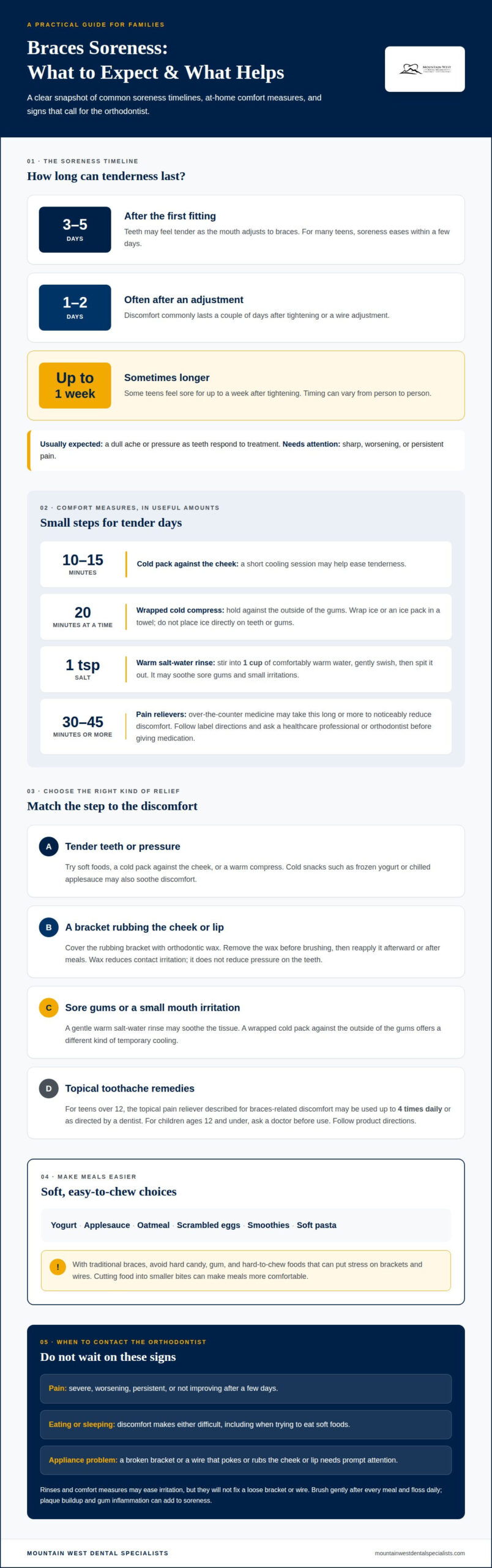
Braces soreness usually eases within a few days, though the first fitting can leave teeth tender for 3 to 5 days. After tightening, discomfort often lasts a couple of days; some teens feel sore for up to a week. A dull ache or pressure can be normal as teeth respond to orthodontic treatment. Sharp, worsening, or persistent pain deserves attention.
For braces pain relief for teens, start with a cold pack against the cheek for 10 to 15 minutes, soft foods, and orthodontic wax on rubbing brackets. Over-the-counter pain relievers such as acetaminophen or ibuprofen may help. Follow the medicine’s dosage instructions, and consult a healthcare professional or the teen’s orthodontist before giving medication. There is no one dose to recommend for every teenager.
Choose foods that require little chewing while teeth feel tender. Yogurt, applesauce, oatmeal, scrambled eggs, smoothies, and soft pasta may be easier to eat than crunchy snacks. With traditional braces, avoid hard candy, gum, and hard-to-chew foods that can put stress on brackets and wires. Cutting food into smaller bites can make meals more comfortable, too.
Contact the orthodontist if pain is severe, gets worse, or continues for more than a few days without improving. Call if discomfort keeps your teen from eating soft foods or sleeping. A broken bracket or wire that pokes or rubs the cheek or lip also needs prompt attention, because it can irritate soft tissue and cause sores.
To reduce irritation, place orthodontic wax over a bracket that rubs, then remove it before brushing and reapply it afterward or after meals. Brush gently after every meal and floss daily; plaque buildup and gum inflammation can add to soreness. If a teen is worried about treatment, invite them to describe what hurts and when. Supporting their confidence can help them focus on progress toward a beautiful smile.
2. Soreness after braces are placed or adjusted
After a fitting or wire adjustment, a teen may feel pressure and tenderness for a few days. Brackets and wires guide teeth into alignment by applying pressure, and new aligners also press on teeth. The change can make teeth and nearby gums sore when chewing or biting. Mild tenderness after an appointment is common as the mouth adjusts.
To ease discomfort after braces are fitted or wires are adjusted, try a warm compress against the cheek at home. Choose soft, easy-to-chew meals while teeth feel tender, and use orthodontic wax if a bracket rubs the cheek or lip. Acetaminophen may help when taken according to its label, but ask a healthcare professional or your teen’s orthodontist before giving medication.
Initial soreness after braces are applied typically lasts about 3 to 5 days. After tightening, tenderness commonly lasts a couple of days, though some people feel sore for up to a week. The pattern can differ: pressure may feel most noticeable when biting, while a rubbing bracket can cause irritation in one specific spot. Orthodontic wax helps cover that contact point; it won’t reduce pressure on the teeth themselves.
A warm compress may feel soothing after the appointment, while a cold pack is another option for tenderness. Avoid chewing pencils, fingernails, or other non-food objects, which can stress brackets and increase discomfort. If soreness worsens, persists without improving, or interferes with eating or sleeping, contact the orthodontist. For ongoing treatment guidance, an orthodontic braces and aligners appointment can help address concerns about pressure, fit, or irritation.
Gently rubbing gums in a circular fashion may help relieve soreness. Acetaminophen or ibuprofen, taken according to the recommended dosage, may ease discomfort. Cold snacks such as ice cream, frozen yogurt, or chilled applesauce may soothe discomfort inside the mouth; over-the-counter pain relievers may take 30 to 45 minutes or more to noticeably reduce discomfort.
3. Salt-water rinses and topical toothache remedies
A warm salt-water rinse can soothe sore gums and small mouth irritations during orthodontic treatment. Stir 1 teaspoon of salt into 1 cup of warm water, swish gently around the teeth and gums, then spit it out. This may ease tenderness from a minor sore, but it won’t fix a loose bracket or wire. Keep the water comfortably warm, not hot, and avoid forceful swishing around sensitive spots.
For a cold compress, wrap an ice pack or ice cubes in a towel and hold it against the outside of the gums for 20 minutes at a time. The coolness can temporarily numb discomfort and help with irritation. Don’t put ice directly against the teeth or gums. A gentle rinse and a wrapped cold pack address different discomforts: one soothes sore tissue inside the mouth, while the other cools the outside.
Topical toothache remedies need age-appropriate directions. For teens over 12, the topical pain reliever described for braces-related discomfort may be used up to 4 times daily or as directed by a dentist. For children ages 12 and under, ask a doctor before using it. Follow the product directions, and don’t apply more often than directed. If a teen takes other medication or has health concerns, ask a healthcare professional before adding a remedy.
If rubbing causes a cut or sore, orthodontic wax can cover the bracket and reduce contact with the cheek or lip. Remove the wax before brushing, then reapply it afterward or after meals. If a wire pokes the cheek, a bracket looks damaged, or eating remains difficult, contact the orthodontist rather than relying on rinses alone. Pain that stays intense, worsens, or does not improve after a few days also needs professional attention. These steps can ease irritation while protecting teeth and gums during treatment.
4. Adjustment discomfort after braces or aligner changes
Brackets and wires apply gentle pressure to move teeth into alignment, so an adjustment can leave them sensitive. A new aligner tray can also press on teeth as it guides movement. Teens may feel a dull ache when biting, chewing, or touching a tender tooth. Some pressure is part of orthodontic treatment, but sharp pain or a broken appliance needs attention.
Soreness after a braces adjustment often lasts 1 to 2 days. A new tray can bring another brief cycle of discomfort, especially for teens who change aligners weekly. During the first weeks with braces, the cheeks and lips may also need time to adapt to brackets and wires. Orthodontic wax can cover a spot that rubs, while a cloth-wrapped cold pack against the cheek may soothe tenderness.
Plan meals around comfort after an adjustment. Soft foods such as oatmeal, scrambled eggs, yogurt, soup, or applesauce require less chewing than crunchy foods. Some teens may prefer soft foods for a few days or up to a week, then gradually return to their usual diet. Avoid hard or sticky foods during the first week after an adjustment to help prevent extra pressure or damage to braces.
Parents can help by keeping the day after an appointment manageable; most teens can return to school the day after getting braces. Ask a healthcare professional or the teen’s orthodontist before giving medicine. Contact the orthodontist if pain worsens, persists beyond a few days, or interferes with eating or sleep. For help with treatment-related discomfort, schedule orthodontic care.
Mountain West Dental Specialists: Orthodontic Braces and Aligners
Mountain West Dental Specialists provides Orthodontic Braces and Aligners for families considering treatment or already adjusting to braces. If your teen’s soreness persists, worsens, or seems connected to a rubbing bracket or wire, an orthodontic appointment can help assess the concern and discuss appropriate next steps. The practice’s orthodontic care is a helpful point of contact for questions about braces, aligner changes, and treatment-related discomfort. You can also discuss whether a Pediatric Dental Checkup fits your teen’s broader dental care needs. For a calm next step, contact Mountain West Dental Specialists to discuss your teen’s orthodontic care.
Help Your Teen Feel Confident About the Next Step
Your teen’s comfort is part of their orthodontic experience, and open communication can make concerns easier to address. Encourage them to describe what feels uncomfortable, where they feel it, and whether it affects eating, sleep, or daily activities. These details help the orthodontic team understand the concern and discuss next steps.
For ongoing family dental needs, Mountain West Dental Specialists offers Orthodontic Braces and Aligners, Pediatric Dental Checkups, and Tongue-Tie Release. The right braces pain relief for teens starts with understanding the discomfort and choosing a response suited to the situation. If you’d like to discuss your teen’s orthodontic care, contact Mountain West Dental Specialists. Your family can take the next step with care and confidence.
Frequently Asked Questions
How Long Does Pain from Braces Last?
For most teens, soreness eases within a few days, though tenderness after braces are first fitted can last about 3 to 5 days. It may feel different from one adjustment to another: pressure while biting can happen as teeth respond, while a sore spot on the cheek often points to rubbing. Track whether discomfort is improving or interfering with normal activities.
Why Do Braces Hurt So Much?
Braces apply steady pressure to move teeth, which can make teeth and gums sensitive, especially after a fitting or adjustment. Brackets and wires may also rub the cheeks or lips, causing a separate kind of irritation. A dull ache is common during these changes. Sharp pain, a damaged bracket, or a wire that keeps poking needs attention from the orthodontist.
How long does pain last after braces are tightened?
After tightening, soreness commonly lasts a couple of days, and tenderness from an adjustment often lasts 1 to 2 days. Some teens feel discomfort for up to a week. Notice whether the ache is easing over time and whether your teen can eat and sleep. Pain that worsens or continues without improvement is a reason to contact the orthodontist.
Can teens use orthodontic wax, cold compresses, or saltwater rinses for braces pain?
Yes. Wax can cover a bracket that rubs, while a cloth-wrapped cold pack held against the cheek can soothe tenderness. For a rinse, mix 1 teaspoon of salt into 1 cup of warm water, swish gently, and spit it out. Remove wax before brushing, then reapply it afterward or after meals. These methods soothe irritation but don’t repair a loose wire.
Do pain-relief gels or numbing products work for braces pain, and are they safe for teens?
Topical pain relievers can be used according to their label or a dentist’s directions. For people over 12, the guidance in this article allows use up to 4 times daily or as directed by a dentist. Ask a doctor before using a topical pain reliever for children ages 12 and under. Before giving a teen any medicine, consult a healthcare professional or their orthodontist.