Age 7 is often the right time to look, not the time to start braces. The average age for getting braces is usually around 12 or 13, when more permanent teeth have come in. An orthodontic evaluation at age 7 can identify developing concerns, but it doesn’t mean braces need to begin then.
If you’re wondering whether age 7 is too young, it’s understandable to want a clear answer before making plans for your child. The right timing depends on how permanent teeth are emerging, how the bite fits together, and how the jaw is developing.
This article explains the average age for getting braces, why an early evaluation can help, and how early orthodontic care differs from standard treatment. You’ll learn what to watch for and why a checkup doesn’t automatically mean your child needs braces.
Key Takeaways
- An early orthodontic evaluation helps identify developing bite or alignment concerns; it doesn’t automatically mean treatment needs to begin.
- Early care can guide jaw growth and make room for permanent teeth, rather than focus on achieving perfect alignment right away.
- The timing of braces depends on how permanent teeth come in and how the bite and jaw develop, not just a child’s birthday.
- Braces treatment may last 6 months to 2 or more years, according to Mountain West Dental Specialists; the dental concern influences the timeline.
What Is Early Orthodontic Treatment?
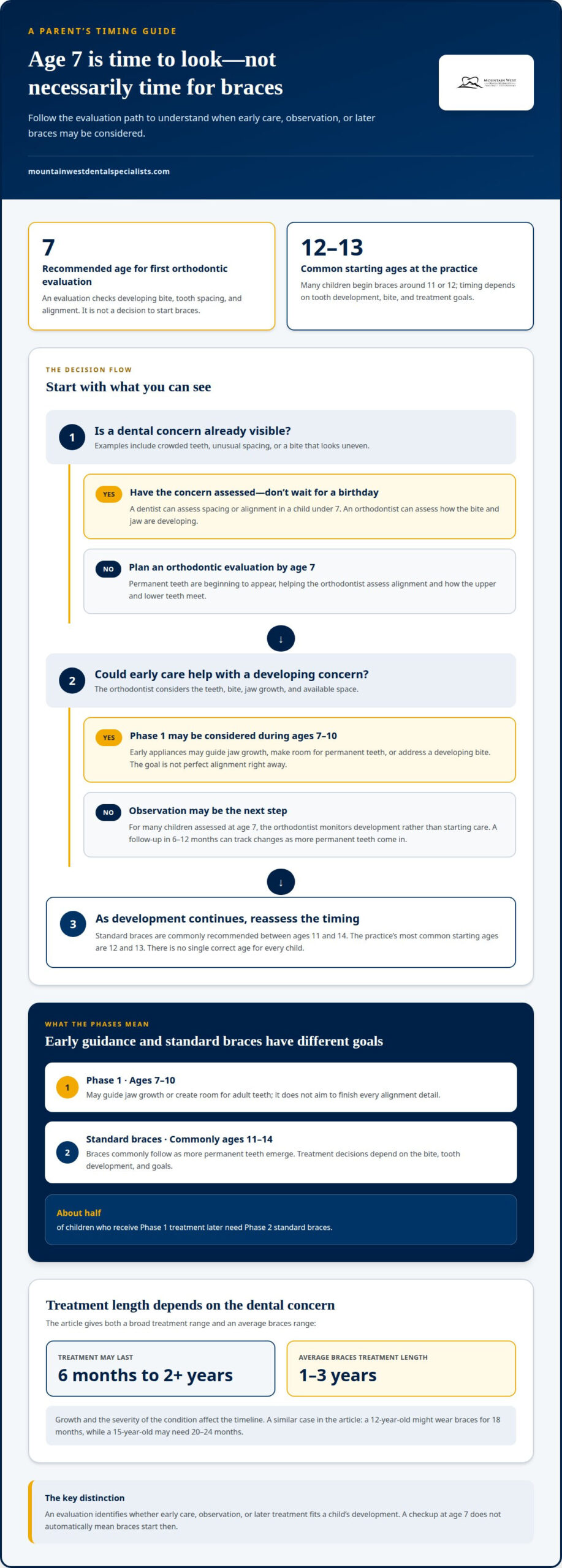
The recommended age for a child’s first orthodontic evaluation is 7. This first appointment lets an orthodontist assess the bite, tooth spacing, and developing alignment. It isn’t a decision to start braces. At this age, permanent teeth are beginning to appear, giving the orthodontist a clearer view of how the teeth meet.
Early orthodontic treatment means evaluating and, when needed, addressing a developing concern while a child is still growing. The goal may be to guide jaw growth, make room for permanent teeth, or address a bite problem. After an evaluation, the orthodontist may recommend treatment or continued monitoring. The right timing depends on the teeth and jaws.
A child younger than 7 can still have an appointment if a parent notices an issue. Examples include crowded teeth, unusual spacing, or a bite that appears uneven. A dentist can evaluate concerns about spacing or alignment in a child under 7, while an orthodontist can assess how the bite and jaw are developing. Don’t wait for a specific birthday if a concern is already visible.
For many children assessed at age 7, the next step is observation rather than orthodontic care right away. A follow-up in 6 to 12 months can help track changes as more permanent teeth come in. That interval gives the orthodontist a chance to see whether tooth positions, spacing, or the bite are changing. Some children may need treatment sooner; others may only need continued observation.
An evaluation at 7 doesn’t mean a child will automatically need braces. Some children may not begin orthodontic treatment for a few years, because their teeth and jaws are still developing. The appointment helps identify whether early care could address a concern or whether waiting offers a better view of the developing bite.
How permanent teeth and jaw development relate to early care
Early care considers how permanent teeth are emerging and how the jaw is growing. These changes help explain why Phase 1 treatment and standard braces may happen at different stages.
Permanent Teeth and Jaw Development
Permanent teeth and jaw development describe the changing bite and available space as a child grows. Around age 7, permanent teeth begin coming in, giving an orthodontist a chance to assess alignment and how the upper and lower teeth meet. Phase 1 care is described for ages 7 to 10, while standard braces commonly follow during ages 11 to 14. The distinction matters because early appliances aim to guide jaw growth and make room, not create perfect alignment.
Reasons for Early Treatment
Early treatment addresses developing concerns that may affect how teeth fit or how permanent teeth find space. An orthodontist may recommend addressing an overbite or crowded teeth early, while growth is ongoing. The American Association of Orthodontists recommends an evaluation by age 7, but an evaluation doesn’t mean treatment must begin then. It helps identify whether a concern calls for early care, observation, or a later treatment phase.
Early orthodontic treatment doesn’t always mean braces. Phase 1 may use appliances to guide jaw growth or create room for adult teeth. About half of children who receive Phase 1 treatment later need Phase 2 standard braces. The first phase focuses on a developing bite; it isn’t intended to finish every alignment detail.
Baby teeth also offer clues. Children should lose them by ages 6 or 7, and most have lost most baby teeth between ages 9 and 14. If a baby tooth is lost early or late, a dentist can assess the child’s dental development and whether permanent teeth have room to emerge. The 12-year molars arrive after the stage when space for permanent front teeth stops increasing as a person grows.
If you’re tracking these changes, Pediatric Dental Checkups can help keep a child’s developing teeth and bite under observation.
What Age Should a Child Get Braces?
Many children start braces around ages 11 or 12, though there’s no single correct age. The bite, tooth development, and treatment goals matter more than a birthday.
Braces are commonly recommended between ages 11 and 14, and the practice’s most common starting ages are 12 and 13. Clear aligners and braces can both address orthodontic concerns. The better fit depends on the dental issue, how teeth need to move, and the child’s ability to follow the treatment plan.
How Growth Affects Treatment
Growth affects how orthodontic treatment can address a child’s changing bite and developing teeth. Younger patients’ bones are still growing, while adult bones have finished growing and are less malleable. This difference can make adult treatment more involved. For children, the stage of growth helps determine whether to address a developing concern now or wait until more permanent teeth have emerged.
Risks of Delaying Braces
Delaying braces means a developing dental concern may remain untreated while a child grows. For example, crowding or an overbite can affect how teeth fit together; early care may guide jaw growth or create space. The concern with waiting is missing that opportunity for early guidance, not that every child needs immediate braces. The American Association of Orthodontists recommends an evaluation by age 7.
Parents also ask about side effects. Braces can cause temporary discomfort as teeth move, and brackets need careful cleaning. These practical considerations differ from the effects of delaying treatment. The dental concern, treatment goals, and child’s age all help determine whether to start now or wait.
Treatment length varies with the dental condition. Mountain West Dental Specialists says treatment may last 6 months to 2 or more years. The average braces treatment length is 1 to 3 years. For a similar case, a 12-year-old might wear braces for 18 months, while a 15-year-old may need 20 to 24 months. Growth and the severity of the condition affect the timeline.
Age recommendations for children getting braces
There’s no single birthday that fits every child. Some orthodontists may recommend braces at age 6 or 7, while others wait until age 9. Traditional braces commonly begin between ages 8 and 14, and most children start between ages 9 and 14. These ranges reflect differences in tooth development and the orthodontic concern being treated.
Age 9 is described as a good time for braces because a child’s permanent teeth are completely grown. In practice, timing depends on the child’s alignment and how the bite fits together. Between ages 9 and 14, most children have lost most baby teeth, with most permanent teeth in or close to coming in. That stage can help clarify which teeth need correction.
For adolescent treatment, braces are often recommended between ages 11 and 14. Treatment may be most efficient after primary teeth are lost and the 12-year molars have at least partly erupted. That doesn’t make earlier or later care wrong. An orthodontic evaluation considers the patient’s developing bite and teeth, not age alone. The average age for getting braces offers a general reference, not a deadline for your child.
Early treatment has a different purpose from standard braces. It can address concerns such as crowding or an overbite while a child is still growing. The aim may be to guide jaw growth or make room for permanent teeth, rather than complete alignment. Some children who receive early care later need another treatment phase, so it’s important to understand the goals before deciding on timing.
A consultation can help turn age guidance into a plan based on your child’s development. Bring examples of concerns, such as crowded front teeth or a bite that doesn’t meet evenly, and discuss how progress will be monitored. The average age for getting braces can help frame the conversation, while an evaluation focuses on your child’s needs. To discuss your child’s timing, schedule an orthodontic evaluation.
Mountain West Dental Specialists: Orthodontic Braces and Aligners
Mountain West Dental Specialists offers braces and clear aligners for children whose teeth or bite may benefit from treatment. If you’re weighing whether to begin now or monitor your child’s development, an orthodontic evaluation can clarify the next step and which options may suit your child’s needs.
Pediatric dental checkups also help monitor a child’s oral health as permanent teeth emerge. These visits can help families understand whether an alignment concern calls for orthodontic care or continued monitoring. The focus is on matching care to the child’s dental development, rather than choosing treatment based on age alone.
Contact Mountain West Dental Specialists to discuss your child’s orthodontic needs or visit mountainwestdentalspecialists.com.
Make the Next Orthodontic Step Feel Clear
Use your child’s current dental concerns as a starting point for a thoughtful conversation about care. The average age for getting braces offers context, but the next step is to understand what support fits your child’s needs and how progress will be followed. Bring questions about comfort, daily routines, and treatment choices to make the discussion practical and personal.
Mountain West Dental Specialists offers braces and aligners, pediatric dental checkups, and tongue-tie release. These services give families options for orthodontic and pediatric dental needs in one practice. Sharing what you’ve noticed about your child’s teeth, bite, or oral habits can help guide a focused discussion about care.
Reach out to contact Mountain West Dental Specialists to discuss your child’s needs. A calm, informed next step can help your family move forward with confidence.
Frequently Asked Questions
Is age 7 too young to start braces?
Age 7 isn’t too young for an orthodontic evaluation, but it’s earlier than the usual age for standard braces. Some orthodontists may recommend treatment at 6 or 7 for a specific concern; others monitor development first. If your child has a visibly uneven bite or crowded teeth, mention what you’ve noticed at an appointment so the concern can be assessed.
When Should I Have My Child See an Orthodontist?
Plan an orthodontic evaluation by age 7, or sooner if you notice a concern. A child younger than 7 can first see a dentist about spacing or alignment; the dentist can help assess whether an orthodontist should evaluate the developing bite. For instance, note whether front teeth meet unevenly or a tooth seems blocked, then share that observation during the visit.
Can my 14-year-old still get braces?
Yes, a 14-year-old can still get braces. Children commonly begin treatment through age 14, and the start date depends on the dental concern and the position of permanent teeth. At an evaluation, the orthodontist considers which teeth need movement and how they fit together. A teen’s age alone doesn’t rule out treatment or determine which approach will work.
How Do I Know When My Child Is Ready?
Readiness involves both dental development and a child’s ability to care for an orthodontic appliance. Your child should be able to follow daily cleaning guidance with your support, including brushing and flossing after meals. Consider whether they can manage a consistent routine before treatment begins. The orthodontist also assesses the teeth and bite to determine clinical timing.
Is it Ever Too Late for Braces?
No, orthodontic treatment isn’t limited to children or teenagers. Adults can receive care when their teeth and gums are healthy, and an evaluation can account for concerns such as gum disease or missing teeth. These factors affect treatment planning, but age alone doesn’t prevent someone from exploring orthodontic care. An assessment can clarify how oral health shapes the available options.
What is the average age children get braces in the United States?
There isn’t one exact age that applies to every child in the United States. Braces commonly begin during adolescence, often around ages 11 or 12, while ages 12 and 13 are the most common starting years in the practice’s experience. These are useful reference points, not a deadline; tooth development and the bite help determine when treatment begins.