
A calmer dental visit doesn’t start with asking your child to be brave. Overcoming a child’s fear of the dentist often begins by helping them know what to expect and offering choices, including the chance to pause. The American Academy of Pediatric Dentistry recommends a first visit around a child’s first birthday or when the first tooth erupts.
It’s understandable to worry when your child feels uneasy about a visit. A new setting, unfamiliar sounds, and uncertainty about what will happen can feel daunting, but small, steady steps can make the experience more familiar. Learn how to prepare for a first appointment, comfort an anxious child during the visit, and understand when nitrous oxide may be considered. Simple choices and planned pauses can also help your child feel involved and supported.
Key Takeaways
- Make the visit feel more familiar with calm, simple explanations and low-pressure practice at home.
- Help your child through each step with comfort items, encouragement, and clear explanations of what’s happening.
- Learn what nitrous oxide may offer and why it’s important to discuss sedation with the dentist and give permission beforehand.
- Give your child age-appropriate choices and agree on a signal for pausing, so they feel more involved during care.
1. How do I prepare my child for their first dental visit?
The American Academy of Pediatric Dentistry recommends scheduling a child’s first dental visit around their first birthday or when the first tooth erupts. Plan follow-up visits every six months so checkups become a familiar routine rather than an unfamiliar event. Early care also lets the dental team monitor oral development and address concerns.
Prepare at home with simple, honest explanations. Tell your child the dentist will count their teeth and help keep them healthy. Count teeth together with a toothbrush, or let your child gently examine a stuffed animal’s mouth. A book or video showing a favorite character at a dental visit can make the steps easier to picture. If your child resists pretend play, pause rather than pushing it.
Parents and other adults can model a calm, positive attitude. Talk about dental care in a relaxed voice, and avoid alarming words such as “shot” or “drill.” Ask what worries your child, then listen without dismissing their concern. Unfamiliar sounds, sights, or smells may be unsettling, so naming what your child is curious about can help you prepare together.
Make the setting less unfamiliar, too. If possible, visit the dental office a day or two before the appointment so your child can see the room. For a nervous child, a brief introductory visit to meet the dentist and sit in the chair without treatment can make the first dental experience more predictable.
How can parents choose a dentist for an anxious child? Choose a pediatric dentist who works with children and explains each step in age-appropriate language. Before the appointment, tell the dental team what your child fears, such as unfamiliar tools or sounds.
How can parents help a child cope with dental anxiety between visits? Keep a gentle routine, such as counting teeth during brushing, and praise your child for trying. A favorite-character dental video or stuffed-animal practice can help make visits feel familiar.
Does dental insurance cover pediatric sedation or anxiety-management services? Coverage depends on the plan and the service. Review the plan’s descriptions of sedation and behavior-management benefits, exclusions, and cost-sharing.
2. Supporting an apprehensive child during an appointment
A calm plan can make a dental appointment feel more manageable. Before the visit, tell the pediatric dental team what sounds or steps are difficult for your child. The team can adapt explanations and pacing to your child instead of expecting every child to respond the same way. A gentle, predictable approach helps your child understand what will happen next.
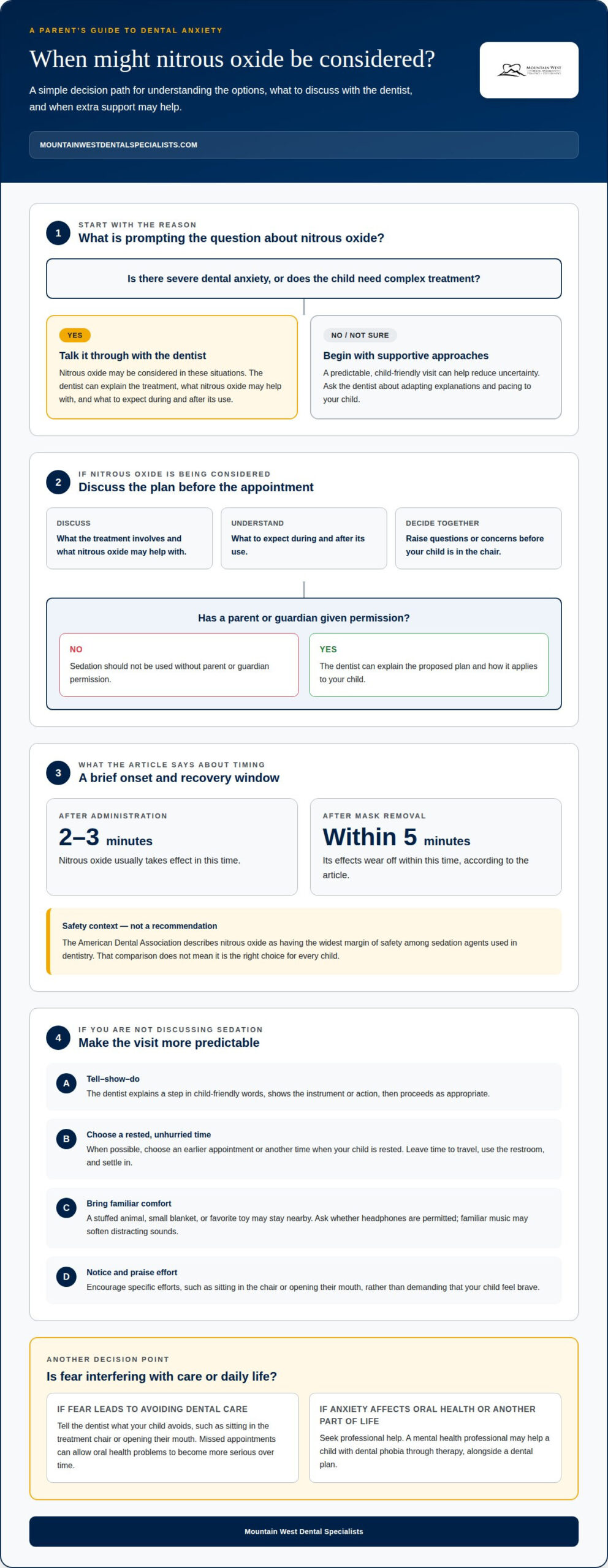
The American Academy of Pediatric Dentistry identifies tell-show-do as a primary behavioral guidance technique. The dentist first explains a step in child-friendly words, shows the instrument or action, then proceeds as appropriate. For example, the dentist might describe a small mirror, let your child see it, and then use it to look at their teeth. This sequence can replace uncertainty with something your child has already seen.
Choose an earlier appointment when possible, especially if your child is more comfortable before a long day. A rested child may find it easier to listen and take part, while a rushed arrival can add pressure. Leave time to travel, use the restroom, and settle in at the dental office. If mornings are difficult for your family, prioritize a time when your child is rested and unhurried.
A familiar object can offer comfort in an unfamiliar room. Let your child bring a stuffed animal, small blanket, or favorite toy, and explain that it can stay nearby during the checkup. Praise specific efforts, such as sitting in the chair or opening their mouth, rather than demanding that they feel brave.
Ask whether your child can use headphones during the visit. If the dentist permits them, familiar music can soften distracting sounds and give your child something pleasant to focus on. For routine care that helps children build familiarity with appointments, explore Pediatric Dental Checkups.
3. Is nitrous oxide safe for children?
Nitrous oxide may be considered when a child has severe dental anxiety or needs complex treatment. A dentist administers it through a small nose mask. It usually takes effect in 2-3 minutes, and its effects wear off within 5 minutes after the mask is removed. The American Dental Association describes nitrous oxide as having the widest margin of safety among sedation agents used in dentistry. That comparison doesn’t mean it’s the right choice for every child.
If you’re considering sedation, talk with the dentist before the appointment. Discuss what the treatment involves, what nitrous oxide may help with, and what to expect during and after its use. A parent or guardian must give permission; sedation should not be used without it. This conversation helps you understand the proposed plan and raise concerns before your child is in the chair.
Your own feelings can shape your child’s response. Children may pick up on a parent’s dental anxiety, even when adults try to hide it. If you feel tense, choose a calm, simple explanation, such as, “The dentist will help keep your teeth healthy.” You can also let the dental team answer questions about procedures rather than sharing frightening details with your child.
Watch for anxiety that goes beyond ordinary nervousness. If fear leads your child to avoid dental care, missed appointments can allow oral health problems to become more serious over time. Tell the dentist what your child avoids, such as sitting in the treatment chair or opening their mouth, so the concern is clear.
Seek professional help when anxiety interferes with oral health or another part of your child’s life. A mental health professional may help a child with dental phobia through therapy. This support can work alongside a dental plan, helping your child approach care without treating sedation as the only answer.
4. Giving children control and permission to pause
Feeling out of control during treatment can add to a child’s fear. Before the appointment, agree on a simple signal, such as raising one hand, that means “please pause.” Ask the dental team how they’ll respond. Knowing the signal works can help your child feel heard at each step. Overcoming a child’s fear of the dentist can begin with the dependable sense of being listened to.
Offer small choices that fit the appointment, rather than asking whether treatment should happen. Your child might choose which song to hear or whether to hold a stuffed animal. The dentist can guide clinical decisions, while manageable choices give young patients a meaningful role. A clear choice can help your child feel more comfortable without making the visit unpredictable.
Break the appointment into familiar steps. For example, explain that the dentist will first talk, then look at the teeth, and then tell you what comes next. After each step, invite your child to use the pause signal or continue. This approach gives them time to process what’s happening and build trust through predictable interactions.
Keep pauses calm and purposeful. If your child signals, acknowledge it, let the dental team know, and give your child a moment to regroup. The team can explain the next step in gentle language before continuing. A pause is not a promise to stop all care; it’s a way to communicate and adjust the pace together.
What should parents do if a child refuses dental treatment? Stay calm, avoid forcing the child, and tell the dentist what feels difficult. The dentist can discuss a manageable next step, such as talking through the procedure or dividing care into smaller parts. This patient approach can help overcome a child’s fear of the dentist without turning the appointment into a struggle.
After visits, notice specific efforts, such as using the signal or trying one step. Praise those actions rather than focusing only on completed treatment. For support with a child’s dental appointment, schedule a pediatric dental checkup and share what helps your child feel safe.
Mountain West Dental Specialists: Orthodontic Braces and Aligners
Mountain West Dental Specialists offers pediatric dental checkups, giving Las Vegas families a place to discuss a child’s dental concerns and build familiarity with routine care. If your child remains uneasy after trying preparation, comfort objects, and pause signals, a checkup gives you a chance to talk through what makes visits difficult and what support may help.
Mountain West Dental Specialists also provides orthodontic braces and aligners for patients who need orthodontic care. If your child needs orthodontic treatment, discussing the process can help you understand the steps involved and prepare them for appointments. Tongue-tie release and Cone Beam CT imaging are also among the practice’s services.
Contact Mountain West Dental Specialists in Las Vegas to discuss your child’s dental care and plan the next step.
Let confidence grow at your child’s pace
Progress doesn’t have to mean instant confidence. Your child may feel ready for one part of a visit before another, and that’s useful information, not failure. Notice what helps them feel secure, then carry that insight into the next conversation about dental care. Overcoming your child’s fear of the dentist is less about demanding bravery and more about helping them feel heard and supported.
After a visit, invite your child to describe what felt easier or harder. Their answers can help you and the dental team shape a thoughtful next step. Keep the goal realistic: building trust takes patience, and each child’s experience is personal. If you’d like to discuss your child’s dental care, contact Mountain West Dental Specialists. A calm, caring conversation can be a positive place to begin.
Frequently Asked Questions
What Is Dental Anxiety?
Dental anxiety is worry or fear connected with dental visits or treatment. It may show up as distress before an appointment, reluctance to enter the office, or difficulty sitting through an examination. Fear doesn’t always interfere with daily life; a phobia is more intense and can disrupt normal activities or cause panic attacks. Notice what your child avoids, then describe those specific concerns to the dental team.
How Do These Tricks Compare to a Full Anxiety Care Plan?
Simple coping tools can make a visit easier, but a care plan connects those tools to your child’s particular triggers and needs. After appointments, make a brief note of what caused worry, what helped, and which step felt manageable. Share that pattern with the dentist. If anxiety repeatedly prevents care or affects daily life, include appropriate professional support rather than relying on rewards or distractions alone.
How do I prepare my child for their first dental visit?
Before the appointment, write down your child’s health conditions, medications, past dental experiences, and questions. Tell your child who will go with them and what the visit is for, using a straightforward example such as checking how their teeth are growing. Bring your notes so you don’t have to remember every detail in the moment. A clear plan helps the dental team tailor explanations to your child.
Is nitrous oxide safe for children?
Nitrous oxide is a dental sedation option, and the American Dental Association describes it as having the widest margin of safety among sedation agents used in dentistry. That doesn’t make it suitable for every child or procedure. Ask the dentist why it’s being considered, what your child may experience, how the team will monitor them, and what recovery should look like.
Should I stay in the room during my child’s appointment?
Your presence may help your child feel supported, especially if they’re unfamiliar with the dental office. Stay calm, let the dental team lead explanations, and avoid answering for your child unless they need help expressing themselves. If your child watches your face for cues, a relaxed expression and steady voice can reinforce that the appointment is a safe place to ask for help.
Want to Start with a Happy Visit?
A happy visit is a low-pressure introduction to the dental office, focused on meeting the dentist and becoming familiar with the room before treatment. It can be a gentle starting point for a child new to dental care or unsettled by a past experience. For Las Vegas families, consider making the first visit about getting acquainted and building comfort at your child’s pace.