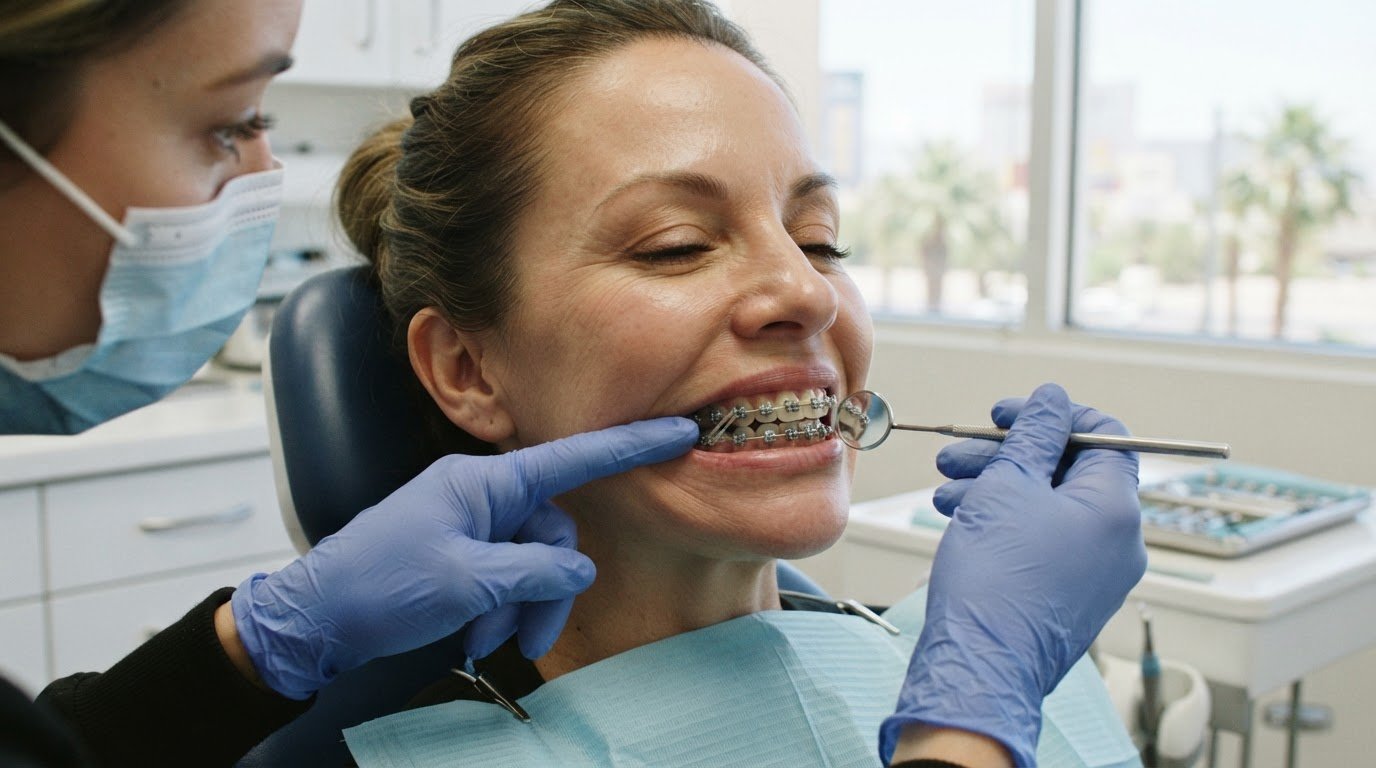
Braces can correct many overbites by gradually moving teeth into better positions. Understanding how to fix an overbite with braces starts with how brackets and wires apply steady pressure. Elastics may also help guide the upper and lower teeth into alignment.
If you’re concerned about your bite, it’s natural to wonder whether braces will be enough or treatment may involve more. The right approach depends on what’s causing the overbite, its severity, and whether the jaw is still growing.
This guide explains how braces work, what can contribute to an overbite, and how treatment options differ for children and adults. You’ll also learn when a plan may include extractions, a palate expander, or jaw surgery, so you can better understand the path to a healthier bite.
Key Takeaways
- Learn how to distinguish an overbite caused by tooth position from one related to jaw growth, since the difference shapes treatment.
- See how braces and other orthodontic appliances can guide teeth into a healthier bite, and why retainers help maintain the correction afterward.
- Understand which childhood habits may affect oral development and how early dental assessment can help identify concerns.
- Find out when a treatment plan may involve tooth extractions, a palate expander, or jaw surgery in addition to braces.
What causes an overbite?
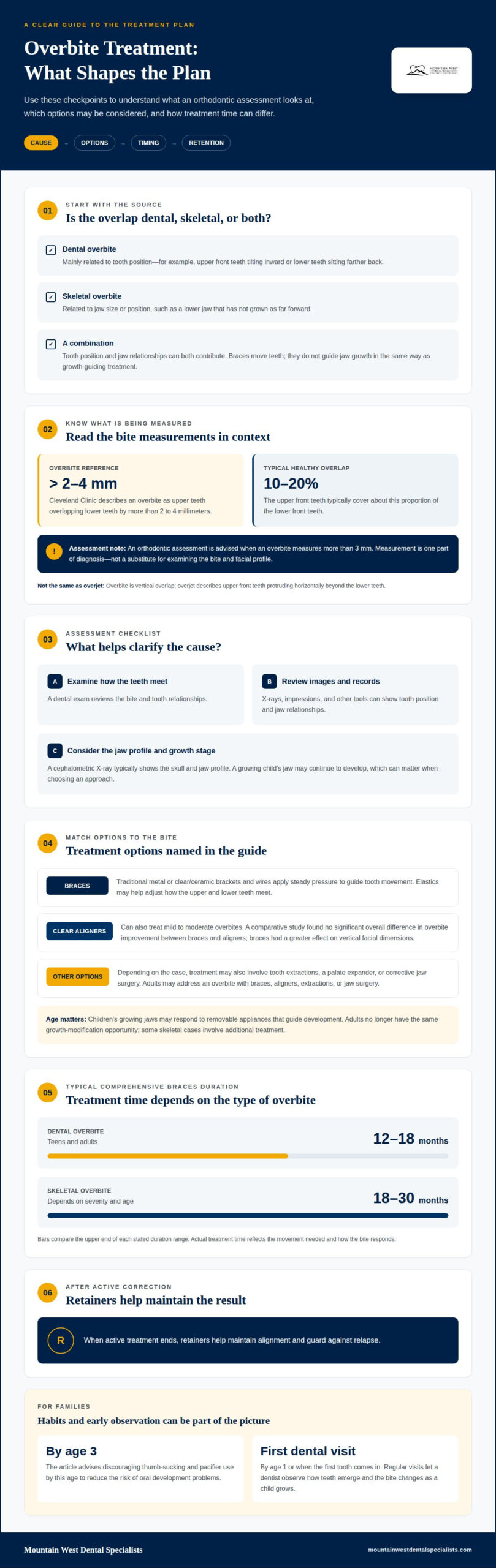
An overbite is a vertical overlap: the upper teeth cover the lower teeth more than typical. Cleveland Clinic describes an overbite as an overlap of the upper teeth over the lower teeth of more than 2 to 4 millimeters. A healthy bite typically has the upper front teeth covering about 10 to 20 percent of the lower front teeth. This differs from overjet, a horizontal relationship where upper front teeth protrude beyond the lower teeth.
An overbite can be dental, skeletal, or a combination of both. A dental overbite is mainly related to tooth position, such as upper front teeth tilting inward or lower teeth sitting farther back. A skeletal overbite reflects the size or position of the jaws, including a lower jaw that has not grown as far forward. A growing child’s jaw may continue to develop, so identifying the cause matters when planning treatment. Braces and elastics can move teeth, but they do not guide jaw growth in the same way as growth-guiding treatment.
Assessment starts with a dental exam and a review of how the teeth meet. X-rays, impressions, and other tools help show tooth position and jaw relationships; a cephalometric X-ray typically shows the skull and jaw profile. These findings help identify whether the overlap comes mainly from teeth, the jaw, or both. An orthodontic assessment is advised when the overbite measures more than 3 millimeters. The measurement is one part of diagnosis, not a substitute for examining the bite and facial profile.
Some people are born with an overbite, so it cannot always be prevented. Traditional spill-proof sippy cups may contribute to dental development issues, according to the American Dental Association. Regular dental visits can help identify changes early. People with an overbite should see a dentist every six months or as often as recommended. Coverage for braces depends on the dental plan’s orthodontic benefits and eligibility rules. The diagnosis alone does not determine coverage; the plan’s terms do.
How is overbite treated?
Orthodontic treatment moves teeth into healthier alignment, with the appliance chosen to suit the bite and treatment goals. Retainers help maintain the correction after active treatment ends.
Braces and Other Adult Treatments
Adults may address an overbite with traditional or clear braces, clear aligners, tooth extractions, or corrective jaw surgery. The right approach depends on whether tooth position or jaw structure is driving the bite, as well as the degree of overlap and overjet. If you’re wondering how to fix an overbite with braces, identifying the cause helps clarify whether moving the teeth alone may meet your needs.
Types of Braces
Braces for overbite correction include traditional metal braces and clear or ceramic braces. Fixed brackets and wires guide tooth movement, and elastics may help adjust how the upper and lower teeth meet. Clear aligners can also treat mild to moderate overbites. A comparative study found no significant overall difference in overbite improvement between braces and aligners, although braces had a greater effect on vertical facial dimensions.
Some soreness after braces are placed or adjusted usually lasts a few days. Your orthodontic team can explain how to manage discomfort during treatment.
Treatment Duration and Expectations
Comprehensive braces treatment for a dental overbite typically takes 12 to 18 months for teens and adults. Skeletal overbite treatment typically takes 18 to 30 months, depending on severity and age. Understanding how to fix an overbite with braces also means knowing that treatment time reflects the movement needed and how the bite responds. Once active correction ends, retainers help maintain alignment and guard against relapse.
Treatment Considerations by Age
Age matters because a child’s growing jaw can respond to removable appliances that guide development, while adults no longer have the same growth-modification opportunity. Children may use braces or other appliances as their teeth and jaws develop. Adults may need braces or aligners to move teeth, and some skeletal cases involve additional treatment. For guidance on orthodontic braces and aligners, an orthodontic assessment connects the bite findings with suitable options.
Causes and childhood risk factors
An overbite can reflect inherited jaw and tooth traits, childhood habits, or both. Knowing the possible influences can help families understand what a dental assessment may clarify.
Genetic and Habit-Related Causes
Some children inherit jaw or tooth characteristics that affect how their upper and lower teeth meet. An overbite may be present from birth, so it cannot always be prevented. Other influences can arise during childhood. Repeated thumb-sucking or pacifier use may affect tooth position as a child grows, particularly when the habit continues over time.
Families can focus on habits they can influence. Children should be discouraged from thumb-sucking and pacifier use by age 3 to reduce the risk of oral development problems. A parent can discuss persistent habits during a dental visit, rather than trying to judge tooth movement from appearance alone. This matters because the visible overlap doesn’t show whether teeth, jaw growth, or both contribute.
Common Causes of an Overbite
Common influences include inherited jaw structure, tooth position, and habits that affect oral development. Upper teeth may sit farther forward, lower teeth farther back, or jaw growth may create a mismatch. These patterns can look similar in a mirror but do not necessarily call for the same treatment. An examination helps distinguish their likely causes.
A child’s first dental visit should happen by age 1 or when the first tooth comes in. Regular visits give a dentist a chance to observe how the teeth emerge and how the bite changes as the child grows. If the overlap seems to be increasing, mention it at the visit. That information, alongside an examination, helps determine whether monitoring or an orthodontic assessment is appropriate.
Extractions, surgery, and palate expanders
The choice between braces, elastics, and jaw surgery depends on the bite examination, the relationship between the jaws, and the severity of the overbite. Orthodontic movement may address tooth position, while a severe skeletal overbite may need a surgical approach.
Appliances and Palate Expanders
A palate expander widens a child’s jaw to make room for crowded teeth during early treatment. It may be part of a plan addressing jaw width as well as tooth alignment, rather than relying on braces alone. Other removable appliances may guide jaw growth in children. The appliance depends on the developing bite and the correction needed; expanders are not a universal treatment for every overbite.
When Jaw Surgery May Be Needed
Jaw surgery may be considered for a severe skeletal overbite that braces alone cannot correct. Braces first arrange the teeth, then orthognathic surgery repositions the jaw to improve how the upper and lower teeth fit. Surgical reshaping to lengthen or shorten the jaw is needed in rare cases, according to the U.S. National Library of Medicine. An orthodontic and surgical plan coordinates tooth movement with jaw position.
Extractions and Treatment Choices
Extractions can create space when a treatment plan calls for moving protruding front teeth back. One approach removes the first premolars and draws the front six teeth into the space created. Elastics may help shift the bite relationship, while braces straighten teeth; neither changes jaw structure as surgery does. The decision depends on whether tooth movement can bring the bite closer to normal or jaw position needs correction.
If you’re considering orthodontic treatment for a complex bite, explore orthodontic braces and aligners as a next step.
Mountain West Dental Specialists: Orthodontic Braces and Aligners
Mountain West Dental Specialists provides orthodontic braces and aligners for children, teens, and adults seeking help with an overbite. An orthodontic assessment can clarify how tooth position and bite alignment shape treatment options. Children’s pediatric dental checkups are also an opportunity to discuss developing teeth and bite concerns. When appropriate, Cone Beam CT imaging can support assessment and treatment planning.
If you’re considering braces or aligners, a professional evaluation can help you understand the options and what your bite may need. Mountain West Dental Specialists also provides tongue-tie release, a separate service for families with related concerns.
Contact Mountain West Dental Specialists to discuss your orthodontic care.
Take the Next Step Toward a Healthier Bite
Understanding how to fix an overbite with braces is a useful starting point. The next step is discussing your own bite. Consider what you want treatment to address, such as how your teeth meet or which options you’d like to understand. Sharing those priorities helps keep the conversation focused on the changes that matter to you.
An orthodontic evaluation connects your concerns with examination findings and clarifies which treatment choices fit your needs. You can also ask how the proposed plan will be monitored and what you’ll need to do, such as attending appointments and following appliance instructions. Clear expectations make it easier to approach treatment confidently and stay engaged as your care progresses.
If you’re ready to discuss your next step, start a conversation with Mountain West Dental Specialists. A thoughtful first discussion can help you move forward with clarity and care.
Frequently Asked Questions
How Do Braces Fix Overbites?
Braces use brackets and wires to apply steady pressure, guiding teeth into a better relationship over time. As teeth move, the supporting bone changes around them. The orthodontist adjusts the appliance to direct movement toward the planned bite. For example, someone whose front teeth tilt inward may need a different movement pattern from someone whose bite also involves jaw position.
What Happens If an Overbite Goes Untreated?
An untreated overbite may continue to affect how the teeth meet, though its impact varies from person to person. If the overlap affects biting, chewing, or comfortable tooth contact, an assessment can clarify what is happening and whether treatment is appropriate. The effect varies; the measurement alone does not show how the bite functions. Describing specific concerns, such as difficulty biting into food, gives the dental professional useful context.
Can overbite be prevented?
Not every overbite can be prevented, because some people inherit the jaw or tooth traits that contribute to it. Families can still address habits that influence oral development. Discourage thumb-sucking and pacifier use by age 3, and discuss prolonged use of traditional spill-proof sippy cups with a dentist, since the American Dental Association says they may contribute to dental development issues.
Do you need rubber bands (elastics) to fix an overbite?
No, elastics are not needed for every overbite. An orthodontist may add them when the plan needs help shifting how the upper and lower teeth meet, but braces can also move teeth without elastics. If prescribed, elastics have a specific role in correcting your bite. The treatment plan explains how they work alongside the appliance and other planned movements.
What Does the Timeline Look Like?
The timeline depends on the type of overbite and the treatment involved. When severe skeletal cases require jaw surgery, the combined orthodontic and surgical process can take 24 to 36 months. That includes coordinating tooth positioning with jaw correction. The overall calendar reflects the sequence of care, not just the time spent wearing braces, so surgery can extend treatment beyond braces alone.
What Is an Overbite and When Is It a Problem?
An overbite describes the vertical overlap of the upper front teeth over the lower front teeth. Cleveland Clinic describes an overbite as an overlap greater than 2 to 4 millimeters; the measurement is considered alongside how the bite works. An orthodontic evaluation can help clarify whether the overlap affects tooth contact, biting, or comfort, and whether monitoring or correction is appropriate.