
The procedure’s name alone won’t tell you what you’ll pay. Lip tie revision cost in Las Vegas depends on the treatment plan, including whether care addresses a lip tie alone or multiple restrictions and whether sedation is part of the plan. A consultation can clarify the recommended care before you decide how to proceed.
It’s understandable to want a clear picture before planning care for yourself or your child. A frenectomy trims or removes the frenum, the tissue connecting the lip or tongue to the mouth. A frenotomy releases tightness with a smaller cut. This article explains how consultations and treatment options work, what can affect cost, and what to expect when considering care.
The reason for treatment, the scope of the procedure, and follow-up needs can all shape the overall plan. Understanding these details helps you have a more informed conversation about whether revision fits your family’s needs.
Key Takeaways
- A consultation helps clarify whether a lip tie, tongue tie, or both may be affecting feeding or oral function and what treatment could involve.
- The treatment plan, procedure setting, and whether sedation is involved can influence the overall cost.
- Understanding the difference between a frenotomy and a frenectomy can help you follow the options discussed for your child or yourself.
- Potential benefits and follow-up needs vary by age and concern, so consider how the treatment plan addresses your family’s specific needs.
Infant lip and tongue tie consultations
An infant consultation evaluates whether a lip or tongue restriction affects feeding and whether release may help. The clinician reviews feeding concerns and examines the frenum, the tissue connecting the lip or tongue to the mouth, before discussing treatment options.
Potential Benefits for Infants
A release may improve breastfeeding and reduce feeding frustration for an infant with tongue tie. That possibility matters when feeding difficulties are affecting daily nursing, but treatment is considered in light of the baby’s specific restriction and symptoms. After a tongue-tie release visit, most babies can nurse or eat immediately. According to Cleveland Clinic, improvement after infant frenotomy may take one to two weeks to become noticeable, so feeding changes may not be immediate.
Infant Release Costs
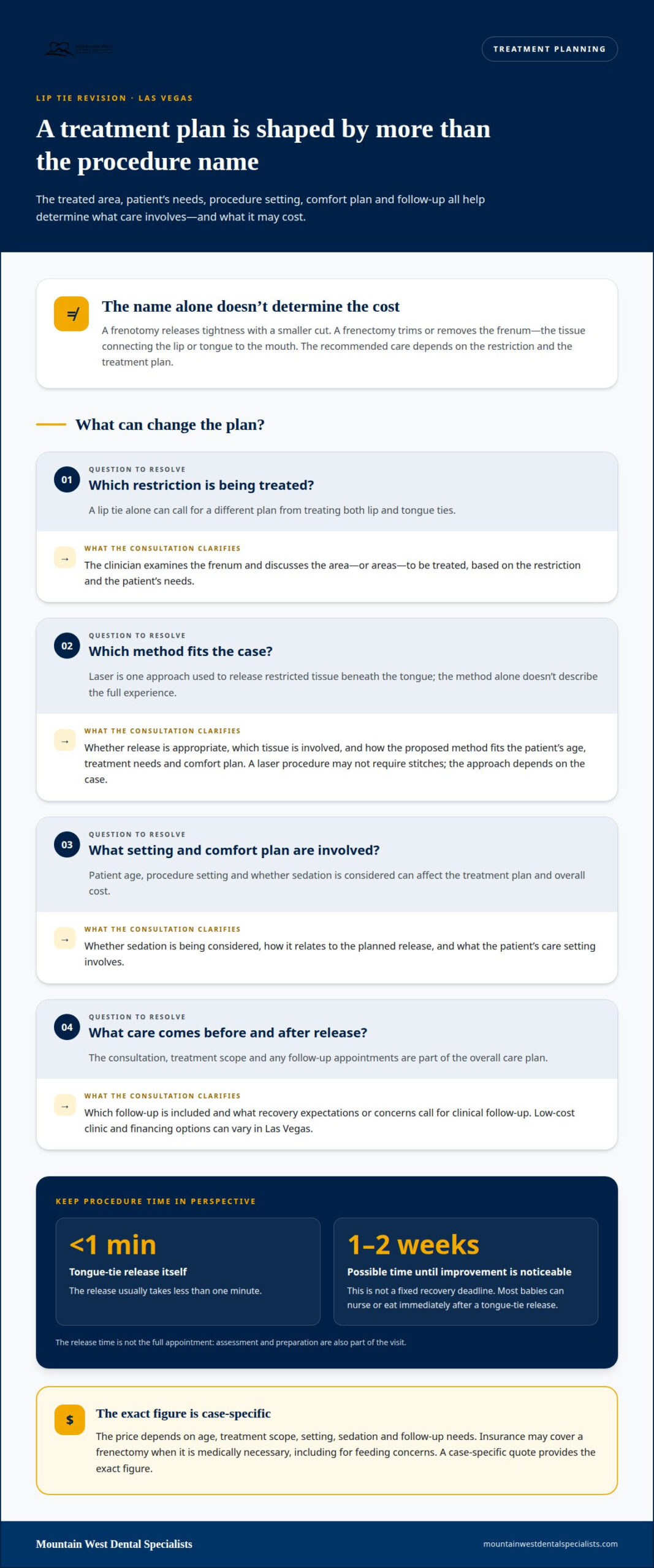
Infant release costs reflect the care included in the treatment plan, such as the consultation, the area being treated, and any follow-up appointments. Treating a lip tie alone may involve a different plan from addressing both lip and tongue ties. The price depends on the infant’s needs, treatment scope, and follow-up; a case-specific quote provides the exact figure.
Low-cost clinic and financing options can vary in Las Vegas. Insurance may cover a frenectomy when it’s medically necessary, including for feeding concerns, so coverage can affect what a family pays.
Risks and Recovery Time
A consultation should explain the risks and recovery expectations for the planned procedure, including which concerns call for clinical follow-up. Each infant’s experience is different. Cleveland Clinic notes that improvement after infant frenotomy may take one to two weeks to become noticeable. That describes when changes may appear, not a fixed recovery deadline. After a tongue-tie release, most babies can nurse or eat immediately, though noticeable improvement may take different amounts of time.
Laser treatment and anesthesia or sedation
Laser treatment is one approach used for tongue-tie release, while sedation is a separate consideration. The treatment method and comfort plan affect what the procedure involves.
Laser treatment for tongue tie
A laser can release restricted tissue beneath the tongue. The dental professional assesses the restriction and discusses whether release is appropriate before choosing a treatment plan. A laser procedure may not require stitches, although the approach depends on the case. The goal is to address the tissue restriction, not to choose a method based on the equipment alone. Ask how the proposed method fits the patient’s age, treatment needs, and comfort plan.
Laser treatment may be considered for tongue-tie release, but the word “laser” doesn’t describe the full experience. The treatment area, number of ties addressed, and setting all shape the plan. Lip and tongue restrictions may call for different treatment decisions. A consultation helps explain which tissue is being treated and what the planned procedure includes.
Procedure duration
The tongue-tie release itself usually takes less than one minute. That describes the release, not the full visit, which also involves assessment and preparation. The total appointment depends on the patient’s needs and the care included. Knowing the difference helps families plan without mistaking procedure time for the entire visit.
Anesthesia or sedation
Sedation may be a factor in the treatment plan, along with the patient’s age and where the procedure takes place. The consultation should explain whether sedation is being considered and how it relates to the planned release. These details can also affect the overall cost. The price depends on age, setting, treatment scope, and sedation; a case-specific quote provides the exact figure.
If you’re considering treatment, a dental assessment can help clarify which options fit the patient’s needs. That conversation can also distinguish the brief release from the broader appointment and comfort plan.
Potential benefits for children and adults
A frenectomy may be considered when restricted tissue affects feeding or other oral functions. Possible benefits depend on the concern being addressed, so treatment planning starts with the person’s symptoms and goals.
Why a child may need a frenectomy
For a child, feeding difficulty can be one reason a clinician evaluates a tongue or lip restriction. The consultation considers how the tissue affects movement and everyday function, rather than treating appearance alone. A child’s age, the location of the restriction, and the specific concern help shape the discussion. Speech, eating, or swallowing concerns can also inform whether release is appropriate.
Examples matter. A parent may describe feeding difficulty, while an older child may struggle with clear speech or comfortable swallowing. These concerns alone don’t establish a need for surgery. The assessment connects the reported difficulty with the restricted tissue and considers whether release could address it.
Potential functional benefits
For children and adults, frenectomy may improve speech articulation, eating or swallowing, and oral hygiene. A restriction that interferes with cleaning can make oral care harder; limited movement may also affect eating or forming certain sounds. For adults, denture fit may be another concern. These are potential functional aims, not promised outcomes. Naming the specific difficulty helps keep the treatment conversation practical and focused.
Factors that shape release costs
Child and adult release costs depend on the treatment plan, including the patient’s age, where the procedure takes place, whether sedation is needed, and how many restricted areas require treatment. A single release differs from a plan addressing multiple ties or including follow-up care. The price depends on the case and is provided in a case-specific quote; age, treatment scope, setting, sedation, and follow-up are cost factors.
For families weighing options, separating the procedure from related appointments can clarify what the proposed plan covers. A consultation connects the reason for considering release, such as feeding or speech concerns, with the intended treatment and associated care.
Frenectomy treatment for lip-ties and tongue-ties
A frenectomy trims or removes the frenum, the connective tissue beneath the lip or tongue. A restrictive upper-lip frenum and a tight tongue frenum affect different areas, so the treatment discussion identifies which tissue is involved. A dentist considers the restriction alongside concerns such as feeding difficulty. The goal is to match the procedure to the affected tissue and reason for considering release.
Frenotomy and frenectomy describe different approaches. A frenotomy makes a smaller cut to release tightness and improve movement; a frenectomy removes the frenulum. For an infant, that distinction helps explain what a proposed treatment involves. Providers recommend frenotomy while a patient is still a baby, as early as the baby’s first month. Timing alone doesn’t determine whether release is appropriate; feeding concerns and examination findings also matter.
Technique is another part of the conversation. A laser may be used for release, and most patients don’t need stitches after a laser procedure. The specific approach depends on the tissue and treatment plan, not the procedure name alone. Ask the dentist to explain which area is being treated, whether the plan involves a cut or tissue removal, and what the chosen method means for aftercare.
For a lip tie, a tongue tie, or both, a clear plan connects the identified restriction with the intended release. It also distinguishes the procedure from related consultation or follow-up care. Those details help you understand what the treatment includes without assuming that every tie calls for the same approach. To discuss whether a tie release consultation fits your concerns, get in touch and review the treatment considerations with a dental professional.
Mountain West Dental Specialists
Mountain West Dental Specialists helps families discuss whether a lip or tongue restriction may warrant treatment. A consultation connects concerns, such as feeding difficulty, with an appropriate evaluation and explains what a release may involve.
For infants and children, Pediatric Dental Checkups and Baby Dental Care support conversations about oral health, while Tongue-Tie Release addresses restricted tongue tissue. Cone Beam CT Imaging and orthodontic care may also be relevant when broader dental needs call for assessment. The right next step depends on the concern being evaluated, not on choosing a procedure before understanding the treatment plan.
If you’re considering whether evaluation or treatment is right for your family, contact Mountain West Dental Specialists to discuss your concerns.
Take the next step with confidence
Choosing care starts with understanding the concern you want addressed and the outcome that matters to your family. Lip tie revision cost in Las Vegas is one part of that decision, but a clear conversation about the treatment plan can help you decide whether the proposed care fits your needs. Bring questions about feeding, speech, or oral function to that discussion.
Mountain West Dental Specialists offers Tongue-Tie Release and Pediatric Dental Checkups, alongside Orthodontic Braces and Aligners. These services support conversations about oral health and related treatment needs for children and families. Contact the practice to discuss your family’s next step.
Contact Mountain West Dental Specialists to discuss your concerns and possible next steps. A thoughtful conversation can help you move forward with greater clarity.
Frequently Asked Questions
What is a frenectomy?
A frenectomy trims or removes a frenum, the tissue connecting the lip or tongue to the mouth. It may be considered when restricted tissue is linked to a functional concern, such as difficulty moving the tongue. A dentist assesses the affected area and reason for treatment before discussing options. This helps distinguish a treatment need from a visible tissue attachment alone.
Does dental insurance cover a frenectomy?
Dental insurance may cover a frenectomy when it affects oral health, such as contributing to gum recession or orthodontic concerns. Medical insurance may consider coverage when a clinician determines the procedure is medically necessary for issues such as feeding or speech. Coverage varies by plan and reason for treatment. A procedure performed primarily for cosmetic reasons may not be covered.
Does it hurt?
The experience can vary with the patient, treatment area, and care plan. Before a release, the dental professional can explain the planned approach and discuss whether sedation is appropriate. For a child, the conversation can cover how the visit will be handled and which comfort measures are part of the plan. Ask about expected sensations and aftercare for the specific procedure.
How much does infant lip tie revision cost in Las Vegas?
The cost depends on the infant’s treatment plan, including whether care addresses a lip tie alone or multiple restrictions, the procedure setting, and any sedation or follow-up. For families considering lip tie revision cost in Las Vegas, an itemized, case-specific quote is the clearest way to understand what’s included. Insurance coverage may also affect out-of-pocket expenses when treatment is medically necessary.
How much does adult lip tie revision cost in Las Vegas?
Adult costs depend on the area treated, the complexity of the plan, the procedure setting, sedation, and related appointments. A release may be considered for concerns involving speech, eating, oral hygiene, or denture fit, so treatment scope can differ between patients. A case-specific quote explains the planned care and associated charges without assuming every adult needs the same procedure.
Do Las Vegas providers charge separately for consultation, laser treatment, and follow-up visits?
Billing can vary by provider and treatment plan; consultation, procedure, and follow-up charges may be grouped or itemized. A laser is a treatment method, while the visit may also include assessment and preparation. Ask for a written breakdown showing which services are included, whether follow-up is part of the plan, and how insurance may apply. This makes the total easier to understand.