
Getting braces off is usually more comfortable than people expect. Knowing how braces are removed can ease uncertainty: an orthodontist releases the brackets, removes the remaining adhesive, and polishes the teeth. The appointment typically takes about 30 to 60 minutes, and you may feel mild pressure or brief sensitivity.
It’s natural to wonder whether removing braces will hurt, especially after months or years of treatment. The process is usually painless, but trying to remove braces at home can damage your teeth, so professional care matters.
Here, you’ll learn what happens during removal, why your orthodontist checks your alignment first, and how a retainer helps maintain your results. We’ll also explain what to expect during the post-removal examination and retainer fitting, so you can feel prepared for this next step.
Key Takeaways
- Professional bracket and adhesive removal is typically comfortable, with mild pressure or brief sensitivity possible.
- An orthodontist checks tooth and bite alignment before deciding the braces are ready to come off.
- Retainer fitting and clear wear instructions help protect your new smile after treatment.
- Trying to remove brackets or scrape adhesive at home can injure teeth, so leave removal to an orthodontic professional.
Should you have an orthodontist remove your braces?
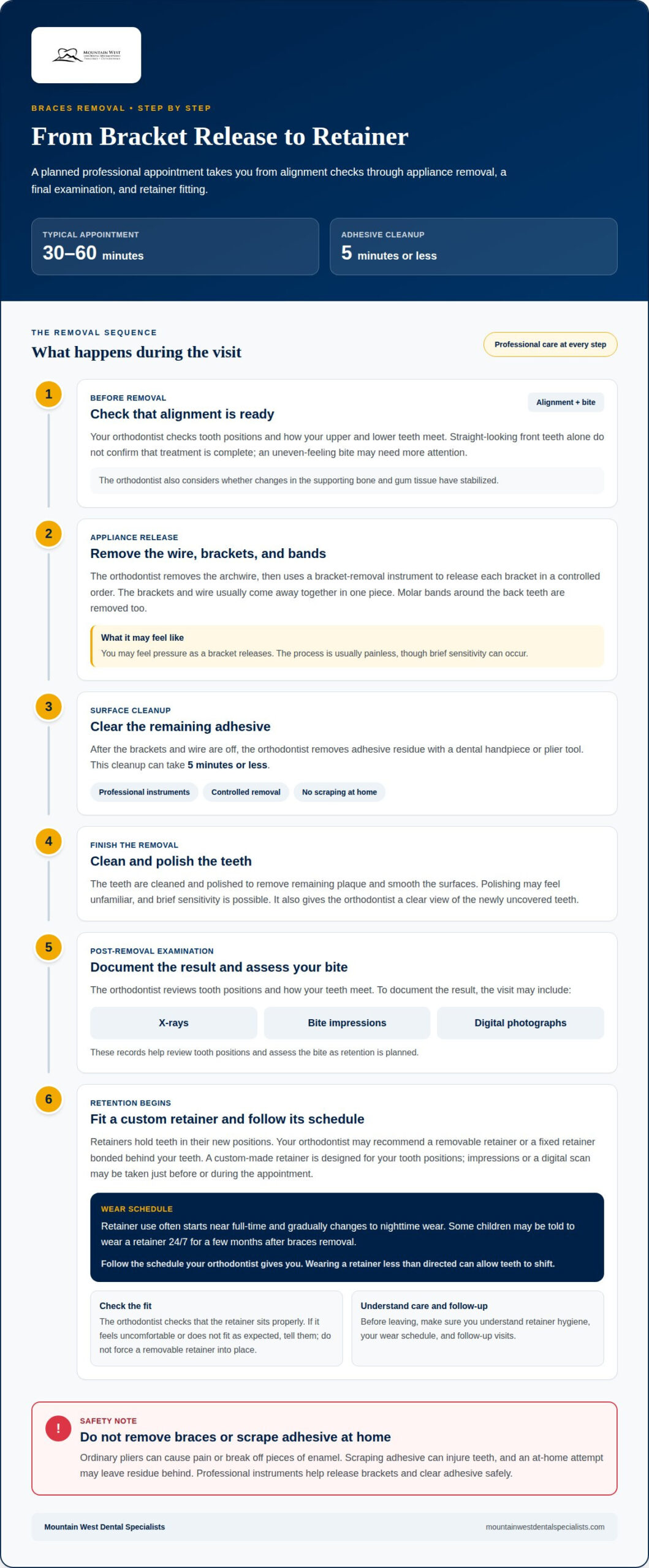
A braces-removal appointment typically takes about 30 to 60 minutes. The orthodontist removes the archwire, releases each bracket, and clears adhesive from the tooth surfaces. Molar bands around the back teeth are also removed as part of the process. This planned sequence helps prevent the appliance from being pulled against your teeth all at once.
To detach brackets, the orthodontist uses a special instrument to loosen them from the teeth. The brackets and wire usually come away together in one piece. A bracket-removal instrument releases the brackets, while a dental handpiece or plier tool can remove leftover adhesive. The professional selects the right tool for each step rather than forcing the appliance loose.
You may feel pressure as a bracket releases, but braces removal is usually painless. Brief sensitivity can occur during bracket release or polishing. If anything feels uncomfortable, tell the orthodontist during the appointment so they can pause and respond. Releasing brackets in a controlled order also helps avoid sudden pulling or twisting.
After the brackets and wire are off, the orthodontist removes adhesive residue with a dental handpiece or plier tool. This cleanup can take 5 minutes or less. The teeth are then cleaned and polished to remove remaining plaque and smooth the surfaces. The polishing step may feel unfamiliar, but it finishes the removal process and lets the orthodontist examine the newly uncovered teeth.
Professional removal matters because orthodontists have the proper tools to release brackets and wires safely. Pliers at home can cause pain or break off pieces of enamel, and scraping adhesive can harm teeth. An orthodontist can also remove molar bands and adhesive without leaving parts of the appliance behind. Careful professional removal helps prevent avoidable tooth damage.
Post-removal examination and retainer fitting
After polishing your teeth, the orthodontist checks the result rather than ending the visit at bracket removal. X-rays, bite impressions, or digital photographs may be taken to document tooth positions and assess your bite. These records help review how your teeth meet and plan retention. The examination links your finished alignment with the next step: keeping it stable.
Retainers hold teeth in their new positions. Your orthodontist may recommend a removable retainer or a fixed retainer bonded behind your teeth. A custom-made retainer is designed for your tooth positions, rather than being one-size-fits-all. Some patients receive one on removal day; impressions or a digital scan may be taken just before or during that appointment.
Your wear schedule follows your orthodontist’s instructions. Retainer use often starts near full-time and gradually changes to nighttime wear. Some children may be told to wear a retainer 24/7 for a few months after braces removal. Follow the schedule you’re given, since wearing a retainer less than directed can allow teeth to shift.
The braces removal agreement confirms that you understand the process and agree to removal. It also acknowledges your responsibility to wear retainers to maintain your results. Before leaving, make sure you understand the wear schedule, retainer hygiene, and follow-up visits. These appointments let the orthodontist monitor retention and offer guidance as you adjust to your new bite.
During fitting, the orthodontist checks that the appliance sits properly and explains how to use it. Tell them if it feels uncomfortable or doesn’t fit as expected; don’t force a removable retainer into place. A clear retainer care plan helps connect fitting instructions with follow-up and daily wear.
Risks of removing braces adhesive at home
Removing braces professionally can cause brief sensitivity or mild pressure. Greater risks come from attempting removal yourself: ordinary pliers can cause pain and break off pieces of tooth enamel. Scraping leftover adhesive can also injure teeth, while an ineffective attempt may leave residue behind.
Trying to remove braces at home is not a safe substitute for an orthodontic appointment. Adhesive cannot be dissolved or brushed off at home, and scraping it away is dangerous or ineffective. A forceful pull can transfer pressure to the tooth instead of releasing the bracket cleanly. Even if a bracket comes off, that doesn’t mean the bonded material has been removed safely.
Professional removal uses orthodontic instruments to release brackets and address remaining adhesive. After the brackets are removed, an orthodontic professional can use a dental handpiece or plier tool to clear residue. The teeth are then cleaned and polished. This removes material without improvised tools or scraping at home.
Adhesive removal takes care because the bonded residue sits directly on the tooth surface. A dental handpiece or plier tool helps the professional work on that residue, then polishing removes remaining plaque. If you feel discomfort during the appointment, tell the orthodontist so they can respond as they complete the removal.
Removing braces before treatment is complete can also leave teeth misaligned or lead to relapse. Early removal may mean the planned result hasn’t been reached. If a bracket loosens or the appliance causes concern, avoid pulling or scraping it yourself. An orthodontist can assess the appliance and determine the appropriate next step without risking avoidable enamel damage.
Checking alignment before braces removal
Straight-looking teeth alone don’t show whether treatment is complete. Before removing braces, the orthodontist checks tooth position and how your upper and lower teeth meet. A bite that still feels uneven may mean alignment needs more attention. These checks help determine whether you’ve reached the planned result, not just whether your front teeth look orderly.
The orthodontist also assesses changes in the bone and gum tissue supporting your teeth. Teeth move during orthodontic treatment, so their supporting tissues need time to adjust. The professional considers whether those changes have stabilized alongside the visible alignment. This matters because removing braces before the teeth and their support are ready can leave treatment incomplete.
Root position is another part of the review. X-rays can show the roots beneath the enamel, which a surface-level examination cannot reveal. The orthodontist considers whether the roots appear healthy and properly positioned, as well as whether your bite and tooth alignment meet treatment goals. If more information is needed, final X-rays or scans may be taken before removal.
The decision comes from the combined findings, not one photograph or tooth. For example, your front teeth may look straight while your bite still needs correction. In that case, the orthodontist may continue treatment rather than remove the braces. Checking the bite, roots, and supporting tissue gives a fuller picture of readiness and helps protect your results.
If your removal appointment is approaching, an orthodontic alignment review can clarify what the final checks assess. Ask the orthodontist to explain how your bite, tooth positions, and any needed imaging inform the decision. That conversation helps you understand whether braces are ready to come off and what the next step will be.
Mountain West Dental Specialists: Orthodontic Braces and Aligners
Mountain West Dental Specialists provides orthodontic braces and aligners for patients considering treatment or seeking guidance about their plan. If you’re approaching the end of braces treatment, understanding the alignment review and retainer stage can help you prepare for the transition. The orthodontic team can discuss your braces or aligners and explain how to maintain your results after active treatment.
For families, a clear conversation about your child’s orthodontic progress can help everyone understand what comes next. Bring questions about treatment completion, follow-up, or retainer instructions to your appointment.
Contact Mountain West Dental Specialists to discuss your orthodontic care.
Take the Next Step Toward Confident Orthodontic Care
As treatment reaches its final stage, think beyond the day your braces come off. Understanding how braces are removed is one part of planning; knowing what support you want afterward can help you feel prepared for the transition. Consider what matters to you, such as how your progress is assessed and what guidance will help you maintain your results.
Mountain West Dental Specialists provides orthodontic braces and aligners, as well as pediatric dental checkups and tongue-tie release. These services support different dental needs for individuals and families, so you can discuss the care that fits your situation.
A thoughtful conversation can help you understand your options and take the next step at a comfortable pace. Contact Mountain West Dental Specialists to discuss your orthodontic care. Your next chapter can begin with clear information and support.
Frequently Asked Questions
Does it hurt to get braces off?
Braces removal usually isn’t painful, though you may notice pressure as brackets release or brief sensitivity during polishing. If you’re nervous about a particular tooth or already have dental sensitivity, tell the orthodontist before the appointment begins. That context helps you describe what you feel during the visit. For most patients, the sensations are unfamiliar rather than painful.
How does an orthodontist remove braces step by step?
Knowing how braces are removed can make the appointment feel more predictable. The orthodontist first checks that removal can proceed, then releases the wire and brackets, including any molar bands. Next, they remove bonded adhesive and polish your teeth. A final examination helps guide the next steps, such as documenting results and discussing a retainer.
Does removing braces hurt, and what does it feel like?
The process is usually painless, but pressure or brief sensitivity can occur as a bracket separates from a tooth. Polishing may feel like vibration or gentle friction rather than sharp pain. Sensations can vary from tooth to tooth. If discomfort concerns you, let the orthodontist know during the appointment instead of silently enduring it.
How are adhesive residue and stains cleaned off teeth after braces?
An orthodontic professional removes remaining adhesive with a dental handpiece or plier tool, then cleans and polishes your teeth to remove plaque. Polishing addresses residue and surface buildup; it doesn’t promise that every difference in tooth shade will disappear. If you still see a mark afterward, point it out so the orthodontist can assess whether it’s remaining material or another visible change.
What should I expect after braces are removed?
Your teeth may look unfamiliar for a day or two as you adjust to your new smile. Cold sensitivity can last a few days, and mild soreness when biting typically settles within a week. Brush several times daily, especially after meals, and begin daily flossing. Keep routine dental cleanings and exams on your schedule, with visits at least twice a year.
Can an orthodontist remove braces, and why is at-home removal unsafe?
Yes. A qualified orthodontist should remove braces using the proper tools. Pliers at home can cause pain and break off pieces of enamel, while scraping adhesive can injure teeth without removing residue effectively. Removing braces early can also leave treatment incomplete or allow teeth to shift. Don’t pull at a loose bracket or try to scrape bonded material away yourself.