Fluoride protection isn’t an all-or-nothing choice. The pros and cons of fluoride treatment for children come down to its cavity-fighting benefit and the importance of using the right amount: fluoride strengthens enamel, while excess fluoride swallowed during tooth development can cause mild dental fluorosis. The Centers for Disease Control and Prevention says community water fluoridation reduces cavities in children by approximately 25%.
It’s reasonable to wonder whether your child needs an extra treatment. Toothpaste, drinking water, and cavity risk all matter when weighing fluoride treatment for children, and more fluoride isn’t automatically better.
Learn what fluoride does, how dentist-applied treatments help protect teeth, and when a child may benefit. We’ll also cover possible risks and ways to limit excess exposure, so you can make informed decisions about your child’s dental care.
Key Takeaways
- Learn how everyday fluoride exposure and dentist-applied treatments differ, and what factors affect whether an added treatment may help.
- Understand how fluoride supports enamel and helps protect teeth from cavities.
- Recognize why swallowing too much fluoride during tooth development can lead to fluorosis, and how careful use helps reduce that risk.
- Discover what happens during a professional fluoride treatment and how pediatric dental checkups can help guide your child’s preventive care.
Do Children Need Fluoride Treatments at the Dentist?
Some children benefit from professional fluoride, while toothpaste and drinking water also help protect teeth. A dentist considers cavity risk and existing fluoride sources when deciding whether another treatment may help.
How Fluoride Strengthens Enamel
Fluoride supports remineralization, the process of restoring minerals to weakened enamel. This helps teeth resist acid attacks that contribute to decay. For your child, fluoride offers added protection against everyday cavity risks, but it doesn’t replace brushing. Appropriate fluoride exposure during childhood can also help protect developing teeth.
Professional Treatment and Everyday Fluoride
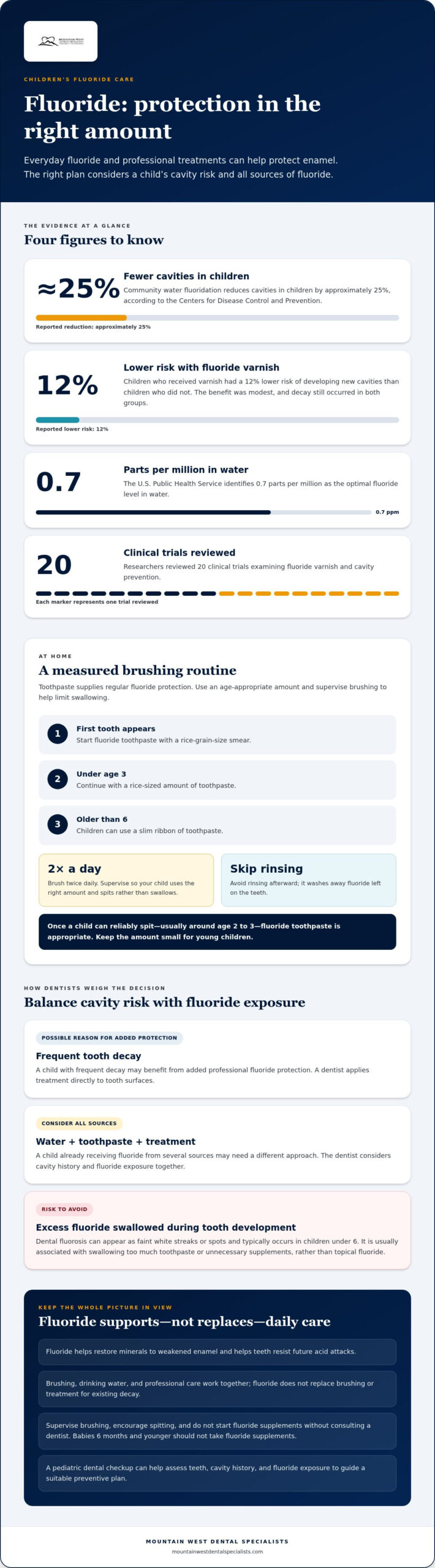
Professional treatments add fluoride directly to tooth surfaces, while toothpaste provides regular protection at home. Fluoridated drinking water offers another source. The U.S. Public Health Service identifies 0.7 parts per million as the optimal fluoride level in water. The Centers for Disease Control and Prevention says community water fluoridation reduces cavities in children by approximately 25%. These sources work alongside brushing, not instead of it.
Start fluoride toothpaste when your baby’s first tooth appears. Brush that tooth with a rice-grain-size smear, then arrange a dental appointment. For children under three, continue using a rice-sized amount. Once a child can reliably spit, usually around age two to three, fluoride toothpaste is appropriate. Use only a small amount of toothpaste when brushing young children’s teeth. Children older than six can use a slim ribbon.
Supervise brushing so your child uses the right amount of toothpaste and spits rather than swallows. Swallowing toothpaste can contribute to excess fluoride exposure while teeth are developing. Children should brush twice a day. Avoid rinsing afterward, since rinsing washes away fluoride left on the teeth. These steps help make everyday toothpaste use both effective and measured.
Whether professional fluoride is appropriate depends on your child’s cavity risk and fluoride exposure from water and toothpaste. A child with frequent tooth decay may benefit from added protection. A child already receiving fluoride from several sources may need a different approach. The goal is enough fluoride to support enamel without unnecessary exposure.
What are the risks or side effects of fluoride?
Most dental insurance plans cover fluoride treatments for children under 18 as preventive care. Medicaid coverage depends on the child’s specific benefits. Starting preventive fluoride care in childhood supports teeth as they develop, and can add protection for children with limited access to regular dental care.
Fluoride helps protect the outer layer of teeth from acid produced when mouth bacteria feed on sugars. This matters as primary teeth emerge and permanent teeth develop. Fluoride varnish can add preventive support: children who received varnish had a 12% lower risk of developing new cavities than children who did not. The benefit was modest, and new decay still occurred in both groups.
Like other preventive measures, fluoride works best alongside brushing and a balanced approach to oral care. For a child who can’t consistently receive dental care, fluoride from appropriate sources can help reduce cavity risk between visits. It doesn’t replace brushing or treatment for existing tooth decay. A pediatric dental checkup can help assess the child’s teeth, cavity history, and fluoride exposure.
The main risk of excess fluoride during tooth development is dental fluorosis. It can appear as faint white streaks or spots on teeth and typically occurs in children under six. The effects of fluorosis can vary. It is usually associated with swallowing too much toothpaste or taking unnecessary supplements, rather than fluoride applied topically.
To reduce excess exposure, supervise brushing and help your child spit out toothpaste instead of swallowing it. Don’t start supplements without consulting a dentist. Babies six months and younger shouldn’t take fluoride supplements. Keep prescribed fluoride pills out of children’s reach and use them only as directed. A suitable preventive plan accounts for your child’s age, exposure, and cavity risk.
If you’d like guidance on your child’s cavity risk and preventive routine, pediatric dental checkups provide an opportunity to discuss those needs as part of ongoing care.
How fluoride strengthens enamel and helps prevent cavities
Tooth enamel loses minerals when acids from plaque bacteria attack its surface. Fluoride supports remineralization, returning minerals to weakened areas before they become cavities. It also helps enamel resist future acid attacks. These effects matter while permanent teeth are developing, because early protection supports long-term dental health. Researchers reviewed 20 clinical trials of fluoride varnish, examining its role in cavity prevention.
Food and drink choices also affect how often teeth face acid. Soft drinks, fruit juice, sugary cereals, and sports drinks contain sugars that bacteria use to produce acids. Offer water between meals and keep sugary drinks occasional. Reducing sugar intake supports enamel and works alongside brushing and fluoride, rather than replacing either.
Fluoride helps prevent cavities, but it isn’t the only part of a child’s dental routine. Brushing with fluoride toothpaste helps keep enamel supplied with protective fluoride. A dentist can consider your child’s decay history, diet, and other fluoride sources when discussing added prevention. This is especially useful if cavities keep appearing despite regular brushing, as the pattern may point to habits or risks that need attention.
Excessive fluoride exposure while teeth develop can lead to fluorosis, which may appear as faint white marks. Reduce the risk by using age-appropriate amounts of toothpaste, supervising brushing, and avoiding unnecessary supplements. Consider all sources together, including drinking water and dental products. This gives families a practical way to address concerns without assuming every fluoride source creates the same exposure.
Enamel protection is strongest as part of a consistent routine: brush regularly, limit frequent sugary snacks, and keep dental visits. For example, choose water instead of a sports drink between meals to reduce repeated sugar exposure. These everyday choices help fluoride strengthen enamel while limiting conditions that contribute to decay.
How Does Fluoride Protect Your Child’s Teeth?
Professional fluoride treatments apply a concentrated fluoride product directly to tooth surfaces. The application and timing depend on the product and your child’s oral health.
How Professional Treatments Protect Teeth
Professional fluoride adds a concentrated source of fluoride to tooth enamel. Varnish stays in contact with tooth surfaces for hours, giving enamel time to absorb fluoride. This supports the mineral repair process and helps teeth resist acid attacks. The amount of fluoride in professional varnishes varies; one commonly cited varnish concentration is approximately 22,600 ppm. Dentists consider a child’s existing fluoride sources and cavity risk.
Professional Treatment Application
A dental professional may apply fluoride varnish with a small brush, painting the tops and sides of the teeth. It hardens quickly, and application takes under two minutes. Other professional forms include a swab, tray, or mouthwash. The method depends on the child and product, allowing treatment to be adapted to the child’s comfort and needs.
Toothpaste and drinking water provide regular fluoride exposure, while professional treatment delivers fluoride directly to tooth enamel. These sources serve different roles in an oral-health routine. A professional application doesn’t replace brushing at home; it adds targeted protection during dental care.
Treatment timing varies with oral health. Some dental practices recommend treatments every three, six, or twelve months, depending on a child’s needs. A child with a history of cavities may need a different schedule from a child with low cavity risk. The interval should reflect the child’s dental history and fluoride exposure.
After varnish, children should wait about 30 minutes before eating or drinking. That pause helps keep the product on tooth surfaces. To discuss whether professional fluoride fits your child’s preventive routine, schedule a pediatric dental checkup.
Mountain West Dental Specialists: Orthodontic Braces and Aligners
Mountain West Dental Specialists offers pediatric dental checkups for families to discuss children’s oral health, including fluoride and cavity prevention. A checkup can help you review your child’s dental history, current routine, and changing needs.
If your child also needs orthodontic care, Mountain West Dental Specialists offers braces and aligners to address tooth alignment, a separate concern from fluoride prevention. Tongue-tie release and Cone Beam CT imaging are also available when they fit a child’s care needs.
Consider a pediatric checkup to discuss fluoride exposure, your child’s brushing routine, or preventive dental care. You can also ask how orthodontic treatment may fit into your child’s broader care. Contact Mountain West Dental Specialists in Las Vegas to discuss your child’s needs.
Make Your Child’s Next Dental Decision With Confidence
Your child’s preventive care can grow with them. As their teeth and routines change, keep the conversation open about what supports their oral health and which concerns need attention. The pros and cons of fluoride treatment for children are easier to weigh when you consider your child’s needs as part of a broader dental care plan.
Mountain West Dental Specialists offers pediatric dental checkups, orthodontic braces and aligners, and tongue-tie release. These services address different needs, from routine pediatric visits to alignment and tongue-tie concerns. Discuss your questions and explore relevant care in a supportive setting.
Contact Mountain West Dental Specialists to talk about your child’s dental care. A thoughtful next step can help you feel more prepared as your family moves forward.
Frequently Asked Questions
What Is Fluoride?
Fluoride is a mineral found naturally in the environment and used in dental care to help protect teeth. For families weighing the pros and cons of fluoride treatment for children, it helps to understand that fluoride can come from several sources, including toothpaste, drinking water, and professional applications. These sources differ in how they reach teeth and how they fit into a child’s routine.
How Much Do Pediatric Fluoride Treatments Cost?
There isn’t one price that applies to every child’s treatment. The cost depends on the child’s needs and the care provided. Most dental insurance plans cover fluoride treatments for children under 18 as preventive care, but benefits vary by plan. To understand your potential out-of-pocket expense, review your plan’s preventive-care benefits and the treatment details with the dental office.
What If My Child Swallows Fluoride Varnish?
Fluoride varnish is applied to the teeth, and a small amount may be swallowed as it wears away. If you’re concerned about how much your child swallowed, contact the dental team that applied it and explain what happened. Information about the product and approximate amount can help them advise you for your child’s situation.
What if I’m concerned my child isn’t getting enough fluoride?
At your child’s next dental visit, describe their routine and mention the toothpaste they use, their drinking water source, and any supplements. For families weighing the pros and cons of fluoride treatment for children, these details help put possible fluoride sources in context. A pediatric dental checkup also gives you time to discuss your child’s teeth and preventive-care questions.
When Should Kids Start Getting Fluoride Treatments?
Professional fluoride varnish may begin when a child’s first tooth appears, according to the American Academy of Pediatric Dentistry recommendation discussed in this article. The timing of later applications depends on factors such as cavity risk and other fluoride sources. An early dental visit gives parents a chance to discuss preventive care as their child’s teeth emerge and routines develop.
What are the benefits of fluoride treatment for children?
Fluoride treatment adds preventive support by helping strengthen tooth enamel and protect against cavities. It complements brushing rather than replacing daily care or treating an existing cavity. If your child has had repeated decay, discuss their dental history and daily routine at a visit. That conversation can help clarify whether professional fluoride treatment fits their overall preventive plan.