
A cavity in a baby tooth needs attention, even if the tooth will eventually fall out. Baby tooth cavity treatment in Las Vegas may involve a filling or crown. If decay reaches the pulp, a baby root canal may help preserve the tooth. The Centers for Medicare & Medicaid Services notes that a dentist may fill or crown a cavity, or remove the tooth if it can’t be saved.
It’s understandable to wonder whether a baby tooth needs treatment or whether a root canal is too much for a temporary tooth. Treating decay can help protect your child’s comfort and the tooth’s role in chewing and holding space for incoming teeth.
Here, you’ll learn how fillings restore damaged teeth, what sedation options may help a child feel more comfortable, and how everyday prevention can reduce cavity risk. You’ll also see when a pulpotomy, a baby-tooth procedure that removes damaged pulp while treating the healthy pulp that remains, may be considered, and what can affect the choice between saving or removing a tooth.
Key Takeaways
- Learn how local anesthetic and other comfort options can support a child during cavity treatment.
- See how a filling replaces decay and helps restore a baby tooth’s shape and function.
- Understand what may guide the choice between a filling, crown, baby root canal, or extraction.
- Explore how silver diamine fluoride and everyday prevention can help address cavity concerns.
Sedation and general anesthesia options
Can a baby tooth cavity be treated without drilling or anesthesia? Sometimes, fluoride application may help strengthen enamel without preparing the tooth for a filling. If a filling is needed, the dentist removes the decayed portion and uses local anesthetic to numb the area beforehand.
For a filling, local anesthesia helps limit discomfort while decay is removed. The dentist numbs the area around the baby tooth, cleans out the decay, and restores the tooth. Your child may still notice pressure, vibration, or movement, even when the area is numb. Let the dental team know if your child seems uncomfortable so they can respond during treatment.
Children who feel especially anxious, have difficulty staying still, or need more involved care may discuss sedation options. These may include nitrous oxide, oral conscious sedation, or general anesthesia. The options differ in how they affect a child’s awareness and cooperation. The appropriate plan depends on the treatment, your child’s needs, and the dental team’s assessment. Sedation does not replace local anesthetic for a filling when decay must be removed.
A practical discussion can cover the steps before treatment, how your child will be supported during the procedure, and what recovery may involve. Share relevant health information and describe how your child responds to dental visits. For example, a child who becomes distressed during an examination may need a different comfort plan from one who can sit calmly for a filling. Clear explanations and a steady, positive approach can help children feel prepared.
Prevention is part of dental care, but it doesn’t replace treatment for an existing cavity. Sealants protect the grooves on molars, while fluoride application helps strengthen enamel. The American Academy of Pediatric Dentistry recommends a child’s first dental visit by age one or when the first tooth appears, whichever comes first. Regular pediatric dental checkups can help identify changes in baby teeth and guide decisions about care, while educational resources like Mirjana Dental Guide provide practical advice for parents navigating early childhood oral health.
How cavity fillings restore decayed teeth
A filling replaces the decayed part of a baby tooth and restores its shape and function. The choice of restoration depends on how much tooth structure remains after the decay is removed.
Choosing a Filling, Crown, or Extraction
A small area of decay may be restored with a filling, which replaces the damaged portion. If decay has weakened more of the tooth, a crown may cover and protect what remains. The choice depends on the cavity’s size and location, the tooth’s condition, and whether it can be restored. According to the Centers for Medicare & Medicaid Services, a dentist may fill or crown a cavity, or remove a tooth that cannot be saved.
Restoration materials include composite resin, porcelain, gold, silver amalgam, or combinations of materials. The dentist considers the tooth’s position and the extent of damage when choosing an approach. For example, a cavity on a chewing surface may need a restoration shaped to fit the tooth and support comfortable eating. A filling seals the prepared area and rebuilds the tooth’s outline.
The Child’s Cavity Treatment Appointment
During the appointment, the dental team examines the affected tooth, explains the planned steps, and removes decay before placing a filling. The dentist then shapes the material so the restored tooth fits your child’s bite. Nevada Medicaid or private dental insurance coverage depends on eligibility, plan benefits, treatment type, and any approval rules. Review your plan’s terms to understand how it handles a filling.
After treatment, follow the dental team’s instructions about eating, especially while the area is numb. A child may accidentally bite a cheek or tongue before normal feeling returns. Keep the tooth clean during daily brushing, and continue regular cleaning routines as the filling settles into everyday use. Pediatric dentistry also uses checkups to monitor baby teeth as children develop. A pediatric dental checkup can help parents keep track of changes and discuss developing dental problems.
When does a baby tooth cavity need a filling, crown, or extraction?
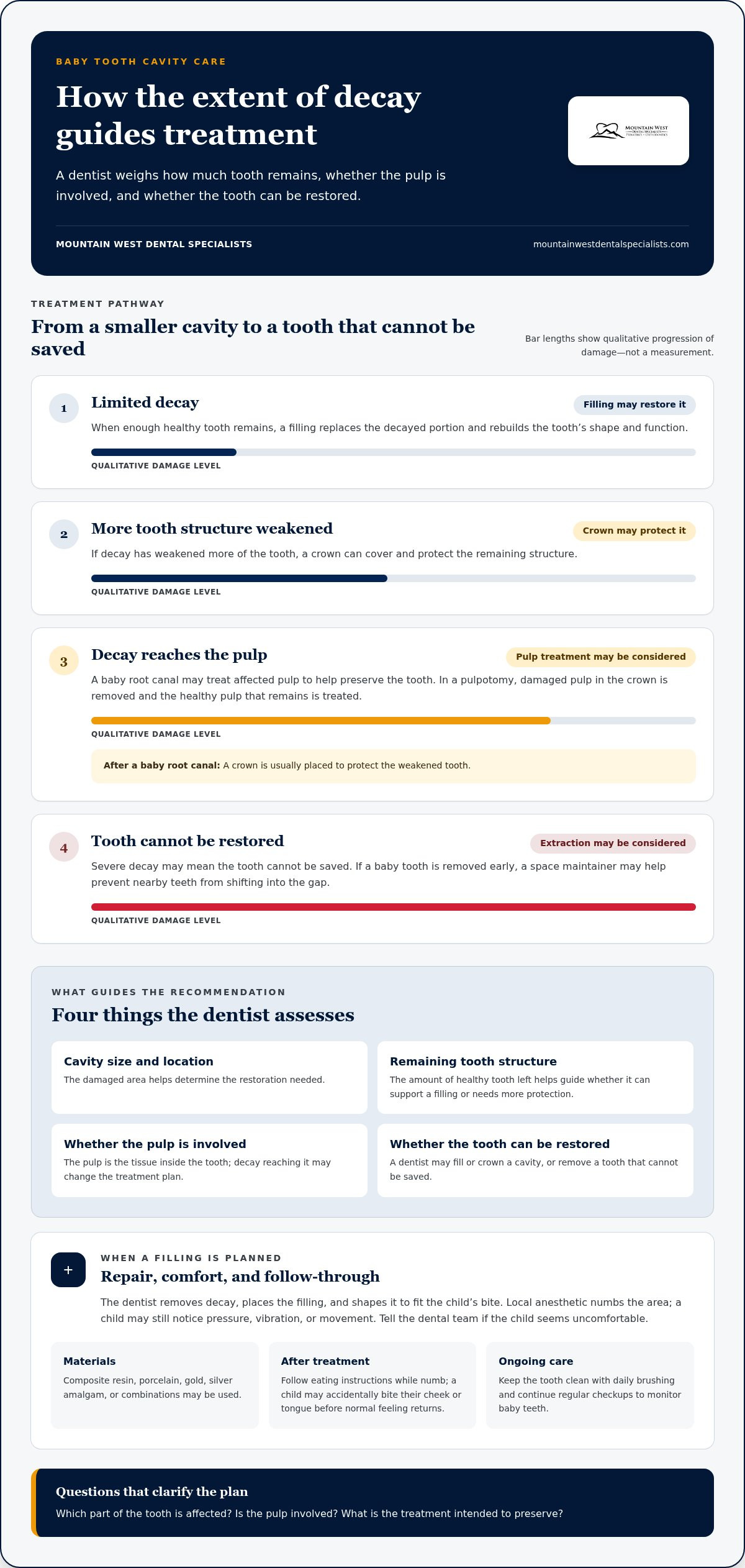
The right treatment depends on the extent of decay and whether the tooth can be restored. A dentist considers the damaged area, the remaining tooth structure, and whether decay has reached the pulp, the tissue inside the tooth.
A filling can restore a cavity when enough healthy tooth remains to support it. If decay has weakened more of the tooth, a crown may cover and protect the remaining structure. According to the Centers for Medicare & Medicaid Services, a dentist may fill or crown a cavity, or pull the tooth if it cannot be saved. These options address different levels of damage rather than following a single rule for every baby tooth.
When decay reaches the pulp, a baby root canal may be considered to treat the affected tissue and preserve the tooth. In a pulpotomy, the dentist removes damaged pulp from the crown of the tooth and treats the healthy pulp that remains. A crown is usually placed after a baby root canal to protect the weakened tooth. The amount of healthy tooth structure remaining helps guide the decision.
Extraction may be considered when decay is severe and the tooth cannot be restored. For example, severe baby bottle tooth decay may require removing the affected tooth. If a baby tooth is removed early, a space maintainer may help prevent remaining teeth from shifting into the gap and causing misalignment.
To understand the recommendation, ask which part of the tooth is affected, whether the pulp is involved, and what the proposed treatment aims to preserve. A filling repairs a smaller damaged area, a crown protects a more weakened tooth, and extraction removes a tooth that cannot be saved. These differences can help you understand the reasoning behind your child’s treatment plan.
Cavity fillings can last 5 to 15 years with proper care, depending on the material; avoid hot or cold food and drinks immediately after the procedure.
What is silver diamine fluoride treatment for children’s cavities, and what are its risks?
Silver diamine fluoride, often called SDF, is a topical treatment sometimes discussed for children’s cavities. It differs from a filling, which removes decay and rebuilds the tooth’s shape. Fluoride application helps strengthen tooth enamel and prevent decay. Ask whether SDF is being considered for an existing cavity or as part of a broader prevention plan.
Before choosing SDF, clarify what it can and can’t do for the affected baby tooth. A filling restores missing tooth structure; SDF doesn’t replace that restorative step. For example, a cavity on a chewing surface may affect how your child eats, so restoring the tooth’s shape may matter alongside managing decay. The cavity’s location and extent help guide the treatment discussion.
Appearance is another important topic to discuss before treatment. Ask what visible change to expect on the treated area, especially if the cavity is on a front baby tooth. Also ask how the dental team will protect surrounding areas during application and what to do if the treatment contacts skin or clothing. These practical details can help you make an informed decision for your child.
Use a simple checklist: identify the tooth and cavity location, ask whether SDF alone addresses the concern, and compare it with a filling or crown if tooth structure needs restoration. If decay has affected the pulp, ask whether a baby root canal is being considered. The dentist can explain how each option relates to the tooth’s condition and your child’s comfort.
SDF doesn’t replace daily brushing or regular dental examinations. Fluoride helps strengthen enamel, while cleaning removes food and plaque from baby teeth. To discuss cavity-prevention options and your child’s dental needs, arrange a pediatric dental checkup.
Mountain West Dental Specialists: Orthodontic Braces and Aligners
Mountain West Dental Specialists provides pediatric dental checkups and baby dental care for families in Las Vegas. A checkup is an opportunity to discuss your child’s oral health and questions about fillings, crowns, extraction, and prevention. If you’re also thinking about future tooth alignment, the practice offers orthodontic braces and aligners. These address alignment needs, while pediatric checkups focus on children’s dental health. Contact Mountain West Dental Specialists to discuss your child’s dental care.
Take the Next Step Toward Confident Care
Your child’s comfort and changing needs can guide the next conversation about dental care. Before an appointment, note what you’ve observed, such as sensitivity while eating or a change in brushing habits. Sharing these details can help the dental team understand your concerns and discuss a plan for your child.
If you’re looking for baby tooth cavity treatment in Las Vegas, Mountain West Dental Specialists offers pediatric dental checkups and baby dental care to support your child’s ongoing care. The practice also provides tongue-tie release and orthodontic braces and aligners for alignment needs. These services address different concerns, so you can focus the conversation on what matters for your child now.
When you’re ready to talk through your child’s dental needs, contact Mountain West Dental Specialists. A thoughtful next step can help your family feel more prepared for the care ahead.
Frequently Asked Questions
Does Your Child Need a Baby Root Canal?
A baby root canal may be considered when decay reaches the pulp, the living tissue inside the tooth, and preserving the tooth is appropriate. A pulpotomy removes damaged pulp in the crown and treats the healthy pulp that remains; a crown usually protects the tooth afterward. Ask which pulp tissue is affected and what the procedure aims to preserve. This helps distinguish root-canal care from treatment for decay that hasn’t reached the pulp.
How are cavities in baby teeth treated?
Baby-tooth cavities are treated according to the damage: a filling restores a cavity, a crown protects a more weakened tooth, and extraction removes one that can’t be saved. Silver diamine fluoride is another approach discussed for cavity management, while fluoride and brushing support prevention. For baby tooth cavity treatment in Las Vegas, note any changes in eating, brushing, or your child’s comfort before the dental visit, so you can describe what you’ve observed.
What are the risks of leaving a cavity in a baby tooth untreated?
Untreated decay can reach the pulp, cause infection, and interfere with a baby tooth’s role in chewing and holding space for incoming teeth. Severe decay may make the tooth impossible to save, and removing it early may lead to shifting teeth.