
School and orthodontic care can fit together with a little planning. Managing orthodontic appointments with school is easier when you book around early mornings, late afternoons, school breaks, teacher workdays, and important events such as exams. Booking ahead and setting digital reminders can also help keep visits on track.
It’s understandable to want your child to miss as little class as possible while still keeping treatment moving. A missed visit can make it harder for the orthodontic team to monitor progress and make adjustments, so a workable schedule matters. This article explains how to choose appointment times around the school calendar, plan ahead to reduce treatment delays, use calendar alerts, and combine visits when feasible. You’ll also find practical ways to prepare for appointments and coordinate around your child’s school commitments, so the routine feels more manageable for the whole family.
Key Takeaways
- Use school calendars, breaks, and lighter days to find appointment times that fit your family’s routine.
- Keep planned visits on track so the orthodontic team can monitor progress and address concerns.
- Set calendar alerts that include travel time to make upcoming appointments easier to manage.
- When suitable, combine orthodontic visits to reduce separate trips and time away from class.
1. Scheduling orthodontic appointments around school
A steady routine for managing orthodontic appointments with school starts with the school calendar. At the start of each semester, note exams, major projects, performances, sports, and other activities. Share those dates and your family’s available times when scheduling visits. Early mornings, lunch breaks, late afternoons, teacher workdays, and early-release days may reduce time away from class.
School breaks and holidays can be convenient times for visits, especially when a student’s schedule is full. For braces adjustments, consider a lighter school day or a visit before the weekend, since temporary discomfort may affect concentration. If travel or an activity creates a conflict, let the orthodontic office know early. Booking the next visit before leaving can help your family keep a consistent routine.
Students shouldn’t routinely postpone needed care just to avoid missing class. First look for a break, an early or late appointment, or a lighter school day. If a school-day visit is the practical option, follow the treatment schedule rather than delaying care. The right choice depends on the visit and the student’s treatment plan.
In the United States, follow the school’s process for attendance and documenting absences. Procedures vary, so notify the appropriate school staff about the appointment. If your child misses class, ask the teacher about assignments, class resources, or a plan to catch up.
There isn’t one appointment frequency that fits every student with braces or Invisalign. Visit timing depends on the treatment plan and progress, so keep the next scheduled visit and discuss conflicts early. Appointment length also varies by visit type. When booking, ask how much time to allow and include travel in your calendar.
An orthodontic office can provide appointment documentation when requested, while the school decides what it accepts for an absence. If a bracket comes loose, a wire breaks, or an aligner no longer fits during the school day, contact the orthodontic office for guidance rather than trying to repair the appliance yourself.
2. How missed appointments can delay orthodontic treatment
Scheduled orthodontic visits give the care team time to assess tooth movement, make adjustments, and check how appliances fit. If a visit is missed, that review and any needed change may have to wait until the next appointment. A loose bracket, broken wire, or poorly fitting aligner may also go unaddressed longer, interrupting the planned sequence of care.
Delays can affect more than the calendar. Without regular progress reviews, the orthodontist has fewer opportunities to identify concerns and respond during treatment. Skipping or postponing visits can extend treatment and may compromise results. If illness, travel, or a school conflict makes attendance difficult, tell the office and arrange a new appointment promptly.
Planning for costs can also support continuity of care. Review the treatment plan alongside your household budget, and account for orthodontic expenses with your regular family costs. Ask the practice to explain charges and payment timing before care begins, then plan for scheduled visits. Don’t assume a missed appointment removes an expense or changes the treatment plan; ask what applies to your case.
Staying motivated is easier when progress feels visible. At each consultation, note what has changed and ask what the next stage involves. A student can mark completed visits on a family calendar, while a parent can connect appointments with routine hygiene habits at home. These small markers can make orthodontic care feel like steady progress rather than an endless interruption to classes.
Stress about schoolwork or treatment can make postponing care tempting. Instead, explain the conflict early and discuss a workable next step with the orthodontic team. If a visit was missed, contact the office to reschedule. If an appliance feels damaged or no longer fits, describe the issue so the team can advise you. Following through helps the care team monitor treatment and address problems before they disrupt the plan further.
3. Using digital appointment reminders
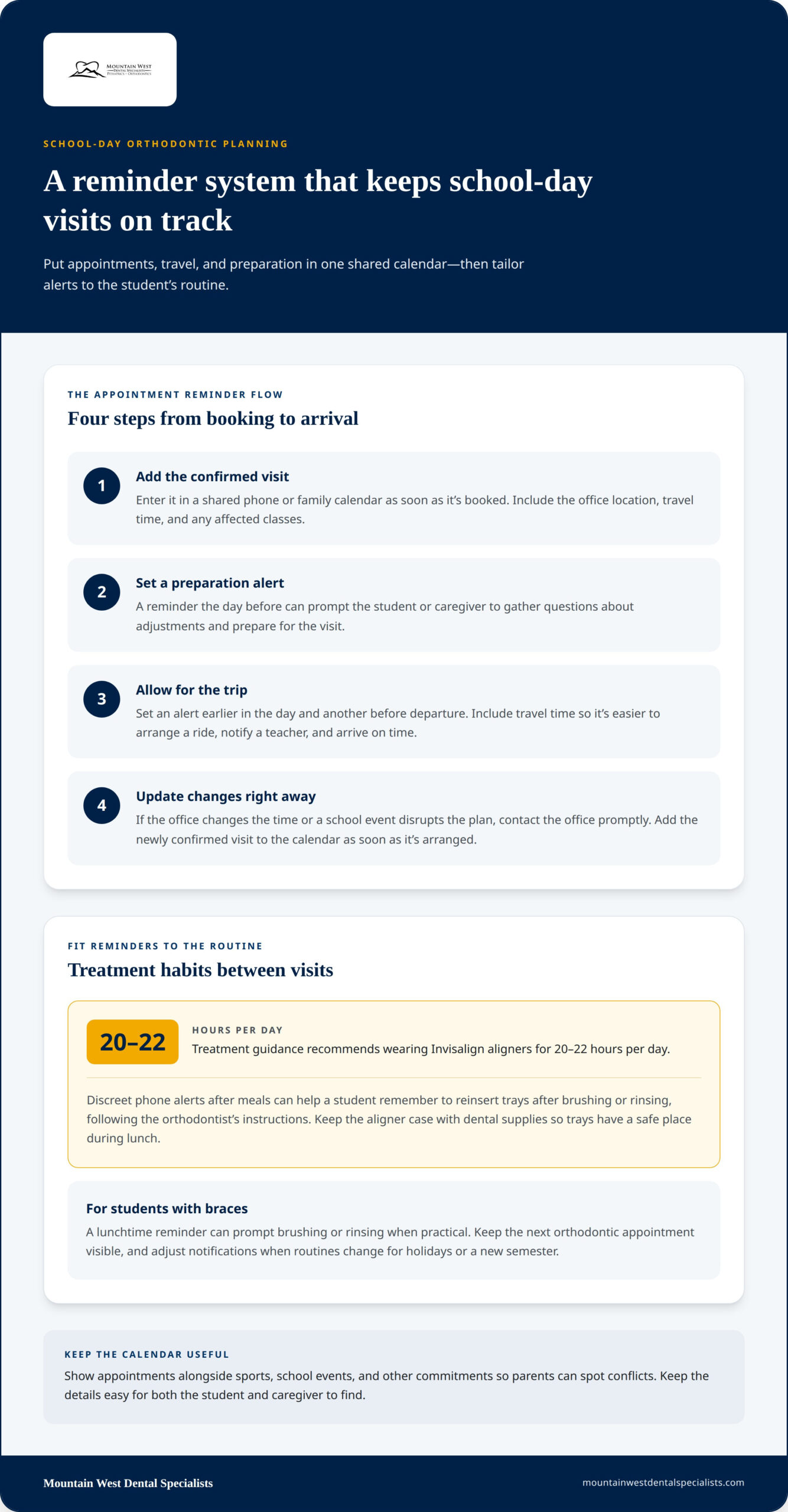
A shared phone calendar keeps orthodontic visits visible to both parent and student. Add the appointment when it’s booked, then include the office location, travel time, and any affected classes. Set an alert before departure and another earlier in the day. These details make it easier to arrange a ride, notify a teacher, and arrive on time.
Orthodontic offices may share appointment details or reminders through their usual communication process. Add the confirmed visit to a digital calendar and update it promptly if the office changes the time. A family calendar can show appointments alongside sports, school events, and other commitments, helping parents spot conflicts before they disrupt the week. Keep the details easy for both the student and caregiver to find.
Set separate alerts for preparation and travel. For example, a reminder the day before can prompt you to gather questions about adjustments, while a departure alert can account for the drive. If an event or sports practice changes the plan, contact the office promptly to reschedule. When a new time is arranged, add it to the calendar right away.
For Invisalign, reminders can support consistent wear alongside school routines. Treatment guidance recommends wearing aligners for 20-22 hours per day. A student might use discreet phone alerts after meals to remember to reinsert trays after brushing or rinsing, following the orthodontist’s instructions. Keep the aligner case with dental supplies so the trays have a safe place during lunch.
Digital alerts can reinforce oral hygiene without replacing the care team’s advice. A student with braces might set a lunchtime reminder to brush or rinse when practical, while keeping the next orthodontic appointment visible. Reminders work best when they fit the student’s actual school day, including classes, travel, and activities. Adjust notifications when routines change for holidays or a new semester.
Use a calendar app or phone reminders to track visits, include travel time, and plan for any time away from school.
4. Combining appointments to reduce missed school
A coordinated visit can mean less time away from class than separate trips. When clinically appropriate, the orthodontic team may combine an adjustment with a consultation. This can help families already traveling to the office and give the care team a chance to address more than one treatment need during a planned visit.
Coordination starts with a clear picture of the student’s schedule and the purpose of each visit. Share the school’s start and end times, activities, and fixed commitments such as a sports event or exam. The office can then consider appointment times and whether the requested services can be handled together. A morning visit may suit one family, while an afternoon appointment may work better around classes or pickup.
Combining visits doesn’t mean every concern belongs in the same appointment. An adjustment, consultation, or appliance issue may need different clinical attention. The team considers the reason for each visit and the time needed to address it. If separate appointments are more appropriate, scheduling them on the same day or near a school break may still reduce travel and missed class time.
Before the visit, write down questions about brackets, aligners, comfort, or treatment progress. A short list helps the student and parent cover their priorities without overlooking a concern. If the appointment is near lunchtime, plan snacks that suit the student’s appliance and treatment instructions. This can make the transition back to school easier.
When arranging orthodontic visits, ask about coordinating an adjustment and consultation in one appointment when feasible. Share school and activity conflicts early, then book the next visit before leaving so the plan stays organized. Coordinate orthodontic visits around school with a schedule that supports consistent care and minimizes disruption.
When appropriate, combining an orthodontic adjustment and consultation into one visit can reduce a student’s time away from school. Ask whether both needs can be addressed together, helping you plan for one absence instead of separate school-day trips.
Mountain West Dental Specialists: Orthodontic Braces and Aligners
Mountain West Dental Specialists provides braces and aligners for children, teens, and adults in Las Vegas. If school commitments make it difficult to keep treatment visits on track, the practice can help you plan orthodontic care around your family’s schedule.
Bring the school calendar, activity commitments, and known travel conflicts to the scheduling conversation. Sharing these details helps the team understand which appointment times fit your routine and discuss ways to keep care consistent. If you miss a visit or an appliance concern affects the schedule, contact the practice to discuss the next step.
For families considering braces or aligners, a consultation is a chance to discuss treatment and scheduling needs together. Contact Mountain West Dental Specialists in Las Vegas to talk about orthodontic care for your family.
Make a school-friendly care plan
A new semester, changing activity schedule, or upcoming trip can shift what works for your family. Keep appointment planning an ongoing conversation: share changes early, involve the student, and revisit the plan when school commitments change. That way, managing orthodontic appointments with school becomes part of the family routine rather than a last-minute source of stress.
If your child is beginning orthodontic care or you’re ready to discuss a schedule that fits school life, Mountain West Dental Specialists can talk with you about braces and aligners in Las Vegas. Bring your questions and the commitments that shape your week. The team can help you discuss a practical next step for your family’s care.
Contact Mountain West Dental Specialists to talk about orthodontic care. With a thoughtful plan and open communication, your family can move forward with confidence.
Frequently Asked Questions
Can orthodontic appointments be scheduled after school or on weekends?
After-school appointments may fit some families’ schedules, and some orthodontic practices offer weekend visits. Appointment options depend on the practice’s schedule, so share the student’s school hours and activities when arranging care. If those times aren’t available, consider an early-morning appointment, a school break, or a lighter class day to reduce disruption while keeping planned treatment on track.
What should parents tell the school when a student will miss class for an orthodontic appointment?
Tell the appropriate school staff the appointment date and expected absence, following the school’s usual attendance process. You can also let the student’s teacher know which classes may be missed and ask how to access assignments or class materials. For example, a student missing a morning lesson can arrange to collect work and clarify deadlines before leaving for the visit.
What are the school attendance rules for orthodontist appointments in the United States?
Follow the student’s school attendance and absence-documentation process, which can differ by school, and notify the appropriate school staff about the appointment. The orthodontic office can provide appointment documentation when requested, but the school determines what it accepts.