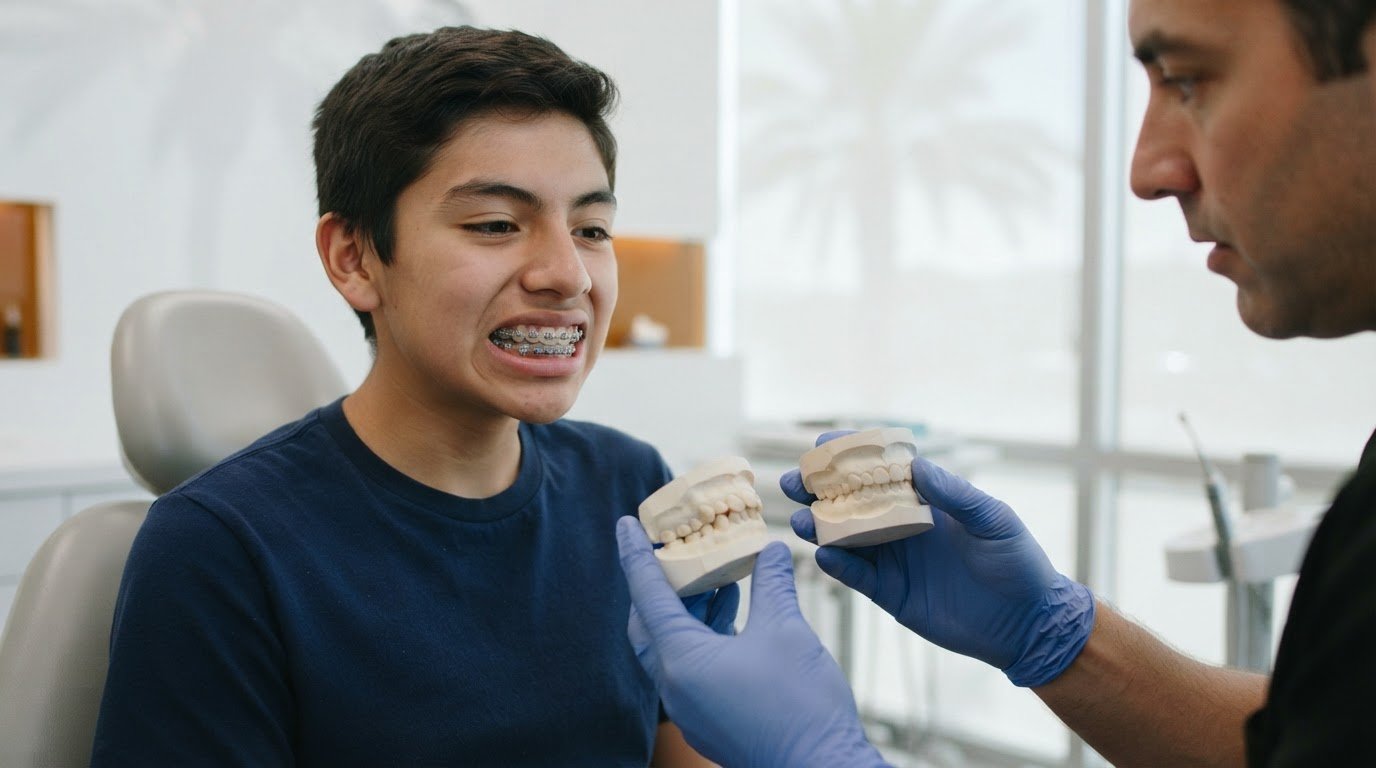
Braces for crowded teeth can create visible before-and-after changes within the first few months of treatment. Some people notice movement within the first three months, while changes may become more noticeable after six months. Severe crowding can take longer to address.
It’s natural to want a clear idea of what progress may look like and how long it could take. The timeline depends on how much crowding needs correction and whether treatment also needs to address other tooth or bite concerns. This guide explains what braces and Invisalign can do, how before-and-after changes may look at different ages, and what treatment and care can involve as teeth move into better alignment.
Key Takeaways
- Learn how braces and Invisalign can make room for crowded teeth, and what may shape the right approach.
- Understand how a child’s, teen’s, or adult’s dental development can influence treatment planning.
- See how before-and-after cases can differ depending on crowding, bite concerns, and the treatment used.
- Find out how appointments, following treatment instructions, and protecting braces can help keep progress on track.
Braces and Invisalign for tooth crowding
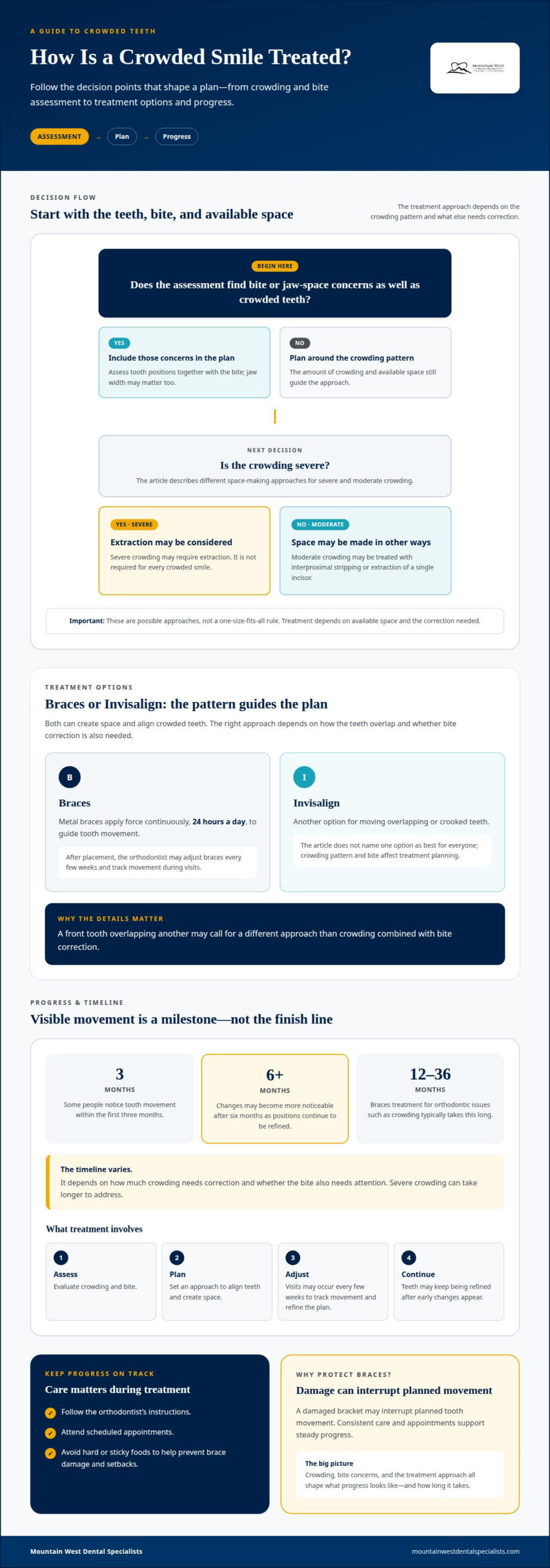
Tooth extraction isn’t required for every crowded smile; treatment depends on available space and needed correction. According to Cureus, severe crowding may require extraction, while moderate crowding may be treated with interproximal stripping or extraction of a single incisor.
Braces and Invisalign Options
Braces and Invisalign can both create space and align crowded teeth. Metal braces apply force continuously for 24 hours a day. Invisalign is another option for moving overlapping or crooked teeth. The comparison matters because a patient’s crowding pattern and bite affect the treatment plan. A front tooth overlapping another may need a different approach than crowding combined with bite correction.
Patients may notice changes within the first three months, although severe crowding can take longer to address. Changes may become more noticeable after six months as braces continue to refine tooth positions. Photos showing braces for crowded teeth before and after treatment can illustrate alignment changes, but every case follows its own treatment plan.
Steps in Braces Treatment
Treatment starts with an assessment of tooth crowding and bite, followed by a plan to align the teeth and create space. After braces are placed, the orthodontist may adjust them every few weeks to guide teeth into position. These visits let the orthodontist track movement and refine the plan as treatment progresses.
Braces treatment for orthodontic issues such as crowding typically takes 12 to 36 months. The timeline depends on the amount of crowding and whether the bite also needs correction. Braces continue refining tooth positions from six months onward, so early visible movement doesn’t mean treatment is complete.
Following the orthodontist’s instructions and attending scheduled appointments can help keep treatment on track. Avoiding hard or sticky foods can help prevent brace damage and setbacks. For example, a damaged bracket may interrupt planned tooth movement, while consistent care supports steady progress.
Crowding in children, teens, and adults
Crowding occurs when teeth lack enough room and grow in overlapping or twisted. Age and jaw development can shape how an orthodontist assesses the pattern.
Crowding in Children
For children, crowding means permanent teeth may emerge without enough room to align. A consultation can help assess tooth positions, jaw space, and bite concerns together. One example involved a 9-year-old with a narrow upper jaw and front-tooth crossbite. Treatment used an upper expander and braces.
That case shows why an assessment considers more than crooked front teeth. A crossbite or narrow jaw may influence the treatment plan. Early treatment for a front-tooth crossbite in another 9-year-old lasted 6 months. That example is specific to that child, not a timeline for every family.
Crowding in Teens
Teen crowding is overlapping or twisted teeth with limited room during ongoing jaw growth. Teens may see orthodontic results somewhat faster than adults because their jaws are still growing and bone structure is more malleable.
That difference can matter when planning how teeth move and whether jaw growth is part of the picture. For example, a teen with crowding and a crossbite may need both conditions assessed. Age alone doesn’t describe the full pattern; the orthodontist also considers tooth positions and bite alignment.
Crowding in Adults
Adult crowding describes teeth that overlap or twist because there isn’t enough room. An adult evaluation considers the crowding pattern and bite, rather than relying on age as the only factor.
For example, one adult may have a few overlapping teeth, while another has crowding with a crossbite. Those patterns raise different planning questions. An adult dental consultation can help put alignment concerns alongside overall dental needs. A professional consultation offers a way to discuss those concerns and the factors shaping treatment.
Across childhood, adolescence, and adulthood, the first useful step is assessing the teeth and bite together. The 9-year-old crossbite example shows how jaw width can also matter. A clear picture of those factors helps explain why two people with crowded teeth may have different plans.
Before-and-after braces cases for dental crowding
Before-and-after examples show how crowding patterns and treatment plans differ. The details of each case help explain why alignment changes can take different paths.
Crowded Teeth Before Braces
Before treatment, teeth may overlap, twist, or remain blocked from their expected positions. One 17-year-old had dental crowding treated with extractions and braces over 22 months. Another case involved severe upper crowding and canines blocked from their usual positions. The starting pattern shaped the treatment plan.
Other examples included severe upper and lower crowding with a deep bite. That case involved braces and four extractions over 26 months. A narrow upper jaw, crossbite, and crowding presented a different starting point. Treatment used upper-jaw expansion without extractions over 12 months.
Crowded Teeth After Braces
After treatment, case descriptions record how the original alignment concerns were addressed. A case involving a narrow upper jaw, crossbite, and crowding used expansion without extractions. Its 12-month treatment shows that the plan can focus on jaw width as well as tooth positions.
A 25-year-old with crowding and a right crossbite had upper-jaw expansion without extractions over 17 months. By contrast, an 18-year-old with severe crowding had upper premolar extractions and no lower extractions over 21 months. These examples show different routes toward addressing crowding.
Compare the starting concern, treatment approach, and duration together. A before-and-after image alone may not show whether the case also involved a bite concern or jaw-width treatment. For example, one case of severe upper and lower crowding included a deep bite and four extractions. Another used expansion without extractions for a narrow upper jaw and crossbite.
Age and treatment needs also vary across examples. An 8.5-year-old with severe crowding received an expander and braces over 12 months. A 55-year-old with spacing and crooked, worn teeth had braces over 18 months. These cases illustrate different starting conditions, not a single template for every smile.
What steps are involved in treating crowded teeth with braces?
Braces treatment progresses through assessment, planning, tooth movement, and progress reviews. Each step helps address the crowding pattern and any related bite concerns.
- Assess the teeth and bite. The orthodontist examines where teeth overlap, which teeth have limited space, and how the upper and lower teeth meet. For example, a blocked-out canine presents a different planning concern from crowding across both arches.
- Plan how to create space. The treatment plan considers crowding severity, tooth positions, and bite alignment. According to Cureus, severe crowding may require extraction, while moderate crowding may be treated with interproximal stripping or extraction of a single incisor. These are possible approaches, not automatic steps for every patient.
- Place braces to guide movement. Brackets and wires apply force to move teeth gradually toward planned positions. The orthodontist selects the approach based on the patient’s pattern, including whether the plan also addresses a crossbite or deep bite.
- Review movement and adjust braces. Orthodontists may adjust braces every few weeks to guide crowded teeth. At each visit, they assess progress and make adjustments that continue directing tooth movement. Regular reviews help the treatment plan respond to how teeth are moving.
- Refine alignment over time. Braces continue refining tooth positions from six months into treatment onward. Early movement may be visible before the final positions are reached, so progress reviews remain important throughout treatment.
Following instructions and attending scheduled appointments can help keep treatment on track. Avoiding hard or sticky foods can reduce the risk of brace damage and setbacks. If a bracket is damaged, contact the orthodontic team for guidance.
For a professional assessment of crowded teeth and a personalized braces plan, schedule an orthodontic evaluation.
Mountain West Dental Specialists: Orthodontic Braces and Aligners
Mountain West Dental Specialists provides orthodontic braces and aligners for children, teens, and adults with crowded teeth in Las Vegas. If you’re considering treatment or noticing overlapping teeth, an orthodontic assessment can clarify the crowding pattern and the factors that shape a plan. The right approach depends on tooth positions and whether bite concerns also need attention. For children, a pediatric dental checkup can support conversations about developing teeth and orthodontic needs. Imaging may be considered as part of an assessment to help inform treatment planning. With a clearer understanding of your needs, you can discuss whether braces or aligners suit your situation and what care involves.
For a conversation about treating crowded teeth, contact Mountain West Dental Specialists in Las Vegas.
Take the Next Step Toward a Clearer Plan
Your next step can be a focused conversation about the smile you want to improve. Before your appointment, consider which teeth or changes concern you most and what you hope treatment will address. This gives you a helpful starting point for discussing your priorities.
Looking at braces for crowded teeth before and after treatment can help you describe the changes you hope to see. Your goals matter alongside your specific tooth positions and bite. Bring questions about treatment choices, appointments, and care. The conversation can then focus on what matters to you, rather than comparing your smile with someone else’s result.
If you’re ready to talk through your options, contact Mountain West Dental Specialists. A thoughtful first conversation can help you move forward with greater clarity and confidence.
Frequently Asked Questions
Crowded Teeth Before and After: How Long Does It Take to See Changes?
Visible movement may appear within the first few months, while complete alignment takes longer. In photos showing braces for crowded teeth before and after treatment, compare the same teeth and angles to notice gradual changes. A front tooth may begin shifting before the full bite is corrected. Regular appointments help the orthodontist assess progress and adjust treatment as teeth move.
What do crowded teeth look like before and after braces?
Before braces, crowded teeth may overlap, twist, or sit out of line with neighboring teeth. After treatment, teeth may appear more evenly arranged, with improved alignment. The bite can change too, so a comparison isn’t only about the front teeth. For example, a person whose crowding also involved a crossbite may have both tooth positions and the way the arches meet addressed.
How long does braces treatment take for crowded teeth?
Braces treatment for orthodontic issues such as crowding typically takes 12 to 36 months. Mild crowding may need less time than severe or complex cases, especially when bite correction is also part of the plan. Appointment attendance and following care instructions can help keep treatment moving as planned. Your orthodontist can explain how the crowding pattern and treatment goals shape the timeline.
How much do braces cost for crowded teeth in the United States?
The cost depends on the case and treatment plan. Factors include the severity of crowding, whether the bite also needs correction, and the treatment approach. Additional planning needs may affect the overall fee. A useful estimate should reflect the proposed plan for your teeth, rather than a general figure for braces across the United States.
Are braces or clear aligners better for crowded teeth?
Neither option is automatically better for every crowded smile. Traditional metal braces use brackets and wires and are more comfortable than older versions. Invisalign is a custom clear aligner system that’s comfortable and flexible. The choice depends on tooth positions, crowding, bite concerns, and the treatment plan. An orthodontic assessment can clarify which approach fits the movements needed and your practical preferences.
What are the risks and side effects of braces for crowded teeth?
Hard or sticky foods can damage braces and cause treatment setbacks. A damaged bracket may interrupt planned tooth movement, so contact the orthodontic team for advice.