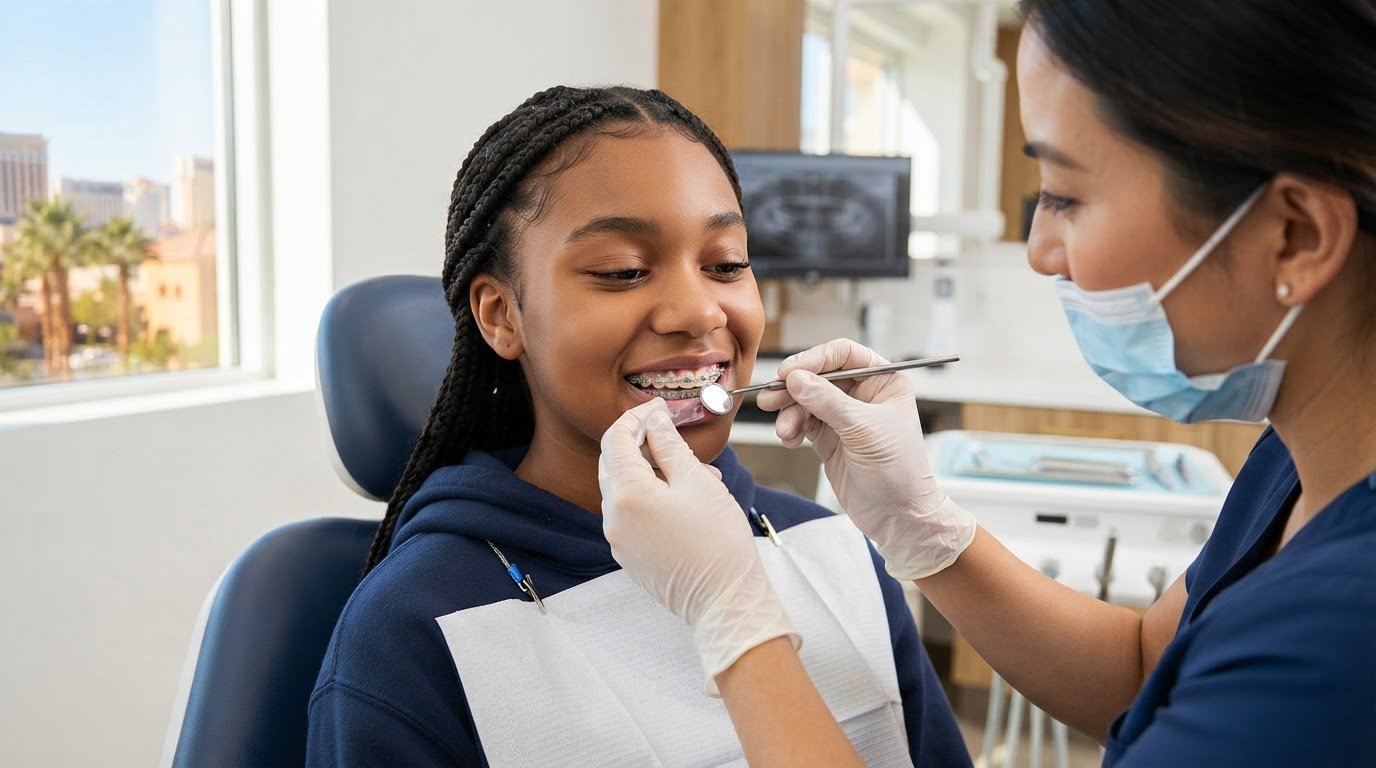
Orthodontic wax for braces discomfort can make a rubbing bracket feel more manageable, but it can’t fix a loose bracket or a wire that’s out of place. If braces are rubbing the inside of your cheeks or lips, wax creates a temporary barrier between the appliance and tender tissue. It can protect the irritated area while you decide what to do next.
For wax to stay in place, start with clean hands, clear away food, and dry the spot as much as practical. Use only enough to cover the part that’s rubbing, and replace it if it loosens or gets dirty. This guide explains how to apply wax, care for your teeth and braces, and recognize when persistent discomfort or a damaged-looking brace needs your orthodontist’s attention. If you’re in Las Vegas, Mountain West Dental Specialists provides orthodontic care for children, teens, and adults.
Key Takeaways
- Orthodontic wax can cushion sensitive cheeks and lips, but it cannot repair a damaged appliance.
- Clean and dry the rubbing area, then use a small amount of wax to create a smooth cover.
- Keep brushing and cleaning your braces. Replace wax if it loosens or gets dirty.
- A loose bracket, broken wire, or persistent sharp irritation calls for your orthodontist’s guidance.
- When discomfort continues, note where it is, what changed, and whether it is improving or worsening.
Orthodontic Wax for Braces Discomfort: What It Does, and What It Doesn’t
New braces or a recent adjustment can leave your cheeks and lips getting used to contact with brackets and wires. A bracket may catch the inside of your cheek as you talk or chew, or a wire may brush a tender spot. Some rubbing can happen as your mouth adjusts, but how the irritation feels and whether it continues can help you decide what to do next.
Orthodontic wax is a temporary, moldable barrier placed over a bracket or wire that’s rubbing soft tissue. Its smoother surface can reduce friction and make everyday activities more comfortable. Wax is a comfort measure, not orthodontic treatment: it doesn’t move teeth, adjust braces, or repair an appliance.
Why brackets and wires can irritate your mouth
Braces have brackets attached to teeth and wires that connect them. As your lips and cheeks move, these components may press or brush against the soft lining of your mouth. A new contact point can feel unfamiliar, and an already tender spot may be more sensitive to further rubbing.
Mild surface soreness is different from sharp, persistent, or worsening irritation. There’s no single adjustment timeline that applies to everyone, so notice whether the sensation is improving or becoming more uncomfortable. If the same spot keeps catching or the irritation gets sharper, don’t assume it’s ordinary adjustment soreness.
What orthodontic wax can and cannot do
At the point where a bracket or wire rubs, wax provides a soft covering that can limit direct contact with your cheek or lip. It may protect the area while the tissue settles or while you arrange orthodontic guidance if the irritation continues. The wax can make the spot feel less exposed, but it doesn’t remove the source of the rubbing.
For example, wax may cushion a bracket that feels rough against your cheek. It can’t secure a loose bracket, move a protruding wire, or fix a broken part of your braces. Covering an appliance problem may make it more comfortable temporarily, but the mechanical issue can remain underneath.
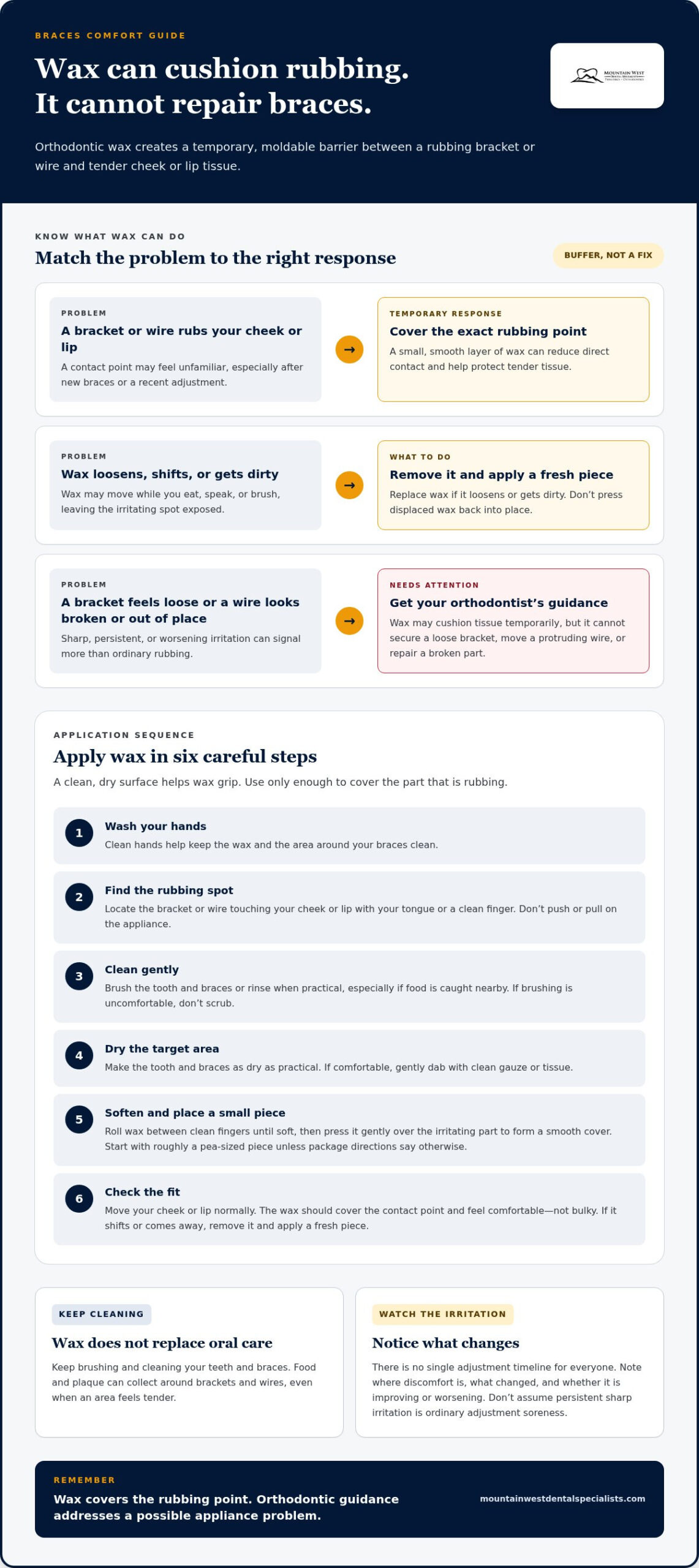
Think of orthodontic wax for braces discomfort as a buffer, not a repair. It may loosen as you eat or speak, and relief may be temporary. If the same sharp spot returns, a bracket feels loose, or a wire appears broken or out of place, contact your orthodontist for advice. Wax can protect irritated tissue in the meantime, but it shouldn’t replace attention to a possible braces problem.
How to Apply Orthodontic Wax to Braces, Step by Step
A clean, dry surface helps orthodontic wax grip the rubbing spot. First, identify the exact bracket or wire causing the irritation. A small amount, pressed gently into place, can create a smooth cover without adding unnecessary bulk.
- Wash your hands. Clean hands help keep the wax and the area around your braces clean.
- Find the rubbing spot. Use your tongue or a clean finger to locate the bracket or wire touching your cheek or lip. Don’t push or pull on the appliance.
- Clean the area gently. Brush the tooth and braces or rinse your mouth when practical, especially if food is caught near the spot.
- Dry the target area. The tooth and braces should be as dry as practical so the wax can adhere. If comfortable, gently dab the spot with clean gauze or tissue.
- Soften and place the wax. Pinch off a small piece and roll it between clean fingers until soft. Press it gently over the irritating part to form a smooth cover.
- Check the fit. Make sure the wax covers the contact point and feels comfortable. If it shifts or comes away, remove it and apply a fresh piece.
Prepare the bracket or wire area
Before applying wax, identify the source of the rubbing instead of coating a nearby area. Gentle brushing or rinsing can clear food and make the spot easier to see. If brushing feels uncomfortable, don’t scrub. A gentle rinse may be enough before you dry the area as best you can.
If dabbing feels comfortable, use a clean piece of gauze or tissue to absorb moisture. Keep your fingers gentle, and avoid poking, bending, or pulling on a wire or bracket. Wax is meant to cover the part that’s irritating your mouth, not reposition it.
Place and check the wax
Start with a small piece, roughly pea-sized unless the package directions say otherwise. Roll it between your fingers to soften it, then press it over the rubbing point. Smooth the edges gently so the wax covers the contact area without forming a bulky lump that changes how your teeth meet.
Move your cheek or lip normally to see whether the cover feels comfortable. If the wax slides, falls away, or leaves the irritating part exposed, remove it and try again with a fresh piece. Don’t keep adding layers if the wax feels bulky or won’t stay in place.
Follow the directions on the wax package and any instructions from your orthodontist, since products and braces can differ. With orthodontic wax for braces discomfort, careful placement matters more than using a large amount. If you’re unsure whether you’ve found the right spot or discomfort continues despite using wax, talk with an orthodontic care team.
Eating, Cleaning, and Reapplying Wax Without Added Irritation
Wax can shift while you eat or brush, so check whether it still covers the spot. Follow the package directions and your orthodontist’s instructions about eating with wax in place. If it loosens, replace it as needed, but don’t let it get in the way of cleaning your teeth and braces.
Wax does not replace cleaning your teeth and braces. It’s a temporary cover for a rubbing point, not a substitute for brushing. Food and plaque can collect around brackets and wires, so keep up your usual oral care even when an area feels tender.
What to do when wax comes off
If wax is loose, displaced, or no longer covers the sore spot, remove it gently rather than pressing it back into place. Clean the area again, then dry it as comfortably as you can before applying a fresh, small piece. Wash your hands before handling wax and follow the package directions for disposing of used wax.
If wax keeps coming away, resist the urge to use a large amount. A bulky covering may feel awkward and still won’t address a wire or bracket that is out of position. Repeated trouble keeping wax in place, particularly when rubbing continues, is a reason to seek guidance from your orthodontist.
Keep teeth and braces clean
Brush carefully around each bracket and along the gumline, using the technique and tools your orthodontist recommends. Clean between your teeth and around braces with the tools advised for your needs. Be gentle around a sore spot rather than skipping it. If you’re unsure how to clean there, ask your orthodontist for instructions tailored to your braces.
You may need to remove wax to reach the tooth and appliance properly. After brushing and cleaning, check whether the rubbing point still needs a cover. If it does, wash your hands, dry the area as practical, and apply fresh wax according to the package directions. Don’t reuse an old, dirty piece.
Food pressing against a covered bracket may loosen the wax. Follow the product label and your orthodontist’s advice about whether to leave it in place during meals. If wax comes off while you eat, you can reapply it afterward if the spot is still rubbing. Keep brushing on your regular schedule rather than waiting for the wax to come loose or disappear.
Used thoughtfully, orthodontic wax for braces discomfort can provide temporary cushioning while you keep your mouth clean. If the wax repeatedly won’t stay on, or you still feel sharp or persistent irritation, don’t keep layering it. Your orthodontist can help determine whether the area needs attention beyond a protective cover.
When Wax Is Not Enough: Recognize a Braces Problem
Wax can cushion a spot where a bracket or wire lightly rubs your cheek or lip. It only covers the contact point, though, and can’t correct a change to your braces. If discomfort feels sharp, keeps returning in the same place, or comes with a visible change to your appliance, don’t rely on another layer of wax alone. Your orthodontist can advise you.
Signs to contact your orthodontist
Get in touch with your orthodontist if a bracket seems loose, a wire is broken or displaced, or a component repeatedly catches your cheek. Also reach out about a sore spot or discomfort that continues despite gentle protective measures. These signs don’t identify the cause, but they may mean the appliance or irritated area needs professional attention.
Notice how the discomfort changes. A little surface rubbing may be manageable with a temporary cover, while worsening irritation or a recurring sharp point deserves guidance. Seek timely professional advice for severe pain or a significant injury to your mouth. You don’t need to determine the cause yourself before describing what you’ve noticed.
- A bracket feels loose or has shifted.
- A wire appears broken or out of place.
- A sore spot or sharp irritation persists or worsens.
- Pain is severe, or your mouth has a significant injury.
Avoid common attempts to fix braces yourself
Don’t cut, bend, pull, or remove braces components at home. Trying to alter a wire or bracket can change the appliance and may cause further discomfort or injury. Wax may cushion a damaged part temporarily, but it doesn’t secure a loose bracket or repair a broken wire.
If you use wax while waiting for orthodontic guidance, treat it as temporary comfort and follow the instructions from your orthodontist and the product label. Don’t assume a visible appliance problem is fixed just because the wax provides relief. If you’re uncertain whether a component is loose or displaced, explain what you see and feel to your orthodontic team rather than testing or adjusting it yourself.
When describing the concern, note the exact location, what seems different about the braces, and whether the discomfort is improving, staying the same, or getting worse. A clear description can help your orthodontist guide you on an appropriate next step. Orthodontic wax for braces discomfort can cushion ordinary rubbing, but persistent or severe symptoms and appliance damage call for professional guidance.
If you have a loose bracket, broken wire, or ongoing sharp irritation, contact our orthodontic team for guidance.
A Comfortable Next Step: Get Guidance for Ongoing Braces Discomfort
Wax can cushion temporary rubbing, but it can’t repair a loose bracket or broken wire. If soreness persists, irritation worsens, or a part of your braces looks damaged, reach out to your orthodontist for guidance. You don’t need to diagnose the problem yourself. Describing what you feel and see can help the orthodontic team understand your concern.
What to share when you call about discomfort
Before you get in touch, note where the sore spot is and when you first noticed it. Mention whether it began after an adjustment or another appliance change, and describe any visible difference, such as a loose bracket or a wire that seems to stick out. Also explain whether the discomfort is improving, staying the same, or worsening.
- The exact location of the rubbing or sore area.
- Whether it started after an adjustment or appliance change.
- Any bracket or wire that looks loose, broken, or out of place.
- What comfort measures you’ve tried and whether they helped.
These details give your orthodontist a useful starting point. If you’re using wax, mention whether it cushions the area or keeps shifting. Don’t try to repair or reposition a braces component before asking for guidance.
Know when a professional assessment can help
An orthodontist can assess whether discomfort seems related to surface rubbing or an issue with the appliance. Persistent soreness or a visible change deserves attention, even if wax offers temporary comfort. Severe pain, a significant injury, or worsening symptoms call for timely professional guidance. An assessment can clarify the next step without assuming in advance what the cause or solution will be.
If you’re looking for broader context as you consider orthodontic care, explore this guide to choosing an orthodontist in Las Vegas. With orthodontic wax for braces discomfort, the key is knowing when temporary cushioning is enough and when an orthodontist should take a closer look. Mountain West Dental Specialists provides orthodontic care for children, teens, and adults in Las Vegas.
If you have ongoing discomfort or a concern about your braces, learn about orthodontic care at Mountain West Dental Specialists.
Move Forward With Confidence in Your Braces Care
Feeling comfortable with braces is part of making treatment fit into everyday life. Pay attention to patterns: whether a sore spot returns in the same place, whether an appliance change came before the irritation, and what helps you feel more at ease. These observations can make conversations about your care clearer and help you speak up when something doesn’t seem right.
Orthodontic wax for braces discomfort can be a useful temporary aid, but you don’t have to manage ongoing concerns alone. Your orthodontist can help you understand what may be contributing to irritation and guide you toward an appropriate next step. Reaching out about a concern is a practical part of caring for your smile.
At Mountain West Dental Specialists, Dr. Keaton Tomlin and Dr. Allison Tomlin provide orthodontic care for children, teens, and adults. Learn about orthodontic care at Mountain West Dental Specialists and take the next step toward care for your smile in Las Vegas.
Frequently Asked Questions
What is orthodontic wax, and how does it help with braces discomfort?
Orthodontic wax is a soft covering that can cushion a specific place where braces rub your mouth. It may help if a bracket catches your cheek as you speak, for example, but it won’t address every kind of soreness. If discomfort feels more like pressure than rubbing, wax may not help much. Follow the product directions and your orthodontist’s advice, especially if the cause isn’t clear or the discomfort continues.
How do you apply orthodontic wax to braces?
Wash your hands, gently clean the target area, and dry it as much as practical. Soften a small piece between your fingers, then press it over the part that’s rubbing. Move your cheek or lip normally to check the fit. The cover should feel smooth, not bulky. If you can’t reach the spot comfortably or applying wax seems to move a braces component, stop and ask your orthodontist for guidance.
Can you eat with orthodontic wax on your braces?
Whether to leave wax in place during a meal depends on the product directions and your orthodontist’s advice. If it shifts while you eat, don’t press a loose piece back onto your braces. Remove it gently and use a fresh piece later if the rubbing returns. After eating, check the area, then brush and clean around your brackets as instructed before deciding whether to reapply wax.
How often should you replace orthodontic wax?
Replace wax whenever it’s dirty, loose, or no longer covering the contact point. There isn’t one replacement schedule for every product or situation, so follow the label. Use a clean piece rather than reapplying wax that has fallen out. If you repeatedly replace it for the same painful spot, note how often the irritation returns and tell your orthodontist, since the area may need assessment.
What should you do if orthodontic wax keeps falling off?
Moisture or an oversized piece may make it harder for wax to stay in place. With clean hands, gently clean and dry the target area, then try a small softened piece. If it still slips, don’t pile on more wax or keep adjusting it against the appliance. Repeated difficulty may mean the rubbing point needs attention, so contact your orthodontist and describe what you’ve tried.
Can orthodontic wax fix a loose bracket or poking wire?
No. Wax can cover a point of contact temporarily, but it can’t secure a bracket or repair a broken or displaced wire. If you notice a change, avoid testing the part with your fingers or trying to reshape it. Tell your orthodontist what appears loose or out of place and whether it’s causing discomfort. Orthodontic wax for braces discomfort is a short-term comfort aid, not a substitute for having a braces problem assessed.
When should you contact an orthodontist about braces discomfort?
Contact your orthodontist if a bracket is loose, a wire is broken or displaced, or discomfort persists despite gentle protective steps. Seek timely professional guidance for severe pain, a significant injury, or symptoms that are getting worse. Note where the sore spot is and what seems to trigger it. In Las Vegas, Mountain West Dental Specialists provides orthodontic care for children, teens, and adults. An orthodontist can advise you on an appropriate next step.