
Don’t expect braces to be placed at your first orthodontic visit. The initial appointment is usually for an evaluation and a discussion of your treatment plan. Preparing for your orthodontic consultation means arriving ready to explain your needs and discuss your options. Once you agree on a plan and discuss payment, the office can schedule a treatment-start visit or another assessment.
It’s natural to hope you can start treatment right away, but the next step depends on your teeth and bite. Use the consultation to discuss braces and clear aligners, and ask whether early appliances or retainers may be part of your care. This guide covers what to bring, questions to ask, and factors that can affect when treatment begins, so you can feel more prepared.
Key Takeaways
- Bring relevant dental records, X-rays, and a clear summary of your health history to help make the evaluation more useful.
- Write down questions about treatment options, expected timing, follow-up visits, and care requirements so you leave with a clearer plan.
- Compare braces, clear aligners, and other appliances by how they address your dental needs, not just by appearance.
- For a child’s visit, note any concerns about jaw growth, spacing, or oral habits to guide the conversation about possible next steps.
Treatment options, including braces and clear aligners
- Compare braces and clear aligners against your needs. Preparing for your orthodontic consultation means identifying the tooth alignment or bite concerns you want addressed. Ask which option suits your case and how each may work toward your goals. Clear aligners can treat some mild to moderate orthodontic issues, while more complex needs may call for another approach. Ask about benefits and drawbacks, not appearance alone.
- Discuss aligner timing and daily routines. Custom clear aligner trays take a few weeks to manufacture, so treatment may not begin immediately after the consultation. Ask what wearing and caring for trays involves, and how consistently you’ll need to follow instructions. Find out how the schedule compares with braces in your proposed plan.
- For a child, ask about growth and development. The American Association of Orthodontists recommends a child’s first orthodontic evaluation by age 7. The consultation can consider jaw growth, space for permanent teeth, and habits such as thumb sucking. Ask what findings could make early intervention appropriate and what an appliance would address.
- Include retainers in the discussion. Ask whether a retainer is part of the proposed plan, when it would be used, and what care it requires. Find out how progress will be assessed and how the plan moves from active treatment to retention. This helps clarify the stages beyond the first appliance.
- Connect the recommendation to daily life. A practical part of preparing for your orthodontic consultation is noting priorities such as appearance, cleaning, comfort, school, work, and meals. Ask what limitations apply to each option and whether preparatory work is needed. Before leaving, make sure you understand the chosen appliance, its purpose, and your next step.
Should You Bring Previous Dental Records and X-Rays?
Bring relevant dental records and previous X-rays, and share your medical history and medications. Follow the appointment instructions for X-rays, scans, or photos, and tell the orthodontist about any imaging you already have.
-
Gather Dental History and Records
Collect your dental history, medical history, medication details, and records from previous dental visits. Include any X-rays or diagnostic images you have, especially a panoramic X-ray taken within the past 6 months. According to the U.S. Environmental Protection Agency, keeping imaging records can help avoid unnecessary duplicate X-rays. Bring the files or arrange to have them sent ahead, if possible.
-
Prepare for Imaging and Examination
Expect an examination of your teeth, face, jaw, and bite. X-rays can show the positions of your teeth, roots, and jawbone, while photographs can document facial and dental features. Digital scans or impressions may create a model of your teeth for treatment planning or custom appliances. Mention past imaging and any concerns that could affect your comfort during the appointment.
- Keep your records together. Place printed reports, imaging files, and a medication list in one folder, or keep digital copies ready on your phone. If you have a recent panoramic image, bring it so the orthodontist can review it alongside the examination instead of relying only on memory.
- Ask what each image is for. If new X-rays, photographs, or a 3D scan are taken, ask how they help assess your teeth and jaw or shape your treatment plan. For a child, write down specific concerns, such as a bite change or a tooth that seems crowded, to discuss during the visit. Cone Beam CT imaging is one option for detailed dental imaging; Cone Beam CT imaging may be relevant when a detailed view is needed.
Why Does Coming Prepared to Your Orthodontic Consultation Matter?
An orthodontic consultation in the United States typically takes 30 to 60 minutes. Before starting treatment, a second opinion can help you compare the diagnosis, options, expected outcomes, and limitations.
-
List Questions and Concerns
Write your questions in a phone note or on paper before the appointment. Include concerns about your bite or crowded teeth, and what you hope treatment will change. Ask what the examination will cover and how your oral health affects the proposed plan. If you feel nervous, put your most important questions first so you can raise them early.
-
Prepare to Ease Consultation Anxiety
Bring a family member you trust if their presence would help you feel at ease, and ask them to help keep track of the answers. Before the visit, note anything that makes you uneasy, such as X-rays, impressions, or uncertainty about treatment. Tell the orthodontist what would help you understand each step. Clear explanations make it easier to discuss concerns openly.
- Ask for answers you can use. Request a plain-language explanation of the diagnosis, treatment options, and how each option supports your goals. Ask about possible risks, limitations, and factors that could affect the expected outcome. If a term is unfamiliar, pause and ask for an example. Understanding the reason for a recommendation helps you make an informed decision.
- Use records and a second opinion purposefully. Bring relevant dental records and ask how each finding relates to the recommended treatment. If you want another orthodontist’s perspective, take the proposed plan and ask them to review the diagnosis, alternatives, expected results, and limitations. Compare the explanations, not just the appliances. Then decide whether the plan is clear enough to move forward.
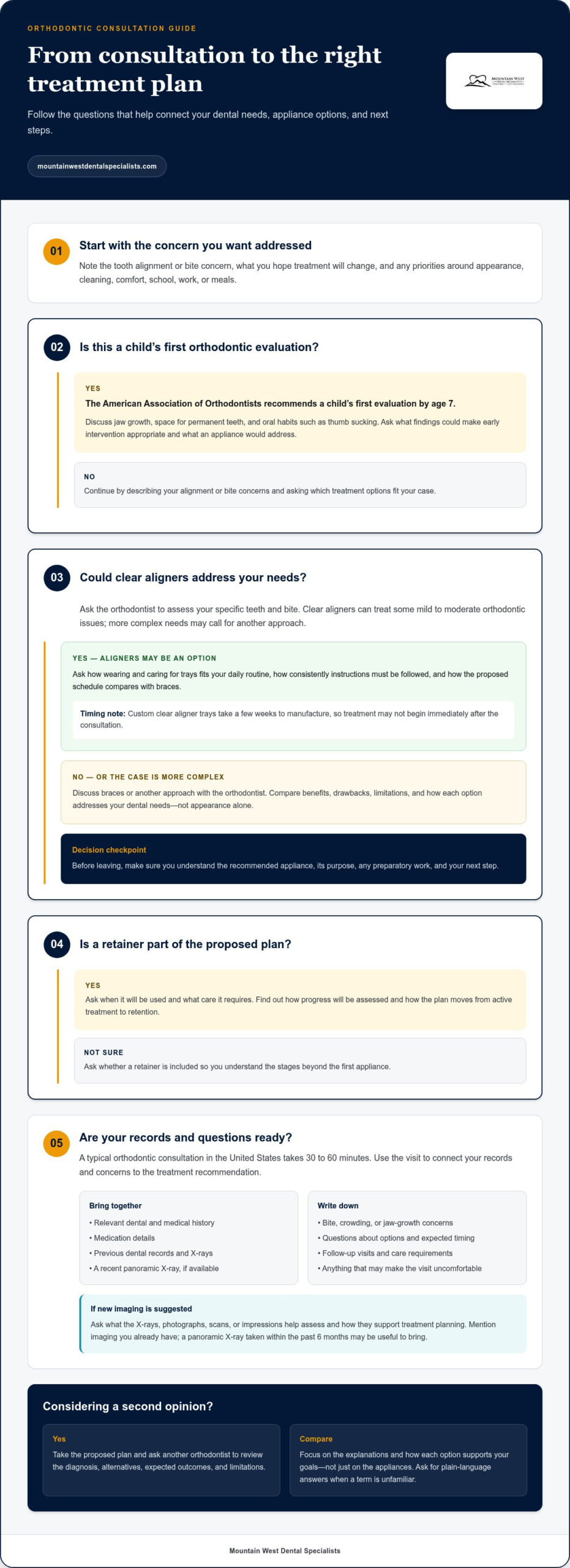
Braces, clear aligners, early appliances, and retainers
- Compare braces and clear aligners against your needs. Ask which option can address your specific tooth alignment or bite concerns. Clear aligners can treat some mild to moderate orthodontic issues, while a more complex case may call for another approach. Ask the orthodontist to explain the benefits and drawbacks for your treatment goals, rather than choosing by appearance alone.
- Ask how aligners affect timing and daily routines. Custom clear aligner trays take a few weeks to manufacture, so treatment may not begin immediately after the consultation. Discuss what wearing and caring for the trays involves, and how consistently you’ll need to follow instructions. Ask how the schedule compares with braces for your proposed plan.
- For a child, discuss growth and development. The American Association of Orthodontists recommends a child’s first orthodontic evaluation by age 7. The consultation can consider jaw growth, space for permanent teeth, habits such as thumb sucking, and whether early intervention may help. Ask which findings would make an early appliance appropriate, and what it aims to address.
- Include retainers in the treatment conversation. Ask whether a retainer is part of the proposed plan, when it would be used, and what care it requires. Discuss how the orthodontist will assess progress and explain the transition between appliances. Understanding each phase helps you see the full path, not just the first device.
- Match the recommendation to the patient’s priorities. Bring up comfort, appearance, cleaning, and how an appliance may fit school, work, or meals. Ask what limitations apply to each option and whether any preparatory work is needed. A useful takeaway is a plan that explains the chosen appliance, expected outcome, and next step in plain language.
Mountain West Dental Specialists: Orthodontic Braces and Aligners
Mountain West Dental Specialists provides braces and clear aligners for patients exploring orthodontic treatment. To discuss a plan, bring questions about your dental needs, expected outcomes, timing, and appliance care. That helps keep the conversation focused on what matters to you.
Ask how braces or aligners could address your specific concerns and what factors shape the recommended approach. For a child, bring questions about jaw growth, space for permanent teeth, or oral habits. These details can help guide a discussion about possible orthodontic next steps.
Whether you’re exploring treatment for yourself or your child, Mountain West Dental Specialists can assess orthodontic needs and discuss braces or aligners. Contact Mountain West Dental Specialists to take the next step.
Take Your Next Step With Confidence
Preparing for your orthodontic consultation can help you make the next decision with greater clarity. Once you understand the proposed approach, consider how it fits your goals, daily routine, and family’s needs. You don’t have to resolve every question in one visit. A useful next step is to identify what you want explained before deciding how to move forward.
For families considering orthodontic care for a child, Mountain West Dental Specialists also provides pediatric dental checkups and tongue-tie release. These services can be relevant to broader questions about a child’s oral care, alongside a discussion of orthodontic needs.
If you’re ready to talk through your next step, contact Mountain West Dental Specialists. Bring your questions, share what matters to you, and take the conversation at a pace that feels comfortable. A clear, thoughtful discussion is a good place to begin.
Frequently Asked Questions
Can I start treatment the same day?
Braces are usually not placed during the initial consultation, which focuses on assessment and planning. If you agree on a treatment plan and discuss payment options, the office can schedule a treatment-start visit or another assessment. Clear aligners require custom trays, which take a few weeks to manufacture. Ask what steps your case needs before treatment can begin.
Do I need a referral from my dentist?
You can contact Mountain West Dental Specialists directly to discuss an orthodontic appointment; you don’t need a referral to start the conversation. Your dentist can still be a helpful partner. Share their contact information and ask them to forward relevant records, especially if they’ve noticed a bite concern or changes in tooth alignment. This coordination can connect your dental history with the orthodontic evaluation.
Does a Parent or Guardian Need to Attend?
Yes. A parent or guardian needs to attend an orthodontic consultation when the patient is under 18. Their presence helps with sharing health history, understanding the proposed plan, and discussing decisions about care. Before the visit, talk together about the child’s concerns, such as a crowded tooth or a bite that feels different. Bring those observations so the child’s perspective is heard, too.
What Are My Treatment Options?
Options may include traditional metal braces, clear aligners, and early appliances for some growing children. Mountain West Dental Specialists also offers Invisalign clear aligners and custom-fit LightForce 3D-printed ceramic braces. Each option suits different dental needs and daily routines. Ask how the recommended appliance addresses your specific alignment or bite concerns, and whether the plan includes a retainer after active treatment.
What should I bring to an orthodontic consultation?
Bring identification, dental insurance information, and any requested paperwork, along with relevant dental records and imaging you already have. Prepare a list of medications and health conditions, and have your general dentist’s contact information ready. For a child’s appointment, include a parent or guardian and note any concerns about jaw growth, thumb sucking, or permanent teeth. Keep digital records accessible on your phone.
What questions should I ask an orthodontist at the first consultation?
Ask what the examination shows, which treatment options fit your needs, and what outcomes the plan aims to achieve. Clarify possible limitations, preparatory steps, expected appointment schedules, and appliance care. If you’re comparing plans, ask how each recommendation addresses the same concern. Note unfamiliar terms during the discussion and request a plain-language explanation before deciding how to proceed.