
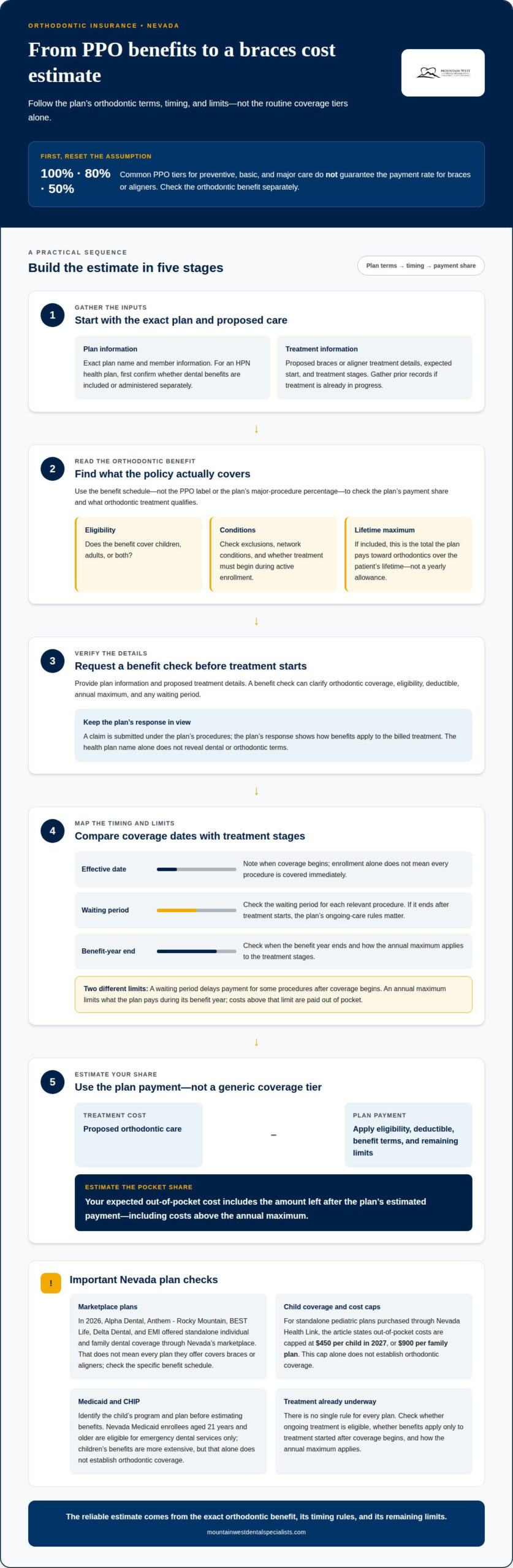
A PPO’s familiar 100% preventive, 80% basic, and 50% major coverage pattern doesn’t by itself tell you what orthodontic treatment will cost. Orthodontic benefits depend on your plan’s terms, while the deductible, waiting period, and annual maximum affect how much you pay out of pocket. With dental insurance for orthodontics in Nevada, the key is to review the orthodontic benefit itself rather than assume it follows the plan’s major-procedure percentage.
It’s understandable to want a clear estimate before starting braces or aligner treatment. This guide explains how PPO coverage works for orthodontics and how deductibles, waiting periods, and annual maximums can shape your share of the cost. You’ll also learn what plan details to gather and how to use them to build a more useful estimate for your family.
Key Takeaways
- Look for a separate orthodontic benefit in your PPO documents instead of assuming the plan’s usual coverage tiers apply to braces or aligners.
- Build a more useful estimate by accounting for the deductible and how the plan calculates its share of eligible treatment costs.
- Review waiting periods and annual maximums to understand when benefits may begin and how the plan’s payment limit can affect your share.
- Compare plans by their orthodontic terms and timing, not just their premiums, so you can choose coverage that better fits your treatment needs.
PPO dental insurance coverage for orthodontics
A PPO’s routine coverage tiers don’t determine its orthodontic benefits. Review the policy’s orthodontic terms separately to understand coverage for braces or aligners.
Orthodontic and Braces Coverage
Braces and Invisalign are orthodontic care, but a PPO’s routine tiers don’t automatically establish their benefits. Typical PPO plans cover preventive procedures at 100%, basic procedures at 80%, and major procedures at 50%. Those percentages describe common coverage tiers, not a guaranteed orthodontic rate. A child’s braces, for example, may be addressed under a separate orthodontic benefit. Review the benefit schedule for covered treatment, exclusions, and any network conditions that affect the plan’s payment.
PPO Coverage and Orthodontic Benefits
An orthodontic benefit may state covered treatment, the plan’s payment share, and a lifetime maximum. That maximum is the total amount the plan pays toward orthodontics over the patient’s lifetime, rather than a yearly allowance. Don’t assume that the 50% major-procedure tier applies to braces. Check whether the plan’s terms cover children, adults, or both, and whether treatment must begin during active enrollment. Emergency dental benefits are separate from orthodontic coverage, so they don’t establish what the plan pays for braces.
Nevada Plans Covering Orthodontics
Which dental insurance plans in Nevada cover orthodontics? Coverage depends on each policy’s orthodontic benefit, not just its insurer or PPO label. In 2026, Alpha Dental, Anthem – Rocky Mountain, BEST Life, Delta Dental, and EMI offered standalone individual and family dental coverage through Nevada’s marketplace. That list identifies marketplace insurers, but doesn’t mean every plan they offer covers braces or aligners. Compare the individual plan’s benefit schedule for eligibility, network terms, exclusions, and any lifetime maximum before estimating your family’s share. Nevada patients should base the estimate on the specific policy, rather than assume all family dental plans work alike.
Checking insurance benefits and estimating out-of-pocket costs
Your estimate depends on the plan’s orthodontic terms and remaining benefits. A benefit check can clarify what the insurance plan may pay before treatment begins.
Benefit Checks and Claims
Start with the exact plan name, member information, and proposed treatment details. Benefit verification can identify orthodontic coverage, eligibility, deductibles, the annual maximum, and any waiting period. For an HPN health plan, first find out whether dental benefits are included or administered separately. The health plan name alone doesn’t show its orthodontic terms.
For a child covered by Nevada Medicaid, dental benefits are more extensive than adult benefits. Nevada Medicaid enrollees aged 21 years and older are eligible for emergency dental services only. For a child with Medicaid or CHIP, identify the program and plan before estimating benefits. Nevada’s benchmark plan includes basic and major dental services for children, but that fact alone doesn’t establish orthodontic coverage. A claim is submitted under the plan’s procedures, and its response shows how benefits apply to the billed treatment.
Out-of-Pocket Cost Estimates
How much can dental insurance reduce the cost of braces in Nevada? The plan’s orthodontic payment terms, deductible, and remaining annual maximum determine the reduction. A general PPO coverage tier isn’t enough to estimate braces costs. Use the orthodontic benefit and treatment details instead.
To use benefits, provide the plan information and proposed treatment details for a benefit check, then review the response before treatment starts. Compare the estimated plan payment with your expected pocket share, including costs above the annual maximum. For children, Nevada standalone pediatric plans purchased through Nevada Health Link cap out-of-pocket costs at $450 per child in 2027, or $900 per family plan. An orthodontic treatment assessment can help connect the proposed care with the benefits estimate.
Dental plan waiting periods and annual maximums
An annual maximum limits what a dental plan pays during its benefit year. Every dental insurance plan has one, and treatment costs above that limit are paid out of pocket. Waiting periods work differently: most plans delay payment for some procedures after coverage begins. For braces, crowns, and other planned dental care, both rules can affect when benefits apply and how much remains your responsibility.
Nevada Health Link offers exchange-certified standalone dental plans during open enrollment from November 1 to January 15. This enrollment window is separate from a plan’s waiting period. Enrolling during open enrollment doesn’t automatically mean every procedure is covered immediately. Read the effective date and benefit terms together, especially if you’re planning orthodontic treatment or crowns. Preventive care and other procedures may have different coverage rules, so check each category in the plan documents.
Do Nevada dental plans cover orthodontic treatment already in progress or treatment that began before enrollment? There’s no single rule for every plan. The policy’s orthodontic terms determine whether ongoing treatment is eligible, whether benefits apply only to treatment started after coverage begins, and how the annual maximum applies. Prior treatment records don’t replace those plan terms.
Use a simple timeline to understand the effect: note the coverage effective date, the waiting period for each relevant procedure, and the benefit-year end date. Compare those dates with the expected start and stages of braces treatment. If a waiting period ends after treatment starts, the plan’s rules for ongoing care determine whether later claims qualify. If the annual maximum is reached first, additional covered treatment that year is paid out of pocket. Keep the plan’s schedule of benefits beside the treatment timeline, and review preventive care separately from orthodontic procedures. This makes timing and payment limits easier to see before care begins.
Deductibles and comparing plans
For families comparing dental insurance for orthodontics in Nevada, the deductible is one part of the value calculation. It affects how much you pay before the plan contributes to eligible care. A lower deductible may still come with limited orthodontic benefits, while another plan may pair a higher deductible with terms that better fit your needs. Compare the full benefit schedule, not just one appealing feature.
Review each plan’s documents for its deductible, covered procedures, orthodontic terms, and network rules. Essential Choice PPO and Dental Family PPO are plan labels, not guarantees of identical benefits. Check whether the deductible applies to orthodontics, preventive care, pediatric services, or oral surgery. For family plans, also note whether each person has an individual deductible or family-level rules apply.
Direct-to-consumer dental plans offer another option to compare. In Nevada, standalone dental plans sold directly to consumers are regulated by the Nevada Division of Insurance. Regulation doesn’t determine whether a specific policy covers braces. Read the written orthodontic benefit, waiting period, deductible, and annual maximum together. Preventive coverage alone doesn’t show how the plan handles orthodontic treatment.
- Deductible: Identify when it applies and which procedures count toward it.
- Orthodontics: Review eligibility, payment terms, and any lifetime limit.
- Family use: Compare deductible rules for each covered person.
- Network: See how network participation affects eligible charges and plan payments.
Finally, compare the plan’s expected payment with your share across the treatment timeline. For a child, include pediatric needs and preventive care, rather than judging a plan on braces alone. A careful review of dental insurance for orthodontics in Nevada can help you weigh benefits against the deductible and other plan limits. If you’re planning care for your child, explore pediatric dental checkups as part of your family’s dental care planning.
Mountain West Dental Specialists: Orthodontic Braces and Aligners
Mountain West Dental Specialists provides braces and aligners for patients considering orthodontic treatment. Once you’ve reviewed your plan’s orthodontic benefits, a treatment discussion can help connect the coverage details with the care you’re considering. Bring your insurance information and any benefit estimate so the proposed treatment and plan terms can be discussed together.
Families can also receive pediatric dental checkups alongside orthodontic care. If you’re weighing braces or aligners for yourself or your child, the next step is a conversation about your needs and treatment options. Contact Mountain West Dental Specialists to discuss orthodontic care in Las Vegas.
Take the Next Step With Confidence
Insurance details can help you plan, but they don’t have to define the whole treatment decision. Use your benefit information as one part of a conversation about your goals, available orthodontic options, and the care that fits your needs. A clear next step is to discuss treatment while keeping your plan’s terms in view. If you’re considering dental insurance for orthodontics in Nevada, Mountain West Dental Specialists can discuss orthodontic care and Tongue-Tie Release as part of its specialized services.
Contact Mountain West Dental Specialists to talk about your orthodontic needs. You can move forward thoughtfully, with a caring team to help you consider the path ahead.
Frequently Asked Questions
What are the waiting periods and age limits for orthodontic coverage in Nevada?
Waiting periods and age limits depend on each plan’s orthodontic terms; plans don’t share one schedule. Review which ages qualify and whether benefits differ for children and adults. If a child is approaching an age cutoff, compare the plan’s eligibility terms with the proposed treatment timeline. Also look for conditions tied to when treatment begins, as these can affect whether benefits apply.
Does Nevada Medicaid cover orthodontic treatment for children or adults?
Nevada Medicaid provides children with more extensive dental benefits than adults, but that alone doesn’t establish whether a child’s orthodontic treatment is covered. Enrollees aged 21 years and older are eligible for emergency dental services only. For a child, distinguish routine dental benefits from orthodontic benefits in the applicable program terms. Coverage for checkups or other dental care doesn’t by itself establish eligibility for braces.
How can I compare Nevada dental insurance plans for orthodontic coverage?
Compare each policy’s written orthodontic terms for the person who needs treatment rather than relying on the plan name alone. If a child and an adult in your family are considering care, check each person’s eligibility separately. Note whether the policy treats braces and aligners alike and whether network rules affect the amount used to calculate benefits. Reviewing these details side by side makes differences between plans easier to spot.
Are there Nevada-specific rules or enrollment periods for dental insurance with orthodontic benefits?
Nevada Health Link offers exchange-certified standalone dental plans during annual open enrollment from November 1 to January 15. That date range applies to enrollment, not automatically to the start of orthodontic benefits. Standalone dental plans sold directly to consumers in Nevada are regulated by the Nevada Division of Insurance. For braces coverage, consider the individual plan’s orthodontic terms alongside its enrollment options.
What orthodontic benefits and lifetime maximums do Nevada dental plans offer?
Benefits vary by policy. Check the plan’s orthodontic terms for covered treatment, the plan’s payment share, eligibility, and any lifetime maximum, the total amount the plan pays toward orthodontics over the patient’s lifetime.