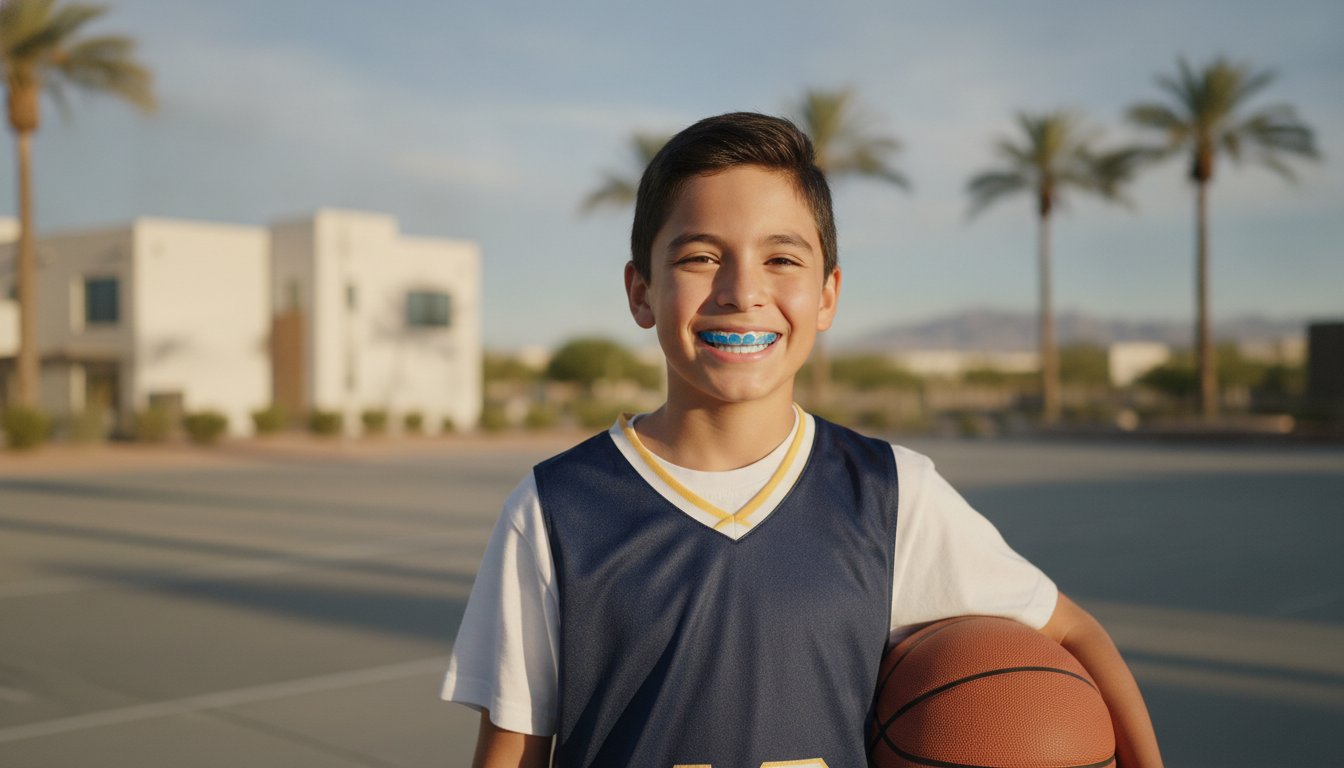
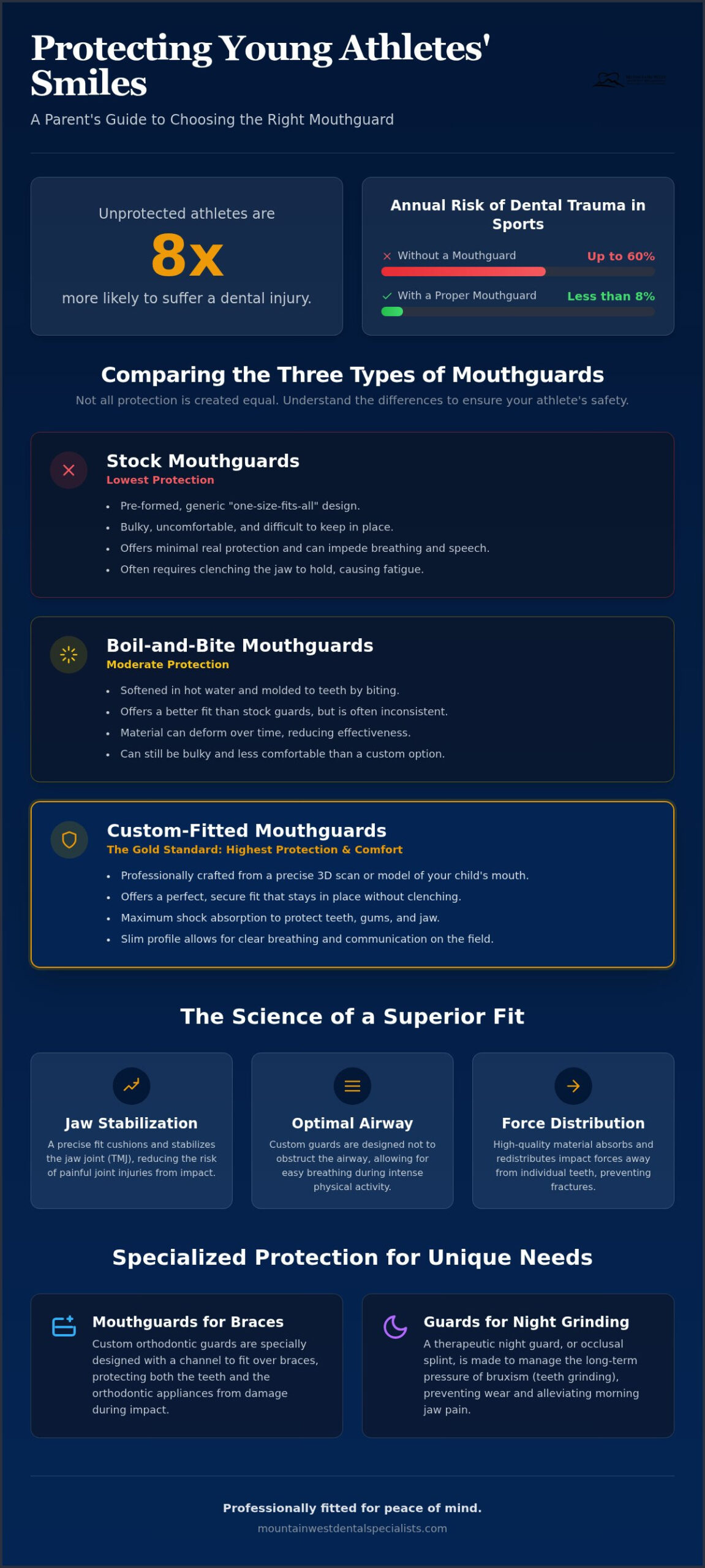
Did you know that young athletes who play without protection are nearly eight times more likely to suffer a dental injury? According to the American Dental Association, children who don’t wear a mouthguard face a trauma risk as high as 60 percent, while those with a proper fit see that risk plummet to less than 8 percent. As a parent, you want your child to dive into the sports they love without the constant fear of a chipped tooth or a painful emergency. We understand that bulky, store-bought options often end up in the gym bag because they’re uncomfortable or make it hard for your child to breathe during a big play.
You deserve a solution that prioritizes your child’s safety and comfort while they stay active. This article will help you discover the critical differences between various protection types and how a professional fit safeguards your child’s smile and long-term health. We will explore how modern 3D imaging ensures a precise fit, why airway management matters during intense competition, and how the right gear can even help with morning jaw pain from teeth grinding. It’s our goal to provide a dental home that treats your family with the specialized care they need to stay healthy on and off the field.
Key Takeaways
- Learn why custom shock absorption is the gold standard for protecting your child’s smile against high-impact sports injuries.
- Understand the differences between store-bought options and a professional mouthguard to ensure your athlete can breathe and speak clearly on the field.
- Discover how specialized designs protect orthodontic work by creating a safe channel for braces and brackets to move as intended.
- Explore how advanced 3D imaging technology provides a precision fit that stabilizes the jaw and supports long-term oral health.
- Gain peace of mind by finding a dental home in Las Vegas where specialists prioritize both safety and comfort for your young athlete.
What is a Mouthguard and Why Does Your Family Need One?
Protecting your child’s vibrant smile is a top priority for any parent, especially when they’re active in the many local sports programs available throughout Las Vegas. Understanding What is a Mouthguard is the first step in providing that essential protection. At its core, this device is a resilient, custom-fitted appliance worn over the teeth to act as a specialized cushion. It’s designed to absorb the energy from a sudden impact and redistribute that force across a larger surface area. This simple mechanism prevents the concentrated pressure that leads to chipped, broken, or knocked-out teeth.
The benefits extend far beyond just tooth protection. A well-fitted guard also shields the soft tissues of the mouth, such as the lips and tongue, from being accidentally bitten or cut during a collision. It even helps stabilize the jaw joint, reducing the risk of painful injuries to the temporomandibular joint (TMJ). When you consider that up to 39 percent of all dental injuries in children are sports-related, the preventive value of a high-quality mouthguard becomes clear. It’s a small investment that protects your child’s long-term health and saves your family from the high emotional and financial costs of emergency dental trauma.
Common Scenarios for Mouthguard Use
While high-impact sports like football or hockey are obvious candidates for protection, many injuries happen in “limited contact” activities. Basketball and soccer are leading causes of dental trauma; a June 2025 study found that basketball alone accounted for 30 percent of these injuries. We also recommend protection for children who experience nighttime bruxism, or teeth grinding, which can lead to morning jaw pain. Specialized guards are even used in airway management to help optimize breathing and improve sleep quality for our young patients.
The Anatomy of a High-Quality Guard
The material used in your child’s appliance is critical for both safety and comfort. Medical-grade thermoplastics are the standard at our practice because they outperform generic rubber in every category. We focus on finding the “Goldilocks” zone for thickness; it must be robust enough to provide maximum protection while remaining slim enough so it doesn’t interfere with your child’s breathing or speech. An occlusal splint is a specialized therapeutic guard used to manage more complex jaw alignment or grinding issues.
Comparing the Three Main Types of Mouthguards
Choosing the right gear for your child often feels like a balancing act between convenience and quality. While it is tempting to grab a quick solution from a local sporting goods store, the idea that “one size fits all” is a dangerous myth for protecting a growing smile. A child’s mouth is unique and constantly changing; an ill-fitting guard can do more harm than good by failing to stay in place when it matters most. Understanding the three primary types of guards helps you make an informed decision for your young athlete’s safety.
- Stock Mouthguards: These are pre-formed and ready-to-wear right out of the box. They are often the least expensive option but provide the lowest level of protection. Because they aren’t shaped to your child’s unique bite, they are bulky and difficult to keep in place without constant clenching.
- Boil-and-Bite: These thermoplastic guards are common in many Las Vegas households. You soften the material in hot water and have your child bite down to create a mold. While they offer a better fit than stock versions, they frequently lose their shape over time and rarely provide the precision needed for maximum safety.
- Custom-Fitted Guards: Professionally designed by specialists, these offer the highest level of protection. They are crafted from a precise model of your child’s mouth to ensure they stay secure during even the most intense physical activity.
It’s also vital to distinguish between a sports mouthguard and a night guard used for bruxism. A sports guard is designed to absorb sudden, high-impact forces, while a guard for grinding focuses on managing steady, long-term pressure. Using the wrong tool for the job can lead to discomfort or inadequate protection for your child’s teeth and jaw.
The Pitfalls of Over-the-Counter (OTC) Options
Poorly fitted store-bought guards often lead to a “gag reflex” issue. Because they are unnecessarily thick in the back of the mouth, kids find them uncomfortable and frequently refuse to wear them. Beyond discomfort, generic guards can cause gum irritation or even unwanted tooth movement if they apply pressure unevenly across the dental arch. Their durability is also a concern; many generic options wear down or thin out within just a few months of regular use, requiring frequent replacements that add up over time.
The Custom-Made Advantage
The precision fit of a custom guard is its greatest strength. We use modern 3D scanning to capture every contour of your child’s smile, ensuring the device fits like a second skin. This allows your athlete to speak to teammates and breathe deeply without the guard falling out or interfering with their performance. If your child is undergoing orthodontic treatment, finding specialized Mouthguards for Braces is essential to protect both the teeth and the brackets. Our team is here to help you find a comfortable, custom-fitted solution that serves as a smart, long-term investment in your child’s health.
The Science of Protection: Airway, Jaws, and Concussions
Protecting your child’s smile involves more than just placing a barrier over their teeth. A high-quality mouthguard acts as a stabilizer for the entire craniofacial system. When an impact occurs, the device helps stabilize the temporomandibular joint (TMJ), which reduces the risk of long-term jaw pain or displacement. It also serves as a critical buffer between sharp tooth edges and the delicate soft tissues of the lips and cheeks. This prevents the painful lacerations often seen in high-contact sports. Experts at Nationwide Children’s Hospital emphasize that these devices are a necessary piece of safety equipment for any young athlete, regardless of their skill level.
We often hear parents ask if these devices can prevent concussions. It’s vital to be clear about what the science says. While current research does not support the claim that a mouthguard reduces the risk of a concussion, it does play a role in reducing the force of jaw-to-skull impacts. By absorbing shock that would otherwise travel through the jawbone to the base of the skull, a custom fit provides an extra layer of protection for the head and neck area during a collision. This structural support helps manage the energy of an impact before it reaches more sensitive areas.
Optimizing the Airway for Athletes
Efficiency is everything during a close game. Many athletes default to mouth breathing during intense play, but nasal breathing is far more efficient for oxygenating the blood and maintaining stamina. A custom-designed guard is crafted with airway management as a priority, maintaining the jaw in an ideal position to keep the airway open and unobstructed. This precision ensures that your child isn’t struggling for air while they’re trying to focus on making the winning play. Proper jaw stabilization directly translates to improved athletic performance by maximizing oxygen intake and reducing overall physical stress on the body.
Protecting the Growing Smile
Children aren’t just small adults; their mouths are in a constant state of flux. With new teeth erupting and the jawbone expanding, a “one-size-fits-all” approach simply isn’t safe. Our specialists, Dr. Keaton and Dr. Allison Tomlin, take a proactive approach by monitoring the fit of your child’s appliance as they grow and develop. We believe in a “family-to-family” care model that treats your child’s long-term dental health with the same attention we give our own children. This protective advocacy ensures that your young athlete remains safe and comfortable through every growth spurt and season change in Las Vegas.
Special Considerations: Mouthguards for Braces and Night Grinding
If your child is currently undergoing orthodontic treatment, protecting their smile requires a more specialized approach than a standard over-the-counter option can provide. A generic mouthguard can actually do more harm than good by trapping teeth in place, which prevents the natural movement your child’s braces are trying to achieve. Even worse, a poorly fitted guard can get caught on metal brackets or wires, potentially damaging the appliance or causing painful injury to the gums during an impact. Custom-fitted guards for orthodontic patients are designed with a specific “channel” that allows the teeth to move safely while still providing a robust shield against external force.
It’s also important to recognize that a sports guard is not a substitute for a nightguard. While both devices offer protection, they serve fundamentally different purposes. A nightguard is designed with a specific material density to resist the constant, grinding pressure of bruxism, whereas a sports guard is built for sudden shock absorption. Using the wrong tool for the job can lead to discomfort, inadequate protection, or even changes in your child’s bite. If you notice your child has worn enamel or wakes up with frequent morning headaches, they may be grinding their teeth and require a therapeutic evaluation.
Navigating Sports with Braces
Las Vegas student-athletes who wear braces face an increased risk of soft tissue injuries. Metal brackets act like sharp edges against the inside of the lips and cheeks during a collision. For certain activities like wrestling, the National Federation of State High School Associations (NFHS) even mandates a mouthguard for any athlete wearing braces to prevent these lacerations. We provide ortho-specific guards that our specialists can adjust as your child’s treatment progresses. This proactive care ensures they stay protected on the field without compromising the results of their orthodontic work.
Managing Bruxism and TMJ Pain
Material density is the key difference between a nightguard and a sports guard. Nightguards are often thinner but much harder to withstand hours of clenching. If your child is using clear aligners like Invisalign, you might wonder if they can wear a guard over them; typically, the aligners themselves provide some protection, but a specialist should evaluate if additional support is needed. When you notice signs like jaw clicking, chronic facial pain, or flattened tooth surfaces, it’s a signal that your child’s jaw joints are under stress. If you’re concerned about your child’s dental safety or jaw health, we invite you to schedule an orthodontic evaluation to find a solution tailored to their unique needs.
Getting Your Custom Mouthguard at Mountain West Dental Specialists
Choosing a professional fit for your child’s protection shouldn’t be a stressful experience for your family. At Mountain West Dental Specialists, we’ve replaced the messy, uncomfortable putty impressions of the past with advanced 3D digital scanning. This technology allows us to create a highly accurate model of your child’s teeth in minutes, ensuring their new mouthguard fits perfectly without any gagging or discomfort. Our family-owned practice, led by Dr. Keaton and Dr. Allison Tomlin, is conveniently located on S. Cimarron Road, making it easy for busy Las Vegas families to access specialized care close to home.
We believe that safety should also be fun for young athletes. Your child can choose from a variety of custom colors and personalized designs to make their gear something they’re proud to wear during the game. When a child loves how their equipment looks and feels, they’re far more likely to keep it in their mouth where it belongs. Every device we create is carefully evaluated by our specialists to ensure it meets our high standards for precision, safety, and long-term comfort.
What to Expect During Your Appointment
Your journey begins with a quick, non-invasive scan using our digital workflow. Once the 3D model is ready, we craft a mouthguard that matches the unique contours of your child’s smile and accounts for any ongoing orthodontic movement. During the fitting appointment, we’ll make any necessary adjustments to ensure the guard is secure and doesn’t interfere with deep breathing. We’ll also provide simple care and maintenance tips, such as rinsing with cool water and using a ventilated case, to keep the appliance hygienic and functional for the entire season.
Your Partner in Las Vegas Pediatric and Orthodontic Care
Our practice is unique because we house both pediatric and orthodontic specialists under one roof. This collaborative environment means we’re looking at your child’s oral health from every angle, from erupting baby teeth to complex jaw alignment and airway management. We treat every young patient like a member of our own inner circle, providing the protective advocacy and neighborly kindness your family deserves. We invite you to join our dental home and experience the peace of mind that comes with expert, specialized care. Schedule your custom mouthguard consultation in Las Vegas today!
Give Your Child the Confidence to Play Hard and Stay Safe
Your child’s smile is a lifelong asset that deserves the highest level of protection. As we’ve discussed, a custom-fitted mouthguard is far more than a piece of plastic; it’s a precision medical device designed to safeguard teeth, stabilize the jaw, and optimize breathing during peak performance. By choosing a professional fit, you ensure that your athlete stays comfortable and protected, even if they wear braces or struggle with nighttime grinding.
At Mountain West Dental Specialists, we take pride in being a trusted home for specialized care in Las Vegas. Our family-owned practice combines expert pediatric and orthodontic knowledge with state-of-the-art 3D digital scanning to deliver a perfect fit every time. You don’t have to sacrifice comfort for safety. We invite you to Book a Custom Mouthguard Fitting for Your Child and take a proactive step toward their long-term health. We can’t wait to see your young athlete thrive on the field with a smile that’s built to last.
Frequently Asked Questions
How much does a custom mouthguard cost compared to a store-bought one?
A custom-fitted appliance is a higher initial investment than a generic store-bought option, but it provides significantly better value over time. While over-the-counter guards are inexpensive, they often lack the durability and precision needed to prevent expensive dental emergencies. Investing in a professional guard helps your family avoid the high costs of repairing chipped or knocked-out teeth that generic options might fail to protect.
Can my child wear a mouthguard with braces?
Yes, your child absolutely can and should wear a mouthguard if they have braces. We create specialized designs that include a protective channel for the brackets and wires to sit comfortably. This ensures the device doesn’t interfere with the tooth movement your orthodontist is working to achieve while protecting your child’s lips and cheeks from painful lacerations during a game or practice.
How often should a child’s mouthguard be replaced?
You should generally replace your child’s guard every six months or at the start of a new sports season. Because children’s mouths grow and change so rapidly, a fit that was perfect last year might be too tight or uncomfortable today. If you notice any signs of thinning, tearing, or if your child has a major growth spurt, it is time to visit us for a new scan.
Is there a difference between a nightguard and a sports mouthguard?
Yes, there is a fundamental difference in how these two devices are constructed. A sports guard is made from thick, shock-absorbing material designed to handle sudden, high-impact collisions on the field. In contrast, a nightguard is typically thinner and made of a harder material to withstand the constant, grinding pressure of bruxism. Using the wrong one can lead to discomfort or inadequate protection for your child’s jaw.
How do I clean and care for a custom mouthguard?
Keeping the appliance clean is simple but essential for your child’s oral health. You should rinse the guard with cool water after every use and store it in a sturdy, ventilated case to prevent bacteria growth. Occasionally, you can brush it gently with a soft toothbrush and non-abrasive soap. Avoid using hot water, as high temperatures can warp the precision fit of the thermoplastic material and ruin the guard.
Can a mouthguard help prevent concussions?
Current medical research does not support the claim that a mouthguard can prevent concussions. However, a properly fitted guard does play a vital role in absorbing the shock from jaw-to-skull impacts. By cushioning the lower jaw and stabilizing the joint, it reduces the amount of force that travels toward the base of the brain during a collision, providing an extra layer of structural safety.
What should I do if my child loses their custom-fitted guard?
If your child loses their guard, please contact our office as soon as possible. Because we use advanced 3D digital scanning, we often have your child’s unique dental records saved in our secure system. This technology allows us to start the replacement process quickly so your young athlete doesn’t have to miss a single practice or game without their essential protection. We are here to help you get back on the field safely.