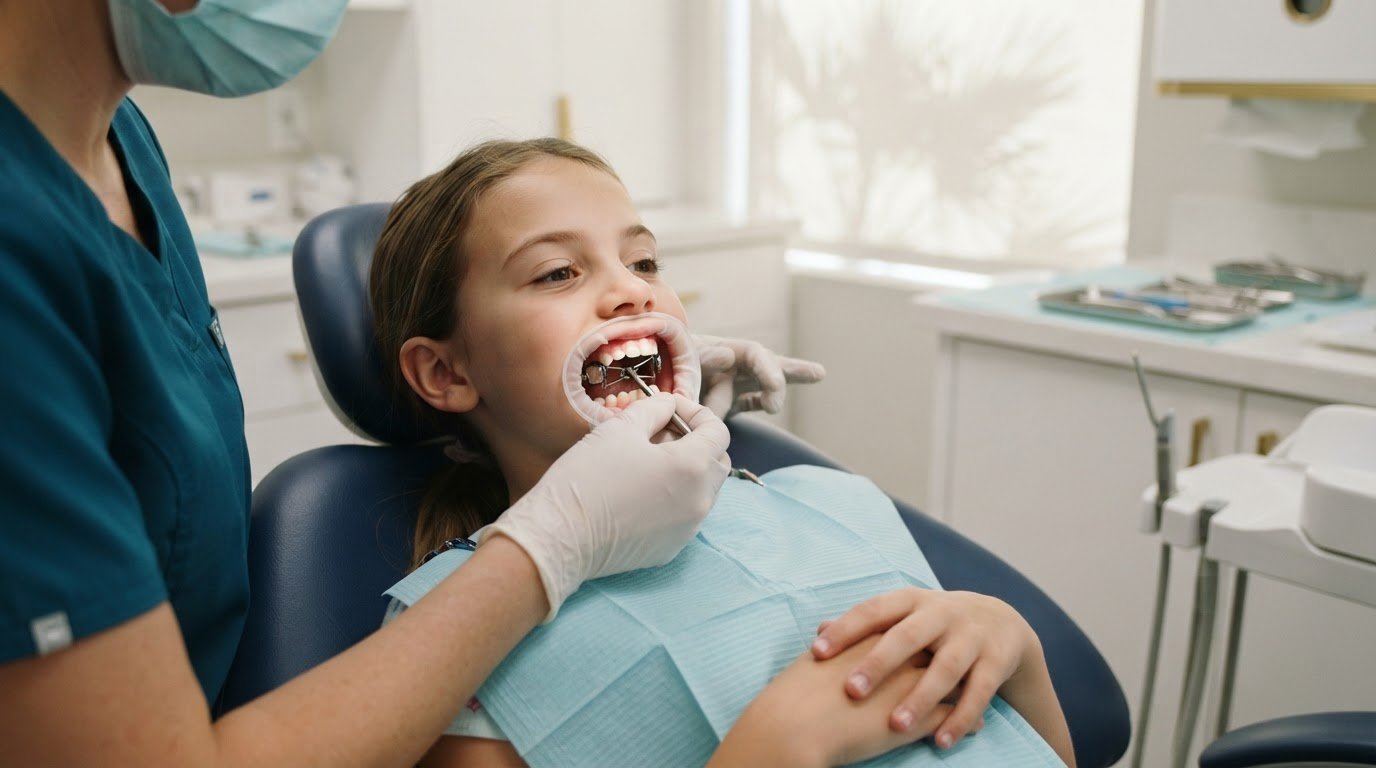
Braces or palatal expansion may support sleep apnea care when jaw position, a narrow palate, or bite alignment contributes to airway obstruction. These orthodontic solutions for sleep apnea address structural factors, but they do not diagnose or treat sleep apnea on their own. Coordination with a sleep physician connects dental findings with appropriate medical evaluation.
Whether orthodontic care could help depends on what is contributing to the obstruction. Palate expansion and braces can affect airway structure, but they are only one possible part of care. A sleep physician evaluates suspected sleep apnea, while an orthodontist assesses dental and jaw features. Severe sleep apnea may require treatment beyond orthodontics.
Key Takeaways
- Jaw and bite alignment may matter when airway obstruction is linked to dental structure; the treatment approach depends on what’s contributing to the blockage.
- Palatal expansion can widen a narrow upper jaw, particularly in growing patients, and may support airflow when a narrow palate is part of the concern.
- Braces are one possible part of care, but they may not be enough on their own, especially when sleep apnea is severe.
- Coordinating orthodontic care with a sleep physician connects dental findings with medical diagnosis and helps shape an appropriate treatment plan.
Sleep Apnea & Orthodontics: Can Braces or Expanders Help?
Braces, clear aligners, and palatal expanders may support care when jaw or dental structure contributes to airway obstruction. They address structural factors, but cannot diagnose sleep apnea independently.
Correcting Bite and Jaw Alignment
Bite and jaw alignment describe how the upper and lower teeth meet and how the jaws relate. A severe overbite, underbite, or crossbite can affect the lower jaw’s position and the space available for the tongue.
If the lower jaw sits back, the tongue may also rest farther back, reducing the space behind it. Correcting a contributing bite relationship can reposition dental structures and may help open the airway. The potential benefit depends on whether jaw structure contributes to the obstruction.
Braces, Aligners, and Jaw Positioning
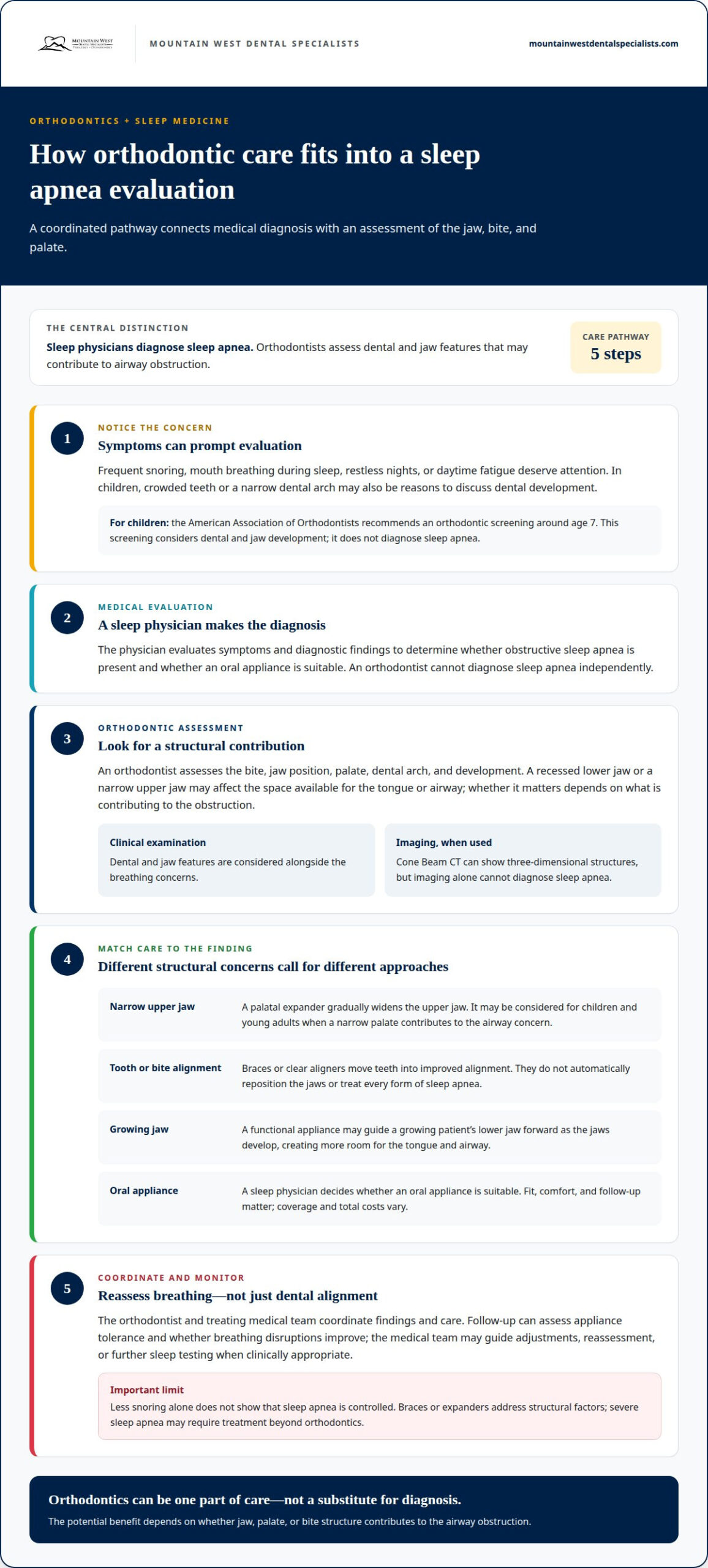
Braces and clear aligners move teeth into improved alignment; they do not automatically reposition the jaws or treat every form of sleep apnea. An orthodontist assesses the bite and tooth position to determine whether dental correction could address a structural factor.
For a growing patient, a functional appliance may guide the lower jaw forward as the jaws develop. This can create more room for the tongue and airway. Adult orthodontic care may correct tooth alignment, while jaw positioning requires an approach tailored to the patient’s anatomy.
Diagnosis and Monitoring With Oral Appliances
A sleep physician diagnoses obstructive sleep apnea; an orthodontist cannot diagnose it independently. The physician evaluates symptoms and diagnostic findings before deciding whether an oral appliance is suitable.
Coverage for oral appliances varies by insurance plan, and Medicare coverage depends on the criteria for the prescribed device. Ask your insurer about coverage for the appliance, fitting, and follow-up before treatment begins. Costs vary because device design, fitting, and follow-up needs affect the total.
Follow-up helps assess whether the appliance is tolerated and breathing disruptions improve. The treating medical team can guide adjustments and reassessment, including further sleep testing when clinically appropriate. Less snoring alone does not show that sleep apnea is controlled.
Palatal expansion and widening the dental arch
A palatal expander gradually widens the upper jaw, changing the shape of the dental arch. For children and young adults, it may be considered when a narrow palate contributes to obstructed breathing during sleep. It addresses one structural factor, not every possible cause of sleep apnea.
A narrow upper jaw can leave less room around the nasal passages and throat, making airflow more difficult. In some children, the upper jaw develops narrow and high when the tongue rests low instead of against the palate. During an assessment of dental development, a clinician can look for a narrow arch alongside concerns such as frequent snoring or mouth breathing during sleep.
Rapid Palatal Expansion uses an appliance placed on the palate to widen a child’s upper jaw. As the jaw widens, the nasal airway may gain space. The clinician considers the palate, dental arch, growth, and breathing concerns together, rather than focusing only on straightening teeth. A sleep physician’s evaluation remains important if symptoms suggest a serious breathing problem.
Expansion is most relevant when a narrow upper jaw is part of the airway concern. It does not replace sleep apnea diagnosis, and daytime fatigue or restless sleep still deserves medical attention. If you’re considering whether your child’s dental development could relate to nighttime breathing, an orthodontic assessment can examine arch width and jaw growth. Explore orthodontic care as a way to discuss dental alignment and development.
Braces as part of a broader sleep apnea treatment plan
Orthodontic treatment can address dental or jaw features that contribute to airway obstruction, but it is only one part of care. Its role depends on whether structural factors help explain the patient’s symptoms.
Benefits and Limits of Orthodontic Treatment
Correcting tooth alignment or a contributing jaw relationship may help open the airway. Braces alone may not be enough for severe obstructive sleep apnea, so additional treatment may be needed.
Mandibular advancement devices move the lower jaw forward during sleep to help keep the airway open. Fit and comfort matter, and custom fitting can support both. Discomfort or an unsuitable fit are possible concerns, so monitoring and coordination with the treating medical team are important. These appliances do not replace diagnosis or automatically address every cause of repeated breathing interruptions.
Children with frequent snoring, mouth breathing during sleep, restless nights, crowded teeth, or a narrow dental arch may benefit from an orthodontic evaluation. The American Association of Orthodontists recommends an orthodontic screening around age 7. That screening considers dental and jaw development; a sleep physician evaluates suspected sleep apnea.
Treatment Planning and Airway Imaging
Treatment planning considers the bite, jaw position, palate, airway concerns, and the patient’s dental development. Cone Beam CT imaging can show three-dimensional structures, helping clinicians assess anatomy alongside a clinical examination. Imaging alone cannot diagnose obstructive sleep apnea, so it belongs within a broader medical evaluation.
For example, a clinician may assess whether a narrow arch or recessed jaw could contribute to airway restriction, then coordinate findings with the sleep physician. Frequent snoring and daytime fatigue still need medical attention, even when orthodontic concerns are also present. The American Association of Orthodontists reviewed around 4,000 scientific studies and found no cases of sleep apnea arising from orthodontic treatments. Untreated sleep apnea requires medical care, not braces as a substitute.
Coordinating orthodontic care with sleep physicians
Orthodontic solutions for sleep apnea work best as part of coordinated care, with each professional assessing a different part of the problem. A sleep physician evaluates breathing during sleep and diagnoses the disorder. An orthodontist examines dental alignment, jaw position, and other oral structures that may contribute to obstruction.
Diagnosis comes first. According to the American Academy of Dental Sleep Medicine, sleep apnea should be diagnosed exclusively by sleep physicians. An orthodontist may notice persistent snoring, restless sleep, or mouth breathing and recommend medical evaluation. These signs can prompt a conversation, but they do not confirm sleep apnea.
After diagnosis, the physician’s assessment and the orthodontist’s findings can help determine whether dental structure belongs in the treatment plan. A narrow upper jaw, crowded teeth, or a recessed lower jaw may be relevant. Orthodontic solutions for sleep apnea may address these features when appropriate to the patient’s clinical needs.
Some patients use an oral appliance alongside CPAP. The professionals can coordinate care around the patient’s anatomy and how each treatment contributes to the plan. Orthodontic care is not an automatic replacement for medical treatment.
For a child with frequent snoring and a narrow dental arch, an orthodontist can share observations about jaw growth with the physician. The physician diagnoses sleep apnea, while the orthodontist assesses dental development. This connects structural findings with medical evaluation instead of relying on symptoms alone.
If sleep concerns coincide with bite or jaw issues, schedule an orthodontic evaluation to discuss how dental findings can inform coordinated care.
Mountain West Dental Specialists: Orthodontic Braces and Aligners
Mountain West Dental Specialists offers orthodontic braces and aligners for patients whose bite or tooth alignment may need attention alongside sleep-related concerns. An orthodontic evaluation can assess dental structure and help clarify whether treatment may address a contributing factor. Sleep apnea diagnosis and medical treatment remain the role of a sleep physician.
For children and adults, Cone Beam CT imaging can support assessment of oral and facial structures when clinically appropriate. Airway management and orthodontic care can connect dental concerns with a broader view of breathing and jaw development. These services complement, rather than replace, medical evaluation for suspected sleep apnea.
If you’re considering orthodontic care as part of a coordinated plan, contact Mountain West Dental Specialists to discuss your concerns.
Move Forward With a Coordinated Care Plan
Bring your sleep concerns and dental questions into the same conversation. Your symptoms, sleep evaluation, and orthodontic assessment can help clarify whether tooth or jaw structure belongs in the care plan. Whether braces or aligners are appropriate depends on your individual findings.
Mountain West Dental Specialists offers orthodontic braces and aligners, pediatric dental checkups, and tongue-tie release in Las Vegas. If you’re considering orthodontic care alongside medical evaluation, the practice can help you understand the dental side of the picture.
Contact Mountain West Dental Specialists to discuss a thoughtful next step for you or your child. A clear conversation can help you move forward with greater confidence.
Frequently Asked Questions
What is airway orthodontics?
Airway orthodontics describes orthodontic care that considers how dental and jaw development relate to breathing. It is not a separate diagnosis of sleep apnea. An evaluation may consider a child’s palate, dental arch, and bite alongside concerns about nighttime breathing. A sleep physician assesses suspected sleep apnea, while an orthodontist evaluates whether dental structures are relevant to the care plan.
Can Bite and Jaw Correction Improve Airway Function?
Orthodontic care may help if a jaw or bite relationship contributes to airway restriction. The key distinction is whether treatment aligns teeth or addresses a jaw-position concern. An improved bite alone does not show that nighttime breathing is normal. If sleep symptoms continue after dental treatment, discuss them with the treating physician.
How Do Custom Oral Appliances (MADs) Work?
A mandibular advancement device, or MAD, is worn during sleep to position the lower jaw forward. This can also bring the tongue forward, helping reduce the chance of airway blockage. Unlike braces, which move teeth over time, a MAD positions the jaw during sleep. A physician evaluates sleep apnea, and fit and comfort matter for use and follow-up.
How do I know if my sleep apnea is related to my teeth or jaw?
Tooth appearance alone cannot reveal the cause of breathing concerns. Persistent snoring, restless sleep, mouth breathing, crowded teeth, or a narrow arch may make both medical and dental evaluation relevant. A sleep physician diagnoses sleep apnea; an orthodontist assesses the bite, palate, and jaw position for structural factors. Sharing observations from home can help both professionals understand the concern.
What Happens During Screening and Evaluation?
Screening may start with a discussion of snoring, sleep quality, and daytime concerns, followed by an orthodontic review of the bite and jaw development. That review can identify dental features for the physician to consider, but it cannot diagnose sleep apnea. A sleep study is commonly used to assess the condition, and its findings guide medical treatment planning.
Can orthodontic treatment help treat obstructive sleep apnea?
Yes, orthodontic treatment may contribute to care when jaw or dental structure plays a role in obstruction. It is not a substitute for diagnosis or suitable for every patient. The physician’s assessment, the severity of the disorder, and the orthodontic findings all shape the plan. Some patients may need orthodontic care alongside other medical treatment.