
An open mouth at bedtime is a clue, not a diagnosis. If your child breathes through their mouth when sleeping, congestion from a cold or allergies may be the reason, but enlarged tonsils or adenoids, nasal structure, and oral or jaw development can also affect nasal breathing. Occasional mouth breathing during an illness often settles as the congestion clears; a persistent pattern deserves closer attention.
It’s understandable to wonder whether this habit affects your child’s sleep or development. Look at the whole picture: snoring, restless sleep, waking with a dry mouth, and daytime tiredness or trouble focusing. One sign alone doesn’t reveal the cause, and mouth breathing doesn’t automatically mean there’s a serious problem.
This guide covers common causes, what to notice during sleep and the day, and how healthcare providers assess a child’s nose, airway, mouth, and jaw. These details can help you understand what may be behind the breathing pattern and when to seek a professional evaluation.
Key Takeaways
- Learn how disrupted sleep may connect with daytime attention, facial growth, and dental development.
- Explore how allergies, nasal structure, tongue mobility, and oral habits can contribute to mouth breathing.
- Notice patterns that may help distinguish occasional congestion from breathing concerns worth discussing with a healthcare provider.
- Understand how a history review and examination of the mouth, jaw, nose, and airway can help identify possible causes.
Why is my child mouth breathing?
Mouth breathing can be a short-term response to congestion, but a persistent pattern may affect sleep, attention, facial growth, and oral health. The effects depend on the cause and how long the pattern continues.
Sleep and Attention Effects
Chronic mouth breathing may accompany restless sleep, frequent waking, or unusual sleeping positions. A child may spend enough time in bed yet wake tired because their sleep wasn’t restorative. Poor sleep can affect attention, mood, and daily functioning, sometimes causing irritability or trouble focusing.
These daytime changes can be mistaken for a separate behavior problem. Sleep difficulties may contribute to behavior that resembles ADHD, but mouth breathing alone doesn’t mean a child has ADHD or another developmental condition. Teeth grinding at night can also occur alongside airway stress and disrupted breathing.
Facial and Dental Development
Nasal breathing encourages the tongue to rest against the roof of the mouth, supporting natural palate expansion. When the mouth stays open, tongue position may change and affect upper-jaw development. Persistent mouth breathing has been associated with a high, narrow palate, crowded teeth, open bite, and posterior crossbite.
Jaw growth makes timing relevant: about 80% occurs by age 7. Long-term mouth breathing has also been associated with facial skeletal changes, including the jaw rotating backward and downward. These patterns are possibilities, not a diagnosis for an individual child.
Dry mouth is another concern: reduced saliva can increase the risk of cavities and other oral health problems. A long face or open bite, for example, is useful to mention at a pediatric evaluation. Mouth breathing may also affect speech, such as making certain sounds difficult or contributing to a lisp, but it doesn’t automatically cause speech problems.
Common causes of mouth breathing in children
Mouth taping and products that hold a child’s lips closed don’t treat the underlying cause and shouldn’t be used to force the mouth shut. Congestion, enlarged tissues, or nasal structure can limit airflow through the nose, so discuss nighttime breathing concerns with a healthcare provider before trying these products.
A cold, sinus infection, or allergy flare can temporarily block a child’s nose. Occasional mouth breathing often settles when congestion clears, but persistent congestion can make nasal breathing difficult night after night. Allergies or asthma may contribute. Report any change from nasal breathing to snoring or restless sleep.
Some causes involve structures inside the nose or throat. A deviated septum, narrow nasal passages, enlarged turbinates, or nasal polyps can obstruct airflow. Enlarged adenoids are more common in children ages 2-4, but can also occur before 12 months. Enlarged tonsils can restrict airflow too, especially during sleep.
Oral and jaw factors may also contribute. A narrow palate can leave less room for the tongue, while restricted tongue movement can make it harder for the tongue to rest against the roof of the mouth. Thumb or finger sucking, an uncomfortable bite, and a mouth-breathing habit that persists after congestion clears are other possible factors.
Treatment focuses on the cause, rather than mouth breathing alone. Depending on the evaluation, care may involve allergy management, treating an infection, or assessing the tonsils and adenoids. A pediatric dental checkup can help assess oral factors such as jaw position and tongue mobility. A clinician may also consider nasal sprays or other care for the condition affecting airflow.
Signs of mouth breathing during sleep and daytime
Snoring, noisy breathing, and sleeping with the mouth open can accompany enlarged adenoids or tonsils. Mouth breathing during sleep can also occur with pediatric sleep apnea, particularly if you notice pauses, gasping, or choking sounds.
Signs Needing Medical Evaluation
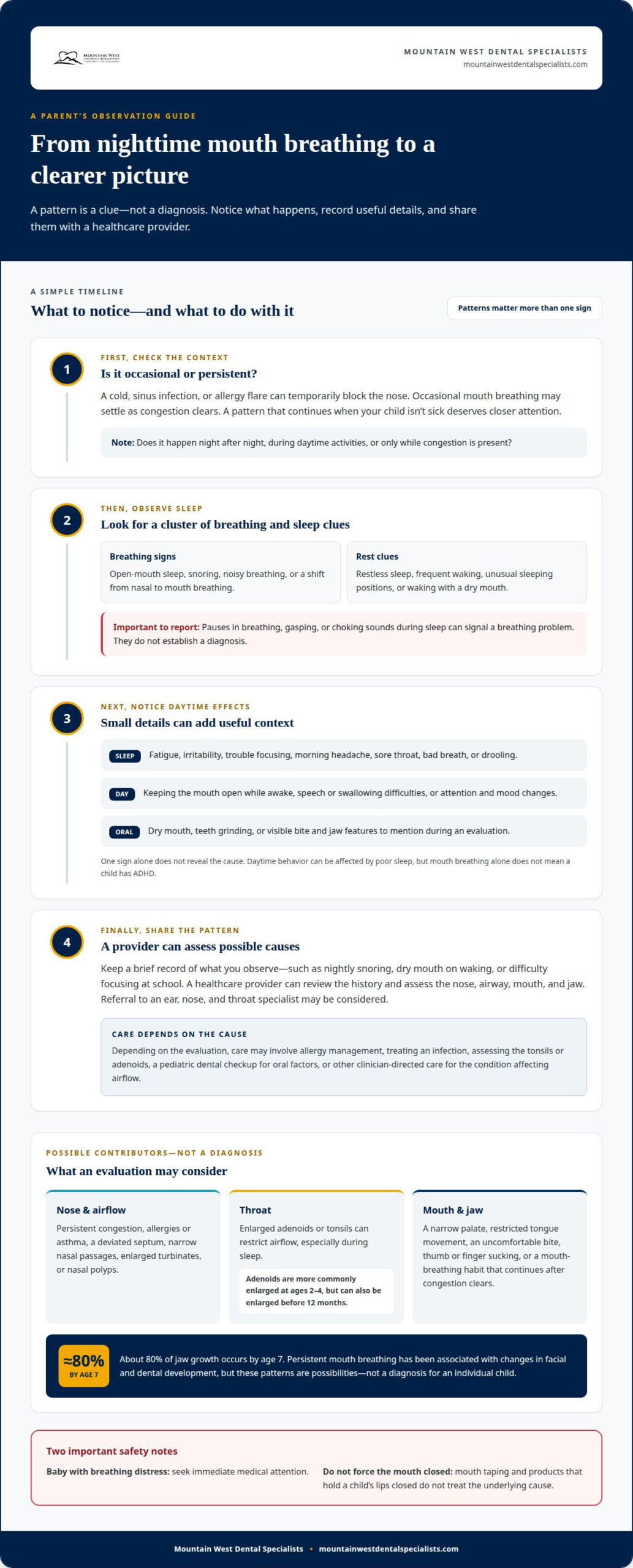
If your child continues to breathe through their mouth when they aren’t sick, discuss it with a healthcare provider. Note whether it happens nightly or during daytime activities, and mention congestion, snoring, or restless sleep. Waking with a dry mouth, sore throat, morning headache, bad breath, or drooling can provide useful context.
Daytime clues include fatigue, irritability, and trouble paying attention, even when your child doesn’t seem sleepy. Discuss speech or swallowing difficulties, too. Describe whether your child often keeps their mouth open while awake, as well as what you observe during sleep.
Adenoid, Tonsil, and Sleep Apnea Symptoms
Enlarged adenoids or tonsils can obstruct airflow and contribute to ongoing open-mouth breathing, snoring, or noisy sleep. Report a shift from nasal breathing to mouth breathing at night, particularly alongside persistent congestion or restless sleep.
Pauses in breathing, gasping, or choking sounds during sleep are important observations because they can signal a breathing problem such as obstructive sleep apnea. These signs don’t establish a diagnosis. A professional evaluation can help determine what is happening.
Keep a brief record of what you observe, such as nightly snoring, waking with a dry mouth, or difficulty focusing at school. Dark circles under the eyes have many possible causes, but mention them if they occur alongside fatigue and mouth breathing.
Mouth breathing occurs at different ages, but persistent patterns in children deserve attention because sleep, behavior, and development may be affected. If a baby struggles to breathe or shows respiratory distress, seek immediate medical attention.
How healthcare providers diagnose mouth breathing
A child who sleeps with their mouth open may be mouth breathing, but observation alone can’t show why. If you’re thinking, “My child breathes through their mouth when sleeping,” a pediatrician can assess the nose and airway and refer your child to an ear, nose, and throat specialist or dentist when closer evaluation is needed.
An assessment often starts with your child’s health history and symptoms. Describe how often mouth breathing occurs, whether it happens while awake, and whether snoring, restless sleep, or daytime changes accompany it. Explain whether “my child breathes through their mouth when sleeping” describes every night or only periods of congestion. The clinician may also ask about allergies, infections, and past breathing concerns.
A clinical examination can assess the mouth, jaw, tongue movement, and airway structure. The provider may look for restricted tongue mobility, a narrow palate, or enlarged tonsils. Lip seal, mirror, or water tests can help assess whether your child can breathe comfortably through the nose. These checks contribute to the overall picture but may not identify every cause on their own.
An ear, nose, and throat evaluation may include an examination of the nose and throat. In some cases, the specialist uses a small, flexible camera to view the nasal passages and possibly the adenoids. If the care team suspects enlarged tonsils or adenoids, or sleep apnea, it may recommend a sleep study to assess breathing during sleep.
Imaging can provide information about anatomy, but it can’t diagnose a sleep-related breathing problem on its own. Providers consider imaging alongside symptoms and examination findings. A pediatric dentist may notice dry mouth, tooth wear, or changes in jaw alignment, then coordinate with an ENT or allergist when needed.
For an evaluation that considers oral function and breathing together, schedule an airway evaluation.
Mountain West Dental Specialists
Mountain West Dental Specialists helps Las Vegas families explore oral and airway factors that may contribute to a child’s mouth breathing. A pediatric dental checkup can assess oral health, jaw development, and tongue movement, helping clarify whether dental or oral-function concerns need attention.
Depending on the findings, care may involve orthodontic braces or aligners, tongue-tie release, or Cone Beam CT imaging as part of a broader assessment. Each option addresses different needs, so the right next step depends on the evaluation. Persistent mouth breathing, changes in bite or jaw position, and restricted tongue movement are useful reasons to discuss your concerns.
If you’d like to talk through your child’s breathing and oral health, contact Mountain West Dental Specialists.
Take the Next Step Toward Clearer Answers
If your child breathes through their mouth while sleeping, you don’t have to determine the cause on your own. Open-mouth sleep is a reason to seek clarity, not a diagnosis. An evaluation can help distinguish oral or jaw-related concerns from causes that need a different kind of care.
Before reaching out, consider what you most want to understand: whether the breathing pattern may involve your child’s oral development, what an evaluation could include, or which concerns to discuss with a healthcare provider. This can help keep the conversation focused and useful for your family.
For a warm, informed conversation about your child’s needs, contact Mountain West Dental Specialists. You’re taking a caring step toward understanding what your child needs next.
Frequently Asked Questions
Is It Bad for Kids to Sleep with Their Mouth Open?
An open mouth during sleep isn’t automatically harmful, especially when temporary nasal congestion explains it and there’s no snoring or other sleep concern. The pattern matters more than a single night: recurring mouth breathing can accompany poor-quality sleep and dry mouth. If it continues when your child isn’t sick, or you notice daytime fatigue or dental changes, discuss it with a healthcare professional.
When should I have my child evaluated?
Arrange an evaluation if your child regularly breathes through their mouth while well, particularly with snoring, restless sleep, or daytime tiredness. A brief sleep-and-symptom record can make the discussion more useful: note whether the mouth stays open, breathing sounds noisy, and how your child seems after waking. Include daytime mouth breathing, speech concerns, or swallowing difficulties.
When should I seek care?
Seek immediate medical attention if a baby is struggling to breathe or shows signs of respiratory distress. For other children, pauses in breathing, gasping, or choking sounds during sleep deserve prompt medical attention. Persistent snoring or mouth breathing without an acute breathing emergency calls for a professional evaluation, especially if sleep is restless or your child seems tired during the day.
What causes a child to breathe through their mouth while sleeping?
Anything that makes nasal airflow difficult can lead a child to breathe through their mouth at night. Common examples include a cold, allergies, or a sinus infection. Enlarged adenoids or tonsils, a deviated septum, and narrow nasal passages may also contribute. Oral factors, such as restricted tongue movement, may play a role, as can a habit that continues after congestion clears.
Is mouth breathing during sleep normal in children, and when is it concerning?
Occasional mouth breathing during a cold or allergy flare is common and often fades as congestion clears. A persistent pattern when your child is otherwise well is more concerning, particularly with snoring, restless sleep, or daytime effects. Mouth breathing that continues for more than six months is generally considered long-term, so discuss ongoing symptoms with a healthcare professional.
What complications can chronic mouth breathing cause in children?
Chronic mouth breathing may be associated with disrupted sleep, daytime attention or mood difficulties, and changes in jaw or dental development. Dry mouth can also increase the risk of cavities and other oral health problems. Speech effects, such as difficulty making certain sounds, can occur, but mouth breathing doesn’t automatically cause speech problems or establish a behavioral or developmental diagnosis.