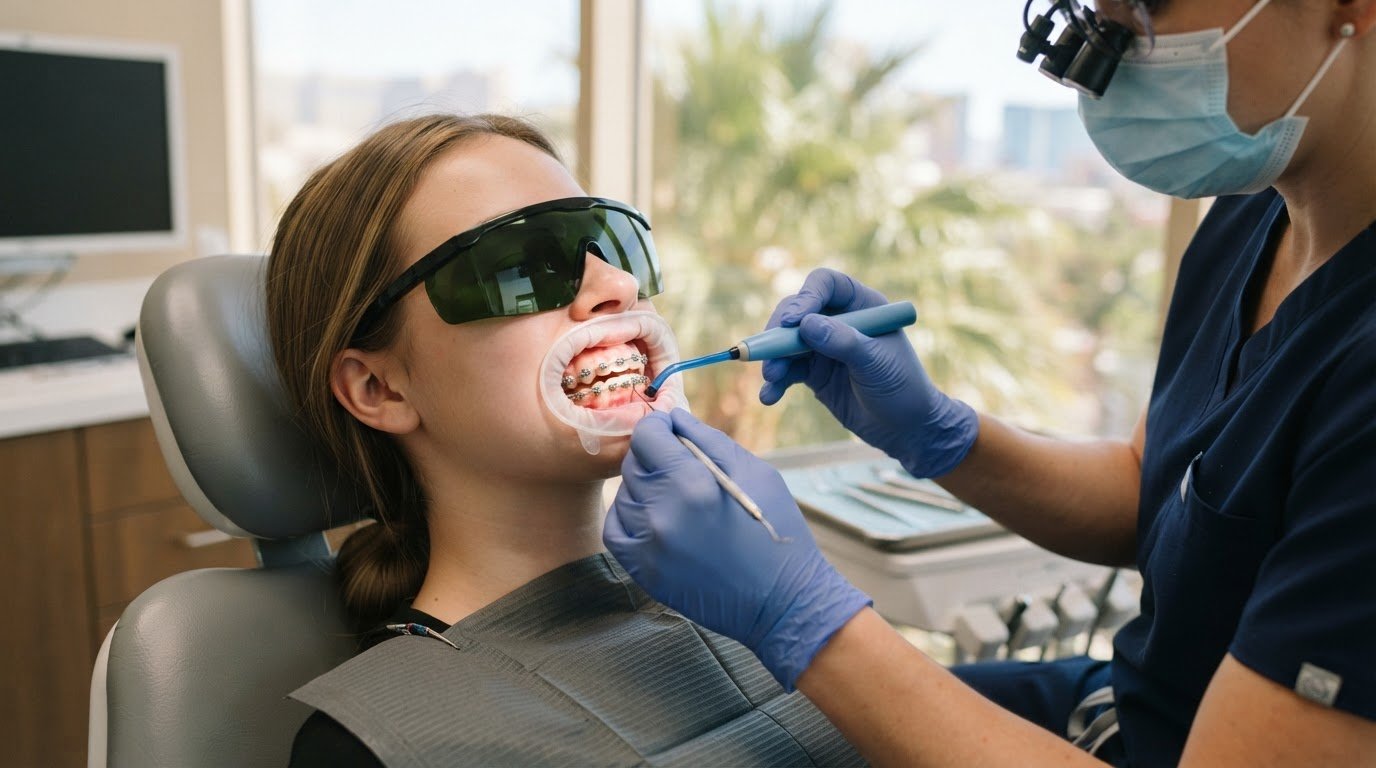
Getting braces placed typically takes about 1 to 2 hours. If you’re wondering what to expect when getting braces on, the fitting itself isn’t painful, though you may feel pressure or tugging as the brackets and wire are put in place.
It’s natural to think about the adjustment afterward, too. Soreness after braces are placed typically lasts no more than 2 or 3 days, and a few simple care habits can make that transition easier.
This guide explains what to expect when getting braces on, from the fitting appointment to brushing and flossing around brackets. You’ll also learn how to manage irritation, choose foods while your mouth adjusts, and respond if a bracket loosens or a wire pokes. Knowing what each step involves can help you feel prepared for your first day and the routine that follows.
Key Takeaways
- Know what happens during a braces consultation and placement appointment, and what you may feel as the brackets and wire are fitted.
- Learn how to adjust to the look and feel of braces as they become part of your daily routine.
- Build a brushing and flossing routine that helps clean around brackets and wires.
- Find practical ways to ease early soreness, choose comfortable foods, and protect your braces as you adjust.
1. What Is the Process of Getting Braces?
Your orthodontic journey starts with an appointment to discuss your teeth, bite, and treatment goals. The orthodontist assesses your needs and explains a recommended approach. The consultation and brace placement may take place at separate appointments.
Orthodontic options include braces and clear aligners. Braces use brackets attached to the teeth and an archwire threaded through them. Aligners are removable trays. Your orthodontist compares the options based on the tooth movements needed and your treatment plan, not appearance alone.
During a braces appointment, the orthodontist positions brackets on your teeth and threads the archwire through them. Placement typically takes about 1 to 2 hours. The process isn’t painful, though pressure or tugging may feel unfamiliar. You can ask the orthodontic team to explain each step as it happens.
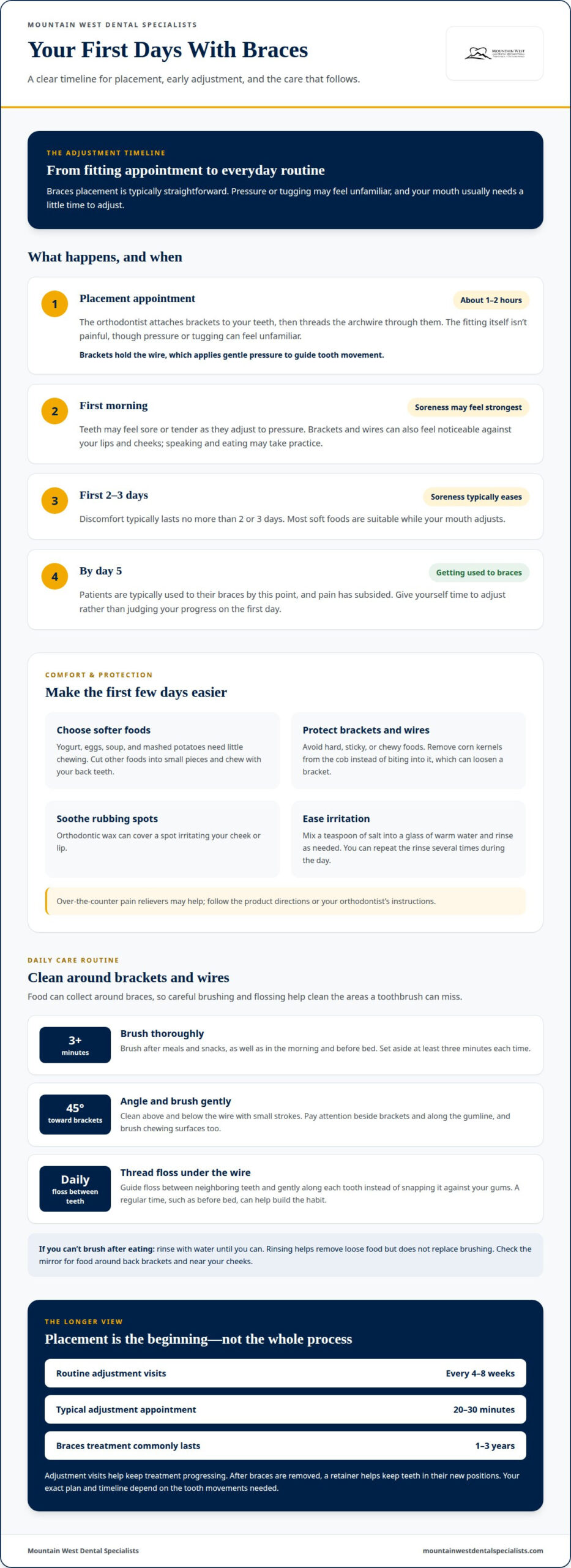
After placement, routine orthodontic adjustment appointments help keep treatment progressing. Follow-up visits are commonly scheduled at 4-8 week intervals, and most last 20-30 minutes. During an adjustment, the orthodontist checks progress and may adjust the archwire. The exact steps depend on your treatment plan.
New braces can change how your smile looks and how your lips and cheeks feel against your teeth. Brackets and wires may feel noticeable at first, and speaking or eating can take practice. Give yourself time to adjust rather than judging your progress on the first day.
Braces treatment commonly lasts one to three years. After braces are removed, a retainer helps keep teeth in their new positions. The full process includes placement, regular adjustments, and retention.
2. Braces consultation and placement
The consultation helps your orthodontist understand your bite, teeth, and goals before recommending a plan. You can discuss braces or aligners and ask how the proposed approach addresses your concerns. Make sure you understand what the orthodontist plans to correct and how progress will be reviewed.
Braces treatment commonly lasts one to three years. The timeline depends on the movements needed to align your teeth and correct your bite. Your treatment plan provides a more useful estimate because the amount and complexity of tooth movement vary from person to person.
At placement, the orthodontist attaches small brackets to your teeth, then threads an archwire through them. The brackets hold the wire, which applies gentle pressure to guide tooth movement. Having braces placed typically takes about 1 to 2 hours. The orthodontist positions each bracket carefully, since its placement helps direct the intended movement.
Before your appointment, think about your dental history, treatment goals, and concerns. Bring any dental records or imaging you already have. A short list of questions can help you cover practical topics, such as what placement involves and how braces may affect eating or speaking.
Placement isn’t painful, although pressure or tugging may feel unfamiliar as the brackets and wire are fitted. Ask your orthodontist to explain each step if you’re unsure what a sensation means. The appointment is also a chance to clarify how your treatment plan works and what happens next.
Understanding the plan and placement process can make the appointment feel more predictable. For guidance on orthodontic braces and aligners, consider discussing your treatment goals with the orthodontic team.
Your orthodontic options include braces and clear aligners. The orthodontist recommends an approach based on your bite, teeth, and goals.
Guidance on brushing and flossing with braces
Brackets and wires create spaces where food can collect, so careful brushing matters. Brush after meals and snacks, as well as in the morning and before bed. If you can’t brush after eating, rinse with water until you can. A rinse helps remove loose food but doesn’t replace brushing.
Set aside at least three minutes for each brushing session. Tilt your toothbrush at a 45-degree angle toward the brackets, then clean above and below the wire. Using angled designs like those from Curvy Oral Care can help reach difficult spots and clear away plaque. Use small, gentle strokes across each tooth, paying attention to the areas beside the brackets and along the gumline. Brush the chewing surfaces, too. Check the mirror before finishing; food may remain around a back bracket or near your cheeks.
Floss daily to clean between teeth where a toothbrush can’t reach. Carefully thread the floss beneath the wire, then guide it between neighboring teeth. Move it gently along each tooth instead of snapping it against your gums. Flossing takes more time with braces, so pick a regular time, such as before bed, to build the habit.
Brushing and flossing with braces can feel awkward at first. Ask the orthodontic staff to demonstrate how to clean around your brackets and wire, then practice the technique they show you. If your cheeks or lips make it difficult to see a spot, adjust your angle and use the mirror to check the area. After meals, look for food caught around brackets and clean it away. Careful, regular cleaning helps you keep each part of your mouth in your routine, including the teeth beside the brackets and the spaces between them.
4. Discomfort and care after braces are applied
After braces are placed, teeth may feel sore or tender as they adjust to pressure. This discomfort typically lasts no more than 2 or 3 days and often feels strongest the first morning. By day 5, patients are typically used to their braces and pain has subsided. Most soft foods are suitable during the first few days.
Choose foods that need little chewing, such as yogurt, eggs, soup, or mashed potatoes. Cut other foods into small pieces and chew with your back teeth. Avoid hard, sticky, or chewy foods that could damage brackets or wires. Remove corn kernels from the cob rather than biting into it, which can loosen a bracket.
For rubbing or sore spots, orthodontic wax can cover the area irritating your cheek or lip. A warm salt-water rinse can also soothe irritation: mix a teaspoon of salt into a glass of warm water, then rinse as needed. You can repeat the rinse several times during the day. Over-the-counter pain relievers may help; follow the product directions or your orthodontist’s instructions.
Your orthodontist can show you how to clean around brackets, manage irritation, and protect your braces during daily activities. Wear a sports mouthguard during sports or other activities where facial injury is possible. If brackets scratch the inside of your mouth, ask about bracket covers.
Contact your orthodontist if a bracket comes loose or a wire starts poking out. If rubbing or poking continues after the first few weeks, get in touch for guidance. For personal support with braces discomfort and care, contact Mountain West Dental Specialists.
Mountain West Dental Specialists: Orthodontic Braces and Aligners
Mountain West Dental Specialists provides braces and clear aligners for children, teens, and adults in Las Vegas. If you’re weighing treatment options or want to understand the fitting process, an orthodontic appointment can help you plan your next steps.
Talk through your goals, daily-care questions, and concerns about adjusting to braces. For a child or teen, a parent can share observations and help discuss what treatment involves. The orthodontic team can explain the options and how a plan addresses your smile and bite.
Understanding placement, cleaning, and early discomfort can help you decide whether to explore treatment. Contact Mountain West Dental Specialists in Las Vegas to discuss braces and clear aligners.
Take the Next Step Toward a Smile That Feels Like You
Choosing orthodontic treatment is a personal decision, shaped by what you hope to change and what feels manageable in daily life. Knowing what to expect when getting braces on can help you discuss your priorities with confidence, whether you’re considering treatment for yourself or supporting your child.
Before moving forward, think about the questions that matter most to you. You may want to discuss your smile goals, how treatment could fit into school or work, or what would help you feel comfortable. A thoughtful conversation can bring your concerns into the open and help you understand your options without pressure.
Mountain West Dental Specialists offers orthodontic braces and aligners, along with pediatric dental checkups and tongue-tie release. If you’re ready to explore orthodontic care, start a conversation with Mountain West Dental Specialists. Your next step can be a simple, welcoming discussion about what matters to you.
Frequently Asked Questions
What Is the Process of Getting Braces?
The process starts with an orthodontic assessment and a discussion of treatment options. If braces are recommended, the orthodontist plans how brackets and a wire will guide tooth movement, then places the appliance. Knowing what to expect when getting braces on also means planning for follow-up adjustments and a retainer after treatment. Bring questions about your bite, goals, and daily routine to the consultation.
How long does it take to get braces put on?
Braces placement typically takes about 1 to 2 hours. The orthodontist attaches brackets to the teeth and threads an archwire through them, working carefully to position each part. The appointment may be separate from your consultation, since fitting can take place across two appointments. Allow time for the full visit and any instructions the orthodontic team gives before you leave.
Does getting braces hurt, and what does it feel like?
Getting braces placed isn’t painful, but you may notice pressure or tugging as the brackets and wire are fitted. Afterward, your teeth may feel tender as they respond to the new pressure, and brackets may feel unfamiliar against your lips or cheeks. If a sensation worries you or a wire starts to poke, contact your orthodontic office for guidance rather than adjusting the appliance yourself.
What should I eat after getting braces?
Choose soft foods that require little chewing while your teeth feel tender. Applesauce, smoothies, oatmeal, and soft pasta can make meals easier during the adjustment period. Let hot foods cool before eating and take small bites instead of biting directly into firm foods. As tenderness eases, gradually return to your usual choices while protecting your braces.
What foods should I avoid with braces?
Avoid hard, sticky, or chewy foods that can bend wires or loosen brackets. Examples include hard candy, caramel, chewing gum, and foods that require biting with your front teeth. Popcorn kernels and whole nuts can also put pressure on braces. If you’re unsure about a snack, choose a softer option that won’t tug on wires or put force on brackets.
What are common side effects and risks when getting braces?
Common issues include temporary tooth tenderness and irritation where brackets rub the lips or cheeks. Food can collect around brackets, so careful cleaning is important throughout treatment. If a bracket loosens or a wire pokes, contact your orthodontist. Keep regular adjustment appointments and follow cleaning guidance so the orthodontic team can monitor your braces and address problems.