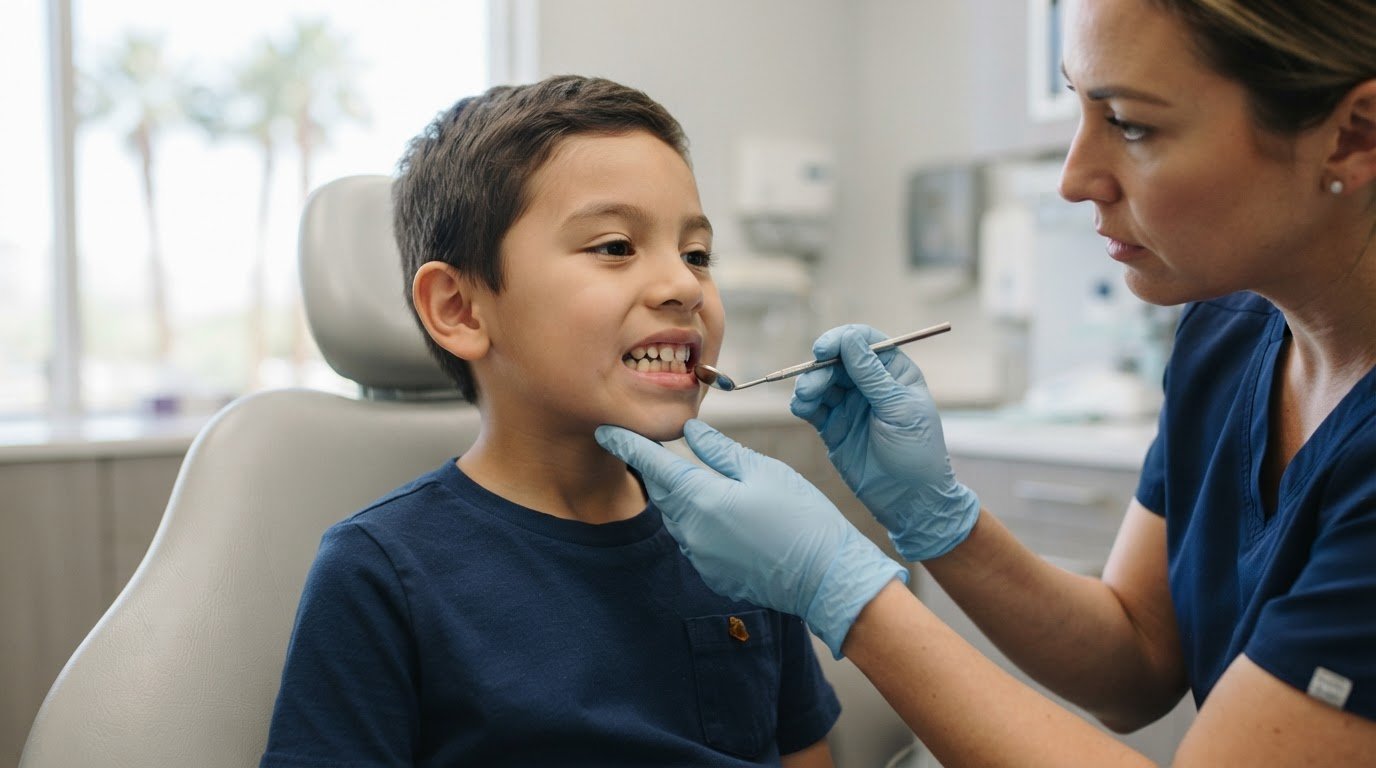
Straight-looking teeth don’t rule out orthodontic concerns: crowding, bite problems, or unusual tooth loss can be signs your child needs braces. The American Association of Orthodontists recommends an orthodontic evaluation no later than age 7, and a concern you notice earlier is also a reason to schedule an exam.
It’s natural to focus on whether your child’s teeth look crooked, but an orthodontic assessment also considers how the teeth meet, how the jaws are developing, and whether teeth are coming in as expected. An exam doesn’t automatically mean braces are needed right away. Some children may simply need their growth and tooth development monitored.
Here, you’ll learn which visible and less obvious signs may be worth discussing, when to arrange an orthodontic exam, and how an orthodontist assesses your child’s bite and alignment. You’ll also see why early attention can be helpful, even when treatment can wait until more permanent teeth come in.
Key Takeaways
- Plan an orthodontic evaluation by age 7, or sooner if you notice a concern; an exam may lead to monitoring rather than immediate treatment.
- Pay attention to early or delayed loss of baby teeth, since tooth timing can offer clues about how permanent teeth are developing.
- Difficulty chewing, frequent cheek biting, or a bite that looks uneven may be worth discussing with an orthodontist.
- Look beyond crooked teeth: gaps, crowding, ongoing thumb sucking, and changes in jaw position can also be useful signs to mention at an exam.
1. Does my child need braces if their teeth look straight?
Yes. Straight-looking front teeth don’t rule out concerns with alignment, the bite, or developing permanent teeth. Crowded or overlapping teeth can make brushing and flossing more difficult, even when the smile looks even. A side view may also reveal upper teeth that sit far ahead of lower teeth, or a bite that doesn’t meet comfortably. These are examples of signs your child may benefit from an orthodontic assessment.
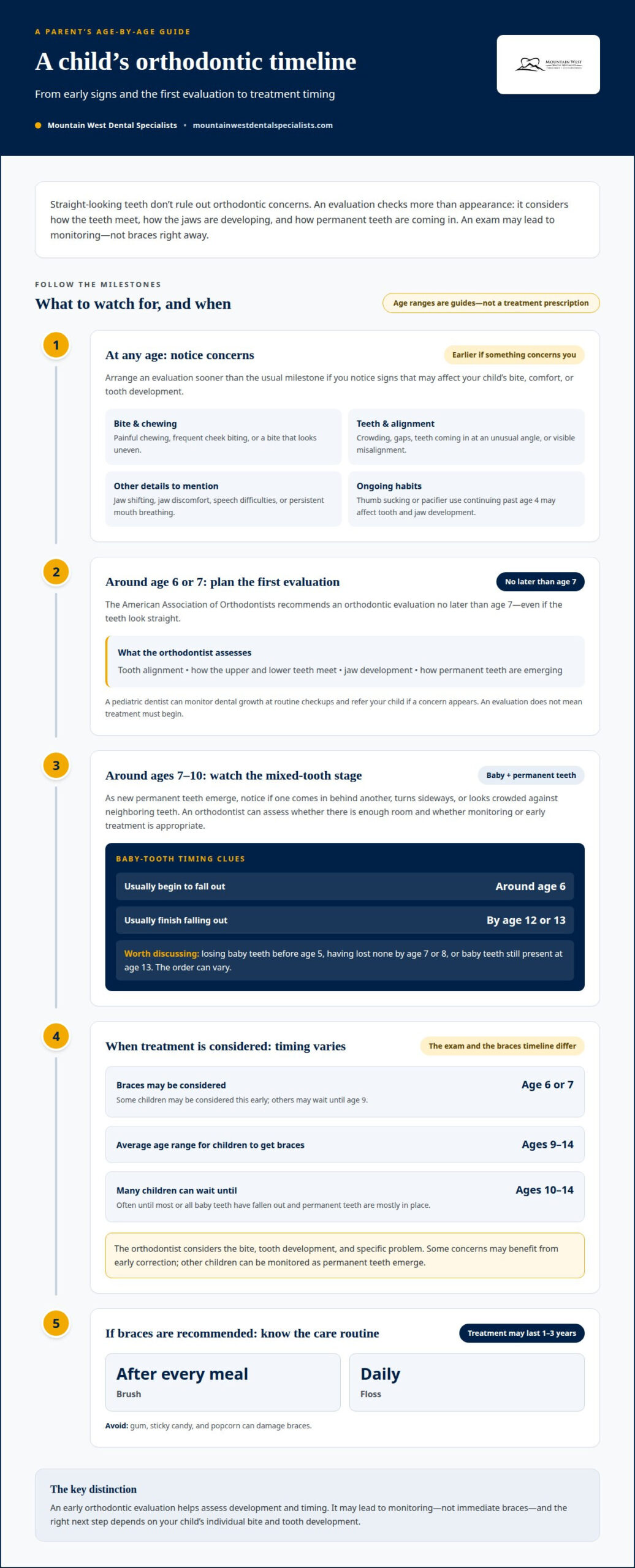
Tooth timing offers another useful clue. Children generally begin losing baby teeth around age 6 and finish by age 12 or 13, although the order can vary. Losing baby teeth before age 5 may signal unusual development, while having lost none by age 7 or 8 may also be worth discussing. Baby teeth still present at age 13 are another sign to mention. Early or late loss can affect the space and path available to permanent teeth.
During the mixed-tooth stage, usually around ages 7-10, a child may have both baby teeth and permanent teeth. Notice whether a new permanent tooth erupts behind another tooth, turns sideways, or appears crowded against neighboring teeth. An orthodontic exam can help assess the developing alignment and whether the emerging teeth have enough room. Some children need early treatment; others can be monitored as more teeth emerge.
How long do children typically wear braces, and what care do they require? Treatment may last between one and three years. Children with braces should brush after every meal and floss daily. Gum, sticky candy, and popcorn can damage braces.
2. At what age should my child have an orthodontic exam?
Plan your child’s first orthodontic evaluation around age 6 or 7. The American Association of Orthodontists recommends an evaluation no later than age 7, even if the teeth look straight. An orthodontist can assess tooth alignment, the bite, jaw development, and how permanent teeth are emerging. This is an opportunity to identify developing orthodontic problems, not a promise that treatment will begin.
A pediatric dentist can also monitor dental growth during routine checkups and refer your child to an orthodontist when a concern appears. For example, mention misaligned teeth, a bite that looks uneven, or persistent mouth breathing. Mouth breathing can contribute to orthodontic problems, so it belongs in the conversation alongside what you notice about the upper and bottom teeth. If something concerns you before age 7, an earlier evaluation is reasonable.
An exam and braces have different timelines. Some children may be considered for braces at age 6 or 7, while others may wait until age 9. Most children can wait to begin treatment until most or all baby teeth have fallen out and permanent teeth are mostly in place, usually at ages 10-14. The average age range for children to get braces is 9 to 14 years. The orthodontist considers the child’s bite, tooth development, and the specific problem before recommending a treatment timeline.
An early orthodontic evaluation may lead to monitoring rather than immediate treatment. Some growth or development concerns benefit from early correction, while other children can be observed as permanent teeth emerge. Early intervention can sometimes reduce the need for more extensive orthodontic work later. Your child’s pediatric dental checkups can help track development and support a referral when needed.
If you’re ready to arrange an evaluation, pediatric dental checkups provide a familiar setting to discuss your child’s developing smile.
3. How can I tell if my child needs braces and how soon?
Watch how your child bites and chews, not just how the front teeth look. Painful chewing can point to an orthodontic problem that needs attention. Frequent cheek biting is another clue: the upper and lower teeth may not fit together properly during chewing. An overbite or underbite can interfere with chewing and speaking and may cause uneven tooth wear. A crossbite or open bite can make chewing less efficient and contribute to jaw pain.
Speech changes are worth mentioning, too. Misaligned teeth can contribute to speech problems, especially when the teeth don’t meet in a typical way. A speech difficulty alone doesn’t establish that braces are needed, but it gives the dentist useful context. Note specific examples, such as trouble biting into food or repeatedly biting the inside of the cheek, and describe when you notice them.
How do dentists determine whether a child needs braces? They assess the teeth, bite, jaw development, and overall alignment, including how the upper and lower teeth meet. An orthodontist uses those findings to recommend whether treatment, monitoring, or another step best suits the developing mouth. When appropriate, digital imaging can help assess what is happening beneath the gums.
Schedule an orthodontic evaluation if chewing is painful, the bite appears uneven, or speech and biting difficulties occur alongside visible misalignment. Together, these signs can show what needs closer assessment. Before the visit, note which foods are difficult to bite or chew and whether your child favors one side. Mention jaw discomfort, cheek biting, or speech concerns, too. These details help the dental team understand how the bite affects everyday function and determine appropriate follow-up.
4. Signs a child may benefit from braces
Common signs include crowded teeth, gaps, an overbite, an underbite, or a crossbite. An open bite, where the upper and lower front teeth don’t meet, is another visible clue. These patterns can affect how the teeth function, not just their appearance. Your child’s lower jaw might also shift when biting, or misaligned jaws may affect facial features. Notice the position of the teeth when your child closes their mouth.
Habits and breathing patterns can offer additional clues. Thumb sucking or pacifier use continuing past age 4 can affect tooth and jaw development, sometimes contributing to an open bite. Mouth breathing may also contribute to orthodontic problems. Mention these patterns during an evaluation, especially if you notice changes in the bite or jaw position. A habit alone doesn’t establish that braces are needed, but it adds helpful context about development.
Consider how gaps and crowding affect daily care. Crowded teeth can make brushing and flossing difficult, while gaps can trap food and raise the risk of cavities and gingivitis. Bite problems may also cause the lower jaw to shift, contributing to jaw pain and other dental consequences. Braces can address bite issues, create space for crowded teeth, and correct jaw misalignments. The goal is to assess both function and alignment.
Look for repeated patterns rather than judging one tooth in isolation. For example, note whether your child’s jaw shifts during meals, the front teeth remain apart when biting, or mouth breathing occurs regularly. Share these observations at an orthodontic evaluation. An orthodontist can assess the bite and developing jaw, then determine whether treatment or monitoring is appropriate.
If you’re noticing these patterns, schedule an orthodontic evaluation to discuss your child’s bite and alignment.
Mountain West Dental Specialists: Orthodontic Braces and Aligners
Mountain West Dental Specialists offers braces and aligners for children whose teeth, bite, or jaw development may need attention. If you’ve noticed crowding, an uneven bite, or difficulty chewing, an orthodontic evaluation at our Las Vegas practice can assess your child’s alignment and help determine whether treatment or monitoring is appropriate.
Braces and aligners are treatment options, not automatic next steps after every exam. The choice depends on your child’s orthodontic needs and the assessment of their teeth and bite. Pediatric dental checkups can also help track oral development and identify concerns to discuss with an orthodontist.
If you have questions about your child’s teeth or bite, contact Mountain West Dental Specialists in Las Vegas to discuss an orthodontic evaluation.
Take the next step with confidence
You don’t need to diagnose your child’s bite at home. Write down what you’ve noticed, such as a change in how they eat or speak, and bring those observations to an evaluation. This can keep the conversation focused on your child’s everyday needs and make it easier to understand what should happen next.
Recognizing signs your child needs braces is about noticing patterns, not deciding on treatment yourself. The right plan depends on your child’s teeth and development. An evaluation can clarify whether treatment or continued observation makes sense.
Mountain West Dental Specialists offers orthodontic care for children, along with pediatric dental checkups and tongue-tie release. If you’d like to discuss your child’s concerns, contact Mountain West Dental Specialists. A thoughtful conversation can be a reassuring first step toward understanding your child’s needs.
Frequently Asked Questions
At what age should my child have an orthodontic exam?
Arrange the first orthodontic evaluation by age 7, as the American Association of Orthodontists recommends. An evaluation is different from starting braces: it gives the orthodontist a chance to review your child’s developing teeth and bite. Before the appointment, write down your questions and note any changes you’ve observed. That preparation can help you understand whether the next step is treatment or continued observation.
How can I tell if my child needs braces and how soon?
Notice whether your child avoids certain foods, takes longer to bite into meals, or struggles to pronounce particular sounds. These patterns don’t identify a specific orthodontic problem on their own, but they give the orthodontist practical examples to assess. Arrange an evaluation if these difficulties persist or occur alongside visible changes in the bite. The examination helps determine the appropriate timing for next steps.
What causes the need for braces?
Braces may be considered when teeth or jaws develop in positions that affect alignment or how the bite functions. Crowding, a mismatch between the upper and lower jaws, or teeth emerging without enough space can contribute. Ongoing habits such as thumb sucking may also affect tooth and jaw development. An orthodontic assessment helps distinguish a developing concern from a pattern that needs treatment.
At What Age Can Kids Get Braces?
Some children may start braces at age 6 or 7, while many begin later, often between ages 10 and 14. The timing depends on the concern and how the child’s teeth and jaws are developing. Early treatment can address certain growth issues, while other children are monitored until more permanent teeth are in place. An orthodontic evaluation helps clarify the suitable stage for your child.
Can early orthodontic treatment prevent braces later?
Early orthodontic treatment can sometimes reduce the need for more extensive work later, but it doesn’t necessarily eliminate the need for braces. Some children receive an initial correction while their mouths are still developing, followed by further alignment after permanent teeth come in. Others only need monitoring until then. The purpose of early care is to address a specific developing concern at a useful time.
Do You Know These 6 Signs Your Child Needs Braces?
Signs your child needs braces can include crowded teeth, a noticeable overbite or underbite, an open bite, an uneven bite, difficulty biting or chewing, and teeth emerging in unusual positions. Look at how your child’s teeth meet when they close their mouth, rather than judging only their smile. Jot down the specific changes you notice so you can describe them clearly during an orthodontic evaluation.