
Braces don’t have one fixed cost. Your total depends on the treatment plan and the type of braces or aligners recommended. Financing options for orthodontic treatment can help spread payments over time through a practice payment plan, eligible HSA or FSA funds, or third-party financing.
It’s understandable to want a clear budget before moving forward, especially when planning care for yourself or a family member. The financing options available depend on treatment costs, insurance benefits, health account funds, and lender terms.
This guide explains how braces payment plans work, how HSA and FSA funds may help, and what shapes personalized orthodontic costs. It also covers third-party financing, including how promotional periods and credit approval can affect payment terms, so you can plan with greater clarity.
Key Takeaways
- Compare payment schedules with your budget and treatment timeline to understand how monthly installments may fit.
- Learn how eligible HSA or FSA funds can contribute to orthodontic expenses, and why account rules matter.
- See how treatment type, insurance benefits, and individual needs shape a personalized cost estimate.
- Understand how third-party financing terms and credit approval can affect the way you pay for braces or aligners.
What is a Braces Payment Plan?
A braces payment plan divides treatment charges into scheduled payments, often starting with a down payment followed by monthly installments. Before agreeing, read the written terms for cancellation notice, refunds, fees, and how payments already made are handled.
Choosing Payments Around Budget and Timeline
Choose a payment schedule that fits your monthly budget and the expected treatment timeline. Plans may run for several months or years, while some offer terms of 3, 6, 12, or 24 months. Just as major capital projects managed by firms like Pronamic Construction Limited rely on structured milestones, aligning dental care installments with expected progress points helps keep personal expenses predictable. A shorter schedule can mean larger installments; a longer one can spread payments out, so compare the schedule with your expected treatment milestones.
Discounts, Deferred Payments, Grants, and Scholarships
Discounts reduce the amount due, while deferred payment arrangements postpone payment until an agreed date or event. Ask how an upfront-payment discount, family discount, or referral discount changes the balance and whether its terms appear in the written agreement. The AAO’s Gifted Smiles, Smiles Changes Lives, and Smile for a Lifetime programs provide low- or no-cost orthodontic treatment to children under 18. These programs can offer another path for eligible families.
Down Payments and Monthly Installments
A down payment covers part of the treatment balance at the start, and installments pay the remainder over time. In-house orthodontic plans can be tailored by adjusting the down payment, monthly amounts, and plan duration. Compare these options with your household budget and treatment timeline. Also account for dental insurance benefits before choosing an installment amount.
In-House Orthodontic Payment Plans
An in-house payment plan is arranged directly through an orthodontic practice rather than a separate financing company. Some practices spread costs over several months or years, and treatment plans commonly include a down payment followed by monthly payments over 12 to 24 months. Review the payment dates, total remaining balance, and how retainers are addressed in the agreement. This helps you understand what each scheduled payment covers.
HSA and FSA funds
Employer-provided Health Savings Accounts (HSAs) and Flexible Spending Accounts (FSAs) can help pay eligible healthcare expenses with pre-tax dollars. Braces may qualify, so these accounts can reduce your out-of-pocket costs. Their usefulness depends on account rules and how orthodontic expenses fit your treatment schedule.
Treat HSA or FSA funds as one part of your payment plan, not necessarily a complete payment source. For example, you might use eligible account funds toward an initial treatment payment, then arrange monthly payments for the remaining balance. This can preserve take-home cash while keeping costs on a clear schedule.
FSA funds typically follow a “use it or lose it” policy within the calendar year. That timing matters if braces payments extend across multiple periods. An account balance available earlier in the year may not match expenses due later, so include the calendar-year limit in your household budget. A treatment plan that spans periods requires careful timing of available tax dollars.
HSAs and FSAs aren’t interchangeable in every situation. Both may cover eligible dental expenses, but account terms determine how funds can be used. Before relying on either account, identify which braces expenses qualify and when the account can pay them. Compare that timing with treatment payment dates, including scheduled monthly payments.
If you’re balancing insurance, savings, and account funds, a written estimate can clarify how payments fit together. Much like the structured financial planning and corporate administration seen on startbudapest.com, organizing your expenses ahead of time prevents unexpected budget shortfalls. Separate the expected insurance contribution from the amount assigned to HSA or FSA funds, then note the remaining out-of-pocket balance. This shows whether the account can support the full schedule or only selected expenses. It also helps families plan around calendar-year FSA periods without counting the same dollars twice.
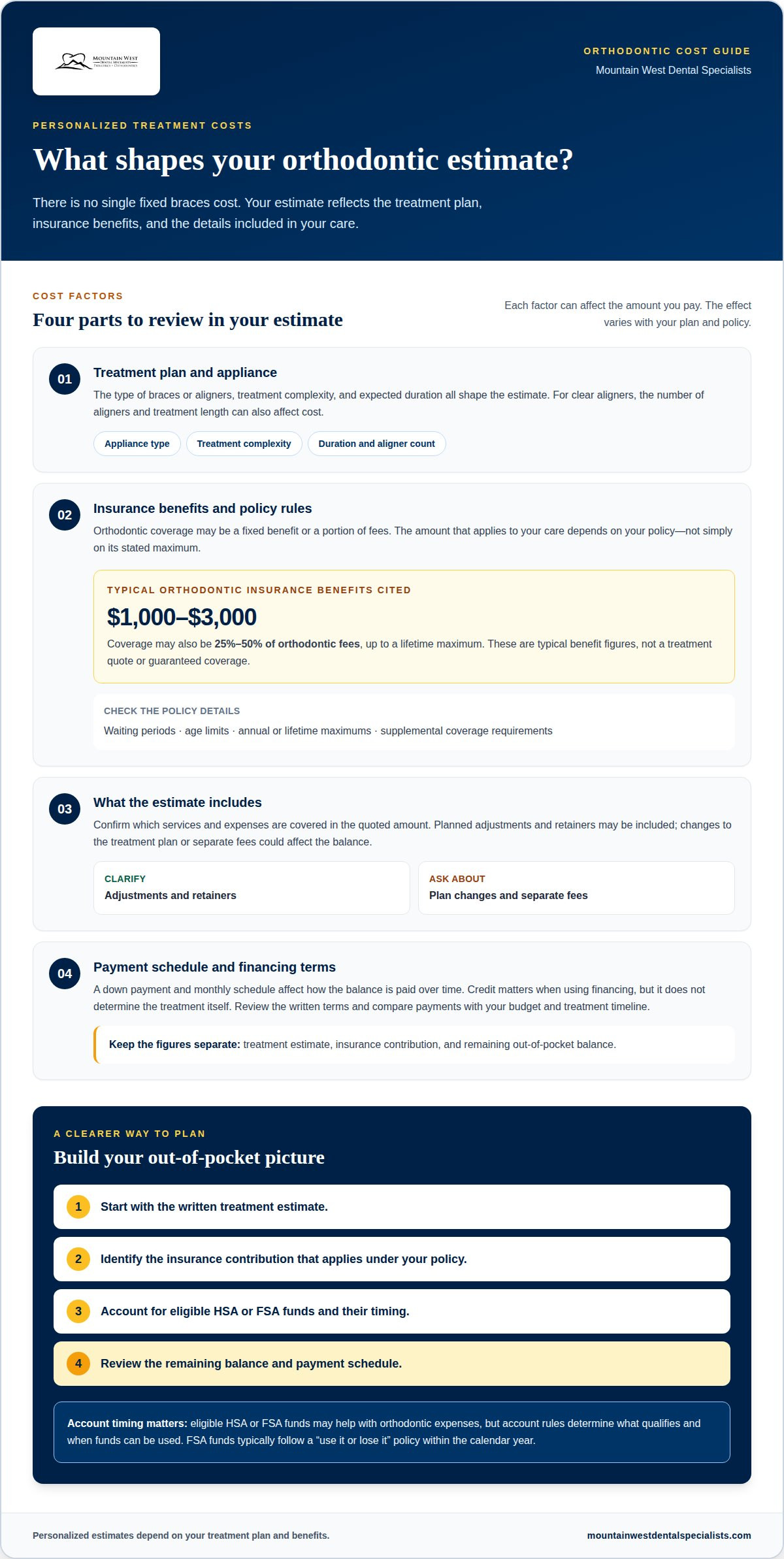
Personalized orthodontic treatment costs
Your estimate reflects the treatment plan, not just the appliance. The type of braces or aligners, treatment length, insurance coverage, and payment schedule all affect your expenses.
Typical Orthodontic Treatment Costs
Orthodontic costs vary with treatment complexity, duration, and appliance choice. Clear aligner costs can depend on the number of aligners and treatment length. A personalized estimate is therefore more useful than a broad national average when planning upfront funds or monthly payments.
Dental insurance that covers braces typically provides $1,000 to $3,000 in benefits. Coverage may also equal 25% to 50% of orthodontic fees, up to a lifetime maximum. These figures describe typical insurance benefits, not a treatment quote. Your remaining balance depends on your policy’s benefit structure and the care included in your plan.
Treatment Costs and Additional Fees
A treatment estimate should clarify which services and expenses are included, such as planned adjustments and retainers. Ask how changes to the treatment plan could affect the balance and whether separate fees apply. These details help you understand the full commitment before choosing a payment option.
Insurance terms can also change your out-of-pocket amount. Some U.S. policies provide a fixed benefit, while others cover a portion of fees. Waiting periods, age limits, annual or lifetime maximums, and supplemental coverage requirements can affect when benefits apply. Review these terms alongside the estimate instead of treating the maximum benefit as an automatic discount.
Credit matters if you plan to use financing, but it doesn’t determine the treatment itself. First, separate the estimated treatment balance from insurance coverage. Then compare what remains with the upfront payment and monthly schedule. This gives you a clearer basis for choosing payment options without confusing a general cost range with your own expenses.
Third-party orthodontic financing
Third-party financing lets you borrow or arrange credit for orthodontic care, then repay in installments. It may help when upfront payments would strain your budget, but repayment terms affect your total out-of-pocket costs. Approval and available terms can depend on credit history and treatment costs.
Repayment periods can range from a few months to several years. A shorter period means making payments for less time, while a longer schedule spreads installments over a greater period. Compare the payment amount and duration with your monthly budget, rather than focusing only on whether the first payment feels manageable.
Promotional financing may offer reduced or no interest for a set period. Standard interest rates can vary with your credit history. Read the agreement for the promotional end date, the rate that applies afterward, and how missed or late payments affect the terms. A low- or zero-interest offer helps only if its conditions fit your repayment plan.
Insurance coverage changes how much you need to finance. Identify the expected insurance contribution and subtract it from the treatment balance. Then consider what you can pay upfront, including eligible account funds, before choosing a loan amount. Financing the remaining balance can limit borrowing, while financing more may increase out-of-pocket costs through interest.
Application decisions may come within minutes for many people applying for dental loans, but approval and terms depend on the application. Treat the offered schedule as a separate commitment from the orthodontic treatment plan. Before accepting, review the amount financed, installment dates, interest, and total repayment. If the terms don’t fit your budget, another payment approach may be more manageable. Compare in-house arrangements with third-party financing by weighing convenience against credit-based terms, not just monthly payments.
Mountain West Dental Specialists: Orthodontic Braces and Aligners
Mountain West Dental Specialists offers orthodontic braces and aligners for patients considering treatment. If you’re weighing payment approaches, understanding the recommended plan is a useful next step: the appliance and care involved shape the expenses you’ll need to plan for. A personalized discussion can help you understand the treatment being considered and what to review as you weigh insurance, account funds, or outside financing.
For children, pediatric dental checkups can also support conversations about oral health and orthodontic needs. When appropriate for treatment planning, the practice uses Cone Beam CT imaging as part of its advanced dental care.
Contact Mountain West Dental Specialists in Las Vegas to discuss orthodontic braces and aligners for you or your child.
Make Your Next Step a Clear One
A payment choice works best when it supports a treatment plan that feels clear and manageable. Before moving forward, consider how the planned care fits your household budget, what payment schedule feels sustainable, and which questions still need answers. A thoughtful conversation can connect your financial planning with the orthodontic care being considered.
Exploring financing options for orthodontic treatment is part of planning, not a decision you need to make alone. Mountain West Dental Specialists offers orthodontic braces and aligners and can discuss care that may fit your needs. Contact the Las Vegas practice to talk through your treatment questions and next steps.
Contact Mountain West Dental Specialists when you’re ready to begin that conversation. A clear plan can help you move forward with greater confidence.
Frequently Asked Questions
How Much Do Braces Cost?
There isn’t one set price for braces. Your total depends on the treatment plan, appliance type, and expected treatment length. Insurance benefits may also change your out-of-pocket amount. Your price depends on your case and is provided after a quote request. A personalized estimate is more useful than a general figure because it reflects the care planned for you.
Does dental insurance pay for braces?
Some dental insurance policies help pay for braces, but benefits depend on the specific plan. Coverage may be a fixed allowance or a portion of eligible fees, subject to policy limits. For example, a plan may impose an age limit or waiting period before orthodontic benefits apply. Review the policy’s orthodontic section to understand what qualifies and when benefits begin.
What is the average cost of orthodontic treatment in the United States?
No single average reliably describes every orthodontic case across the United States. Treatment method, complexity, and length all affect the total, while insurance can reduce what you pay yourself. A national average may not reflect your needs or benefits. Use a treatment-specific estimate for planning instead of assuming a broad figure applies to your situation.
What payment plans do orthodontists offer for braces and clear aligners?
Orthodontists may offer in-house installments, while third-party lenders may provide separate financing. Depending on the plan, you might make an initial payment and spread the balance over scheduled installments. Some arrangements use terms of 3, 6, 12, or 24 months. Compare the payment dates, interest terms, and what happens if treatment plans change before deciding which arrangement suits your budget.
Can you use dental insurance to pay for orthodontic treatment, and what are typical lifetime maximums?
Yes, dental insurance may contribute to orthodontic treatment, but the plan’s lifetime maximum limits the total benefit available for that care. Policies set different caps and may cover a fixed amount or a share of eligible fees. The maximum is not necessarily what the plan will pay: conditions such as age limits or waiting periods can affect benefits.
Does Medicaid cover braces or orthodontic treatment for adults or children?
Medicaid orthodontic coverage varies by state program, and eligibility for children may differ from eligibility for adults. Coverage may depend on program criteria and the clinical reason for treatment, not just the appliance. Don’t assume braces will be covered or excluded based on someone else’s experience. Consider Medicaid as a possible funding source only after clarifying the terms for the patient’s situation.