
What if the most important part of an orthodontic consultation isn’t choosing braces or clear aligners right away, but understanding why a treatment is recommended? The right questions to ask your orthodontist can connect your diagnosis to a plan that fits your needs and daily life. It’s natural to wonder how long treatment may take, how often appointments happen, what it might feel like, or what diagnostic images can show. Parents and adult patients alike deserve clear explanations, and no single option is right for everyone.
This practical checklist can help you leave your Las Vegas consultation with a better understanding of your diagnosis, treatment choices, and how progress will be monitored. It also covers comfort, daily routines, fees, and insurance, so you can raise practical concerns before making a decision. At Mountain West Dental Specialists, you can discuss orthodontic care and how imaging may help assess your needs. Bring your questions, take notes, and give yourself time to understand the plan.
Key Takeaways
- Use your consultation to understand how your diagnosis, age, and individual needs shape orthodontic recommendations.
- Compare braces and clear aligners by suitability, daily routines, and treatment goals, rather than assuming one option is best for everyone.
- Ask how treatment timing and appointment frequency are estimated, and what could affect the plan as progress is monitored.
- Bring questions to ask your orthodontist about oral hygiene, comfort, eating, and activities so you can picture daily life during treatment.
- Prioritize your concerns, bring relevant dental history, and take notes to feel prepared for your Las Vegas consultation.
Questions to Ask Your Orthodontist About Your Diagnosis
Your consultation is a chance to understand what’s happening and discuss possible next steps. You don’t have to make every decision during the appointment. Ask your orthodontist to explain the diagnosis in everyday language, then find out how the recommendation relates to your or your child’s needs.
Orthodontic recommendations depend on individual findings, including age and dental development. A child’s teeth and jaw are still growing, while an adult’s needs may differ. Orthodontics involves diagnosing and correcting the position of teeth and jaws, but the appropriate approach depends on what an examination reveals for each patient.
Start with these questions to ask your orthodontist:
- What is happening with my teeth, bite, or jaw?
- What are the goals of treatment in my case?
- What could happen if I wait or don’t pursue treatment?
What is my orthodontic concern, and what are the treatment goals?
Ask the orthodontist to describe the alignment or bite concern without relying on technical terms. Then clarify the proposed goals. Are they intended to improve how the teeth meet, support dental health, change appearance, or address more than one concern? Understanding the purpose helps explain why a recommendation may fit your findings. It also helps you avoid assuming that the same plan works for everyone.
What did the examination and imaging show?
Ask which parts of the examination or images informed the recommendation, what each finding means, and how it affects the plan. You don’t need to interpret an image yourself. Ask the orthodontist to point out the relevant areas and explain unfamiliar terms in plain language.
Cone Beam CT is a form of three-dimensional imaging that can help assess structures relevant to orthodontic care. Whether it’s appropriate depends on clinical need. If imaging is part of your evaluation, ask what it helps clarify and how the findings connect to the recommendation.
Diagnostic findings help the orthodontist identify what needs attention and explain which options may fit your needs. Before moving on, make sure you can describe the concern in your own words and understand the treatment goals. If anything is unclear, ask for another explanation. A thoughtful conversation can help you make an informed decision without feeling rushed.
Questions to Ask Your Orthodontist When Comparing Braces and Clear Aligners
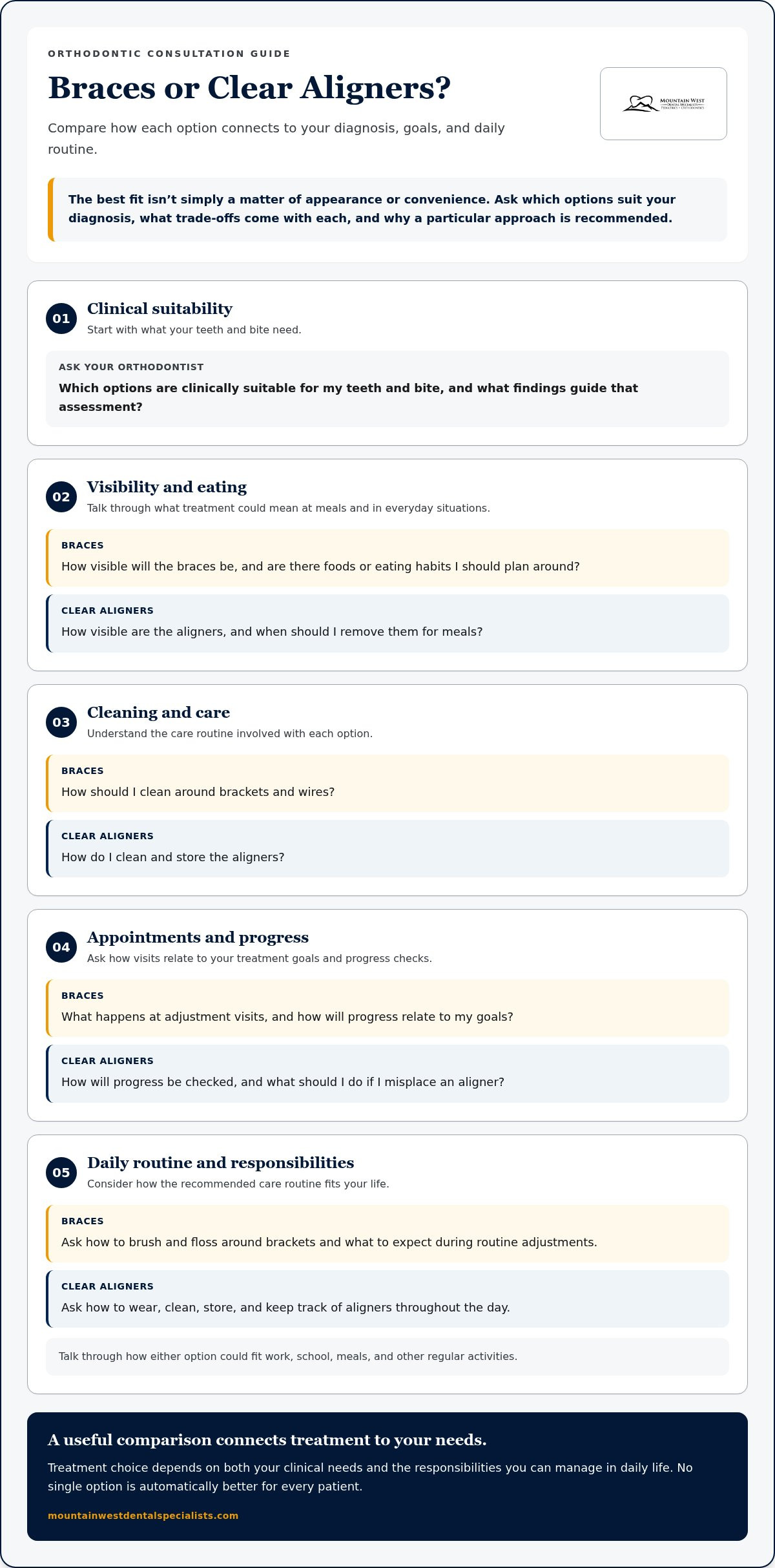
Braces and clear aligners can both be part of orthodontic care, but they involve different daily routines. The best fit isn’t simply a matter of appearance or convenience. Ask which options suit your diagnosis, what trade-offs come with each, and why the orthodontist recommends a particular approach. The American Dental Association’s patient-friendly overview of Orthodontics and dentofacial orthopedics can also introduce common treatment approaches.
Which treatment options could work for my needs?
Ask which options are clinically suitable for your teeth and bite, and what findings guide that assessment. Then compare visibility, eating, cleaning, and routine care. Ask about limitations and trade-offs, too. A useful comparison connects each option to your diagnosis and goals rather than treating one approach as automatically better for every patient.
What would I need to do during treatment?
Be realistic about the routine you can maintain. For aligners, ask how to wear, clean, store, and keep track of them throughout the day. For braces, ask how to brush and floss around brackets and what to expect during routine adjustments. Talk through how each option could fit work, school, meals, and other regular activities.
Treatment choice depends on both your clinical needs and the responsibilities you can manage in daily life. These questions to ask your orthodontist can make the recommendation clearer and more personal. At an orthodontic consultation in Las Vegas, you can discuss how braces or clear aligners relate to your needs.
Questions to Ask About Orthodontic Treatment Time, Visits, and Fees
Understanding practical details helps you plan for orthodontic care. Treatment time and appointment schedules depend on your diagnosis, the recommended approach, and how treatment progresses. An estimate is a guide, not a promise, so ask what it’s based on and what could lead to a change.
How long might treatment take, and how often are visits?
Ask for an estimate tailored to your case and which factors may affect it. Useful questions include:
- What milestones will help us track progress?
- How often should I expect appointments, and what happens during each one?
- What could change the schedule or estimated treatment time?
- How might missed visits or difficulty following the recommended routine affect progress?
Depending on the treatment approach, appointments may include progress checks and adjustments. Knowing their purpose helps you plan around school, work, and family responsibilities. If you need to reschedule, ask how to arrange another visit and whether you should take any steps in the meantime. Your orthodontist can explain how keeping appointments and following treatment instructions supports the plan, while accounting for the fact that each patient’s timeline differs.
What should I understand about fees and follow-up care?
Before beginning, ask for a clear, written explanation of the fees and what the proposed plan covers. Specifically, ask whether diagnostic imaging, periodic adjustment visits, and any other parts of care are included or billed separately. You can also ask what payment arrangements are available and how insurance may apply. A written outline gives you something concrete to review at home and makes it easier to raise questions about the full commitment before treatment starts.
Ask about care after braces or aligners are complete, too. Find out whether retainers or other follow-up steps are recommended to help maintain the result, what that care includes, and whether it is part of the fee outline. Understanding this next phase helps you consider the full treatment journey, not just the time spent wearing an orthodontic appliance.
Bring these questions to ask your orthodontist to the consultation and take notes on the answers. If a timeline, appointment pattern, or fee detail is unclear, ask for an everyday-language explanation. You should leave with a realistic picture of the proposed plan, its commitments, and the next steps to consider.
Questions to Ask Before Starting Orthodontic Treatment
Orthodontic care can change parts of your routine, but preparation can make those changes easier to manage. Before treatment begins, ask for practical instructions tailored to the recommended braces or aligners. Knowing what to expect with meals, cleaning, activities, and concerns can help you decide whether you feel ready to start.
What changes should I expect in everyday life?
Use this checklist during your consultation, and save it to revisit later:
- How should I brush and floss with my braces or aligners?
- Will I need to adjust what or how I eat?
- What kinds of discomfort might I notice, and what can I do to manage it?
- Are there sports, instruments, or other activities I should plan around?
- What concerns should prompt me to call the office, and what’s the best way to reach the team?
- How will progress be reviewed, and what might lead to an adjustment in the plan?
Ask for clear instructions specific to your treatment rather than assuming the same guidance applies to every patient. Braces and aligners have different care routines, so ask what to do at home and what to expect during regular activities. You can also ask how to manage discomfort and when a concern needs professional guidance. Having those answers ahead of time can make the first days feel more manageable.
How will progress and concerns be handled?
Find out how the orthodontist will review progress and explain changes to the plan. Ask how to get help with a treatment-related question between appointments and what information to share if something feels wrong. Clear instructions help you know what to do instead of guessing.
For a child, readiness involves more than age. Ask how much your child should understand about treatment, which daily tasks they can take responsibility for, and where a caregiver’s help will be important. A child might practice a routine independently while a parent checks that it’s completed. Agreeing on expectations together can support consistency without making treatment feel like a disruption to family life.
Orthodontic treatment asks for attention to new habits, but you can discuss how they fit your routine. Bring your concerns to the conversation, even if they seem small. You can discuss your orthodontic treatment questions and clarify the routines and support involved before taking the next step.
How to Use Your Orthodontist Questions Checklist at a Las Vegas Consultation
Preparing a few questions can make your consultation more focused. You don’t need to ask everything at once. Start with the concerns that matter most, then use the conversation to connect the diagnosis, treatment options, and daily responsibilities. A notes page or list on your phone can help you remember the answers afterward.
What should I bring and write down before my visit?
Before your appointment, jot down what you’ve noticed, what you hope treatment might address, and any previous dental care that could be relevant. If you’re attending with your child, agree on the family’s main concerns beforehand. Your child may have questions about appearance or activities, while you may want to understand the diagnosis and home-care routine. Both perspectives matter.
Use this short checklist to get started:
- Note concerns about tooth alignment, bite, or changes you’ve observed.
- Write down your goals, such as improving how your teeth fit together or discussing appearance.
- Bring relevant dental history or details about previous care.
- Mark your top questions to ask your orthodontist so you can raise them early.
- Leave space to record unfamiliar terms, explanations, and next steps.
During the appointment, ask the orthodontist to explain anything unclear in plain language. If you’re shown examination findings or imaging, ask what they mean for the recommendation rather than trying to interpret them alone.
How can I leave the consultation feeling informed?
Before wrapping up, summarize what you’ve heard: the orthodontic concern, the options discussed, the recommended approach and why it may fit, and the responsibilities treatment involves. Note the estimated timeline, expected visits, and any follow-up questions. If an answer feels incomplete, ask for clarification or write it down to revisit.
You don’t have to decide before you understand the plan. Take your notes home, review them with family, and consider how each option fits your needs and routines. Mountain West Dental Specialists is a family-owned Las Vegas practice offering orthodontic care for children, teens, and adults at its S. Cimarron Road office. Use the consultation to talk through your concerns and understand the options.
To discuss your orthodontic needs, schedule an orthodontic consultation and bring your checklist along.
Take Your Questions Into a Confident Next Step
A thoughtful orthodontic conversation can help you understand your diagnosis, compare braces and clear aligners, and prepare for the routines, visits, and follow-up care ahead. Bring your top questions to ask your orthodontist, note what the findings mean, and make sure you understand why an approach is recommended. You don’t have to decide before you feel informed.
At Mountain West Dental Specialists, children, teens, and adults can discuss orthodontic care with family-owned practice owners Dr. Keaton Tomlin and Dr. Allison Tomlin. Cone Beam CT imaging is available to help assess orthodontic needs when clinically appropriate. Your consultation is an opportunity to talk through your concerns and understand options for your individual situation.
Schedule an orthodontic consultation in Las Vegas and bring your checklist along. You deserve clear answers and a plan you feel comfortable considering.
Frequently Asked Questions
What questions should I ask at my first orthodontist appointment?
Ask what your orthodontist found, what treatment goals they recommend, and which options may fit your needs. Useful questions to ask your orthodontist include, “What did the examination or imaging show?” and “What could happen if I wait?” You can also ask about expected visits, daily care, and fees. At a Las Vegas consultation, bring notes about your concerns and ask for unfamiliar terms to be explained in plain language.
How do I know which orthodontic treatment is right for me?
The right treatment depends on your diagnosis, age, dental development, goals, and daily routine. Ask which options are clinically appropriate and why the orthodontist recommends one approach over another. Compare practical responsibilities, such as cleaning, eating, and keeping track of aligners, along with the treatment goals. An explanation tied to your examination findings is more useful than assuming one option is best for every patient.
Can I ask my orthodontist about clear aligners and braces?
Yes. Ask about both clear aligners and braces, including which options suit your needs and what trade-offs each involves. Discuss visibility, eating, cleaning, appointments, and the responsibilities you’ll have at home. Ask whether the options address the same treatment goals in your case, and why one may be recommended. Mountain West Dental Specialists provides orthodontic care for children, teens, and adults in Las Vegas.
How long should I expect orthodontic treatment to take?
Your orthodontist can provide an estimate based on your diagnosis and proposed treatment, but the timeline can vary as progress is reviewed. Ask what factors shape the estimate, how often progress checks or adjustments are expected, and what might affect the schedule. Missed appointments or difficulty following treatment instructions can influence progress, though the effect depends on the individual plan. Ask for an updated explanation if your needs or circumstances change.
What should parents ask an orthodontist about a child’s treatment?
Parents can ask what the orthodontic findings mean, what goals are recommended, and how the child’s age and dental development affect the plan. Discuss brushing, eating, activities, appointments, and what to do if the child has a concern. Ask which responsibilities the child can manage and where caregiver support is useful. Making space for the child’s questions can help the family understand the plan together.
What should I ask about orthodontic fees and payment options?
Ask for a written explanation of the fees, what the proposed plan includes, and which payment arrangements are available. Clarify whether diagnostic imaging, appointments, and follow-up or retention care are part of the outlined plan or handled separately. Ask how insurance may apply, too. A clear written outline helps you review the commitment and identify anything you’d like explained before beginning.
Should I get a second opinion before starting orthodontic treatment?
A second opinion is a personal choice, not a requirement for every patient. If you’re uncertain about the diagnosis or recommendation, first ask your orthodontist to explain the findings, alternatives, and reasons for the proposed plan in plain language. You can also ask what records or images informed the assessment. Understanding the options can help you make a considered decision about next steps.