
The retainer that seems easiest at first may not be the one that fits your daily life best. When comparing a permanent retainer vs removable, consider comfort, cleaning habits, and whether you might forget to wear a retainer.
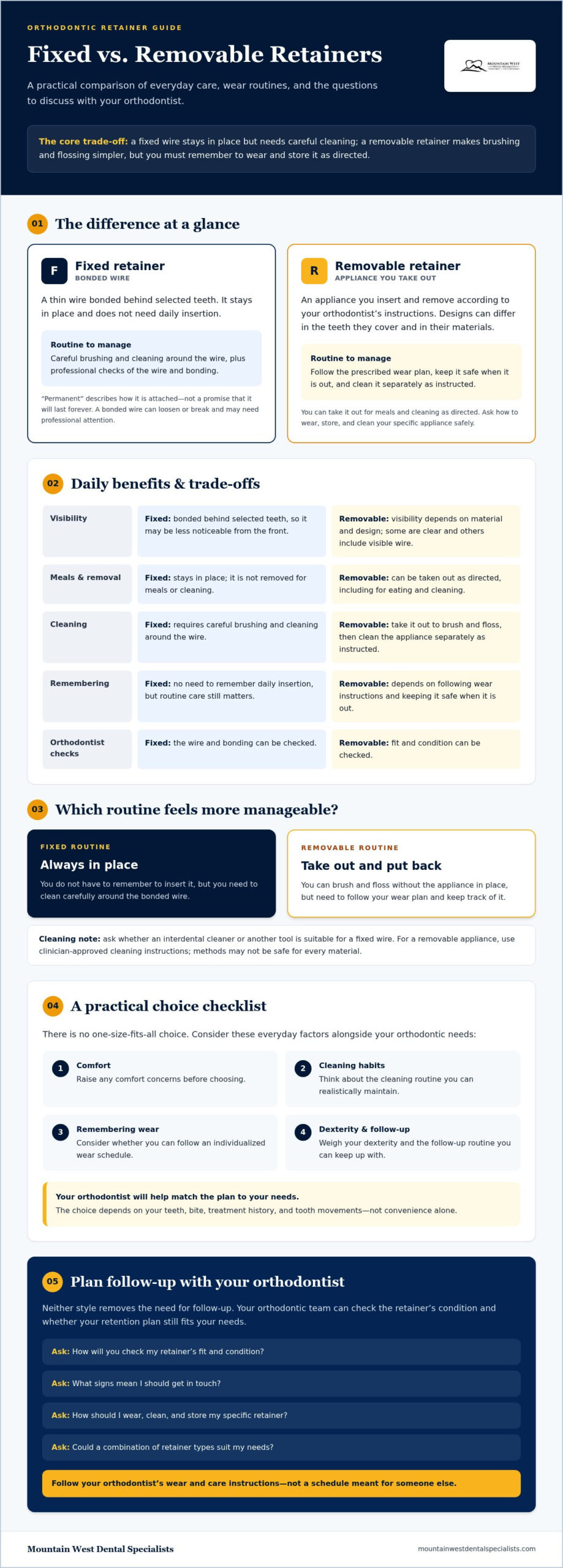
If you’re unsure which option suits your teeth and bite, or how long you’ll need a retainer, you’re not alone. A bonded wire stays in place but needs careful cleaning around it. A removable retainer makes brushing and flossing simpler, but you have to remember to wear and store it as directed.
This guide compares the practical differences so you can prepare for a conversation with your orthodontist. You’ll learn what to consider about comfort, hygiene, long-term wear, and the routines each option involves. We’ll also cover questions to ask, including whether a combination of retainer types may suit your needs. There’s no single best choice for everyone: the right plan should reflect your orthodontic needs and the routine you can realistically maintain.
Key Takeaways
- Compare how fixed and removable retainers fit into your everyday habits, including cleaning and remembering to wear them.
- The choice between a permanent retainer vs removable depends on your orthodontic needs, tooth movements, and bite, not a one-size-fits-all rule.
- Use a practical checklist to weigh comfort, dexterity, hygiene, and the follow-up you can keep up with.
- Ask your orthodontist how they’ll check your retainer’s fit and condition, and what signs mean you should get in touch.
- Follow your orthodontist’s wear and care instructions rather than relying on a schedule meant for someone else.
Permanent Retainer vs. Removable: What Is the Difference?
After orthodontic treatment, a retainer helps support the position of your teeth while your orthodontist monitors your results. Fixed and removable styles may both be considered, but the right fit depends on your teeth, bite, and treatment history. Choosing between a permanent retainer vs removable involves more than convenience: each style has different daily care needs.
A fixed retainer is a wire bonded to the back of selected teeth, while a removable retainer is an appliance you take out and put back in as directed. You can explore this overview of orthodontic retainers to learn about common types and their general purpose, then ask your orthodontist how those distinctions apply to your care.
One detail can prevent confusion: “permanent” describes how the wire is attached, not a promise that it will last forever. A bonded wire can loosen or break and may need professional attention. Neither style removes the need for follow-up. Your orthodontic team can check the retainer’s condition and whether your retention plan still fits your needs.
How does a permanent retainer work?
A permanent, or fixed, retainer is typically a thin wire bonded behind selected teeth, often a group of teeth rather than the entire mouth. Because it stays in place, it holds those teeth without requiring you to remember to insert it each day. It doesn’t control every tooth, though. Your orthodontist can explain how to care for it and keep it monitored.
How does a removable retainer work?
In everyday life, the key difference is how each retainer fits into your routine. A fixed wire is always in place, but cleaning carefully around it takes attention. A removable appliance lets you brush and floss without the retainer in the way, but you have to keep track of it and follow the prescribed wear plan. Consider which routine feels manageable, and raise any comfort or cleaning concerns before choosing.
Permanent vs. Removable Retainers: Compare Daily Benefits and Trade-Offs
The practical difference often comes down to what you’d rather manage: a wire that stays in place and needs careful cleaning, or an appliance you remove and must remember to wear. Neither option is best for everyone. Your orthodontist can weigh your treatment needs alongside your habits and preferences. For an overview of common types of retainers and how their designs vary, see Healthline’s guide.
A fixed retainer trades daily insertion for careful cleaning, while a removable retainer trades easier access for the responsibility of following a wear routine.
| Consideration | Fixed retainer | Removable retainer |
|---|---|---|
| Visibility | Bonded behind selected teeth, so it may be less noticeable from the front. | Visibility depends on its material and design. Some styles are clear, while others include visible wire. |
| Removability | Stays in place and isn’t removed for meals or cleaning. | Can be taken out as directed, including for eating and cleaning. |
| Cleaning | Requires careful brushing and cleaning around the wire. | Can be removed to brush and floss, then cleaned separately as instructed. |
| Adherence | No need to remember daily insertion, but it still needs routine care. | Depends on following your orthodontist’s wear instructions and keeping it safe when it’s out. |
| Professional monitoring | Your orthodontist can check the wire and bonding. | Your orthodontist can check its fit and condition. |
Which retainer is easier to keep clean?
A bonded wire can make brushing and flossing around the teeth more challenging. Brush carefully along the gumline and around the wire, and ask your orthodontist whether an interdental cleaner or another tool is suitable. With a removable appliance, you can clean your teeth without it in place, then clean the appliance separately using clinician-approved instructions. Don’t assume a cleaning method is safe for every material.
Which retainer is easier to remember and wear?
A fixed wire stays in place, so you don’t have to remember to insert it. A removable retainer gives you flexibility, but you’ll need to follow the prescribed routine and keep track of it when it’s out. It could be misplaced, damaged, or left unworn. Consider your schedule, comfort, and willingness to build appliance care into each day.
As you compare a permanent retainer vs removable, consider which responsibilities feel realistic, then discuss how your orthodontic needs affect the choice. If you have questions about your retention plan, you can discuss orthodontic care with the Las Vegas team.
Does a Permanent Retainer Work Better Than a Removable One?
Neither a fixed wire nor a removable appliance is automatically more effective for every patient. The question of permanent retainer vs removable can’t be answered by convenience alone: your orthodontist considers how your teeth moved during treatment, your bite, and your individual clinical needs. The American Association of Orthodontists explains the role retainers play after orthodontic treatment, but your own orthodontist is best placed to recommend a plan for your smile.
It also helps to consider the care each appliance requires. Its fit and condition, your cleaning habits, any prescribed wear routine, and recommended follow-up all matter. Neither option can promise that teeth will never move or that you’ll never need further orthodontic care. Keep follow-up appointments and ask what to do if the appliance feels different, becomes damaged, or no longer fits as expected.
When might an orthodontist recommend a fixed retainer?
A bonded wire may be considered when the orthodontist believes certain teeth need ongoing support in a fixed position. The history of movement in particular teeth could be one factor in the discussion. That alone doesn’t determine the choice: the orthodontist also evaluates tooth position, bite, hygiene, and your circumstances. A fixed wire requires careful cleaning and monitoring. Only the treating clinician can determine whether it’s appropriate for you.
When might a removable retainer suit your routine?
A removable appliance may appeal if you value being able to take it out for meals and cleaning. That flexibility comes with responsibility: you’ll need to follow the wear and care instructions for your appliance and keep it safe when it’s out. If you’re concerned you might forget it, mention that openly. Your orthodontist can consider your habits and clinical needs together rather than relying on a generic schedule.
Think of the decision as a conversation, not a contest between two appliances. Ask why a particular option is being considered for your tooth movements and bite, what daily care it involves, and how your orthodontic team will monitor it. A clear explanation can help you understand both the recommendation and the routine needed to maintain your results. If you are also interested in how post-treatment alignment fits into broader smile design, you can learn more about Aesthetic Smiles to see how modern clinics approach aesthetic dentistry.
How to Choose Between a Permanent and Removable Retainer
There’s no need to decide based on convenience alone. Your orthodontist can explain the clinical reasons behind a recommendation, while your daily routine can help you decide whether the plan feels manageable. Use these steps to guide the conversation about a permanent retainer vs removable:
- 1. Discuss your clinical needs. Ask which teeth need retention and why this option fits your tooth movements and bite.
- 2. Compare the daily routines. Consider whether you’re more comfortable with a retainer that stays in place or one you need to wear and keep track of.
- 3. Review cleaning and care. Ask how to clean your specific appliance safely, and whether dexterity or other daily habits could affect your routine.
- 4. Plan follow-up. Find out how the orthodontic team will monitor the retainer and what to do if it feels loose, becomes damaged, or no longer fits.
Be honest about what you can sustain. If handling a removable appliance feels difficult or you’re concerned about forgetting it, say so. If cleaning around a fixed wire seems challenging, ask for practical guidance. Describe any comfort concerns, too. Keeping appointments is another part of a realistic plan, since your orthodontist needs to assess how the retainer is holding up.
Questions to ask before choosing your retainer
Along with asking which teeth need retention, ask how the recommended option supports those teeth and what care it needs between visits. Clarify how to clean and protect the appliance, how its condition will be checked, and whether repair or replacement may be needed if it’s damaged. Ask which changes or symptoms should prompt a call to the orthodontic office rather than waiting for your next appointment.
What if your retainer breaks, feels loose, or no longer fits?
Contact your orthodontist promptly for advice. Don’t bend or try to repair a bonded wire at home, and don’t wear a damaged appliance unless your clinician says it’s appropriate. If a removable retainer no longer fits comfortably, have it professionally assessed instead of forcing it into place. Your orthodontic team can advise you on the next step.
If you’re still weighing your options, this Las Vegas orthodontist selection guide can help you think about what to look for in a provider. You can also discuss your orthodontic retention questions with the Las Vegas team. The right choice is a clinically appropriate plan you can maintain.
Plan Retainer Follow-Up With Your Las Vegas Orthodontist
Choosing between a permanent retainer vs removable is one part of your retention plan. Follow-up gives your orthodontic team a chance to check the appliance’s fit and condition, review how you’re cleaning it, and discuss changes in your needs. Your orthodontist’s instructions should guide wear and care, not a schedule you find online. Retainer plans are personal, so ask if you’re unsure whether your directions still apply.
What to expect at a retainer check
Your clinician can examine the retainer, assess its fit, and talk through your oral hygiene routine. Bring your removable retainer, if you have one, along with questions about cleaning, comfort, or changes you’ve noticed. Imaging isn’t automatic for every retainer check; your orthodontist will determine whether it’s clinically appropriate. Preparing questions can help you leave with a clearer understanding of how to care for your appliance at home.
Keep your retention plan realistic and personal
Follow the wear and care directions for your specific retainer, and let your orthodontic team know if your schedule or circumstances make them difficult to follow. Mountain West Dental Specialists provides orthodontic care for children, teens, and adults in Las Vegas. Learn more about choosing a local provider in this orthodontic care guide for Las Vegas.
At a visit, ask how the team will monitor your retainer and whether your plan should be reassessed as your needs change. The practice uses tools such as Cone Beam CT imaging in its care, but your clinician decides whether imaging is useful for your individual situation. No retainer plan should be treated as a universal schedule.
If you have questions about retainer options or need to arrange an orthodontic appointment, contact Mountain West Dental Specialists in Las Vegas. The team can discuss your circumstances and help you understand appropriate next steps, without assuming that one retainer style is right for everyone.
Choose a Retention Plan That Fits Your Life
Choosing between a permanent retainer vs removable isn’t about finding one option that’s best for everyone. It’s about matching your orthodontic needs with a routine you can maintain. Consider the daily care each style involves, and ask your orthodontist how your teeth, bite, and treatment history shape the recommendation.
Follow-up matters, too. Your orthodontic team can review your retainer’s condition, fit, and care routine, then advise you if your needs change. Follow the instructions for your own appliance rather than relying on a general schedule.
Mountain West Dental Specialists is a family-owned practice led by Dr. Keaton Tomlin and Dr. Allison Tomlin, providing orthodontic care for children, teens, and adults in Las Vegas. The practice also uses modern technology, including Cone Beam CT imaging, as part of its care. If you have questions or would like to discuss your orthodontic needs, talk with the Las Vegas orthodontic team about your retainer options.
A thoughtful, personalized plan can help you feel more confident about caring for your smile after treatment.
Frequently Asked Questions
Is a permanent retainer better than a removable retainer?
Neither is automatically better for every patient. The choice between a permanent retainer vs removable depends on factors such as your tooth movements, bite, oral hygiene, and which care routine you can maintain. A fixed wire avoids daily insertion but needs careful cleaning around it. A removable retainer can be taken out for cleaning, but you need to follow its prescribed wear instructions. Ask your orthodontist why a particular option fits your needs.
Can you have both a permanent and a removable retainer?
Yes, an orthodontist may recommend using both, depending on your treatment history and clinical needs. For instance, your plan might include a fixed retainer for selected teeth and a removable appliance as additional support. That combination isn’t necessary or appropriate for everyone. Your orthodontist can explain what each appliance is intended to do, which teeth it supports, and how to manage the separate care and wear instructions.
How long do you need to wear a removable retainer?
The wear duration and daily schedule are specific to your treatment and should come from your orthodontist. Instructions may change over time, so don’t assume a general schedule found online applies to you. Ask whether to wear your retainer during the day, at night, or at other times, and what to do if you miss wear or it no longer fits comfortably. Follow the plan your clinician gives you.
What happens if a permanent retainer breaks or comes loose?
Contact your orthodontist for guidance if a bonded wire breaks or feels loose. Avoid bending it, removing it, or trying to repair it yourself, since that may damage the wire or affect your teeth. Don’t assume a partly detached retainer is still working as intended. Tell the office what you’ve noticed and follow their advice about next steps, including whether the retainer should be left alone until it can be assessed.
Is a permanent retainer harder to clean than a removable one?
Cleaning around a fixed wire can take extra care because it remains bonded behind selected teeth. Your orthodontist can show you how to brush around it and whether an interdental cleaning tool is suitable. With a removable retainer, you can take it out to brush and floss, then clean the appliance separately as instructed. Cleaning methods depend on the retainer’s design and material, so ask for guidance specific to yours.
Can a retainer fix teeth that have shifted?
A retainer is generally intended to hold teeth in position, not to correct noticeable shifting. If your teeth have moved or your removable retainer feels tight or no longer fits, contact an orthodontist for an assessment rather than forcing the appliance into place. The appropriate next step depends on how much movement has occurred and your bite. Your clinician can explain whether your retention plan needs to change or whether further orthodontic care should be considered.
Do you need an orthodontist to choose a retainer in Las Vegas?
An orthodontist can assess your bite, treatment history, and tooth position to recommend a retainer plan suited to your needs. That guidance is especially useful if you’re unsure which style to choose, have a retainer that feels different, or need advice about cleaning and wear. Mountain West Dental Specialists provides orthodontic care for children, teens, and adults in Las Vegas. Follow the instructions from your own treating clinician.