
You wrapped your clear aligner in a paper napkin during dinner, and by the time you realized what happened, the table was cleared and your tray was gone. That sudden sinking feeling is completely understandable, but knowing what to do if you lose an Invisalign tray will quickly turn an accidental mistake into a minor, manageable hiccup.
It’s easy to worry that weeks of dedication are slipping away, or to feel anxious about whether you should put in your previous tray, jump ahead to the next one, or leave your teeth bare. Rest assured, a missing aligner doesn’t mean your smile journey has derailed. By following a clear, doctor-approved plan, you’ll discover the exact steps to protect your smile progress, avoid treatment delays, and safeguard your oral health without unnecessary stress. Here is your straightforward guide to stabilizing your teeth right now, notifying your orthodontic team, and keeping your alignment seamlessly on track.
Key Takeaways
- Act quickly without panic: Knowing exactly what to do if you lose an Invisalign tray starts with checking common hiding spots and ensuring your teeth never remain unprotected.
- Timing dictates your immediate step: Depending on where you are in your current wear schedule, safely reverting to your previous tray or advancing forward protects your tooth movement.
- Keep your orthodontic team informed: Prompt communication allows your provider to evaluate your digital treatment plan and coordinate replacement aligners before teeth begin to shift.
- Avoid makeshift fixes: Never force a damaged or ill-fitting aligner onto your teeth, which can risk tracking errors and harm delicate root structures.
- Cultivate simple protective habits: Storing your aligners in their dedicated cases and saving previous trays will keep your smile transformation moving forward smoothly.
Immediate Action Steps: What to Do in the First 24 Hours
Losing an aligner feels disorienting, especially when your office is closed for the evening or over the weekend. Understanding precisely what to do if you lose an Invisalign tray during these initial hours ensures your teeth remain stable while you coordinate with your provider. Taking quick, calm action protects the progress you have worked hard to achieve.
Conducting a Thorough Physical Search
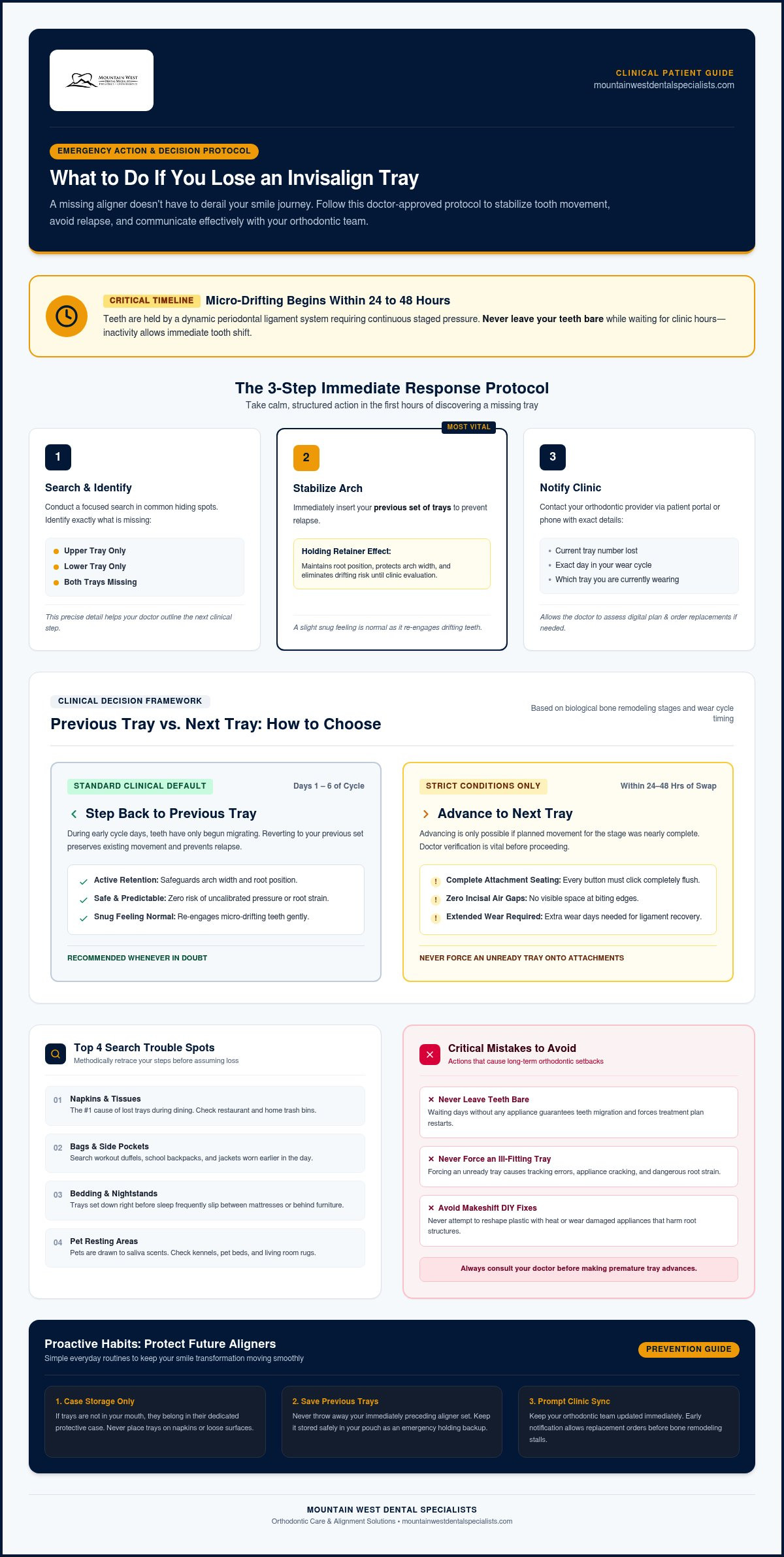
Before assuming the worst, retrace your steps methodically. Clear aligners are practically invisible, meaning they blend into their surroundings with ease. Focus your initial search on these common trouble spots:
- Napkins and tissues: Wrapping trays during meals is the most frequent reason aligners end up in household or restaurant trash cans.
- Bags and side pockets: Check workout duffels, school backpacks, and jackets worn earlier in the day.
- Bedding and nightstands: Trays set down right before sleep often slip between mattresses or behind furniture.
- Pet resting areas: Dogs are naturally drawn to the saliva scent on dental appliances. Check kennels, dog beds, and living room rugs.
Once you finish searching, identify whether you lost the upper tray, the lower tray, or both. This detail helps your doctor plan your next step.
Stabilizing Your Teeth Immediately
Teeth are held in place by a dynamic periodontal ligament system. In active clear aligner therapy, teeth require continuous pressure to stay in their staged positions. Without an appliance holding them, micro-drifting begins within just 24 to 48 hours. Never leave your smile bare while waiting for regular clinic hours.
The safest immediate decision is to open your storage pouch and put in your previous set of trays. Wearing your previous tray acts as an active holding retainer. It prevents relapse, maintains root position, and keeps your teeth comfortable until your doctor can review your plan. Note the day you were on in your current cycle, then send a message through your patient portal or call the office line. When you know what to do if you lose an Invisalign tray right away, you protect your smile from unwanted delays.
Previous Tray vs. Next Tray: How to Make the Safe Clinical Choice
Standing in front of your bathroom mirror with an empty smile leaves you with a tough decision: step backward or jump forward? Understanding what to do if you lose an Invisalign tray hinges on biological timing. Orthodontic movement relies on bone remodeling, where bone breaks down on one side of the root and rebuilds on the other. Rushing this sequence risks your smile’s long-term health.
When It Is Generally Safe to Step Back to Your Last Tray
If you lost your aligner during days one through six of your cycle, slipping into your previous set is almost always the correct clinical path. During the initial days of a new stage, your teeth have only started migrating. Wearing your immediately preceding tray provides stable retention, preserving your arch width and preventing relapse.
Your previous tray might feel slightly snug as it re-engages teeth that began drifting. That gentle firmness is normal. It simply means the appliance is holding the line until your doctor outlines a formal plan.
When Moving Forward to the Next Aligner May Be Approved
Advancing to your upcoming set occasionally makes sense, but only under narrow conditions. If you were within 24 to 48 hours of your scheduled tray swap, your teeth may have already achieved that stage’s planned movement. Even so, caution is vital. Never force a new plastic tray over complex composite attachments without doctor verification.
Before considering this jump, check these clinical requirements carefully:
- Complete attachment seating: Every composite button on your teeth must click flush into its corresponding aligner bubble without bending the plastic.
- Zero incisal air gaps: Look closely in a mirror. Visible space between the plastic edge and your biting surfaces signals non-tracking.
- Extended wear protocol: If approved to advance early, expect to wear that next tray for additional days to allow full periodontal ligament recovery.
Skipping forward prematurely generates uncalibrated orthodontic pressure. In severe scenarios, forcing unready teeth causes poor tracking, appliance cracking, or even root strain. Aligning with official FDA guidelines on clear dental aligners, close doctor supervision protects your bite from unexpected disruptions. When in doubt about what to do if you lose an Invisalign tray, reaching out to your local Las Vegas team at Mountain West Dental Specialists ensures your treatment plan stays protected, personalized, and completely on course.
Critical Mistakes to Avoid When an Aligner Goes Missing
Facing a misplaced aligner can tempt anyone toward hasty fixes. Knowing what to do if you lose an Invisalign tray is just as much about avoiding harmful reactions as it is about taking proper action. Making the wrong move can turn a simple bump in the road into costly setbacks and unnecessary discomfort.
The True Cost of Silence and Treatment Delay
Embarrassment leads many patients to stay quiet, hoping to sort things out at their next routine visit weeks away. Silence is the quickest route to orthodontic regression. Without sequential force, your teeth begin migrating away from your planned digital track within days.
Hiding the issue allows hidden tracking errors to multiply. When teeth fall behind schedule, subsequent trays will no longer seat properly over your attachments. According to the American Association of Orthodontists, continuous supervision and full compliance are essential for aligners to deliver their intended biological movement. Catching a missing tray early lets your team adjust your plan immediately, avoiding the need for unplanned mid-course refinements or fresh diagnostic scans.
Why Compromised or Damaged Trays Must Never Be Worn
Recovering an aligner from the bottom of a bag or beneath furniture often reveals visible damage. Never wear an appliance that is cracked, distorted, or chewed by a pet. Damaged medical plastic introduces severe oral health hazards:
- Loss of calibrated force: Even tiny hairline cracks destroy the precise tension engineered into medical-grade polyurethane. Without uniform pressure, targeted movements stall out completely.
- Unintended rotational torque: Warped plastic twists teeth in rogue directions. These rogue forces place intense lateral stress on tooth roots and surrounding alveolar bone.
- Bacterial buildup: Deep tooth punctures from dogs or rough abrasions harbor stubborn oral bacteria that standard rinses cannot wash away.
- Heat deformation: Boiling water or microwaving trays to sanitize them instantly warps the plastic, rendering the prescription useless.
Your orthodontic team wants to support you, not judge you. Sharing honest updates about what to do if you lose an Invisalign tray ensures your care stays safe, comfortable, and focused on delivering the smile you deserve.
Ordering Replacements and Navigating Treatment Timelines
Once you alert your orthodontic practice about a missing aligner, a well-defined clinical protocol begins behind the scenes. Knowing what to do if you lose an Invisalign tray includes understanding how digital files turn into physical replacements, ensuring you never feel stranded during the turnaround period.
The Replacement Workflow Behind the Scenes
Modern clear aligner treatment is entirely digital. Because your doctor stores a complete virtual roadmap of your smile, ordering a specific stage does not require starting from square one. Your provider accesses your staging file within the digital system and reorders the exact upper or lower aligner you need.
Standard laboratory manufacturing and delivery generally require 7 to 14 business days. When teeth experience minor shifts while waiting, your clinician may capture a rapid digital scan in the office to verify tracking. Once the replacement arrives, your doctor checks that the plastic seats firmly against your teeth and engages all attachments before sending you home.
Managing Your Overall Orthodontic Completion Date
A single misplaced tray does not mean your final target date gets pushed back by months. Orthodontic timelines are resilient when managed within the first few days of an incident. In many cases, your doctor can strategically adjust the calendar to absorb the lost time:
- Wearing the replacement tray longer: You may wear the newly arrived aligner for an extra three to four days to solidify root positioning.
- Committing to strict compliance: Hitting the gold-standard 20 to 22 hours of daily wear allows bone remodeling to catch up efficiently.
- Calibrating future stages: Your clinician can shorten subsequent tray intervals slightly if your teeth demonstrate exceptional biological movement.
Working alongside a dedicated orthodontist in Las Vegas ensures that unexpected aligner mishaps are handled smoothly with advanced 3D imaging and tailored care. If you find yourself uncertain about what to do if you lose an Invisalign tray, let our doctor-led team help. Contact Mountain West Dental Specialists today to stabilize your progress and keep your smile moving forward seamlessly.
Proactive Habits to Prevent Losing Future Aligners
Preventing an orthodontic setback is far simpler than correcting one. While learning what to do if you lose an Invisalign tray prepares you for surprises, building solid daily habits keeps your treatment running smoothly without unwanted interruptions. Small adjustments to your everyday routine protect your appliances wherever life takes you.
Smart Storage Protocols at Home, School, and Work
Clear aligners disappear most often during quick meals, sports practices, and rushed morning routines. Practicing the golden rule of aligner wear, keeping trays securely in their case whenever they leave your mouth, removes guesswork entirely. Here are simple routines to keep your appliances safe:
- Distribute high-visibility cases: Keep brightly colored cases in your gym bag, backpack, work desk, and car console. Bright cases stand out immediately against dark tabletops and car interiors.
- Banish the napkin trap: Never place your aligners in paper napkins, lunch trays, or folded tissues. Restaurant staff and busy family members naturally sweep them straight into the trash.
- Archive your previous pouches: When advancing to a new aligner set, clean your completed trays and slide them back into their original numbered pouches. Storing your last two stages in a bathroom drawer gives you an instant, reliable backup plan.
Compassionate, Personalized Orthodontic Care in Las Vegas
Clear aligner therapy is a shared partnership between you and your clinical team. At Mountain West Dental Specialists, Dr. Keaton Tomlin and Dr. Allison Tomlin take pride in delivering supportive, family-first orthodontic care. When accidents happen, you will never face judgment. Instead, you receive steady, reassuring solutions designed around your lifestyle.
Utilizing advanced 3D digital imaging, our team closely tracks tooth movement, evaluates bite alignment, and quickly manages treatment adjustments for children, teens, and adults alike. Having a warm, neighborhood clinic right on S. Cimarron Road means you never have to wonder alone about what to do if you lose an Invisalign tray. With thoughtful daily habits and a dedicated clinical home, your journey to a balanced, radiant smile remains fully protected every single day.
Keep Your Smile Transformation Moving Forward
Misplacing an aligner feels stressful in the moment, but it never has to derail your hard-earned progress. Remembering what to do if you lose an Invisalign tray empowers you to act with clarity: stabilize your teeth using your previous set, steer clear of risky DIY modifications, and reach out to your doctor right away.
Orthodontic care is a collaborative journey, and having a supportive dental home makes all the difference. At Mountain West Dental Specialists, Dr. Keaton Tomlin and Dr. Allison Tomlin combine family-first warmth with advanced Cone Beam CT and 3D digital imaging to ensure your teeth stay precisely on track. Having comprehensive pediatric and orthodontic expertise under one welcoming Las Vegas roof means your entire family is always in compassionate hands. Schedule a clear aligner consultation with Mountain West Dental Specialists today, and protect your smile with steady confidence.
Frequently Asked Questions
Can I skip directly to my next Invisalign tray if I lose my current one?
You should not skip directly to your next aligner without explicit guidance from your orthodontic doctor. Knowing what to do if you lose an Invisalign tray depends on your wear cycle. If you were only a few days into your set, advancing forces rigid plastic over unready roots. Stepping back into your previous tray is much safer for delicate periodontal ligaments.
What happens if I lose both my current and previous Invisalign trays?
Reach out to your orthodontic team immediately if both trays are missing. Without an appliance, teeth begin shifting within 24 to 48 hours. At Mountain West Dental Specialists in Las Vegas, Dr. Keaton Tomlin and Dr. Allison Tomlin evaluate your teeth using advanced 3D digital imaging to determine whether an interim passive appliance or an expedited replacement stage is best to preserve your alignment.
Will losing an aligner tray permanently delay my orthodontic treatment timeline?
A lost tray will rarely cause a permanent delay to your overall treatment timeline when addressed right away. Clear aligner protocols are adaptable. Your doctor can often compensate by adjusting wear intervals on your upcoming aligners or having you wear your replacement a few extra days. Consistently hitting your daily wear goals keeps your projected completion date firmly within reach.
How much wear time per day is required if I have to use an older tray?
You should still wear your older backup tray for the standard 20 to 22 hours each day. Even though it represents a previous stage, it functions as an active holding appliance that keeps your bone structure and dental arches stable. Leaving it out for extended hours allows your teeth to drift, creating larger tracking problems once your official replacement arrives.
Can I wear a cracked or partially broken aligner while waiting for replacement?
Avoid wearing cracked, snapped, or severely compromised aligners while waiting for advice. Fractured plastic loses calibrated tension and can exert unpredictable rotational forces against tooth roots, while sharp edges irritate your cheeks and gums. Instead, rinse and seat your intact previous tray to safely stabilize your smile until your orthodontic team outlines your next steps.
What should I do if my child or teen loses their clear aligner at school?
Have your student switch to their previous tray the moment they arrive home, then contact your family orthodontic provider. School cafeterias and sports locker rooms are common places for aligners to vanish. Teaching your teen what to do if you lose an Invisalign tray removes fear and blame, ensuring they speak up immediately so treatment stays completely on track.
Does dental insurance cover the cost of replacement clear aligner trays?
Most dental insurance policies provide a general lifetime orthodontic benefit rather than paying for individual lost trays. Coverage terms depend on your specific carrier and plan structure. When you call to report a lost appliance, your practice’s treatment coordinator can review your benefits, verify insurance details, and clarify practical options for keeping treatment progressing smoothly. For an example of how specialized orthodontic practices outline clear aligner costs and treatment packages, click here.