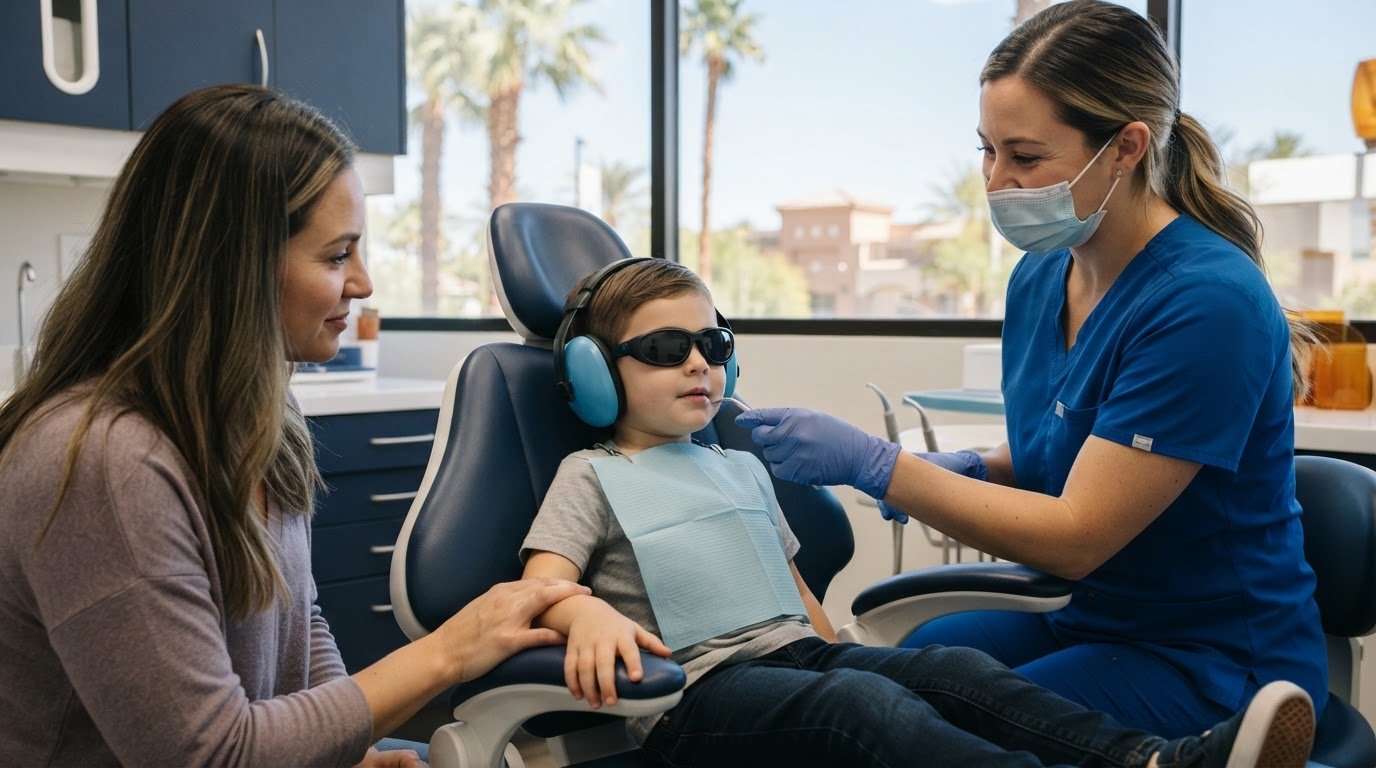
A calm first dental visit can start with small, predictable steps. Gentle dental care for kids in Las Vegas begins with a reassuring approach, and the American Academy of Pediatric Dentistry recommends a child’s first dental visit by age one or when the first tooth appears, whichever comes first.
It’s understandable to want your child to feel safe, especially if new sounds, bright lights, or unfamiliar routines cause worry. The visit can move at your child’s pace, with clear explanations, gradual introductions to the chair and instruments, and breaks when needed. Parents can stay alongside their child throughout the appointment.
This guide explains how a children’s dentist can support ongoing family dental care, and how introductory visits, tell-show-do, and comfort aids such as sunglasses or headphones may make appointments easier. You’ll also learn how pediatric checkups connect with care for babies and orthodontic needs, so you know what to expect at each step.
Key Takeaways
- Learn how a child-centered visit can make dental care feel more predictable and comfortable.
- See how gradual introductions and clear explanations can help children who feel uneasy about unfamiliar appointments.
- Explore ways sensory comfort aids may support a child’s experience in the dental chair.
- Understand what to look for in a pediatric dentist and how baby dental care can fit into a family’s ongoing needs.
Pediatric dental care in a stress-free environment
A calm pediatric appointment combines prevention with a pace suited to the child. According to the American Academy of Pediatric Dentistry, a child’s first dental visit should happen by age one or when the first tooth appears, whichever comes first. Regular check-ups let the dentist examine developing teeth and discuss daily care. A cleaning can remove plaque in areas that brushing may miss.
In Las Vegas, a relaxed visit can start with simple steps: explain what will happen, introduce the dental chair, then proceed at the child’s pace. Children with autism, sensory processing differences, ADHD, Down syndrome, cerebral palsy, developmental delays, severe anxiety, or complex medical needs may benefit from a visit tailored to them. For orthodontic planning, the American Association of Orthodontists recommends an orthodontic checkup by age seven.
Sedation options differ among Las Vegas dental clinics and depend on a child’s needs. Sedation can carry risks, so the dentist considers health history, treatment needs, and anxiety before recommending an approach.
Emergency appointments and weekend hours vary by office, rather than following one citywide schedule. Check the practice’s appointment information for its hours and arrangements for urgent care.
Neighborhood access also depends on each office’s location. Families can consider whether an appointment fits their route from home, school, or another regular stop.
Affordability depends on the care a child needs, from preventive checkups to additional treatment, and on the family’s coverage. A clear treatment plan separates routine care from recommended follow-up, helping parents understand the proposed steps before proceeding. Mountain West Dental Specialists offers flexible pricing options, including zero-interest in-house financing.
Pediatric dentistry focuses on children’s developing mouths and communication needs. A dentist’s experience with a child’s age, comfort, and health needs can shape how an exam is explained and paced. For example, a young child may need more time to become familiar with the chair than an older child.
Desensitizing visits and tell-show-do
A gradual introduction helps children understand what a dental visit involves. Familiar steps make the appointment more predictable and give the team a chance to adapt to the child.
Desensitizing Visit Techniques
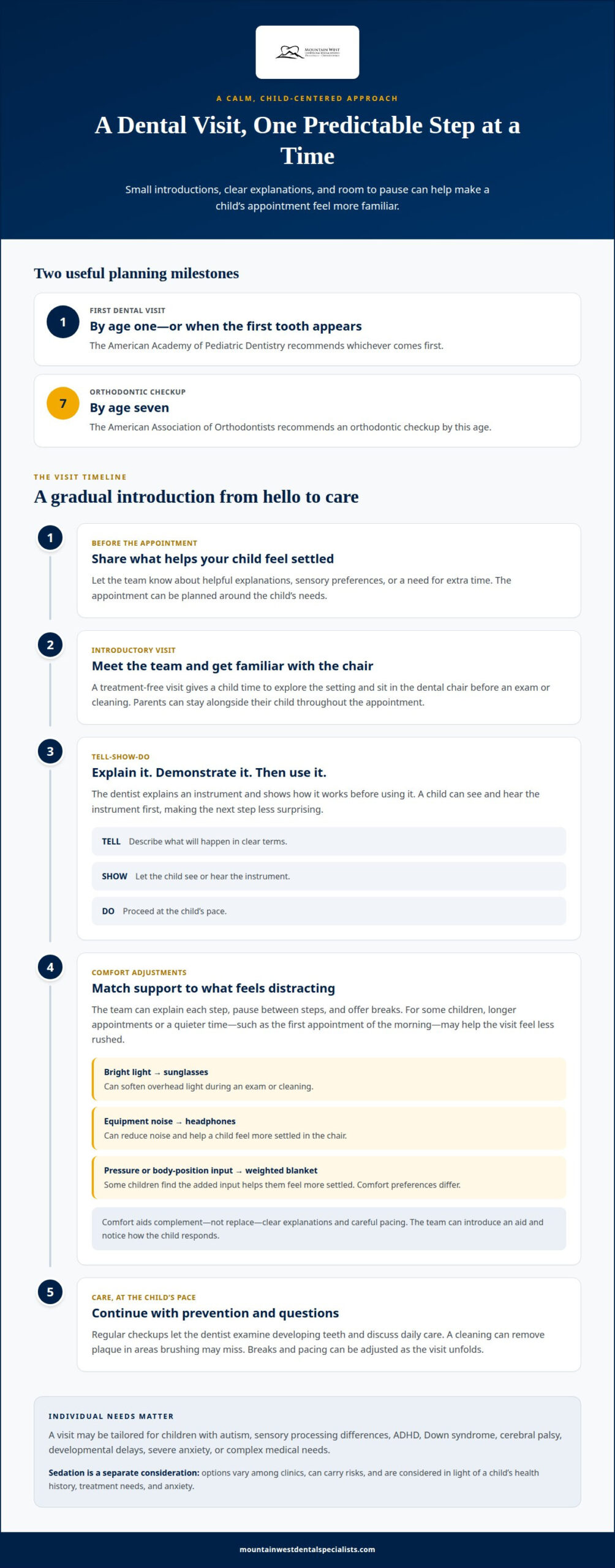
An introductory visit lets a child meet the team and sit in the dental chair without treatment. This gives children time to explore the setting before an exam or cleaning. With tell-show-do, the dentist explains an instrument, demonstrates how it works, then uses it. For example, the child can see and hear an instrument before it enters the mouth.
Sensory-Friendly Visit Features
A calm visit considers how noise, light, and pace affect each child. The team can explain each step, pause between steps, and offer breaks. Children with additional needs may benefit from longer appointments so the visit doesn’t feel rushed. Scheduling during quieter times, such as the first appointment of the morning, can also help. These adjustments support a more comfortable experience.
First visits are a chance to build familiarity, not just address a concern. For babies, an early appointment can introduce the dental team and allow parents to discuss emerging teeth and care routines. The American Academy of Pediatric Dentistry’s first-visit timing, described earlier, offers a useful planning point. A pediatric dental checkup can also provide a setting for preventive care and questions.
When scheduling, share what helps your child feel settled, such as a familiar explanation or extra time to adjust. The team can plan around those needs and include breaks during a longer appointment. If your child is anxious, an introductory visit offers a treatment-free way to become familiar with the setting; it is different from sedation. Tell-show-do makes instruments and steps less surprising. Together, these approaches help the team notice comfort cues and adjust the pace as the visit unfolds.
Comfort aids such as sunglasses and headphones
A dental room can bring bright lights and unfamiliar sounds into a child’s space. Sunglasses, headphones, and weighted blankets offer practical ways to address those sensory experiences. The right aid depends on what feels distracting or uncomfortable for the child during an appointment.
Sunglasses can soften the overhead light during an examination or cleaning. Headphones can reduce equipment noise and help a child feel more settled in the chair. These aids don’t replace explanations or careful pacing, but they can make the setting feel more manageable. A caring dental team can introduce each option and see how the child responds.
A weighted blanket can provide proprioceptive input, meaning a sense of pressure and body position. Some children find that added input helps them feel more settled while sitting still. Comfort preferences differ, so a blanket may suit one child while sunglasses or headphones feel better to another. Offering choices can give children a clearer role in shaping a positive visit.
Comfort matters during preventive care, including cleanings, and may also matter at appointments related to braces. A child who is sensitive to light might prefer sunglasses during an exam, while a child bothered by noise may choose headphones. The dental team can explain what’s happening and pause to adjust an aid. Small, practical changes can support comfort while the appointment continues.
Before using an aid, the team can show it to the child and explain its purpose. For example, a child can see the sunglasses before wearing them, or try headphones before dental equipment is used. This gives the child time to respond and helps the team notice preferences. A relaxed, positive experience can help children feel more confident returning for care and build steady habits that support oral health and healthy smiles.
How to Choose a Gentle Pediatric Dentist in Las Vegas
A gentle dental experience depends on communication, planning, and care that fits the child. In Las Vegas, look for a practice that treats comfort as part of the appointment, not an afterthought. Clear explanations help parents understand the dentist’s recommendations and why they matter. They also help children know what comes next.
Notice how the dental team responds to your child’s cues. If your child needs time, a pause, or a simpler explanation, the care plan should allow for it. Children with additional needs may benefit from longer appointments and quieter scheduling. Share sensory preferences or medical needs with the team so they can plan thoughtfully.
Useful signs of a child-centered approach include:
- Clear explanations: The dentist describes each step in child-friendly language and answers parents’ questions.
- Flexible pacing: The team can adjust the visit, allow breaks, and avoid rushing a nervous child.
- Practical comfort: Options such as sunglasses, headphones, or a weighted blanket can address sensory needs.
- Connected care: The dentist considers prevention, a child’s development, and orthodontic concerns as needs arise.
Ask how the practice handles routine care and follow-up recommendations. A helpful explanation distinguishes what the dentist observes from what care may be recommended next. For example, parents should understand whether a visit focused on prevention or whether the dentist noticed a concern that needs further discussion. A clear plan makes it easier to follow the child’s care over time.
Convenience matters, too. Consider how the office location, appointment timing, and visit structure fit your family’s routines. A child who attends school or has a predictable daily schedule may find a well-planned appointment easier. For families seeking a calm place to begin, take the next step toward a gentle pediatric visit.
Mountain West Dental Specialists: Baby Dental Care
Mountain West Dental Specialists provides baby dental care for families beginning their child’s oral health journey. A baby appointment gives parents a chance to discuss emerging teeth and establish a familiar setting for dental care. Pediatric checkups support children as they grow, while braces and clear aligners address orthodontic needs. The practice also provides tongue-tie release.
Consider pediatric dental care when your baby or child needs a professional checkup or guidance about a specific dental concern. These services give families one place to discuss care at different stages, from baby teeth to orthodontic treatment.
For a welcoming next step, contact Mountain West Dental Specialists to discuss your child’s dental care.
Let Your Child Help Shape the Next Step
A child’s confidence can grow when their preferences are heard and respected. Before the next appointment, invite your child to describe what would help them feel ready. They might want to know who they’ll meet, what the room is like, or how to signal that they need a pause. Sharing these details gives the dental team a more personal starting point.
Choosing gentle dental care for kids in Las Vegas means finding an approach that respects your child as an individual. Their comfort may change as they grow, so keep the conversation open and share what you notice over time. A steady partnership can help your family make thoughtful care decisions as new questions arise.
If you’re ready to talk through your child’s needs, start a conversation with Mountain West Dental Specialists. One thoughtful next step can help your child feel more at ease with dental care.
Frequently Asked Questions
Why Visit a Children’s Dentist?
A children’s dentist can tailor an exam to a child’s age, developing teeth, and comfort level. Families seeking gentle dental care for kids in Las Vegas can ask about concerns such as tooth sensitivity, brushing challenges, or changes in how teeth fit together. For example, a child who avoids chewing on one side can have that concern assessed during a pediatric appointment. Early conversations help families make informed care decisions.
Are dental X-rays safe for kids?
Mountain West Dental Specialists uses digital X-rays with low radiation and lead apron protection. X-rays help dentists assess concerns that a visual exam alone may not answer. Whether an image is needed depends on the clinical question and the child’s dental history. Parents can ask what the image will help the dentist evaluate before it is taken.
Do baby teeth really need fillings?
Yes, a baby tooth may need a filling if decay requires restorative treatment. The dentist considers the decay’s location and extent, whether the tooth is causing symptoms, and its stage of development. A tooth’s temporary nature alone doesn’t determine whether treatment is useful. An examination helps explain the concern and the next steps for that specific tooth.
Do you accept insurance and offer payment plans?
Insurance benefits depend on the details of your plan. Mountain West Dental Specialists offers flexible pricing options, including zero-interest in-house financing. Since coverage differs between policies, review your plan’s pediatric dental provisions to understand how they apply. The practice’s financing option provides another way to consider payment for recommended dental or orthodontic care.
How can a pediatric dentist help prevent cavities in your child’s teeth?
A pediatric dentist can examine teeth for early signs of decay and discuss prevention based on your child’s needs. A checkup can help identify where plaque collects or brushing needs attention. The dentist can also explain whether protective measures, such as sealants, are appropriate for your child’s molars and how to care for them as part of a routine.
How do I schedule my child’s appointment?
To arrange a pediatric appointment in Las Vegas, call Mountain West Dental Specialists at (702) 899-3600. If you’re looking for gentle dental care for kids in Las Vegas, share your child’s age, the reason for the visit, and any comfort or accessibility needs that could shape the appointment. Describing a specific concern can help the team understand what kind of visit you’re seeking.