
A child’s snoring is a clue, not a diagnosis. Sleep apnea involves repeated breathing pauses when soft tissues in the throat collapse and block the airway; these interruptions typically last about 10 seconds and may happen several times in an hour. It affects an estimated 2% of children, so child snoring treatment in Las Vegas begins with recognizing possible signs and understanding what they may mean.
If you’re concerned about your child’s noisy sleep, it’s worth looking beyond the sound itself. Untreated sleep apnea can contribute to problems with a child’s heart, behavior, learning, and growth, but snoring alone doesn’t confirm the condition.
This guide explains symptoms that may point to sleep apnea, how an overnight sleep study can assess breathing, and how treatment options and schedules differ. You’ll also learn what to consider when choosing care in Las Vegas, so you can approach the next step with more clarity and confidence.
Key Takeaways
- Track patterns such as restless sleep, mouth breathing, and daytime behavior changes to give your child’s care team a clearer picture.
- An overnight sleep study can monitor breathing, oxygen levels, and brain waves to help assess possible sleep-disordered breathing.
- Sleep quality may affect attention and development; learn which signs deserve a closer conversation about your child’s health.
- Treatment timing depends on the cause and approach, so distinguish diagnostic steps from procedures and ongoing care.
- Choose a Las Vegas provider whose pediatric dental and airway perspective can help assess how oral development fits into your child’s care.
Snoring and sleep apnea symptoms
For child snoring treatment in Las Vegas, start by distinguishing ordinary snoring from signs of obstructed breathing. A sleep study helps determine whether sleep apnea is present and how severe it is.
Sleep Apnea Symptoms and Complications
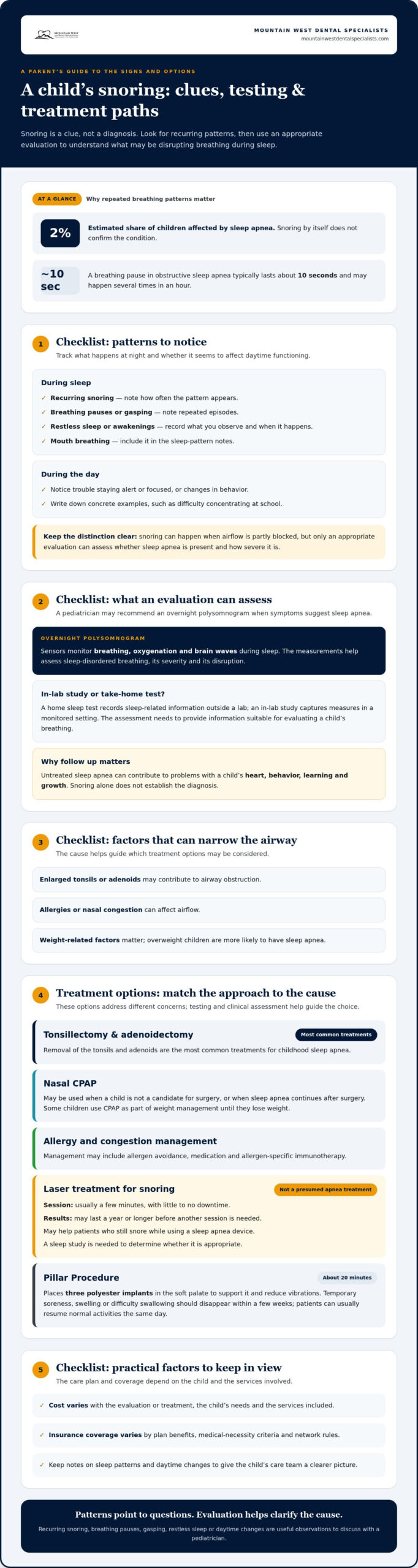
Snoring happens when airflow through the mouth and nose is partly blocked, making throat tissues vibrate. In obstructive sleep apnea, soft tissues repeatedly collapse and block the airway. Breathing pauses typically last about 10 seconds and may happen several times in an hour. Listen for recurring snoring, pauses, gasping, or restless sleep, and note how often these patterns appear.
A pediatrician may recommend an overnight polysomnogram when symptoms suggest sleep apnea. Sensors monitor breathing, oxygenation, and brain waves during sleep, helping assess severity and disruption. A take-home sleep test is a different format; the assessment must provide information suitable for evaluating a child’s breathing. Untreated sleep apnea can contribute to heart, behavior, learning, and growth problems.
Cost depends on the evaluation or treatment involved, the child’s needs, and the services included; the price is given after a quote request. Insurance coverage for a sleep study, ENT evaluation, or treatment depends on plan benefits, medical-necessity criteria, and network rules.
Child Snoring Causes and Treatments
Enlarged tonsils or adenoids can contribute to airway obstruction. Tonsillectomy and adenoidectomy are the most common treatments for childhood sleep apnea. Children who aren’t candidates for surgery, or whose sleep apnea continues afterward, may use nasal CPAP. For a child who snores, the right approach depends on whether testing finds sleep apnea and what is narrowing the airway.
Allergies and nasal congestion can also affect airflow. The U.S. Environmental Protection Agency describes allergic rhinitis management as potentially including allergen avoidance, medication, and allergen-specific immunotherapy. Overweight children are more likely to have sleep apnea; weight management may be part of care, and some children use CPAP until they lose weight.
Laser treatment may be considered for snoring, but it should not be assumed to treat sleep apnea. A session usually takes a few minutes, requires little to no downtime, and results may last a year or longer before another session is needed. It may help patients who still snore while using a device for sleep apnea. A sleep study is needed to determine whether laser treatment for snoring is appropriate.
The Pillar Procedure places three polyester implants in the soft palate to support it and reduce vibrations. It takes about 20 minutes; temporary soreness, swelling, or difficulty swallowing should disappear within a few weeks, and patients can usually resume normal activities the same day. These procedures address different concerns, so the diagnosis guides the treatment choice.
How likely is a child with a sleep breathing disorder to develop ADD/ADHD?
Snoring can occur when airflow is partly blocked, including by enlarged tonsils or adenoids, nasal congestion, allergies, or weight-related factors. See a pediatrician if snoring persists or comes with breathing pauses, restless sleep, or daytime behavior changes.
Look for patterns beyond nighttime noise. A child who struggles to stay alert, focus, or manage behavior during the day may also have disrupted sleep. These symptoms can have several causes, so note bedtime, snoring, awakenings, and daytime functioning. Concrete examples, such as repeated gasping or difficulty concentrating at school, help explain the concern.
Sleep-disordered breathing and attention concerns can occur together. Nearly 20% of children with moderate sleep-disordered breathing have ADD/ADHD, and children in this group are 12.1 times more likely to have ADD/ADHD. These figures describe a relationship between conditions, not a prediction for an individual child. Snoring alone cannot establish an ADD/ADHD diagnosis, and attention difficulties alone don’t confirm sleep apnea.
A pediatrician may recommend an overnight polysomnogram when symptoms suggest sleep apnea. In a lab, sensors monitor breathing, oxygenation, and brain waves during sleep. A home sleep test records sleep-related information outside a lab, while an in-lab study captures those measures in a monitored setting. The method matters because clinicians need useful information about a child’s breathing and sleep patterns.
Better sleep may support daytime alertness and make it easier to manage normal routines, but results depend on the cause and treatment. After care begins, track changes in snoring, night waking, morning energy, and attention. If your child is prescribed a sleep device, note whether they use it as directed and whether their sleep seems more settled. Share your observations at follow-up appointments.
Arrange a pediatrician visit when snoring recurs or you notice pauses, gasping, or daytime changes. Discuss the symptoms, family observations, and whether a sleep evaluation is appropriate. A pediatric dental checkup can also provide a setting to discuss oral and airway concerns as part of your child’s overall care.
Effects on jaw, teeth, and facial development
A child’s bite, jaw position, and tongue movement are useful parts of an oral health assessment, but they don’t diagnose sleep apnea. During a dental assessment, note examples such as an open-mouth resting posture, crowded teeth, or difficulty moving the tongue comfortably. These observations can guide a conversation about airway symptoms and whether further evaluation is appropriate.
Keep sleep history alongside dental observations. Record whether snoring occurs most nights, whether you notice breathing pauses, and whether your child wakes tired. Share those details with the pediatrician and dental professional. A sleep study evaluates breathing during sleep; looking at the teeth and jaw cannot establish the presence or severity of obstructive sleep apnea.
Jaw growth and tooth alignment change as children develop, so timing matters when considering orthodontic care. A dental professional can assess the bite and track changes during routine examinations. If restricted tongue movement is a concern, ask whether an assessment for tongue-tie is appropriate. Tongue-tie release is an option for selected cases, not a substitute for diagnosing sleep-related breathing problems.
An oral appliance is not a universal solution for a child who snores. Its suitability depends on the child’s age, oral development, symptoms, and the breathing evaluation. Don’t use an adult appliance or make adjustments to a device without professional guidance. If a device is prescribed, follow its cleaning directions; a cleaned oral appliance should air-dry for 20-30 minutes before storage.
Laser treatment for snoring also needs careful consideration. It does not treat sleep apnea, and a sleep study is needed to determine whether it is appropriate. It may help patients who still snore while using a device for sleep apnea.
Some patients feel warmth in the throat during laser treatment. A session usually takes a few minutes and requires little to no downtime, but that doesn’t mean the procedure suits every child. Discuss its purpose, expected schedule, and possible effects in relation to your child’s symptoms and sleep-study findings.
Choose the next step by matching each concern to the right assessment: sleep symptoms call for a breathing evaluation, while tooth or jaw changes call for a dental examination. If snoring comes with observed breathing pauses, address the sleep concern first rather than assuming tooth alignment is the cause. Tracking both areas helps keep care focused on your child’s needs.
Treatment schedule and session duration
A child’s treatment schedule starts with identifying the cause of snoring and whether sleep apnea is present. An overnight polysomnogram monitors breathing, oxygenation, and brain waves, helping guide the next step. The plan differs when enlarged tonsils or adenoids contribute from when nasal CPAP is used. Ask how appointments, treatment sessions, and follow-up fit the recommended approach.
A laser session for snoring usually takes a few minutes and requires little to no downtime. Results may last a year or longer before another session is needed. This schedule relates to snoring, not sleep apnea: laser treatment doesn’t treat sleep apnea. A sleep study is needed to determine whether laser treatment is appropriate, and the identified cause of symptoms should guide the discussion.
The Pillar Procedure has a different time frame. The procedure takes about 20 minutes, and patients can usually resume normal activities the same day. Temporary sore throat, swelling, and difficulty swallowing should disappear within a few weeks. These details help families plan around the procedure, but the Pillar Procedure is distinct from treatment approaches for a child’s sleep apnea.
When enlarged tonsils and adenoids are the cause, tonsillectomy and adenoidectomy are the most common treatments for childhood sleep apnea. Nasal CPAP is generally used for children who aren’t candidates for surgery or whose sleep apnea continues afterward. Overweight children with sleep apnea may need CPAP until they lose weight. These paths don’t follow one standard schedule; the cause and treatment determine what comes next.
A consultation should connect the diagnosis to practical planning. Bring notes about snoring, breathing pauses, night waking, and daytime changes, along with sleep-study results if available. Ask which treatment addresses the cause, what each session involves, and how progress will be assessed. If CPAP or another device is prescribed, discuss how its use fits into your child’s sleep routine and follow-up care.
Track sleep quality through observable changes, such as quieter nights, fewer witnessed breathing interruptions, or improved morning readiness. These observations help describe your child’s experience, but they don’t replace an evaluation for sleep apnea. Serious breathing concerns deserve attention before choosing a snoring-only procedure. Matching treatment to the diagnosis supports a schedule focused on the underlying problem and your child’s quality of life.
Choosing a Las Vegas snoring treatment provider
Choose care that starts with your child’s breathing concern, not a preselected procedure. Begin by reviewing when snoring occurs, whether you’ve noticed pauses or gasping, and how your child sleeps. Bring examples, such as snoring most nights or waking tired, so the discussion reflects your child’s pattern.
Ask how the evaluation distinguishes snoring from obstructive sleep apnea. A pediatrician may recommend an overnight polysomnogram when symptoms suggest sleep apnea. This study monitors breathing, oxygenation, and brain waves during sleep. The provider should explain how the findings guide treatment choices, rather than treating snoring alone as a diagnosis.
Look for a clear explanation of treatment scope. Tonsillectomy and adenoidectomy are the most common treatments for childhood sleep apnea, while nasal CPAP is generally used when surgery isn’t suitable or sleep apnea continues afterward. These approaches address different circumstances. A helpful care discussion identifies the problem each proposed treatment targets and how progress will be followed.
For a snoring procedure, make sure the treatment matches the diagnosis. NightLase does not treat sleep apnea, and a sleep study is needed to determine whether laser treatment for snoring is appropriate. The Pillar Procedure supports soft-palate tissue to reduce vibration. Before discussing a schedule, a provider should explain how these options differ from sleep-apnea care.
Include oral health in the conversation when an appliance or dental concern arises. Ask how a device fits your child’s age, teeth, and sleep evaluation, and how it should be cleaned and used. For example, an adult appliance shouldn’t simply be adapted for a child. Clear instructions help you understand the purpose of each part of the plan.
Use this checklist during a consultation:
- Describe the child’s nighttime symptoms and daytime changes.
- Review whether a sleep study is needed and what it measures.
- Ask which cause the proposed treatment addresses.
- Clarify expected sessions, follow-up, and signs of changing sleep quality.
- Discuss how medical and dental findings fit together.
The right choice is a provider who explains the diagnosis, options, and next steps in language your family can use. If your child’s snoring raises airway or oral-health concerns, discuss your child’s airway concerns as a practical next step.
Mountain West Dental Specialists: Orthodontic Braces and Aligners
Mountain West Dental Specialists helps families assess pediatric dental and orthodontic concerns that may accompany questions about sleep and breathing. A pediatric dental checkup can review your child’s teeth and bite, while orthodontic braces and aligners address alignment needs. If restricted tongue movement is a concern, tongue-tie release may be considered after an assessment.
These dental services don’t replace a sleep study or medical evaluation for suspected sleep apnea. They can help clarify oral-development questions as you coordinate your child’s care. Bring observations about snoring and sleep, along with any concerns about the bite or tongue, to the discussion.
For a calm next step, contact Mountain West Dental Specialists or visit Mountain West Dental Specialists online.
Take the Next Step Toward Clearer Answers
Choose a next step that helps you understand your child’s needs, rather than trying to address every concern at once. Bring your observations and questions to a conversation about sleep, breathing, and oral development. A focused discussion can help distinguish concerns that call for medical evaluation from those that may benefit from dental assessment.
For families considering child snoring treatment in Las Vegas, Mountain West Dental Specialists can support the dental side of the conversation. Pediatric dental checkups assess oral health, orthodontic braces and aligners address alignment needs, and tongue-tie release may be considered when tongue movement is restricted. These services complement, but don’t replace, evaluation for suspected sleep apnea.
When you’re ready to discuss your child’s oral health and airway concerns, contact Mountain West Dental Specialists. A thoughtful first conversation can help your family move forward with greater clarity and confidence.
Frequently Asked Questions
How do I know if my child has sleep apnea?
Snoring alone can’t confirm sleep apnea; a sleep evaluation is needed. Notice whether your child pauses, gasps, or seems to struggle for breath during sleep, and record how often it happens. Share those observations with the pediatrician, along with daytime changes such as difficulty focusing. Your notes can help the pediatrician decide whether an overnight sleep study is appropriate.
What Are the Signs and Symptoms?
Signs may include regular loud snoring, observed pauses in breathing, gasping, or restless sleep. Daytime clues can include behavior changes, difficulty learning, or trouble staying focused. Look for a pattern rather than relying on one night: note whether noisy breathing recurs and whether your child seems tired or unsettled the next day. These observations can guide a conversation about sleep.
What to Expect on the Day of Treatment?
The day depends on the treatment selected, so ask for instructions specific to your child’s plan. For an appointment or procedure, bring relevant sleep-study findings and a list of medicines or care instructions your family already follows. A laser snoring session usually takes a few minutes; the Pillar Procedure takes about 20 minutes. Those options are not treatments for sleep apnea itself, so confirm the purpose of the scheduled care.
What’s the First Step?
Write down your child’s nighttime breathing and sleep patterns, then discuss them with the pediatrician. Include examples such as snoring, gasping, pauses, or repeated waking, along with daytime behavior you’ve noticed. If symptoms point to sleep apnea, the pediatrician may recommend an overnight polysomnogram. A clear symptom record makes that first discussion more specific and useful for your family.
What are signs of obstructive sleep apnea in a snoring child?
In a child who snores, repeated breathing pauses, gasping, and restless sleep raise concern. Obstructive sleep apnea occurs when soft tissues collapse and block the airway during sleep. A practical clue is a recurring sequence of snoring followed by a pause or gasp. Note what you observe and discuss it with the pediatrician rather than treating snoring itself as a diagnosis.
How is pediatric sleep apnea diagnosed, and when is a sleep study needed?
A pediatrician may recommend an overnight polysomnogram when a child’s symptoms suggest sleep apnea. During the study, sensors monitor breathing, oxygenation, and brain waves while the child sleeps. This information helps assess whether breathing interruptions occur and how severe they are. Bring observations about snoring, pauses, or gasping to the appointment so the discussion reflects your child’s actual sleep patterns.
What are the risks of untreated sleep apnea in children?
Untreated sleep apnea can contribute to problems affecting a child’s heart, behavior, learning, and growth. Ongoing sleep disruption, for example, may show up in daytime behavior or difficulty keeping up with learning. Those changes can have more than one cause, so describe them alongside nighttime breathing symptoms. If you notice recurring pauses or gasping, share the overall pattern with the pediatrician for assessment.
Which Las Vegas providers treat snoring and sleep apnea in children?
Mountain West Dental Specialists offers pediatric dental checkups and airway management for children with oral or airway concerns. Its dental and orthodontic care can complement a child’s wider evaluation, but suspected sleep apnea needs medical assessment and may require an overnight sleep study. Families can discuss dental concerns such as bite development or restricted tongue movement as part of care, while keeping sleep diagnosis and treatment decisions guided by the appropriate evaluation.