
What if a holistic approach to children’s dental health is less about choosing “natural” materials and more about seeing the whole child? It can be hard to sort evidence-based guidance from conflicting advice, especially when you’re wondering whether habits, breathing, or development could affect your child’s mouth.
You’re right to want care that looks beyond a single tooth while staying grounded in sound dental evidence. Whole-child dental care brings prevention, oral development, daily routines, and professional assessment together. It doesn’t mean assuming every symptom points to a bigger health problem or promising that dental treatment will resolve one.
In this guide, you’ll learn which home habits support healthy teeth, how regular checkups and preventive care fit in, and how questions about materials, breathing, or oral development can be approached thoughtfully. You’ll also find practical ways to prepare for a dental visit and discuss your child’s needs with a pediatric dental team in Las Vegas.
Key Takeaways
- A holistic approach to children’s dental health considers prevention, development, comfort, and each child’s individual needs.
- Build steady brushing and between-teeth cleaning habits, and pay attention to everyday food and drink patterns.
- Separate evidence-based prevention from claims that promise more than dental care can deliver.
- Keep a simple record of your child’s dental questions, health history, and changes you’ve noticed to guide conversations at checkups.
- A family-owned Las Vegas practice can consider development during pediatric checkups and baby dental care.
What Does a Holistic Approach to Children’s Dental Health Mean?
For parents, “holistic” can sound like a promise to treat more than teeth or a suggestion to avoid conventional care. A practical holistic approach to children’s dental health is neither. It means considering a child’s oral health in context: their age, dental development, everyday habits, comfort, family questions, and individual clinical needs. It isn’t a separate dental specialty or a single protocol that fits every child.
Evidence-based whole-child dental care connects prevention and development with a child’s individual needs, while treating broader wellness claims as questions to assess rather than proven outcomes. This keeps care thoughtful without assuming every dental concern signals a problem elsewhere in the body.
What parents may mean by holistic dental care
You may want the dental team to understand more than what appears during an exam. A young child’s needs differ from those of a school-age child whose teeth and bite are changing. Routines, feeding or oral habits, comfort, and family concerns can all shape a useful conversation. A clinician can explain what they observe, why they recommend a next step, and which alternatives may suit your child.
The term is used in different ways. The overview of Holistic dentistry describes principles associated with this broad approach, but a label alone doesn’t establish that a claim or treatment is supported by evidence. Clear reasoning and individualized assessment matter more than a one-size-fits-all “holistic” plan.
Whole-child care without overpromising
Oral health is part of a child’s health, but that doesn’t mean every cavity, bite difference, or mouth habit causes illness or explains a concern such as disrupted sleep. Questions about breathing patterns or tongue movement may warrant professional assessment when a child’s history or exam raises a concern. Assessment can help clarify what is relevant, but it can’t guarantee that dental treatment will resolve a broader health issue.
Whole-child care should complement established pediatric dental prevention, not replace it. Regular dental visits, appropriate home care, and preventive recommendations remain central. If a recommendation involves a newer or less certain claim, ask what is known, what remains uncertain, and how it relates to your child’s findings. This helps keep choices grounded in evidence and tailored to your child, rather than driven by fear or sweeping promises.
How Development, Daily Habits, and Oral Health Fit Together
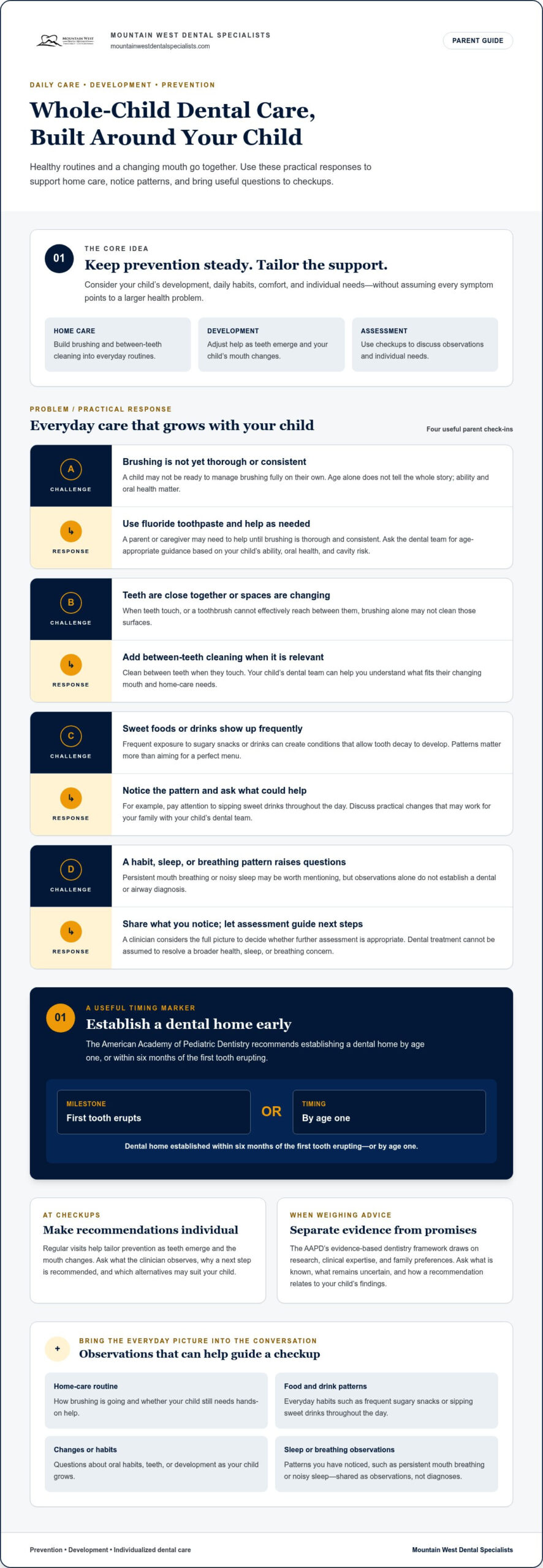
Daily routines lay the groundwork for healthy teeth, while a child’s changing mouth affects what support they need. Brushing with fluoride toothpaste, cleaning between teeth when they touch, and keeping regular dental visits all play a role. A parent or caregiver may need to help with brushing until a child can do it thoroughly and consistently. Your dental team can offer age-appropriate guidance based on your child’s ability, oral health, and risk of cavities.
Food and drink patterns matter, too. Frequent exposure to sugary snacks or drinks can create conditions that allow tooth decay to develop. You don’t need to aim for a perfect menu. Notice patterns, such as sipping sweet drinks throughout the day, and ask your child’s dental team what practical changes may help your family.
Home care that grows with your child
Children develop at different rates, so home care shouldn’t rely on age alone. A toddler may need close, hands-on help, while an older child may be ready to take more responsibility but still benefit from a parent’s check. Cleaning between teeth becomes relevant when spaces close and a toothbrush can’t reach those surfaces effectively.
Regular visits help tailor prevention as teeth emerge and the mouth changes. The American Academy of Pediatric Dentistry recommends establishing a dental home by age one or within six months of the first tooth erupting. At checkups, the clinician can consider your child’s individual needs and explain recommendations. The AAPD’s Evidence-based dentistry (EBD) framework supports decisions that draw on research, clinical expertise, and family preferences.
Sharing observations about development
You see your child in everyday settings, so details you notice can help inform a professional assessment. Share questions about oral habits, sleep, or breathing, including patterns such as persistent mouth breathing or noisy sleep. These observations can start a useful conversation, but symptoms alone don’t establish a dental or airway diagnosis. A clinician considers the full picture before deciding whether further assessment is appropriate.
Airway management is an area for professional assessment, not a guaranteed way to change sleep or breathing. The goal is to understand whether a concern relates to your child’s oral health and what, if anything, is supported by their findings. That’s how a holistic approach to children’s dental health connects consistent home care with individualized professional prevention.
For a child-specific conversation about development and preventive care, explore pediatric dental checkups.
Holistic Care Versus Dental Myths: What Is Evidence-Based?
Does “holistic” mean turning away from standard pediatric prevention? It shouldn’t. A thoughtful holistic approach to children’s dental health can include a child’s development and family priorities while still relying on established preventive care. The key is distinguishing supported recommendations from claims that go beyond what the evidence can show.
A simple way to weigh advice is to identify what kind of statement you’re hearing:
- Evidence-based guidance: Recommendations are explained in light of the child’s examination, health history, professional guidance, and family circumstances.
- A claim needing more context: A particular material, procedure, or diet is said to prevent or resolve a separate condition without clear evidence for that outcome.
- A personal preference: A family has a preference about care or materials. It can be discussed respectfully, weighing potential benefits, limitations, and alternatives.
These distinctions aren’t a reason to dismiss questions or mainstream pediatric dentistry. They help families make choices without relying on fear-based messages or promises of whole-body results. MedlinePlus provides a helpful starting point for reliable information about children’s dental health.
How to assess a dental-health claim
Ask what the recommendation is intended to do for your child’s oral health, what evidence supports it, and what its limits or alternatives are. The clinician should be able to explain how an option relates to examination findings and your child’s history. It’s reasonable to raise concerns about fluoride, materials, or a proposed procedure as part of a calm conversation.
Be cautious with statements that one dental material prevents an unrelated illness or that a specific diet alone can treat a dental or whole-body condition. A possibility or individual experience isn’t the same as an established clinical benefit. If evidence is emerging or uncertain, that uncertainty should be stated plainly.
When an assessment can clarify concerns
A pediatric dental visit can assess the teeth, gums, oral development, and symptoms or habits you’ve noticed. Recommendations depend on what the clinician finds, your child’s history, and professional judgment. If you’re concerned about tongue movement or a possible tongue-tie, an evaluation can help determine whether it is relevant. Finding a tongue-tie doesn’t automatically mean release is appropriate. That decision calls for an individualized assessment.
Cone Beam CT imaging creates detailed images that may support diagnosis when clinically indicated. It isn’t a routine step for every child. A careful, evidence-based discussion keeps the focus on the question being investigated, why a diagnostic tool may help, and what the findings mean for your child.
A Parent’s Practical Plan for Supporting Children’s Dental Health
A steady routine and a few notes can make it easier to support your child’s oral health and have useful conversations at checkups. This plan focuses on what you can do at home, what you’ve noticed, and when professional guidance may help.
- Make home care predictable. Build brushing into the morning and bedtime routine, and help your child as needed so teeth are cleaned thoroughly. Clean between teeth when they touch, following your dental team’s guidance. A routine that fits your family is more useful than aiming for perfection.
- Notice patterns, not isolated moments. Pay attention to frequent sugary snacks or drinks, changes in eating, oral habits, tooth comfort, and any sleep or breathing observations that concern you. These details can help a clinician understand what’s happening, but they don’t establish a diagnosis on their own.
- Keep a short record. Before a visit, jot down your questions, relevant health history, previous dental care, and changes you’ve observed. Include when a concern began and whether it seems to happen in particular situations. A few clear notes can help guide the conversation.
- Keep regular pediatric dental visits. Follow the schedule recommended for your child, since visit timing and preventive options can depend on age, development, oral health, and individual risk. Bring your notes and ask how recommendations relate to your child’s needs.
- Understand the options. If treatment is proposed, ask about its purpose, expected benefits, limitations, and alternatives. You can also ask how a preventive option fits your child’s age and circumstances. Open questions help you make an informed decision with the dental team.
For a helpful overview of preparing for an early visit, read this guide to your baby’s first dental visit in Las Vegas.
Know when to seek timely advice
Don’t wait for a routine appointment if your child has significant or worsening tooth pain, swelling, a dental injury, or another symptom that concerns you. Seek timely professional dental advice. This checklist supports everyday prevention and preparation; it isn’t a substitute for an assessment when a child has symptoms.
A holistic approach to children’s dental health can start with small, consistent steps and a clear picture of your child’s individual needs. Explore pediatric dental care at Mountain West Dental Specialists for support with your child’s checkups and development.
How a Las Vegas Pediatric Dental Team Can Support Whole-Child Care
Whole-child care becomes practical when a dental team connects prevention with a child’s stage of development and the questions a family brings. At Mountain West Dental Specialists, a family-owned Las Vegas practice led by Dr. Keaton Tomlin and Dr. Allison Tomlin, pediatric dental checkups and baby dental care provide opportunities to consider a child’s needs as they grow. A holistic approach to children’s dental health makes room for family concerns while keeping recommendations grounded in the child’s examination and clinical needs.
A family-centered approach to pediatric assessment
A checkup is a chance to discuss what you’ve noticed, hear what the clinician observes, and understand possible next steps. Your child’s age, dental development, health history, and comfort can all inform that conversation. You can raise questions about oral habits, tongue movement, or breathing without assuming they point to a particular diagnosis or require a specific treatment.
Mountain West Dental Specialists provides tongue-tie release and airway management. An evaluation considers the child’s individual findings and whether further care may be appropriate. It can’t guarantee a change in feeding, sleep, or breathing. The same measured approach applies to imaging. Cone Beam CT provides diagnostic images, but it’s a tool used when clinically appropriate to help address a specific question, not an automatic part of every visit.
Connecting pediatric and orthodontic perspectives
As a child’s teeth and bite develop, a family may have questions about spacing, alignment, or how the jaws are changing. Those observations can guide a conversation about whether orthodontic evaluation is appropriate and when it may be useful. Mountain West Dental Specialists offers braces and clear aligners. Recommendations and timing depend on the child’s individual assessment.
For more context on orthodontic considerations in Las Vegas, read this Las Vegas orthodontist guide. It can help you prepare questions as you think about your child’s developing smile.
Every child’s needs are different, and a supportive conversation can help you understand the options without pressure. Explore pediatric care at Mountain West Dental Specialists and learn how the team supports children’s dental health in Las Vegas.
Support Your Child’s Smile With Thoughtful Care
A holistic approach to children’s dental health brings together steady home habits, preventive visits, your child’s development, and care guided by individual clinical needs. It doesn’t mean chasing every wellness claim or setting aside established prevention. It means asking questions, understanding the reasons behind recommendations, and making decisions with evidence and your child’s needs in mind.
At Mountain West Dental Specialists, family-owned and operated by Dr. Keaton Tomlin and Dr. Allison Tomlin, pediatric checkups and baby dental care are part of a child-focused approach. The team also assesses concerns related to airway development or tongue-tie, helping families understand whether further care may be appropriate without promising a particular outcome.
Your small, consistent steps at home matter, and professional guidance can help you adjust them as your child grows. Learn about pediatric dental care at Mountain West Dental Specialists and explore support for your family’s questions. Schedule a visit to discuss your child’s dental health in Las Vegas.
Frequently Asked Questions
What does a holistic approach to children’s dental health include?
A holistic approach to children’s dental health considers prevention alongside a child’s development, daily habits, comfort, and individual clinical needs. It may include discussing home routines, changes in the mouth, and family questions during dental visits. The term isn’t a standardized protocol, and it doesn’t mean dental care addresses every part of a child’s health. Whole-child care complements evidence-based pediatric dentistry rather than replacing established prevention.
Is holistic dentistry safe for children?
Safety depends on the specific recommendation, your child’s needs, and the clinical reason for care. Ask the dental team to explain the evidence, expected benefits, limitations, and alternatives. Distinguish established preventive care from claims that lack strong support, such as promises that a dental treatment will resolve an unrelated health concern. “Holistic” covers different approaches, so consider each recommendation on its own rather than accepting or rejecting the label outright.
Can a child’s breathing or sleep affect dental care?
Observations about breathing or sleep can be useful to share during a dental assessment, but they don’t establish a diagnosis by themselves. A dental professional may assess relevant oral development and discuss appropriate next steps based on the child’s history and findings. Airway-related assessment can be part of that conversation. Dental care shouldn’t be assumed to resolve sleep, breathing, focus, or behavioral concerns, and outcomes can’t be promised.
How often should a child have a dental checkup?
Checkup timing should reflect your child’s oral-health needs and current professional guidance, so one schedule may not suit every child. Follow the visit plan recommended after an individual assessment, taking into account factors such as development and dental history. If you notice pain, a change in the mouth, or another concern, seek professional advice sooner rather than waiting for the next routine visit. Pediatric dental checkups in Las Vegas can help families discuss a child’s needs.
Is fluoride part of a holistic approach to children’s dental health?
Fluoride may be part of a child’s preventive dental care, but recommendations should follow current pediatric dental guidance and consider the child’s individual needs. If you have questions or preferences, discuss the potential benefits, appropriate use, and any concerns with the dental team. Advice should be specific to your child, not based on broad claims that fluoride is always necessary or always harmful. Avoid changing a child’s prevention plan without professional guidance.
When should a child be evaluated for tongue-tie or airway concerns?
Share relevant observations or symptoms, such as concerns about tongue movement, sleep, or breathing, with a qualified clinician. An assessment can consider your child’s specific situation and whether further evaluation is appropriate. A finding of tongue-tie or an airway concern doesn’t automatically mean a procedure or treatment is needed. Symptoms alone can’t confirm a diagnosis, and tongue-tie release or airway-related care shouldn’t be presented as a guaranteed way to change a particular outcome.