
A child’s dental visit can do more than address a toothache: it can build healthy habits and monitor developing teeth and jaws. A pediatric dental office near me should provide care tailored to children, including checkups, preventive guidance, and evaluations when concerns arise.
It’s natural to want a welcoming setting and clear answers about your child’s needs. This guide explains what pediatric dentistry includes, how preventive care supports oral health, and what services can help as children grow. You’ll also learn how Medicaid, CHIP, and private insurance benefits may vary, so you can prepare for your family’s next step. From routine visits to specialized care, knowing what to expect can make it easier to choose a practice.
Key Takeaways
- Learn how pediatric dentistry focuses on children’s developing teeth and how it can differ from general and family dental care.
- Understand how preventive checkups can help support your child’s oral health as they grow.
- Explore common pediatric dental services and when a child may benefit from specialized care.
- Find out what to consider when reviewing Medicaid, CHIP, and private insurance coverage for dental care.
What is pediatric dentistry?
Pediatric dentistry focuses on dental care for children, from early visits through the teen years. It considers changing teeth, developing jaws, and a child’s comfort during an appointment. For example, a dentist may explain an exam in simple steps before checking a child’s teeth. This child-centered approach helps families understand what the visit involves and why a recommended step matters.
General dentistry often serves adults, while family dentistry can care for patients of different ages. Pediatric dentistry focuses on children’s oral development and age-appropriate communication. A family dentist may see both a parent and child, while a pediatric dentist specializes in children’s needs. The right fit depends on the reason for the visit, whether it’s a routine checkup, a tooth concern, or guidance as adult teeth emerge.
Experience matters because children may need a different approach to communication and comfort. A pediatric dentist should explain the care plan to both the child and family, adapting the conversation to the child’s age and situation. When reviewing qualifications, look for dental education, pediatric specialty training, and experience caring for children. Ask how the dentist explains procedures, responds to concerns, and discusses next steps after an exam.
Board certification is a separate credential to consider. The American Board of Pediatric Dentistry is the board associated with this certification. Board-certified pediatric dentists have earned that credential, which helps distinguish certification from a general claim of experience. A clear explanation of credentials and training gives you useful context when choosing care for your child.
Hospital dentistry under general anesthesia differs from a regular office visit. General anesthesia means the child is unconscious during dental treatment; hospital dentistry describes care provided in a hospital setting. The doctor considers the child’s dental needs and medical circumstances when planning this approach. For a dental emergency, such as a tooth injury, seek prompt professional guidance so the child can be assessed and appropriate care discussed.
Accepted insurance, Medicaid, and CHIP
Coverage depends on the child’s plan, the dental office’s participation, and the service. A plan may cover cleanings differently from cavity treatment, so an insurance card alone doesn’t explain the full benefit. Before an appointment, review the benefits summary for pediatric dental services, participating offices, exclusions, and any patient share. Check, for example, whether both routine cleanings and fillings are covered.
Medicaid and the Children’s Health Insurance Program (CHIP) differ from private dental insurance. Benefits and participating offices can vary by state and plan. Confirm which program and plan your child has, then review its member materials for dental benefits and network rules. The program name alone doesn’t establish that a particular office participates or that every service is covered.
For private insurance, identify the insurer, plan name, and your child’s coverage details. Look for terms describing preventive care, diagnostic exams, and cavity treatment. Note whether the plan distinguishes in-network from out-of-network care, as this can affect your costs and whether separate approval is required. If a pediatric dentist recommends care beyond a cleaning, compare the proposed service with the plan’s written benefits before deciding.
Financing is separate from insurance, Medicaid, or CHIP. It refers to payment arrangements that may be available for a dental bill, while insurance benefits depend on the plan’s terms. Don’t assume financing is offered or that it changes coverage. Review any written payment terms carefully, including the amount due and timing. For families arranging preventive care, pediatric dental checkups can be a useful starting point for discussing a child’s needs.
Pediatric dental services
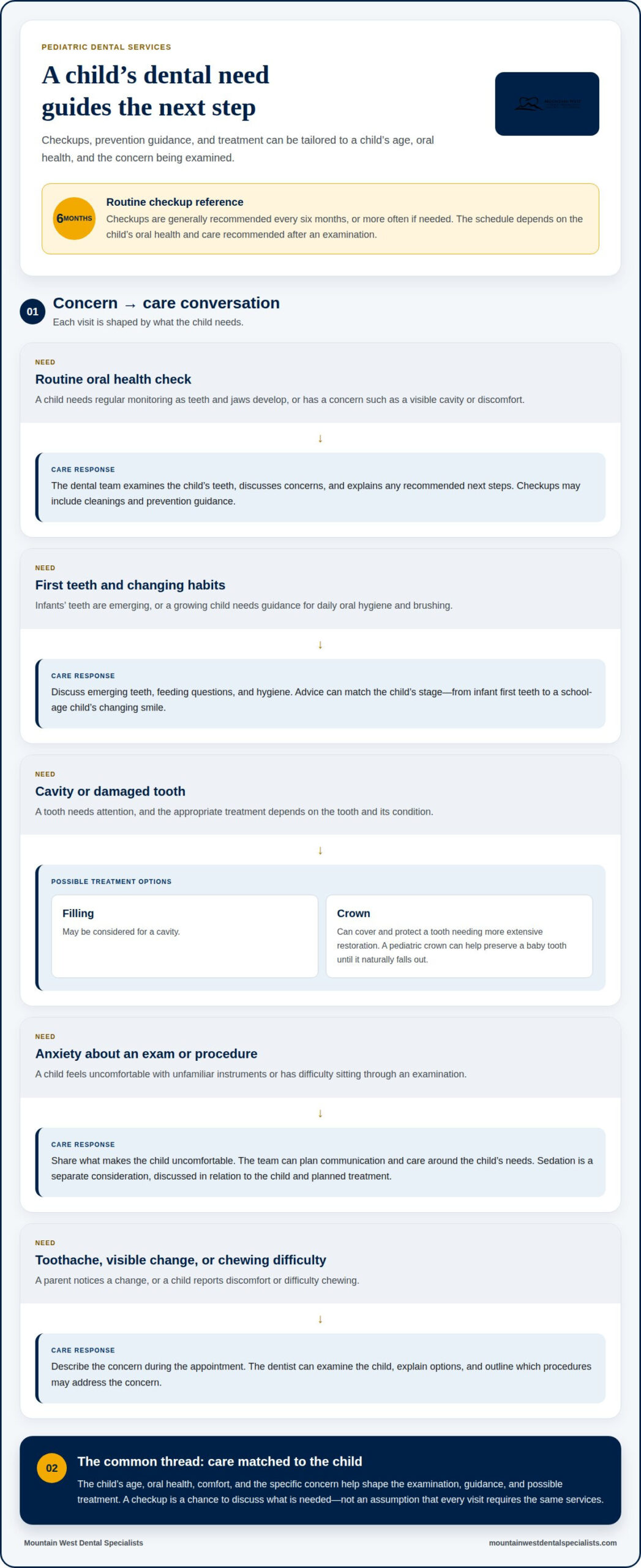
Pediatric care can include checkups, cleanings, prevention guidance, and treatment for teeth that need attention. During a checkup, the dental team examines the child’s teeth and discusses concerns such as a visible cavity or discomfort. Routine checkups are generally recommended every six months, or more often if needed. The appropriate schedule depends on the child’s oral health and the care recommended after an examination.
For infants, baby dental care gives parents a chance to discuss emerging teeth, feeding questions, and daily oral hygiene. As children grow, visits can include guidance on brushing and other habits that support healthy smiles. Advice should match the child’s stage: caring for an infant’s first teeth differs from helping a school-age child manage a changing smile. Parents can also mention changes they’ve noticed, such as sensitivity or difficulty chewing.
When a child has a cavity or damaged tooth, treatment depends on the tooth and its condition. A filling may be considered for a cavity, while a crown can cover and protect a tooth that needs more extensive restoration. Pediatric crowns can help preserve baby teeth until they naturally fall out. Keeping a primary tooth in place can matter while adult teeth develop.
Some children feel anxious about examinations or procedures. Sedation is a separate consideration from routine care, and the dental team discusses whether it suits the child’s needs and planned treatment. Tell the team what makes your child uncomfortable, such as unfamiliar instruments or difficulty sitting through an exam. That context helps the team plan communication and care.
A useful next step is to describe the concern during the appointment. Mention a toothache, a visible change, or difficulty tolerating routine visits. The dentist can examine your child, explain the options, and outline which procedures may address the concern. This keeps the conversation focused on your child’s needs rather than assuming every visit requires the same services.
What pediatric dental offices are near me?
In Las Vegas, the right nearby office depends on your child’s needs, your location, and the kind of visit you’re planning. A routine checkup, a tooth concern, and care for an infant may call for different conversations. Start by identifying the reason for the visit, then look for a pediatric dental practice that provides children’s care and explains next steps clearly.
Distance is only one practical factor. Consider how the office location fits your family’s usual routes, such as trips from home, school, or childcare. An office that’s convenient after school, for example, may make routine appointments easier to plan. Also consider whether the practice’s services fit your child’s concern. A child needing an evaluation of developing teeth may have different needs from one with a sudden toothache.
Before booking, have the child’s basic information ready, including the reason for the visit and any relevant dental history. If you’re using insurance, Medicaid, or CHIP, have the plan details available to discuss coverage and participation. A clear description of the concern helps the dental team understand whether the visit is for prevention, an existing problem, or a question about the child’s development.
Use the first appointment conversation to understand what the examination includes and how the findings will be explained. If the dentist identifies a cavity, for example, ask what options may address that tooth and how the care plan will be discussed with your family. If your child feels nervous, explain what causes the anxiety so the team can describe the visit in age-appropriate steps. Clear communication can help you decide whether the practice feels like a good fit.
For families in Las Vegas seeking a place to begin, schedule a pediatric dental visit to discuss your child’s needs and arrange the next step.
Mountain West Dental Specialists: Pediatric Dental Checkups
Mountain West Dental Specialists provides pediatric dental checkups for Las Vegas families seeking an assessment of a child’s teeth and oral development. Schedule a routine checkup or come in for guidance about a concern affecting your child’s smile.
If your child needs more than a checkup, Mountain West Dental Specialists also provides orthodontic braces and aligners, tongue-tie release, and Cone Beam CT imaging. These services address different needs, from orthodontic treatment to tongue-tie care and treatment planning. The appropriate next step depends on the concern being assessed.
For an appointment, share what prompted the visit and any changes you’ve noticed. The dental team can assess your child and explain relevant care options, giving your family a clearer path forward.
Contact Mountain West Dental Specialists to discuss pediatric dental care for your child.
Take the Next Step Toward Your Child’s Care
Choosing a pediatric dental office near me means finding a good fit for your child’s needs and your family’s routine. Decide what you want the first visit to accomplish, such as establishing care, discussing a concern, or understanding a possible treatment plan. You can also note what helps your child feel more at ease. These details give the dental team a clear starting point for a thoughtful conversation.
Bring your questions to that conversation. Ask what the examination involves, how findings will be explained, and what options may follow. Clear answers can help you make a considered decision without feeling rushed. Your child’s care can begin with a supportive discussion.
Contact Mountain West Dental Specialists to talk about a next step for your child’s dental care. A calm, informed start can help your family move forward with confidence.
Frequently Asked Questions
Which nearby pediatric dentists accept my insurance?
Insurance acceptance depends on your specific plan and each office’s participation. Use your insurer’s provider directory to find Las Vegas pediatric dental practices listed as in-network, then compare the plan name with your child’s insurance card. Review whether the planned exam or treatment falls under the plan’s dental benefits. Network status can differ between plans from the same insurer, so the company name alone isn’t enough.
What services do local pediatric dental offices offer?
Mountain West Dental Specialists offers pediatric dental care alongside orthodontic braces and aligners, tongue-tie release, and Cone Beam CT imaging. These services address different needs: braces and aligners support tooth alignment, while imaging supports treatment planning. The appropriate service depends on the concern being evaluated and the care recommended for your child.
What are the office hours and appointment availability near me?
For current office hours and appointment availability at Mountain West Dental Specialists in Las Vegas, call (702) 899-3600. Open times can change as appointments are booked. When calling, share whether you’re arranging a routine visit or seeking an evaluation for a specific concern, and ask which available appointment options suit that need.
What is the cost of a pediatric dental exam and cleaning near me?
The cost depends on the services involved and your child’s coverage. An exam and cleaning may cost differently from a visit that also involves diagnostic imaging or treatment for a dental concern. Before proceeding with recommended care, ask for an estimate that separates the planned services and explains how your insurance benefits may apply. Costs vary with each child’s needs.
Do nearby pediatric dentists accept Medicaid or CHIP?
Medicaid and the Children’s Health Insurance Program (CHIP) have plan-specific benefits, and participating dental offices can vary. A program name alone doesn’t establish whether a particular Las Vegas practice participates. Have your child’s plan information ready, then contact Mountain West Dental Specialists and the plan to discuss network participation and whether the proposed service is covered under your child’s benefits.
Are local pediatric dental offices accepting new patients?
New-patient availability depends on each office’s current schedule. To ask about care at Mountain West Dental Specialists, call (702) 899-3600 and share your child’s age, the reason for the visit, and any timing needs. This gives the practice relevant information for discussing new-patient appointments and the type of visit your child may need.