
A child’s dental care is about more than treating a toothache. Understanding what a pediatric dental specialist does starts with their focus: these dentists diagnose and treat children’s oral health needs while supporting healthy growth and development. In the United States, dentists complete four years of dental school, and pediatric dentists complete two to three years of additional education.
It’s natural to want dental visits to feel reassuring as well as thorough. A pediatric dental specialist, also called a pediatric dentist, has child-focused training to guide children through care and tailor treatment to their needs and development.
Learn how pediatric dentists help children feel more comfortable, plan treatment, and adapt care from infancy through adolescence. Knowing what to expect at different stages can help you understand how specialized dental care supports your child’s healthy smile.
Key Takeaways
- Behavior guidance is shaped around a child’s health, development, dental needs, and family preferences.
- Early checks can help identify bite and alignment concerns as a child grows.
- Plan a first dental visit when the first tooth appears or by your child’s first birthday.
- Pediatric dental checkups offer a place to discuss changing needs, from early oral care to teen treatment.
What is a pediatric dentist?
A pediatric dentist focuses on children’s oral health, from prevention and diagnosis to treatment. This specialty accounts for how growth, development, and a child’s experience shape dental care.
Definition and Role
If you’re asking what a pediatric dental specialist is, it’s a dentist whose practice centers on young patients’ oral health. Pediatric dentists generally care for patients from birth through age 18. They help families understand how oral health relates to facial growth and development, and guide care as children’s needs change. This perspective can support informed decisions throughout childhood.
Training and Qualifications
In the United States, dentists complete four years of dental school, followed by two to three years of additional education in pediatric dentistry. This training includes child psychology, growth and development, techniques for easing dental anxiety, and care for children with special needs. Children may need different explanations and approaches than adults. Pediatric dentists are also trained to provide comprehensive treatment under general anesthesia in a hospital or special outpatient setting.
Focus on Children’s Oral Health
A general dentist can provide children with cleanings, cavity prevention, and diagnosis and treatment of dental conditions. A pediatric dentist focuses on children’s oral health, including needs related to facial growth and development, and guides parents as their child grows. Child-sized equipment and age-appropriate explanations can help children feel more prepared for visits. A general dentist may refer a child when specialized care would be helpful.
Does dental insurance cover pediatric dentists? Coverage depends on your plan and its benefits. Review the pediatric dental provisions or contact your insurer to understand which visits are covered and whether referrals are required.
How do you find a board-certified pediatric dentist nearby? Search for pediatric dentists in your area, then review their credentials or a professional directory for board-certification status. Your child’s pediatrician may also help you find a local pediatric dentist.
Behavior guidance and treatment planning
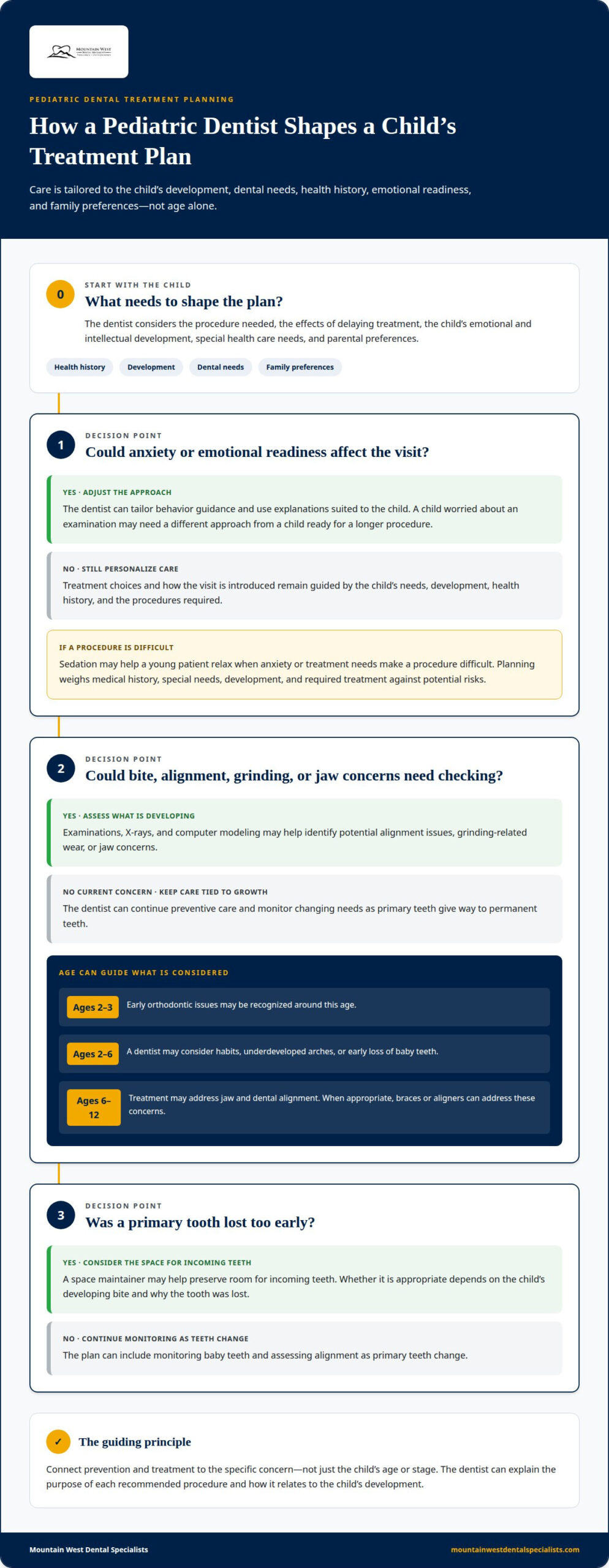
A pediatric dentist plans care around a child’s development, dental needs, health history, and emotional readiness. These details shape treatment choices and how each visit is introduced.
Behavior guidance is tailored to the child. The dentist considers health history, special health care needs, the procedures required, the effects of delaying treatment, emotional and intellectual development, and parental preferences. A child worried about an examination, for example, may need a different approach from one who is ready for a longer procedure. Families can also discuss habits such as pacifier use and thumb sucking as part of preventive care.
Treatment planning can also look ahead. Examinations, X-rays, and computer modeling may help identify potential alignment, grinding-related wear, or jaw concerns. If primary teeth are lost too early, a space maintainer may help preserve room for incoming teeth. Whether it is appropriate depends on the child’s developing bite and why the tooth was lost.
Orthodontic concerns can appear at different stages. Early issues may be recognized around ages 2-3. For ages 2 to 6, a dentist may consider habits, underdeveloped arches, or early loss of baby teeth. For ages 6 to 12, treatment may address jaw and dental alignment. When braces or aligners are appropriate, orthodontic braces and aligners can address those concerns.
Sedation may help a young patient relax during dental procedures. It can support care when anxiety or treatment needs make a procedure difficult. Planning weighs the child’s medical history, special needs, development, and required treatment against potential risks.
Your child’s plan should connect prevention to the specific concern, not just their age or stage. Pediatric dental care may include guidance on habits, monitoring baby teeth, and assessing alignment as primary teeth change. The dentist can explain the purpose of each recommended procedure and how it relates to your child’s development.
Dental care from infancy through adolescence
Dental care evolves as teeth erupt, baby teeth give way to permanent teeth, and facial growth continues. A child’s first dental visit should take place when the first tooth appears or by the first birthday.
Care Across Childhood
In infancy, an oral health visit can help parents understand cavity risk and care for emerging teeth. A child’s first tooth typically erupts between 6 and 12 months, and most children have 20 primary teeth by their third birthday. As teeth touch, flossing can begin; fluoride toothpaste amounts also change with age. These early steps help families build a dental health routine that grows with the child.
Age Range for Pediatric Dental Care
Pediatric dentists generally care for children from birth through age 18, adapting dental care to each stage. Baby teeth help children eat and speak while holding space for adult teeth. Children often begin losing primary teeth at age 6 or 7, and some baby teeth remain until age 12 or 13. Regular checkups are generally advised every six months, unless the dentist recommends a different schedule.
Preventive care may include cleanings, fluoride, and nutrition guidance. For children under age three, use a smear of fluoride toothpaste when brushing; children ages three to six should use a pea-sized amount. A dentist may also discuss sealants based on the child’s teeth and cavity risk. You can ask about thumb sucking and pacifier use, which may affect developing teeth.
For children with special health care needs, the care plan can account for medical history, physical needs, and the treatment required. Pediatric dentists can care for children who are medically or physically compromised, helping families understand how those needs may affect examinations and procedures.
Dental injuries need prompt attention. Pediatric dentists can treat fractured, displaced, or knocked-out teeth, as well as other oral trauma. A persistent toothache lasting more than 24 hours warrants contacting a pediatric dentist. Addressing an injury or ongoing pain helps determine what care the affected tooth needs.
What is a pediatric dentist and what training do they have?
A pediatric dentist is a dental professional focused on children’s oral health and the changing needs that come with growth. The role extends beyond treating an individual tooth: pediatric dentists can assess oral conditions, provide preventive care, and explain how a child’s development affects dental decisions. Their specialized education prepares them to adapt care for young patients, including children with special health care needs.
In the United States, dentists complete four years of dental school. Pediatric dentists then complete two to three years of additional education. This advanced study focuses on childhood growth and development, child psychology, techniques for easing dental anxiety, and care for children with special needs. This training helps the dentist consider both the clinical concern and how to communicate with a young patient.
This distinction is useful when a child needs care tailored to their age, development, or health needs. A general dentist can provide children’s cleanings, cavity prevention, and diagnosis and treatment of dental conditions. A pediatric dentist focuses on young patients and guides parents on oral health as children grow. A general dentist may refer a child for specialized care, while some families choose a pediatric dentist for ongoing visits.
Pediatric dental training supports a broad approach to care. Pediatric dentists can provide preventive services, including cleanings and fluoride treatments, and may recommend nutrition and diet changes to support oral health. Their training also includes treating dental conditions and providing care under general anesthesia in hospital or special outpatient settings. The treatment plan remains specific to each child’s needs.
For ongoing guidance as your child grows, explore pediatric dental checkups.
Mountain West Dental Specialists: Pediatric Dental Checkups
In Las Vegas, Mountain West Dental Specialists offers pediatric dental checkups where families can discuss a child’s oral health, development, and preventive care. A checkup is a helpful next step if you want ongoing guidance or have questions about changing dental needs.
If your child’s teeth or bite need attention, braces or clear aligners may address alignment concerns. Mountain West Dental Specialists also provides tongue-tie release and Cone Beam CT imaging for specific dental care needs. The appropriate service depends on the concern and your child’s care plan.
To discuss your child’s dental care with a caring team in Las Vegas, contact Mountain West Dental Specialists.
Take the next step with confidence
Understanding what a pediatric dental specialist is can help you feel prepared to make decisions for your child. Start with a conversation about the concern you’ve noticed and the support your family needs. You can ask questions about your child’s dental care and discuss what may be appropriate.
Mountain West Dental Specialists offers pediatric dental checkups, braces and clear aligners, and tongue-tie release in Las Vegas. These services support routine dental guidance and specific concerns involving alignment or tongue-tie. A conversation with the team can help you understand which care may suit your child.
Contact Mountain West Dental Specialists to talk about your child’s dental needs. Each family’s questions deserve care and attention, and taking that first step can make the path ahead feel clearer. Your child’s healthy smile is worth thoughtful support.
Frequently Asked Questions
What ages does a pediatric dentist treat?
Pediatric dentists generally care for patients from birth through age 18. The age range helps families understand when this specialty may fit, but a child’s needs matter too. For example, a young person with developmental or medical needs may benefit from care tailored to their circumstances. Some pediatric dentists also treat adults with special needs, depending on the practice.
What dental services do pediatric dentists provide?
Pediatric dentists provide preventive and treatment services for children’s teeth, gums, and oral health. Examples include examinations, cleanings, cavity prevention, fluoride treatments, and advice about nutrition. They can also address concerns such as oral injuries, gum conditions, and problems affecting baby teeth. In Las Vegas, families can discuss a child’s particular concern during a pediatric dental checkup.
How is a pediatric dentist different from a family dentist?
A pediatric dentist has additional education focused on children. A general dentist may also provide children’s cleanings, cavity prevention, and treatment. The distinction is specialized focus, not a requirement that every child see one type of dentist. A child who needs guidance tailored to their development or special health care needs, for instance, may benefit from pediatric expertise.
When should a child first visit a pediatric dentist?
Schedule your child’s first dental visit when the first tooth appears, or by the first birthday. The American Academy of Pediatric Dentistry recommends an appointment within six months after the first tooth erupts or by one year of age, whichever comes first. An early visit gives you a chance to discuss oral care and ask questions as your child’s teeth emerge.