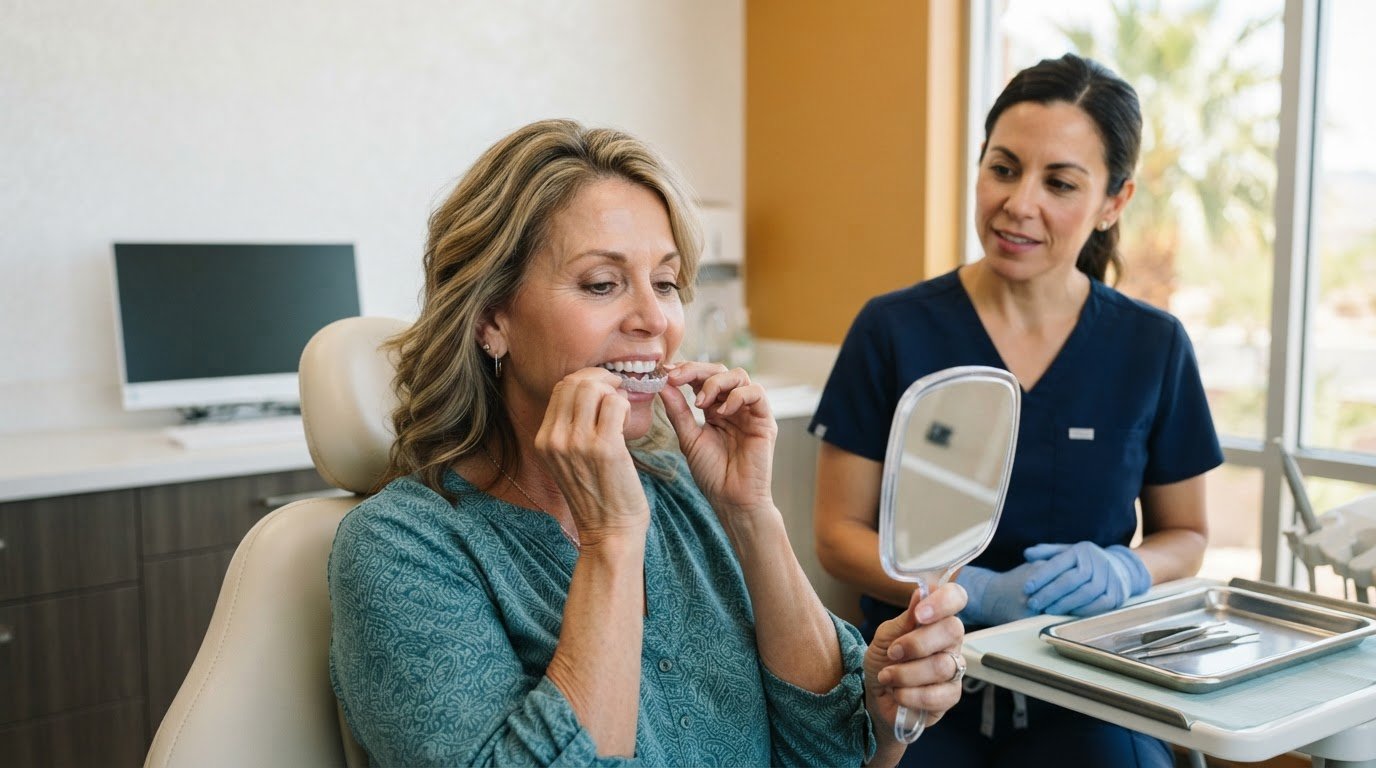
Turning 50 doesn’t close the door on a straighter smile. Orthodontic treatment for adults over 50 can still move teeth when the gums and jawbone are healthy enough to support treatment. An evaluation considers oral health, bite alignment, existing dental work, and what you hope to change.
That may be reassuring if shifting teeth, crowding, or an uneven bite has become more noticeable over time. Age alone isn’t the deciding factor; the condition of your teeth and supporting tissues matters. Existing dental work or missing teeth can also shape how treatment is planned.
This article explains why adults pursue orthodontic care later in life, what an evaluation and treatment can involve, and how clear aligners may fit. You’ll also learn why treatment length varies and why retainers matter afterward. Aligners can be removed for eating and oral hygiene, but they need consistent wear to work as planned. Understanding these considerations can help you feel more prepared to explore an approach that fits your oral health needs and daily routine.
Key Takeaways
- Crowded teeth can make cleaning harder, while an uneven bite may place extra wear on certain teeth. Learn how these concerns can shape treatment goals.
- Clear aligner trays are typically changed every few weeks, so staying on schedule is part of the treatment routine.
- Compare how treatment length can vary with the complexity of tooth movement and the appliance used.
- Retainers help maintain tooth position after treatment, and consistent long-term wear can help limit gradual shifting.
Clear aligners
Clear aligners can be removed for meals and cleaning; metal, ceramic, and lingual braces remain attached. For adults over 50, the choice depends on planned tooth movement and whether you can wear removable trays consistently.
Dental Concerns Addressed
Crowding, spacing, bite alignment, and tooth wear all describe how teeth sit and meet. Crowded teeth can trap food and plaque, while gaps may allow neighboring teeth to shift. An uneven bite can concentrate pressure and contribute to wear on particular teeth. Orthodontic movement can improve alignment and make crowded surfaces easier to clean. Active gum inflammation needs treatment before tooth movement begins.
Comparing Aligners and Braces
Metal braces use brackets and wires; ceramic braces use tooth-colored brackets. Lingual braces sit behind the teeth, but can irritate the tongue or affect speech. Clear aligners are removable for meals and cleaning, but require consistent wear. The right comparison depends on the movements planned and the routine you can maintain. If you often misplace removable items, for example, fixed braces may be easier to manage.
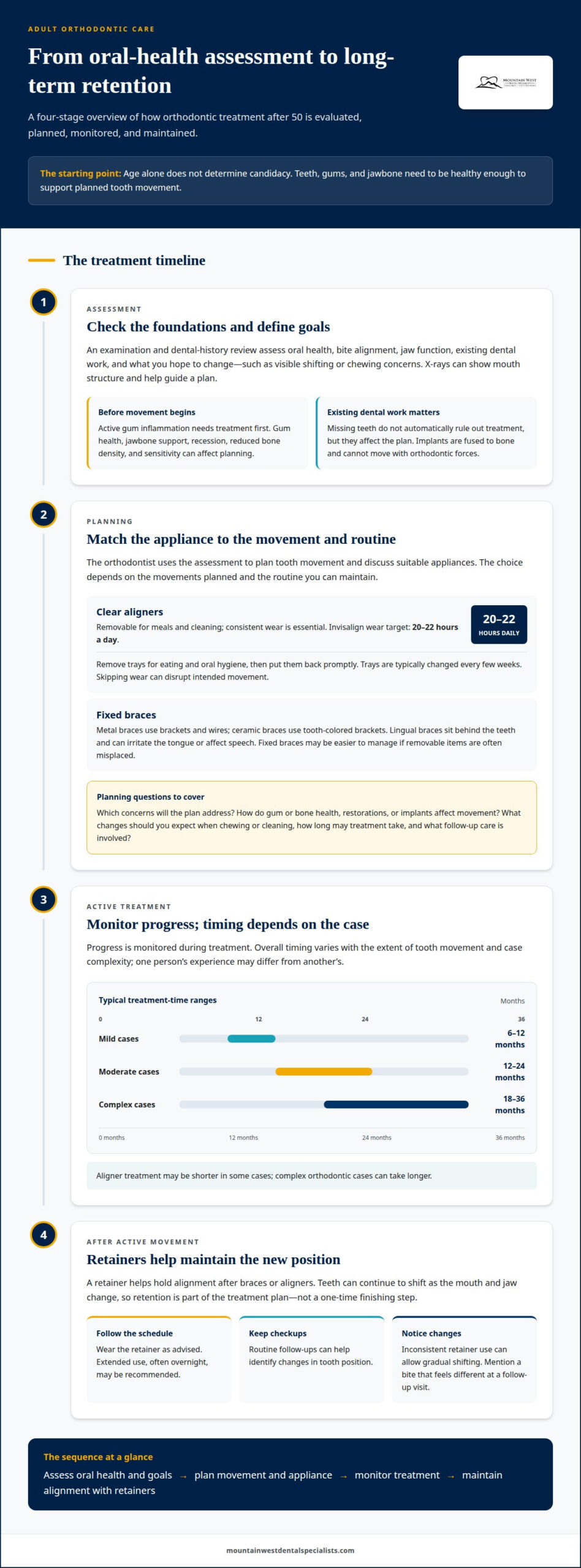
Clear aligner wear has a specific daily target: adults using Invisalign need to wear trays 20 to 22 hours a day. Remove them for eating and oral hygiene, then put them back promptly. Patients typically change trays every few weeks as teeth progress through the planned sequence. Skipping wear can disrupt the intended movement, so consistency is part of treatment, not an optional convenience.
Treatment time depends on the extent of tooth movement and case complexity. Mild adult orthodontic cases typically take 6-12 months; moderate cases, 12-24 months; complex cases, 18-36 months. Aligner treatment may be shorter in some cases, while complex orthodontic cases can take longer. These ranges help explain why one person’s experience may differ from another’s.
An implant cannot move with orthodontic forces because it is fused to the bone. Treatment planning accounts for existing implants when moving nearby teeth, especially if bite alignment or spacing is a concern.
What Is Orthodontic Treatment After 50?
Orthodontic treatment for adults over 50 can move teeth when their supporting structures are healthy enough. An assessment considers oral health, bite function, existing dental work, and treatment goals.
Candidacy and Oral Health Assessment
An oral-health assessment examines whether teeth, gums, and jawbone can support planned movement. For orthodontic treatment for adults over 50, this matters because age alone doesn’t determine candidacy. The evaluation considers bite alignment, jaw function, existing dental work, and goals such as addressing visible shifting or improving chewing.
Does dental insurance cover orthodontics for adults over 50? Some plans provide an annual or lifetime maximum benefit for adult orthodontics, but most dental plans don’t provide coverage. Review how your plan treats adult orthodontics and what maximum applies.
How can adults over 50 find a qualified orthodontist nearby? Search for an orthodontist in your area and arrange an evaluation focused on adult treatment, oral health, and existing dental work.
Bone Density and Gum Health
Gum health and jawbone support are central to safe tooth movement. Reduced bone density, gum recession, or sensitivity may affect planning, so these findings need assessment. Active gum inflammation must be treated before orthodontic movement begins. Teeth can still move after the jaw has stopped growing, provided their supporting structures are healthy enough.
How can you tell whether your mouth is ready for treatment? An examination assesses gum and bone health, bite alignment, and jaw function. X-rays can show mouth structure and help guide a plan for moving teeth. Missing teeth do not automatically rule out treatment, but they affect the plan.
Treatment Steps and Orthodontist Questions
Adult treatment starts with an examination, a review of your dental history, and an assessment of your bite and existing dental work. The orthodontist uses these findings to plan tooth movement and discuss suitable appliances. Ask which concerns the plan addresses, how gum or bone health affects it, and whether restorations or implants influence tooth movement.
What does the process involve? First comes an assessment, followed by a treatment plan and appliance choice. Progress is then monitored during treatment. Before you begin, ask what changes to expect when chewing or cleaning, how long treatment may take, and what follow-up care involves. Clear answers make it easier to understand your plan and decide whether to proceed.
Retainers after treatment
Finishing braces or Invisalign treatment is not the end of maintaining tooth position. Retainers help hold the new alignment as natural changes in your mouth and jaw continue.
Maintaining Treatment Results
A retainer helps maintain the position achieved with braces or aligners after active tooth movement ends. Your orthodontist may recommend extended wear, often overnight. Follow the wear schedule provided for your treatment, and keep routine checkups so any changes in tooth position can be noticed.
Long-term maintenance supports function as well as appearance. If your bite starts to feel different, for example, mention it at a follow-up visit. A retainer is part of the treatment plan, not a one-time finishing step. Consistent use helps maintain the alignment you worked to achieve.
Tooth Shifting and Orthodontic Relapse
Orthodontic relapse is the gradual movement of teeth after treatment. Inconsistent retainer use can allow teeth to shift, and teeth may continue moving throughout adulthood as the mouth and jaw change naturally. That is why adults are often advised to wear retainers long-term, even after orthodontic treatment is complete.
Retainers cannot prevent every natural change, but they help maintain tooth position. If a retainer no longer fits comfortably, do not force it into place; contact the orthodontist who planned your treatment for guidance. This is especially important if you notice shifting or new pressure around a tooth.
Build retainer wear into a dependable routine, such as placing it beside your evening dental-care items. Keep it accessible when traveling and follow its care instructions. Mention crowns or other existing dental work at follow-up visits, too. This context helps the orthodontist assess your retainer fit and alignment together.
Routine checkups complement retainer use by tracking whether teeth remain in position. Bring your retainer to appointments, including Invisalign follow-ups, so its fit can be assessed alongside your bite. If you have missed wear for a period, resume according to your orthodontist’s instructions. Consistent maintenance helps support your results over time.
Reasons adults over 50 seek orthodontic treatment
For adults over 50, the reasons to straighten teeth can extend beyond appearance. Crowding, shifting, or an uneven bite may affect cleaning, how teeth meet, and planning around missing teeth. The useful starting point is identifying the concern treatment should address.
Easier cleaning is one reason to consider correcting crowding. Closely packed teeth can trap food and plaque, making brushing and flossing harder. Better alignment may make tooth surfaces easier to reach. For example, moving a crowded lower tooth could create an arrangement that is easier to clean.
Bite function matters, too. When teeth meet properly, biting forces are spread more evenly. Uneven pressure can contribute to excessive wear on particular teeth over time. Long-term clenching or grinding may also put pressure on teeth and affect alignment. An orthodontic assessment can determine whether bite position is part of the concern.
A missing tooth can affect the position of neighboring teeth. They may drift into the gap, changing the bite and available space. Orthodontic movement can create room for a future implant or bridge, or help balance the bite around the gap. An implant itself cannot move with orthodontic forces because it is fused to bone.
Your daily routine can also shape appliance choice. Removable aligners come out for meals and cleaning, while braces stay attached. That difference matters if you prefer removing an appliance to eat or want a fixed option. Choose an approach based on the movements needed and the routine you can maintain.
Orthodontic treatment isn’t a treatment for TMJ disorder. If a bite misalignment contributes to mechanical strain, correcting that alignment may reduce stress on jaw muscles and joints, but it doesn’t address every cause of jaw symptoms. To explore whether braces or aligners fit your goals, explore orthodontic braces and aligners.
Mountain West Dental Specialists: Orthodontic Braces and Aligners
Mountain West Dental Specialists provides braces and clear aligners for adults considering changes to tooth position or bite alignment. If shifting, crowding, or an uneven bite is affecting your goals, an orthodontic evaluation at our Las Vegas office can help identify an approach suited to your oral health and treatment needs.
Treatment planning considers gum and bone health, jaw function, existing dental work, and the movements required. Clear aligners and braces fit different daily routines, so discussing your priorities helps shape a plan. Wearing a retainer after active treatment is also part of maintaining alignment over time.
Ready to discuss orthodontic options? Contact Mountain West Dental Specialists in Las Vegas to arrange an evaluation.
Make Your Next Step Personal
Choosing orthodontic treatment after 50 is a personal decision, shaped by what you want to change and what will fit your everyday life. Before an evaluation, consider which outcome matters most to you: feeling more comfortable with your smile, addressing a bite concern, or making daily care easier. A clear priority gives your conversation a useful starting point.
Orthodontic treatment for adults over 50 can be approached with a plan centered on your goals and oral health. You don’t need to have every answer before taking the next step. A thoughtful conversation can help you understand your options and decide what feels right for you.
Contact Mountain West Dental Specialists to begin a conversation about orthodontic care. Your goals deserve careful attention, and it’s never too late to explore a path that feels right.
Frequently Asked Questions
Will my teeth shift back?
Yes, teeth can shift after orthodontic treatment, so wearing a retainer helps protect your results. If you notice a new gap, crowding, or a bite change, note when it began and mention it at your follow-up. That timeline gives your orthodontist useful context. Keep up with routine dental visits so changes in tooth position can be considered alongside your overall oral health.
Can Older Adults Over 50 Safely Get Braces or Aligners?
Yes, adults over 50 can have braces or aligners when their teeth and supporting structures are healthy enough for movement. Age alone isn’t the deciding factor. Gum inflammation needs attention before orthodontic movement begins, and the jawbone must be able to support the planned changes. An evaluation also considers bite function and existing dental work to shape an appropriate treatment plan.
Does treatment take longer for older adults?
Treatment for adults may take longer than for children because adult teeth are more firmly set in the jaw and can need more time to move. The amount of correction matters, too: moving a few crowded teeth differs from addressing a complex bite. Your plan should account for the movements required, the appliance, and how consistently you follow its wear instructions.
Can I get Invisalign with crowns, bridges, or implants?
Crowns and bridges do not automatically rule out Invisalign; existing dental work is assessed during treatment planning. Implants need special consideration because orthodontic forces cannot move an implant fused to bone. Nearby natural teeth may still move, and missing teeth do not automatically prevent orthodontic treatment. Share details about restorations and implants during your evaluation so the plan accounts for them.
Can braces work after age 50?
Yes, braces can work after age 50 if your teeth, gums, and jawbone can support orthodontic movement. Tooth movement doesn’t depend on bones continuing to grow; orthodontic pressure can move teeth in adults, too. The important consideration is the health of the supporting tissues and the movement required. An examination helps establish whether braces can address your alignment or bite concerns.
Can orthodontics improve chewing ability?
Orthodontic treatment may improve chewing when tooth position or bite alignment affects how your teeth meet. Better alignment can help distribute biting forces more evenly instead of concentrating pressure on a few teeth. Orthodontics does not address every cause of chewing difficulty, so describe which foods or movements feel challenging during your evaluation. A specific example can help determine whether bite alignment is relevant.