
Getting braces in your 30s can be a reasonable option when your teeth and gums are healthy enough for treatment. There’s no upper age limit for orthodontics, and adult treatment typically takes 18 months to three years, followed by retainer wear.
You may be weighing the benefits of a better-aligned bite against concerns about appearance, comfort, and fitting visits into your routine. Those are practical considerations, and you deserve clear answers before deciding whether treatment feels right for you.
Learn how braces move teeth, how orthodontic treatment may support bite alignment and oral health, and what to expect during appointments. We’ll also explore discreet options, including clear aligners and lingual braces, which sit behind the teeth.
Key Takeaways
- Braces use gentle, steady pressure to move teeth; your gum health and existing dental work help shape treatment planning.
- Improving tooth alignment and bite concerns can support a more comfortable fit between your teeth.
- Regular orthodontic visits and professional cleanings help keep treatment on track and make it easier to manage plaque around brackets and wires.
- Compare visible and lower-profile options, including removable clear aligners and braces placed behind the teeth, to understand what may suit your routine.
How Does Adult Orthodontic Treatment Work After 30?
Braces can move adult teeth after 30, with treatment duration and planning shaped by your dental health and alignment needs. The consultation helps establish what your teeth and gums require.
Adult Treatment Duration
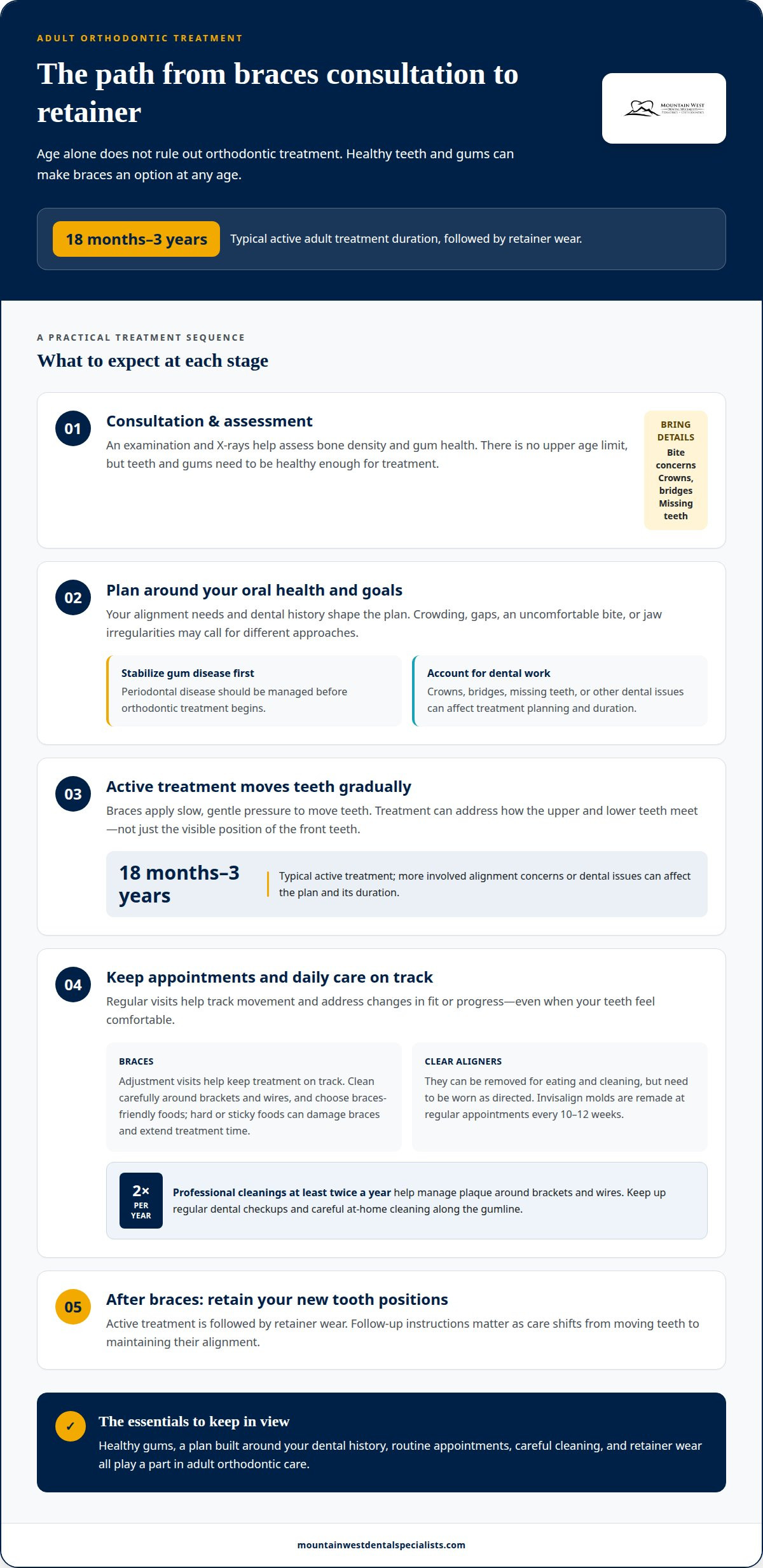
Adult orthodontic treatment typically takes 18 months to three years, followed by retainer wear. Your timeline matters when planning appointments, daily care, and the commitment that continues after braces come off. Braces apply slow, gentle pressure to move teeth into new positions. More involved alignment concerns or dental issues that need attention can affect the treatment plan and its duration.
Braces and Candidacy After 30
Age alone doesn’t rule out braces: healthy teeth and gums can be treated orthodontically at any age, with no upper age limit. This means getting braces in your 30s can be an option when your oral health supports treatment. Is it common to get braces in your 30s? Adults do seek orthodontic treatment, and singer Faith Hill had braces at 45 after forgetting her childhood retainer.
At an adult orthodontic consultation, expect an examination and X-rays to assess bone density and gum health. To prepare, note your bite concerns and bring details about existing crowns, bridges, or missing teeth. These help guide a plan around your dental work.
Adult and Teen Treatment Differences
Adult braces move teeth using gentle pressure, just as they do for teens. Planning may differ because adults can have crowns, bridges, or missing teeth that need consideration. At Mountain West Dental Specialists in Las Vegas, an orthodontic assessment helps connect your bite, gum health, and dental history to treatment options. Discussing these details can clarify which approach suits your needs.
Risks and Side Effects of Adult Braces
Adult braces require careful attention to gum health and appliance care. What are the risks and side effects of braces for adults? Periodontal disease should be managed and stabilized before treatment begins, because gum problems can complicate tooth movement. Hard or sticky foods can damage braces and extend treatment time, so choosing braces-friendly foods helps protect your appliance. Regular oral care remains important throughout treatment.
Benefits of orthodontic treatment for oral health and bite alignment
Orthodontics can address tooth alignment, bite concerns, and jaw irregularities. Understanding your treatment goals helps you weigh options against your daily needs.
Tooth Alignment and Bite Benefits
Orthodontic treatment moves teeth to address alignment and the way the upper and lower teeth meet. A more even bite can distribute contact between teeth more evenly during chewing. The right plan depends on the concern: crowded teeth, gaps, or an uncomfortable bite may each call for a different approach. Set goals around the specific issue you want to address.
Bite Alignment and Function
Bite alignment describes how your upper and lower teeth meet when you close your mouth. Orthodontic treatment can address bite concerns and jaw irregularities, not just the visible position of your front teeth. This matters if your molars meet unevenly or your teeth don’t fit together comfortably. Describe how your bite feels during everyday chewing to clarify what you want treatment to address.
What dental or gum health issues should be treated before getting braces? Periodontal disease should be managed and stabilized before orthodontic treatment begins. Gum health is part of treatment planning, and adults may need periodontal care or extractions alongside braces when dental issues complicate tooth movement.
Braces and clear aligners both move teeth, but they require different daily routines. Aligners can be removed for eating and cleaning, while braces stay fixed to the teeth. Removability can make meals and brushing more straightforward, but aligners still need to be worn as directed. Braces call for attention to food choices and careful cleaning around brackets and wires.
Consider which option fits your meals, cleaning habits, and alignment goals. If you’re weighing braces against removable aligners, orthodontic braces and aligners can be a useful starting point for discussing treatment options.
Dental visits and professional cleanings during treatment
Regular appointments help track tooth movement and keep braces or aligners working as planned. For braces, adjustment visits help keep treatment on track. Appointments also let the team address changes in fit or progress, so keep them even when your teeth feel comfortable.
Aligner appointments follow a different rhythm. Invisalign molds are remade at regular appointments every 10-12 weeks. Between visits, continue cleaning your teeth carefully and follow the wear instructions for your aligners. Brackets and wires can trap food, so regular dental checkups and professional cleanings help manage plaque during orthodontic treatment.
Plan professional cleanings at least twice a year while wearing braces, alongside regular dental visits. A hygienist can clean around brackets and wires, where a toothbrush may not reach as easily. At home, take extra care along the gumline and around each bracket. Consistent cleaning matters throughout treatment, not only before an appointment.
Active treatment typically lasts 18 months to three years, followed by retainer wear. That timeline makes routine visits and daily care part of a longer commitment, not occasional tasks. After active treatment ends, wearing a retainer helps maintain the new tooth positions. Keep follow-up instructions in mind as treatment changes from moving teeth to retaining their alignment.
Treatment cost depends on the case and is provided after a quote request; factors include treatment complexity, appliance type, and duration. For budgeting, review the total fee, what appointments it covers, and the payment schedule before treatment begins. Payment arrangements vary, so don’t assume a plan for metal braces, ceramic braces, or Invisalign applies to another option. Clear expectations help you plan for visits and care without losing sight of the treatment goals.
Discreet orthodontic treatment options
Considering treatment but concerned about visible braces? Clear aligners and lingual braces offer different ways to make orthodontic appliances less noticeable. Their placement and daily routines differ, so compare how each option fits your priorities before choosing.
Invisalign uses custom clear aligners that fit over your teeth. You can remove them for meals and cleaning, then wear them as directed. Their flexibility may suit patients who want to eat or brush without brackets and wires in the way. The aligners are clear, but they still cover your teeth while you wear them.
Lingual braces take another approach: they’re attached to the backs of the teeth rather than the fronts. Because the brackets sit behind the teeth, they’re less visible in a face-to-face conversation. They remain fixed in place during meals and brushing, unlike removable aligners. Patients considering lingual braces should think about the position of the appliance as well as its appearance.
For comparison, conventional braces place brackets on the front surfaces of teeth. They’re more visible, but the right choice depends on the alignment concerns being treated, your oral health, and the routine you can maintain. An orthodontic assessment can connect those factors to a suitable treatment plan. Ask how each option addresses your specific bite or tooth-position goals, and what daily care it requires.
Think through a typical day: meals, brushing, work conversations, and whether you prefer a removable or fixed appliance. Clear aligners allow removal for eating and cleaning, while lingual braces stay behind the teeth throughout treatment. Neither option removes the need to follow wear or care instructions. The best discreet approach is the one that balances your treatment needs with habits you can sustain.
If you’re ready to compare options for your smile, schedule an orthodontic braces and aligners consultation.
Mountain West Dental Specialists: Orthodontic Braces and Aligners
Mountain West Dental Specialists offers orthodontic braces and aligners for adults considering treatment to improve tooth alignment or address bite concerns. If you’re weighing discreet options or wondering how existing dental work may affect a plan, an orthodontic visit is a practical next step. You can discuss your goals, gum health, and daily preferences, then learn which approaches fit your needs. Braces and aligners each involve different routines, so bring questions about appearance, cleaning, meals, and ongoing retainer wear. A clear conversation can help you understand the choices and what treatment involves before making a decision. Contact Mountain West Dental Specialists to discuss orthodontic care.
Take the Next Step Toward a Plan That Fits
Choosing orthodontic treatment is a personal decision, and the best starting point is knowing what you want it to change. For adults considering getting braces in your 30s, it can help to name your priorities before discussing options: a bite concern, tooth positioning, or how an appliance fits into everyday life. Clear priorities make it easier to have a focused conversation and understand the choices in front of you.
You don’t need every detail figured out before taking that step. Bring the questions that matter most, including what you hope to improve and what feels manageable in your routine. An orthodontic discussion can help connect those goals with a practical path forward. Explore your orthodontic options with Mountain West Dental Specialists, then take the time you need to decide what feels right for you. A thoughtful plan is a confident beginning.
Frequently Asked Questions
Is It Advisable To Get Braces In My 30’s?
Yes. For adults getting braces in your 30s, orthodontic treatment can be advisable when teeth and gums are healthy and treatment addresses an alignment or bite concern. Age alone isn’t a cutoff. Consider what you hope to change, whether gum disease is stable, and whether you can maintain appliance care and follow-up appointments throughout treatment. Those priorities give your consultation a practical focus.
What’s Different About Braces for Adults?
The tooth-moving process is similar for adults, but planning may need to account for dental history and personal priorities. Before your consultation, list crowns, bridges, missing teeth, and previous gum treatment. This gives the orthodontist useful context when discussing appliance choices and goals. You can also describe work routines or appearance preferences that may affect which approach feels manageable.
Is It Too Late to Get Braces If I’m Over 30 (or 40 or 50)?
No, there’s no upper age limit for orthodontic treatment when teeth and gums are healthy. Adults over 30, 40, or 50 can discuss treatment based on their oral health, bite, and goals rather than age alone. If periodontal disease is present, it should be managed and stabilized before tooth movement begins. Existing dental work can also be considered during planning.
Who Is a Good Candidate for Braces Over 30, 40, or 50?
A good candidate has teeth and gums that can support orthodontic movement, along with an alignment or bite concern to address. Gum disease needs to be stable before treatment. Start by describing your main concern, such as crowded front teeth or an uneven bite, and sharing relevant dental history. This helps shape a plan around your starting point.
Will braces affect my daily life at work?
Braces may call for small adjustments to your workday routine, especially around eating and cleaning. Plan time to brush carefully after lunch and avoid hard or sticky snacks that could damage brackets. If you speak often in meetings, raise any comfort or speech concerns at appointments. Clear aligners can be removed for meals and cleaning, which may suit a different routine.
What orthodontic treatments are available for adults in their 30s?
Adult options include traditional metal braces, custom-fit 3D-printed ceramic braces, and Invisalign clear aligners. Metal and ceramic braces stay attached to the teeth, while clear aligners are removable for eating and cleaning. In Las Vegas, you can discuss which approach fits your alignment goals, dental health, and preferences for visibility and daily care. The treatment choice should account for the needs of your bite.