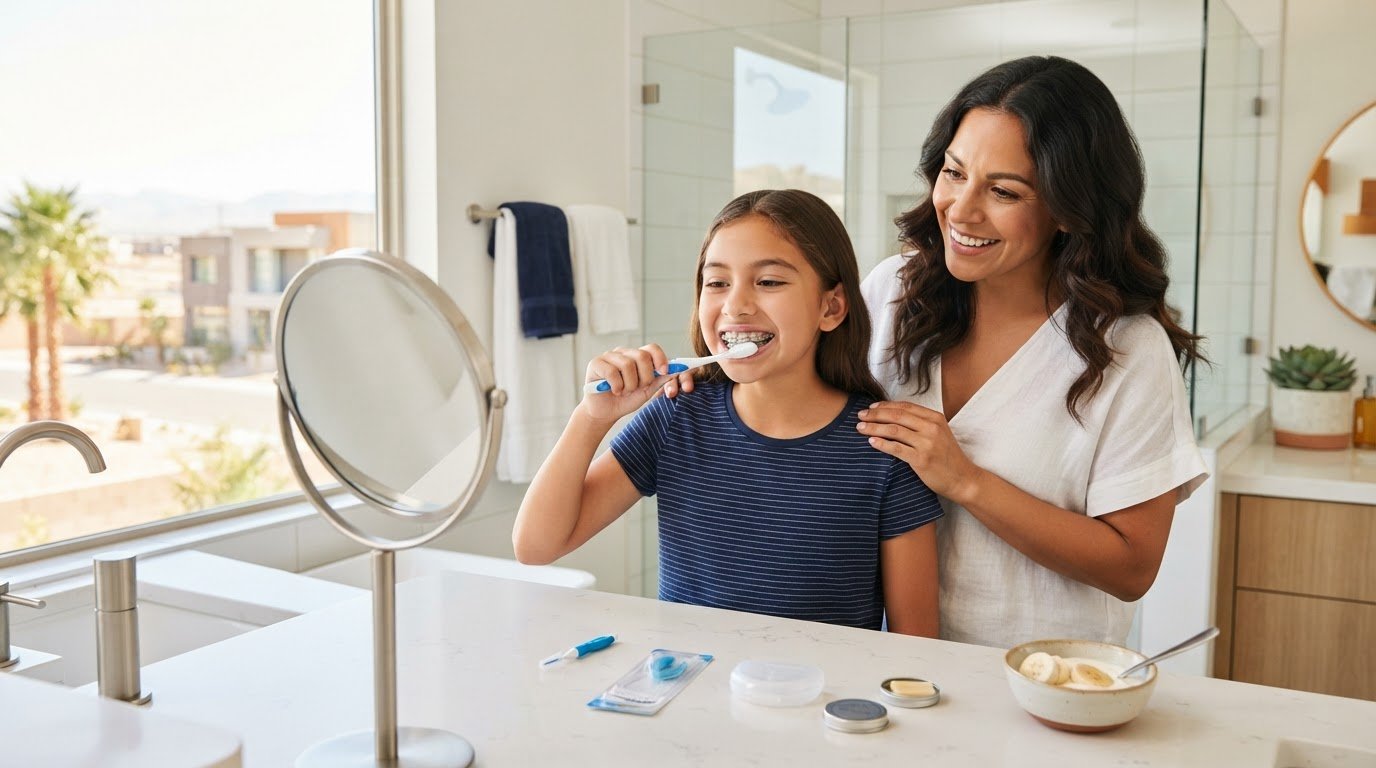
Caring for your child’s braces is a steady routine, not a complicated one. Have your child brush twice daily with fluoride toothpaste, clean carefully around brackets and wires, and avoid foods that can bend or break appliances. These small habits help keep teeth and braces clean throughout treatment.
It’s natural to wonder whether a favorite snack or a loose wire could disrupt your child’s progress. This guide covers everyday braces care, foods to avoid, and ways to look after aligners, retainers, archwires, and elastics. You’ll also learn what to do if a bracket or wire feels loose, so you can handle common concerns with confidence.
Key Takeaways
- Build a consistent cleaning routine, paying close attention to the areas around brackets and wires.
- Choose braces-friendly foods and change how you serve harder produce to reduce pressure on appliances.
- Keep removable appliances clean and follow the orthodontist’s directions for wearing retainers and elastics.
- If a bracket loosens or a wire causes irritation, use orthodontic wax for comfort and contact the office about the problem.
1. What Are Dos And Don’ts When Caring For Braces?
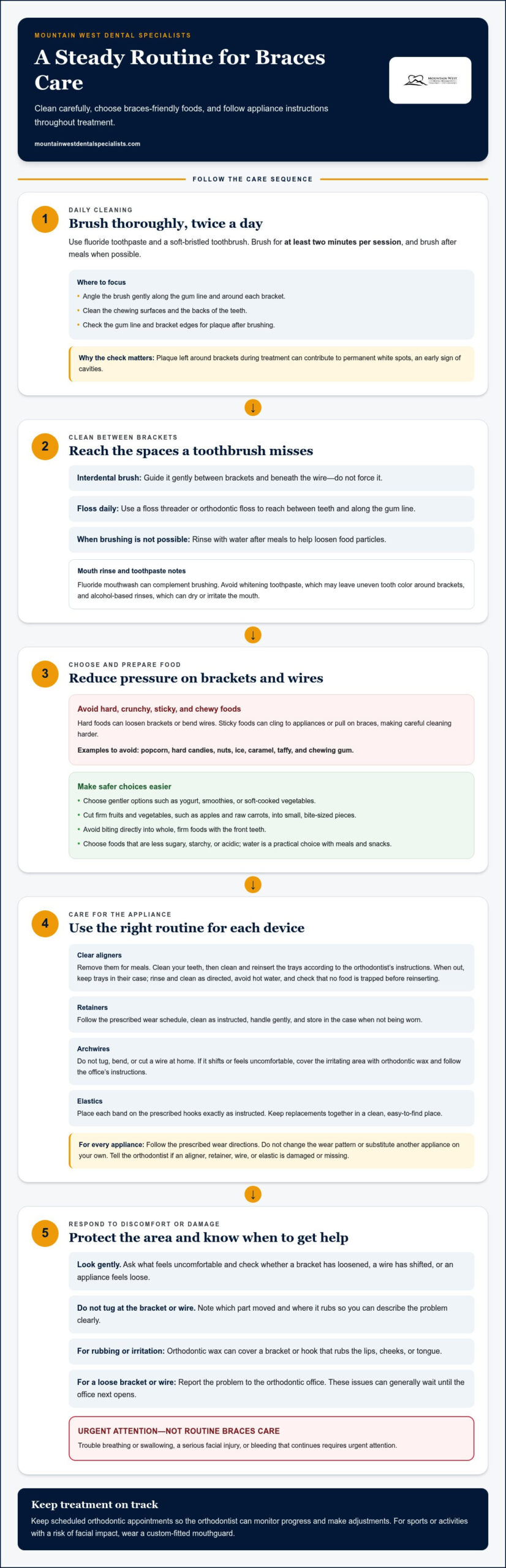
Make cleaning a reliable part of your child’s orthodontic treatment. Brush with fluoride toothpaste at least twice daily, and brush after meals when possible. Mountain West Dental Specialists recommends brushing for at least two minutes per session. Use a soft-bristled toothbrush, angling it gently along the gum line and around each bracket, then clean the chewing surfaces and the backs of the teeth.
Brackets and wires create small spaces where food and plaque can collect. Use an interdental brush to clean between brackets, guiding it gently beneath the wire without forcing it. Floss daily with a floss threader or orthodontic floss, reaching between teeth and along the gum line. Fluoride mouthwash can complement brushing. Avoid whitening toothpaste, which may leave uneven tooth color around brackets, and alcohol-based rinses, which can dry or irritate the mouth.
After brushing, check the gum line and the edges of the brackets. Plaque left there during orthodontic treatment can contribute to permanent white spots, an early sign of cavities. Rinsing with water after meals can help loosen food particles when brushing isn’t immediately possible.
If your child feels sore after braces are placed or adjusted, offer soft foods. Acetaminophen or ibuprofen may help if appropriate for your child. Orthodontic wax can cover a bracket or hook that rubs the lips, cheeks, or tongue.
Keep scheduled orthodontic appointments so the orthodontist can monitor progress and make adjustments. The visit schedule depends on your child’s treatment needs and planned adjustments.
For sports or activities with a risk of facial impact, have your child wear a custom-fitted mouthguard to protect their teeth, lips, cheeks, and gums. Don’t allow contact sports without one.
Report a loose bracket or wire to the orthodontic office. These problems can generally wait until the office next opens. Trouble breathing or swallowing, a serious facial injury, or bleeding that continues requires urgent attention rather than routine braces care.
2. Hard and crunchy foods to avoid
Hard foods can put direct pressure on brackets and wires, potentially loosening a bracket or bending a wire. Avoid popcorn, hard candies, nuts, and ice while your child wears braces. Biting directly into a whole apple or raw carrot can also stress the front brackets. Cut firm fruits and vegetables into small, bite-sized pieces so your child can chew without biting into them with the front teeth.
Sticky and chewy foods can cling to brackets or pull on braces during chewing. Avoid caramel, taffy, chewing gum, and other sticky sweets. They can be difficult to remove from appliances, making careful cleaning harder. Check snack labels and choose alternatives that don’t stretch, stick, or require forceful biting.
Choose gentler options such as yogurt, smoothies, or soft-cooked vegetables. Cooked vegetables are easier to chew than raw, crunchy ones, and yogurt makes a simple snack that requires no biting. Cut harder foods into small portions before serving, and avoid whole, firm foods that invite a hard bite with the front teeth.
Food choices also matter for teeth during orthodontic treatment. Choosing foods that are less sugary, starchy, or acidic can be part of supporting dental health during braces treatment. Frequent sweets or sticky starches can leave residue around brackets, where cleaning takes extra care. Water is a practical choice with meals and snacks. Avoid making sugary or acidic drinks an everyday habit.
A pediatric approach to braces care includes planning snacks as well as meals. Keep braces-friendly choices ready, such as yogurt or a smoothie, and prepare apples or carrots in bite-sized pieces rather than serving them whole. If you’d like support with your child’s oral health during treatment, a pediatric dental checkup can help keep routine care on track.
3. Aligners, retainers, archwires, and elastics
Metal and ceramic braces are fixed appliances, so both require careful cleaning around brackets and wires. Clear aligners are removable, so the routine is different: take them out for meals, clean your teeth, then clean and reinsert the trays according to your orthodontist’s instructions. Whatever the appliance, keep your teeth and it clean.
Whenever aligners are out of your mouth, put them in their case. This helps prevent them from being left on a lunch tray or wrapped in a napkin and accidentally discarded. Rinse and clean each tray as directed, and avoid hot water, which can distort its shape. Before reinserting a tray, make sure no food is trapped between it and your teeth.
Retainers help maintain tooth position after active orthodontic treatment. Follow the orthodontist’s wear schedule, which may begin with full-time wear and later change as advised. Clean the retainer as instructed, handle it gently, and keep it in its case when it’s not being worn. A pet or an unprotected retainer in a backpack pocket can lead to damage or loss.
Archwires connect brackets and guide tooth movement. Don’t tug, bend, or cut a wire at home, because this can affect how the appliance works or irritate the mouth. If a wire shifts or feels uncomfortable, cover the irritating area with orthodontic wax and follow the office’s instructions for getting help.
Elastics, also called rubber bands, apply pressure when attached to designated hooks. Help your child use them exactly as instructed, placing each band on the prescribed hooks rather than choosing a different arrangement. Keep replacement elastics together in a clean, easy-to-find place, such as a small container in a school bag.
A simple routine supports good appliance care: use the correct storage case, follow the prescribed wear directions, and tell the orthodontist if an aligner, retainer, wire, or elastic is damaged or missing. Don’t substitute another appliance or change the wear pattern on your own.
4. What should parents do if a child has a loose bracket or wire?
Start by looking gently at the area and asking your child what feels uncomfortable. Check whether a bracket has loosened from a tooth, a wire has shifted, or an appliance feels loose. Don’t tug at the bracket or wire. Note which part moved and where it rubs so you can explain the problem clearly to the orthodontic office.
If a bracket, hook, or wire irritates the lips, cheeks, or tongue, cover the spot with orthodontic wax. Roll a small piece between clean fingers, then place it over the irritating area. The wax provides a temporary cover while you arrange follow-up. If the irritation continues, tell the office where your child feels discomfort.
Call the orthodontic office if a bracket loosens from a tooth. Describe what happened, which tooth or area is affected, and whether your child feels discomfort. Broken brackets, loose wires, and loose appliances can generally be addressed when the office next opens, rather than through an emergency call. Promptly reporting the concern helps the orthodontist advise you on the next step.
Until the office can address the problem, keep the conversation calm and practical. Have your child avoid touching the loose part, and use orthodontic wax if it rubs. Don’t try to reattach a bracket or adjust a wire yourself. If a piece comes free, keep it safe so you can describe what happened during the call.
Clear details make the next step easier. Before calling, note when the problem began, what your child was doing, and whether the bracket or wire is causing irritation. For example, explain if a wire shifted during a meal or a bracket feels loose after brushing. Follow the office’s instructions for arranging care.
If your child needs help with a braces concern or ongoing treatment, contact an orthodontic team to discuss the next step.
Mountain West Dental Specialists: Orthodontic Braces and Aligners
Mountain West Dental Specialists provides orthodontic braces and aligners for children and families in Las Vegas. If your child is starting treatment, finding appliance care difficult, or concerned about braces, an orthodontic visit can provide guidance tailored to their needs. Pediatric dental checkups can support routine oral health alongside braces care. The team can explain treatment options and daily appliance care, so you and your child know what to expect at home. For a loose bracket or wire, follow the orthodontic office’s instructions and contact the office about the concern. Contact Mountain West Dental Specialists to discuss your child’s orthodontic care.
Make Braces Care Part of Your Child’s Routine
As your child grows more independent, caring for your child’s braces can become a shared routine that gradually shifts into their hands. Let them lead daily habits while you offer gentle reminders and help notice when an appliance feels different. This balance builds confidence without leaving them to manage every detail alone.
Talking openly about what feels easy or difficult can help you identify where extra support would be useful. If your child struggles with the routine, review their technique together. Questions about treatment are a good reason to seek professional guidance. Caring for your child’s braces isn’t about getting every day perfect. It’s about making thoughtful care manageable over time.
If you’d like guidance for your child’s orthodontic care, contact Mountain West Dental Specialists. With steady encouragement and support when questions arise, your child can keep building healthy habits with confidence.
Frequently Asked Questions
What Are Dos And Don’ts When Caring For Braces?
Keep cleaning consistent, choose braces-friendly meals, and avoid pulling or bending appliance parts. A simple routine chart can help your child remember brushing, flossing, and appliance instructions. Praise completed tasks to encourage the habit rather than focusing only on missed steps. If you notice a new white spot near a bracket or your child reports a change in comfort, make a note and raise it at an orthodontic appointment.
How should a child brush and floss with braces?
Have your child brush for two minutes, paying attention to the tooth surfaces above and below each bracket. Supervise or check their brushing, especially while the routine is new. For flossing, use a threader to guide floss beneath the archwire, then gently clean between teeth and along the gum line. A mirror and good lighting can help your child spot missed areas.
What foods should children avoid with braces?
Children should avoid foods that put force on brackets or are sticky and chewy enough to tug at braces. Consider the texture and how your child needs to bite: if a food resists chewing or clings to teeth, choose a softer alternative. Cut firm foods into small pieces at meals and encourage chewing with the back teeth rather than biting directly with the front brackets.
How can you clean between braces and wires?
Use an interdental brush to reach small spaces around brackets, guiding it carefully beneath the wire without forcing it. To clean between teeth, use a floss threader to pass floss under the archwire, then move it gently along each tooth and the gum line. Rinsing with water after eating can help dislodge loose food particles until your child can brush properly.