
You’re not automatically too old for braces. The answer to “am I too old for braces” is usually no: teeth can move through bone from age 8 to 80 years old, and age alone is rarely the deciding factor. Your oral health and the condition of your teeth, gums, and supporting bone matter more.
It’s understandable to wonder whether adult treatment will take longer, feel different, or fit your daily life. Adults’ jaws have finished growing, so treatment may take slightly longer than it does for children and teens. But that doesn’t mean braces or aligners are out of reach.
This guide explains how adult orthodontic care differs, what a consultation may cover, and how insurance coverage can vary. You’ll also learn about treatment options, timelines, and ways to protect your results, so you can make your decision with a clearer picture of what lies ahead.
Key Takeaways
- Use your consultation to discuss your gum and bone health, dental history, and bite, since these can shape an adult treatment plan.
- Adult treatment commonly lasts about 12-30 months, with the timeline influenced by case complexity, appliance type, and how consistently you follow the plan.
- Compare braces and clear aligners by considering the tooth movements needed as well as your preferences for wearing and caring for an appliance.
- Review your dental plan’s orthodontic benefits, since coverage for adult braces varies between insurance plans.
- Plan for retainer wear after treatment; following the prescribed schedule helps keep teeth from shifting.
How is Adult Treatment Different from Child Orthodontics?
Adults aren’t automatically too old for braces: teeth can move through bone from age 8 to 80 years old. Age is rarely the deciding factor, but adult treatment can take longer because adults are no longer growing.
Adult Eligibility for Braces
Adult eligibility means age alone rarely rules out orthodontic treatment. Teeth can move at 8 or 80 years old, so asking, “Am I too old for braces?” doesn’t have a set age cutoff as its answer. This matters because the focus shifts from your birth date to whether tooth movement can address your orthodontic needs.
The main difference between adults and children is growth. Children and teens are still growing, while adults’ jaws have finished growing. That can affect how an orthodontist plans treatment, particularly when the goal is to move teeth rather than guide jaw growth. Adult braces can still move teeth, although a similar concern may take slightly longer to treat in an adult.
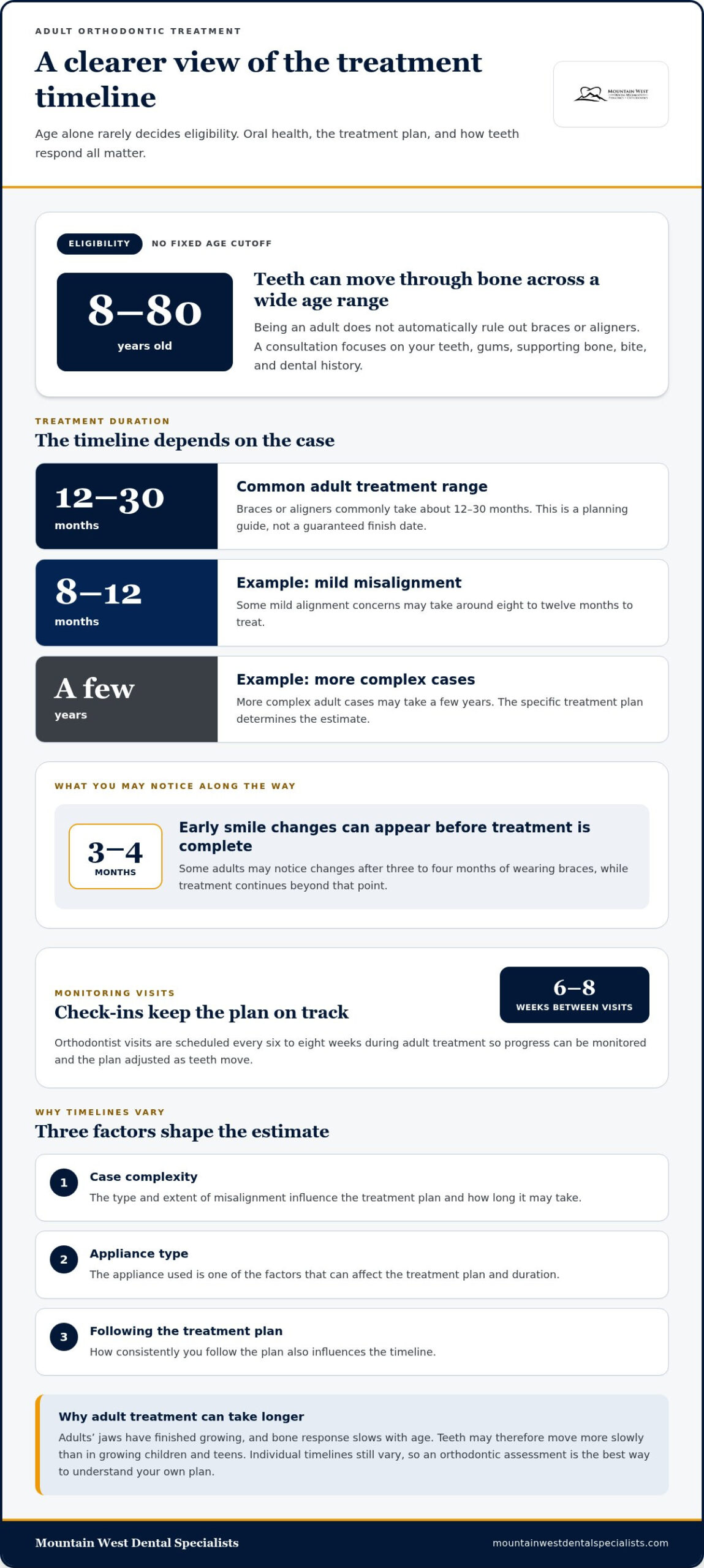
For example, adolescent treatment typically takes about two years. Adult timelines vary: mild misalignment may take around eight to twelve months, while more complex cases may take a few years. These examples show why age alone can’t predict treatment time.
Adult Treatment Timelines
Adult treatment timelines describe how long braces or aligners move teeth into planned positions. Adults commonly spend about 12-30 months in treatment, depending on case complexity, appliance type, and patient adherence. That range matters for planning work, routines, and confidence in your decision, because a mild alignment issue and a complex case can require very different timelines.
Bone response is one reason treatment may take longer. In adults, the cellular response in bone slows with age, and adult bones are more solid than those of growing children. As a result, teeth may move more slowly. The type of misalignment and the appliance used also influence the treatment plan and its duration.
Progress isn’t always visible at the same pace throughout treatment. Some adults may notice changes to their smile after three to four months of wearing braces, even though treatment continues beyond that point. Orthodontist visits are scheduled every six to eight weeks during adult treatment, so progress can be monitored and the plan adjusted as teeth move.
Use the estimated timeline as a planning guide, not as a comparison with a child’s experience. An adult with mild misalignment may finish in eight to twelve months, while a more complex case may take a few years. The appliance, case complexity, and how consistently you follow the treatment plan all help explain why two adults of the same age can have different treatment lengths.
Orthodontic consultation and treatment planning
A consultation connects your goals with an assessment of your teeth, gums, bite, and dental history. At Mountain West Dental Specialists in Las Vegas, an orthodontic consultation can help outline treatment options and explain factors that shape affordability, including case complexity, appliance type, and insurance benefits.
Bring details about previous dental work, such as fillings, crowns, missing teeth, or worn teeth. Your orthodontist may use X-rays to assess your mouth and plan tooth alignment. The consultation can also identify oral-health concerns to address before orthodontic treatment begins.
Treatment Costs and Financing
Treatment costs and financing are about the expense of orthodontic care and how you may pay for it. They matter because case complexity, appliance type, and treatment duration affect the plan and its overall cost. Dental insurance may help pay for adult braces, but coverage varies by plan.
For a useful affordability discussion, consider the complete proposed treatment rather than the appliance alone. Ask how the plan’s scope and duration affect its cost, and review your dental benefits before deciding. Any price depends on the case and is provided after a quote request; the main cost factors include treatment complexity, appliance type, and duration.
Discreet Appliance Options
Discreet appliances are designed to be less noticeable during treatment. They may appeal to you if appearance at work or in social settings affects your comfort. Clear aligners and ceramic braces offer less visible options, while lingual appliances sit behind the teeth.
Not every appliance suits every orthodontic problem. Lingual appliances may irritate the tongue or make speaking difficult for some people, so appearance is only one consideration. During your consultation, discuss the tooth movements needed as well as visibility, comfort, and daily care.
Oral health is part of treatment planning, not an afterthought. Crowded or crooked teeth can be harder to clean, while gum inflammation may need attention before braces are applied. Inflammation related to gum disease can contribute to uncontrolled bone loss, so you may need a dental cleaning first.
Teeth damaged by decay may also need restorative care, such as a crown or root canal, before orthodontic treatment. Fillings, missing or worn teeth, dental disease, some medications, smoking, clenching or grinding, and tongue thrusting can affect treatment outcomes. Sharing these details helps your orthodontist plan with your oral health in mind.
Some cases involve coordination between an adult’s dentist and orthodontist, with other dental specialists contributing to overall dental health. If you’re considering orthodontic braces and aligners, a consultation can help connect your treatment goals with an appropriate plan.
Does insurance cover braces for adults?
Dental insurance may help pay for adult braces, but coverage varies by plan. Age alone doesn’t set an upper limit for orthodontic treatment. Adults in their 50s, 60s, 70s, and beyond may benefit when their oral health allows. For insurance, the practical question is whether your specific plan includes adult orthodontic benefits, not simply whether you’ve passed a certain age.
Eligibility depends more on the condition of your teeth, gums, and supporting bone than on your age. An orthodontist considers how much bone remains to support your teeth, because braces rely on that support during tooth movement. Healthy bone and gums can make treatment possible at an older age, while reduced support or active gum problems can affect the plan.
Some health conditions may affect eligibility or how treatment is planned. Diabetes and osteoporosis might prevent an adult from having braces, while some medications can also affect orthodontic treatment. Smoking, clenching or grinding, and tongue thrusting may influence the outcome, too. These factors matter because treatment must account for the forces on your teeth and the health of surrounding tissues.
Pay particular attention to gum health before treatment begins. Gum inflammation related to gum disease may need to be reduced with a dental cleaning before braces are applied. Inflammation can cause uncontrolled bone loss, affecting the support teeth need during orthodontic movement. Teeth damaged by decay may also need restorative care, such as a crown or root canal, before treatment starts.
Straighter teeth can support oral health as well as appearance. Crowded or crooked teeth can be harder to clean, potentially allowing bacteria to build up and contributing to gum disease. Improved alignment may make daily brushing and flossing easier. A straighter smile may also affect confidence, although dental-health goals and visible changes depend on your treatment plan.
Adult orthodontic treatment can also improve bite function and reduce jaw strain. These benefits can matter during everyday activities such as chewing, as well as for the appearance of your smile. Insurance coverage and oral-health eligibility are separate considerations: your plan may offer benefits, while gum or bone health still shapes whether braces are suitable. Reviewing both gives you a clearer picture of treatment and how it may fit your lifestyle.
Metal braces, ceramic braces, and clear aligners
Adult orthodontic treatment commonly uses fixed braces or clear aligners to guide tooth movement. The right option depends on the movements needed, your preferences, and how you’ll manage treatment in daily life.
Metal braces use brackets and a connecting wire to move teeth while the appliance remains in place. Ceramic braces work similarly, but their tooth-colored brackets can make them less noticeable. Both are fixed appliances, so you don’t remove them for meals or brushing. Your orthodontist considers the correction needed, not appearance alone, when recommending braces.
Clear aligners use a series of removable trays. You can take them out to eat and brush your teeth, which may help them fit into certain routines. The trays are typically changed every few weeks. Invisalign aligners, for example, are replaced with the next aligner in the series every 1-2 weeks.
Aligners can be removed, so treatment depends on wearing them consistently as directed. They suit some treatment plans, but no appliance works for every orthodontic problem. Braces may be more effective for some movements, while aligners may take longer to achieve the same movement. That distinction matters if your plan involves more than a small adjustment.
At-home aligners are another option adults may encounter while comparing treatments. The key question is whether an appliance suits the specific tooth movements and bite concerns in your case. Convenience or a discreet appearance doesn’t make an aligner suitable for every orthodontic problem. Treatment planning should account for oral health and the correction you need.
Use these points to compare options during treatment planning:
- Visibility: Ceramic braces and clear aligners can be less noticeable than traditional metal braces.
- Daily routine: Aligners come out for eating and brushing; fixed braces stay in place.
- Movement needs: Braces may be more effective for some movements, while aligners may take longer for similar movement.
- Tray changes: Aligners are changed periodically, with Invisalign’s next tray used every 1-2 weeks.
Choosing braces or clear aligners is more than a style decision. Consider how each appliance fits your treatment goals, oral-health needs, and lifestyle. A less visible option may appeal if you prefer discretion, while fixed braces don’t require you to remove trays during meals. Your orthodontic plan brings those practical preferences together with the movement your teeth need.
Long-term expectations after treatment
Active orthodontic treatment commonly lasts one to three years, and the experience includes more than the day braces come off. You may have temporary soreness for a few days after adjustments. Brackets, wires, or aligners guide tooth movement during treatment, while retainers help maintain tooth position afterward. Planning for both stages helps you understand the commitment from the start.
Modern options can be less noticeable than traditional braces, which may matter if appearance is a concern at work or in social settings. Ceramic brackets can blend with tooth color, and lingual appliances sit behind the teeth. Lingual appliances may irritate the tongue or make speaking difficult for some people, so weigh discretion against comfort.
After active treatment, wearing a retainer becomes part of your routine. Patients should wear it all day every day for the first three months, then eventually wear it at night. This transition helps protect the result as your mouth adjusts to the new tooth positions. Follow the retainer schedule provided for your treatment plan.
Retainer use is a long-term commitment, not a brief final step. Without a retainer, mouth tissues tend to pull teeth toward their former positions, so patients should keep wearing one for life after braces. Tooth position can change throughout life, even after orthodontic treatment. Consistent nighttime wear helps limit shifting after the initial full-time period.
Function matters as much as appearance. Straighter teeth may improve bite function and reduce jaw strain, while better alignment can make dental hygiene easier. A retainer doesn’t replace everyday brushing and flossing; it helps preserve tooth positions. If your retainer feels different after a period of missed wear, contact your orthodontic provider for guidance rather than forcing it into place.
Plan for follow-through as carefully as you plan for braces or aligners. Keep your retainer clean, store a removable retainer safely during meals, and bring it to orthodontic appointments. These habits help maintain your results beyond the one-to-three-year active treatment phase. Retainer care helps protect your smile’s appearance and your bite’s function over time.
Ready to discuss a treatment plan and what comes after active treatment? Explore orthodontic braces and aligners as a starting point for your next conversation.
Mountain West Dental Specialists: Orthodontic Braces and Aligners
Mountain West Dental Specialists offers orthodontic braces and aligners for people considering adult orthodontic treatment in Las Vegas. If you’re weighing whether braces or aligners may suit your goals, an orthodontic consultation can help clarify your options and the factors that shape your plan.
Questions about tooth movement, appliance preferences, and oral health are useful starting points for that conversation. Sharing your priorities, such as choosing a less noticeable option or improving your bite, helps guide the discussion. Treatment planning is personal, and the right next step depends on your orthodontic needs.
If you’re ready to discuss adult orthodontic care, contact Mountain West Dental Specialists in Las Vegas.
Make Your Next Step Your Own
If you’ve asked yourself, “Am I too old for braces?” you can turn that uncertainty into a focused conversation about your goals. Think about what you’d most like to change, what matters in your daily routine, and what questions would help you feel ready to decide. You don’t need to have every answer before exploring your options.
Mountain West Dental Specialists offers braces and aligners, giving you a place in Las Vegas to discuss adult orthodontic care and your priorities. You might start by noting whether appearance, comfort, or treatment preferences matter most to you. A thoughtful conversation can help you understand how those priorities fit into treatment planning.
Whenever you’re ready to take that step, share your orthodontic goals with Mountain West Dental Specialists. Your path forward can begin with a simple conversation and a clearer sense of what you want for your smile.
Frequently Asked Questions
Am I Too Old for Braces?
No, there’s no fixed upper age limit for braces. If you’re wondering, “Am I too old for braces?” the more useful question is whether your teeth, gums, and supporting bone can support treatment. Teeth can move through bone from age 8 to 80 years old. For example, an older adult’s gum and bone health matters more to candidacy than reaching a particular birthday.
Age and Tooth Movement: Is There an Impact?
Yes, age can affect the pace of tooth movement, but it doesn’t automatically rule out treatment. Adult bones are more solid, and the cellular response in bone slows with age, so movement may take longer than for a growing child. The orthodontist plans around the movement needed and your oral health. This helps explain why two people with similar-looking teeth may have different treatment plans.
How Does the Adult Treatment Process Work?
Adult treatment begins with a review of your bite, dental history, and oral health. Bring a list of medications and details about fillings, crowns, missing teeth, or previous dental work. X-rays can help an orthodontist assess your mouth and plan tooth movement. If decay or gum inflammation needs attention, restorative care or a cleaning may come before braces, sometimes with coordination between your dentist and orthodontist.
How long does treatment take?
Adult orthodontic treatment commonly lasts about 12-30 months, while mild misalignment may take around eight to twelve months. More complex cases can take a few years. Progress also depends on appliance type and following the treatment plan. Visits are scheduled every six to eight weeks, and some adults notice smile changes after three to four months. Early visible changes don’t mean treatment is complete.
What Is the Downside of Wearing Braces As an Adult?
Practical challenges can include temporary soreness for a few days after adjustments and extra care when cleaning around brackets. Some appliances have specific trade-offs: lingual appliances may irritate the tongue or make speaking difficult for some people. Treatment can also require regular orthodontist visits and consistent attention to oral hygiene. Considering these everyday demands alongside your goals can help you choose an option that fits your routine.
What Treatment Options Are Available for Adult Patients?
Adult options include traditional metal braces, ceramic braces, and clear aligners. Ceramic brackets can be less noticeable, while aligners are removable for eating and brushing. Invisalign is a clear-aligner system with trays replaced every 1-2 weeks. Braces may be more effective for some tooth movements, while aligners can take longer for similar movement. Not every appliance suits every orthodontic problem, so the movement needed guides the choice.
What should my long-term expectations be?
Expect to wear a retainer after active treatment to help maintain tooth position. The prescribed schedule may begin with all-day, everyday wear for the first three months, followed by nighttime wear. Retention is ongoing because tooth position can change throughout life, even after braces. Keep brushing and flossing, and follow your retainer-care instructions so it stays clean and ready to wear.
Is there an age limit for getting braces as an adult?
No, adult orthodontic treatment has no upper age limit; candidacy depends on teeth, gums, and supporting bone. Bone support matters because it holds teeth during movement. Diabetes and osteoporosis may affect suitability, while gum disease may require care before treatment. Adults in their 50s, 60s, 70s, and beyond can benefit when oral health allows. Insurance is a separate consideration, since adult orthodontic coverage varies by plan.