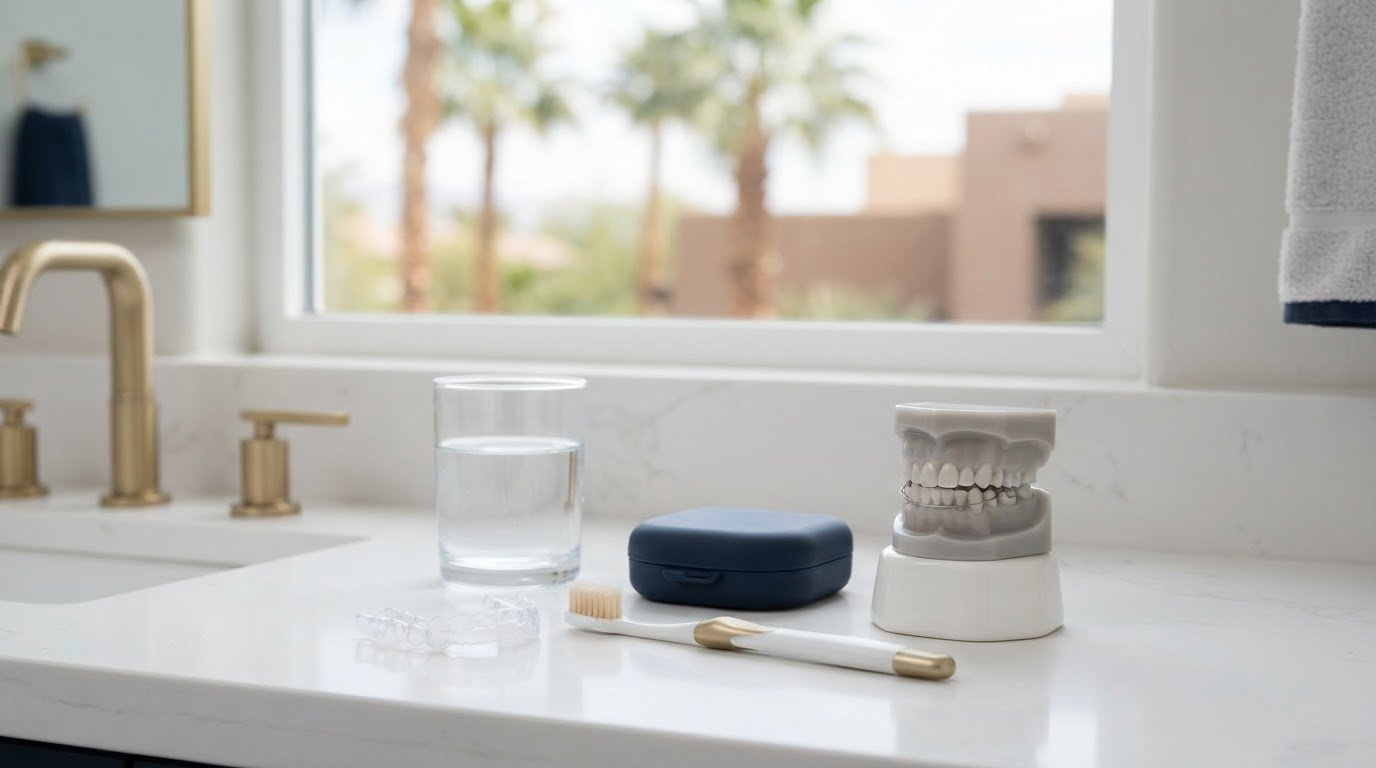
Your retainer helps keep your smile in place after braces, so it needs daily care. Good retainer care instructions include gently cleaning removable retainers, storing them in their case, and keeping them away from heat that can warp them. Wear your retainer as directed by your orthodontist while the bone around your teeth stabilizes.
It’s easy to focus on brushing and flossing during treatment, then wonder what your retainer needs each day. A few steady habits can help keep it clean, comfortable, and ready to wear.
Learn how to clean removable retainers, care for fixed ones, store a retainer safely, avoid heat damage, and understand why retainers matter after braces. The key is to care for the appliance you have and follow the wear schedule set for your smile.
Key Takeaways
- Clean removable retainers gently with cool water and a soft-bristled toothbrush; avoid toothpaste on clear plastic retainers because it can scratch them.
- With a fixed retainer, brush and floss beneath the wire every day, and watch for a wire that feels loose or broken.
- Put removable retainers in their case whenever they’re out of your mouth, and keep them away from hot water and hot cars.
- Follow your orthodontist’s wear schedule: retainers help hold teeth in position while the surrounding bone stabilizes.
- If a retainer is damaged, missing, or no longer fits, contact your orthodontist promptly to help prevent unwanted tooth movement.
1. Cleaning removable retainers
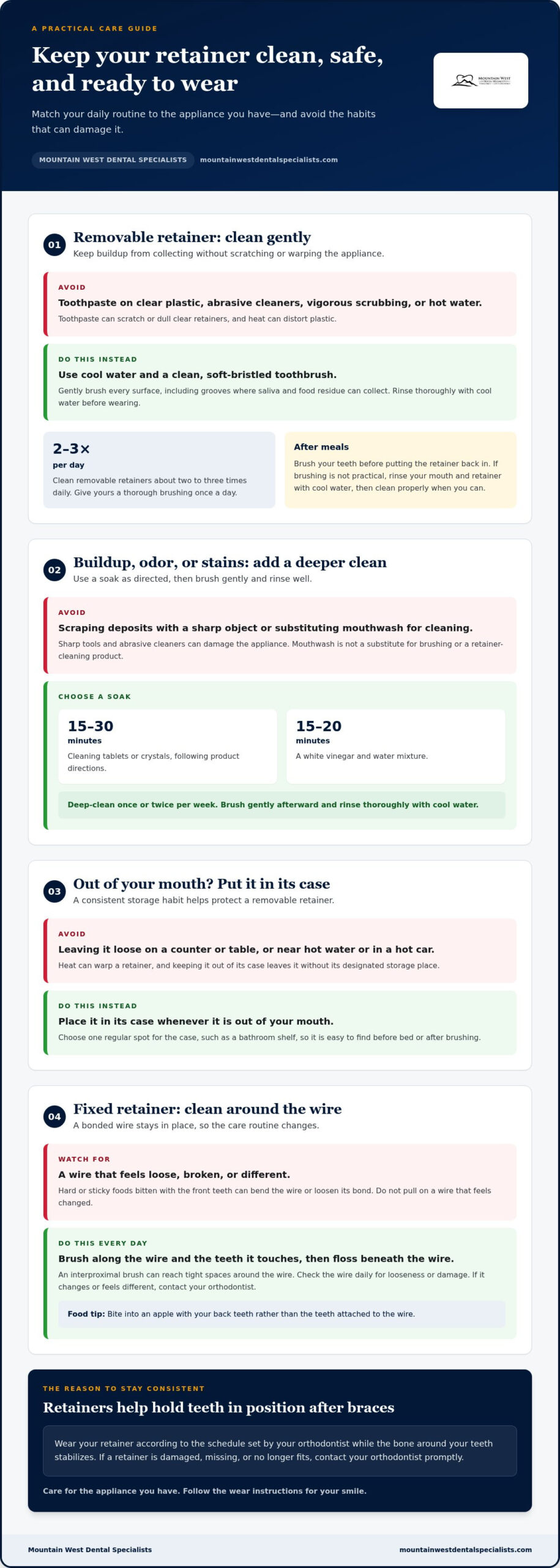
Clean a removable retainer each time you brush your teeth, and give it a thorough brushing once daily. Use cool water and a clean, soft-bristled toothbrush. Gently brush every surface, including grooves where saliva and food residue can collect. This routine supports oral hygiene by clearing buildup before it hardens.
Brush your teeth after every meal before putting the retainer back in. Clean removable retainers about two to three times a day. If brushing isn’t practical after a meal, rinse your mouth and retainer with cool water, then clean them properly when you can. Remove the appliance before eating to keep food from lodging against it.
Clear plastic retainers need a light touch. Toothpaste can scratch the material or leave it looking dull or cloudy, so use a soft brush and cool water instead. Retainer-cleaning tablets, including Retainer Brite and Efferdent, are other options; follow each product’s directions. Tablet and solution costs depend on the product and package size.
For deeper cleaning, soak a retainer in a cleaning solution or tablet mixture as directed. Cleaning tablets or crystals are typically soaked for 15-30 minutes. A mixture of white vinegar and water can be used for a 15-20-minute soak. Brush gently afterward, then rinse the retainer thoroughly with cool water before wearing it. Deep-clean once or twice per week.
Toothpaste may dull plastic or scratch clear retainers. Mouthwash isn’t a substitute for brushing or a retainer-cleaning product; use cool water and a soft toothbrush for routine cleaning. Avoid hot water because heat can distort plastic. Don’t scrub with abrasive cleaners, which can damage the appliance’s surface.
If your retainer smells, has visible buildup, or becomes stained, brush it gently and use a retainer-cleaning tablet according to its directions. Don’t scrape deposits with a sharp object. If buildup remains after cleaning, or the retainer looks damaged, bring it to your orthodontic appointment for guidance. Regular cleaning also helps prevent residue from collecting around its edges.
Fixed retainers need cleaning in place. Brush carefully along the wire and the teeth it touches, then floss beneath the wire every day. An interproximal brush can reach tight spaces, including around a lower bonded wire. For an upper fixed retainer, angle the brush to clean around the wire and the backs of the front teeth. Check the wire daily for looseness or damage as part of lifetime orthodontic hygiene.
2. Differences between removable and fixed retainer care
A removable retainer comes out for meals and cleaning; a fixed retainer stays bonded behind the teeth. That difference changes your daily routine. With a removable retainer, you manage when it’s in your mouth and where it goes. With a fixed wire, you clean around it while brushing and flossing. Both types help maintain tooth positions after orthodontic treatment.
Removable retainers include clear plastic styles, often called Essix retainers, and Hawley retainers. A Hawley retainer has a bar that wraps around the six top or bottom middle teeth, with two bars on each side that hug a molar. A fixed, or permanent, retainer is a bonded wire attached to specific teeth. The orthodontic problem treated helps determine whether you receive a removable retainer, a fixed one, or both.
Take a removable retainer out before eating unless your orthodontist specifically instructs otherwise. Food can press against the appliance, trap particles, or stress its plastic and wire. Keep it out for snacks as well as meals, including a quick bite between classes or work. Before reinserting it, brush your teeth after eating so food and drink residue aren’t held against enamel.
Remove the appliance carefully rather than pulling sharply on one corner. Use your fingers to release it evenly from both sides, then lift it away without twisting. This balanced motion reduces strain that could crack plastic or bend a Hawley wire. If a retainer resists removal, don’t force it; pressure in one spot can damage the appliance or irritate a tooth.
A fixed retainer needs a different approach because it cannot be taken out for meals. Brush along the wire and the tooth surfaces it contacts, then floss beneath the wire every day. Hard or sticky foods bitten with the front teeth can bend the wire or loosen its bond. For example, bite into an apple with your back teeth, rather than the teeth attached to the wire.
A fixed wire holds only the teeth it touches, so it doesn’t replace a removable retainer when both are prescribed. Follow the wearing instructions for each appliance rather than assuming one covers every tooth. Check a bonded wire daily for a broken or loose section. If it changes or feels different, avoid pulling on it and contact your orthodontist.
Some people have both types for a reason: a bonded wire can hold selected teeth, while a removable retainer covers a broader set. Don’t swap, stop, or change how you wear either appliance based on comfort alone. A retainer that no longer fits may signal tooth movement. Raise this concern promptly with your orthodontist.
If you’re unsure which appliance your treatment plan calls for, an orthodontic appointment can connect retainer care with the teeth moved during treatment. Keep the appliance available for that discussion, and describe when discomfort, looseness, or a fit change began. Those details help distinguish a routine adjustment question from a retainer that needs attention.
3. Safe retainer storage
Put a removable retainer in its designated case whenever it’s out of your mouth. Choose one regular spot for the case, such as a bathroom shelf, rather than leaving it beside the sink. A consistent storage place makes the case easier to find before bed or after brushing. Keep the retainer inside, not loose on a counter or table.
Prevent warping by storing the retainer away from hot water and hot cars. Prevent cracking by handling it gently and placing it in its case instead of wrapping it in a napkin. To prevent loss, return it to the same case after each removal. These simple steps protect the plastic and make accidental disposal less likely.
A paper napkin can seem like an easy temporary wrapper at lunch, but it can end up in the trash with food scraps. Use the case instead, even when you’re eating away from home. Keep it in a bag or pocket where it won’t be crushed by keys, books, or other hard items. Don’t leave the retainer on a cafeteria tray.
After cleaning, rinse the retainer and case, then let them air-dry before closing the case. Trapped moisture can leave the inside damp and unpleasant. Keep the case clean too: rinse away visible residue and allow it to dry fully. Don’t use toothpaste to scrub a clear plastic retainer, since abrasive particles can scratch its surface.
Choose a case that closes securely and is easy to recognize. If several family members wear retainers, label each case with its owner’s name. A child can keep the case in a backpack’s inside pocket, while an adult might choose a consistent place in a work bag. Keep the case separate from loose snacks and items that could press against it.
Don’t put a retainer in a pocket without its case. Sitting on it or pressing it against keys can crack or distort the appliance. If you remove it while brushing, set the case beside your toothbrush before starting. That small step gives the retainer a natural place to go, rather than leaving it near the sink where it may fall.
Your tongue may notice that a retainer feels different after storage, but don’t bend it or bite down to force it into place. Rinse it and check for visible cracks or warping. If it’s damaged, missing, or no longer fits, contact your orthodontist promptly. Bring the retainer to orthodontic appointments, even when it has stayed safely in its case.
4. Avoiding heat that can warp retainers
Heat can change a removable retainer’s shape, so keep it away from hot water and hot cars. A warped appliance may no longer sit against your teeth as intended. The retainer is designed to hold teeth in their post-treatment positions, not to take on a new shape.
Use cool water for rinsing and cleaning, even when you’re in a hurry. Don’t place a retainer in a sink filled with hot water or leave it beside a steaming kettle. Harsh chemicals and very hot water can damage or warp retainer material. Follow the cleaning product’s directions rather than adding heat to speed up soaking.
A parked car can become hot enough to damage a retainer, so take its case with you instead of leaving it in the vehicle. A sunny dashboard or center console is especially poor storage. When traveling, keep the closed case in a bag you carry, away from direct heat and pressure. The case protects the appliance from everyday knocks, but not from a hot car.
Food and drink choices matter while wearing a clear plastic retainer. Limit drinks other than water with the appliance in place. Sugary or acidic liquids, such as soft drinks, can seep beneath an Essix retainer and remain against teeth, raising the risk of decay. Remove the appliance before meals unless your orthodontist has instructed otherwise, then brush your teeth before putting it back.
With a fixed retainer, you can’t remove the wire for eating, so protect it from hard or sticky foods. Avoid biting into hard foods with the front teeth, since pressure can bend the wire or loosen its bond. Cut apples and carrots into small pieces, then chew with your back teeth. This keeps chewing force away from the bonded wire while supporting oral hygiene.
Contact sports call for another adjustment. Don’t wear a removable retainer during contact sports; wear a mouthguard instead. A loose appliance can break or be damaged during impact. Follow your retainer’s wear directions outside sports, since skipping wear after orthodontic treatment can allow teeth to shift.
If your retainer feels different after heat exposure, don’t bend it back or force it into place. Check for visible distortion or a broken area, and contact your orthodontist promptly if it no longer fits. A retainer that looks unchanged can still feel wrong, so pay attention to pressure or looseness. Keep it in its case while arranging the next step.
5. Purpose of retainers after braces
Braces move teeth into new positions, but finishing treatment doesn’t make those positions permanent. After braces come off, the bone and tissues around your teeth need time to rebuild and stabilize. A retainer holds teeth where treatment placed them during this transition. It protects the result while your mouth adjusts.
Think of braces as the active movement phase and a retainer as the holding phase. Without wearing your retainer as directed, teeth can shift toward earlier positions. That movement can happen gradually, so your smile may look unchanged at first. Consistent wear supports the result you worked toward throughout orthodontic treatment.
The first schedule may be demanding. Many patients are instructed to wear retainers 20-22 hours per day during the initial full-time phase after braces or Invisalign are removed. That initial phase typically lasts three to six months. Follow the schedule given for your treatment, including when to remove the appliance for meals or cleaning.
After the initial stabilization period, most patients transition to nighttime wear. Retainers are often worn at night for years or indefinitely. Some orthodontists recommend wearing them at least a few nights per week indefinitely. The takeaway is simple: finishing braces usually begins a long-term retention routine, rather than ending appliance wear.
Teeth can change position later, even after years without braces. They may become rotated or crooked over time, which is why long-term retainer wear matters. A retainer isn’t a one-time safeguard that permanently locks teeth in place. Ongoing use helps counter the natural tendency for teeth to move.
Make the routine easy to remember. Pair nighttime retainer wear with brushing before bed, then return the appliance to your mouth after cleaning. If your schedule changes, such as during travel or a school break, keep your orthodontist’s instructions close. Don’t make a lasting change to your wear pattern just because your teeth feel settled.
Pay attention to fit. If your retainer feels unusually tight or no longer seats fully, teeth may have shifted. Contact your orthodontist promptly, since more treatment may be needed. Bring your retainer to every orthodontic appointment, even if you wear it only at night. A broken or missing appliance also needs prompt attention.
If you’re considering treatment or have questions about keeping teeth in position afterward, explore orthodontic braces and aligners as part of your smile-care plan.
Mountain West Dental Specialists: Orthodontic Braces and Aligners
Mountain West Dental Specialists provides braces and aligners for families considering orthodontic treatment or seeking guidance about maintaining tooth alignment. A conversation about treatment can cover how retainers fit into the plan after braces or aligners, why consistent wear matters, and what to do if an appliance feels loose or no longer fits.
If you’re exploring orthodontic care for yourself or your child, Mountain West Dental Specialists can help you understand the treatment approach and next steps. Retainer habits are part of protecting progress after active treatment, so discuss them as part of the bigger picture.
Contact Mountain West Dental Specialists to learn more about orthodontic braces and aligners.
Make retainer care part of your next chapter
Your smile’s next chapter is shaped by the routines you keep and the questions you bring to orthodontic visits. Choose a practical reminder, such as pairing your retainer routine with a familiar bedtime habit. Keep your retainer care instructions somewhere easy to find, so you can revisit them when your schedule changes or you’re unsure what to do.
At your next appointment, bring up any changes in fit, comfort, or condition. A clear description of what changed and when can help guide a useful conversation about your orthodontic care. If you’re considering treatment for yourself or your child, Mountain West Dental Specialists provides braces and aligners. Take the next step at a pace that feels right for your family.
Contact Mountain West Dental Specialists to discuss orthodontic care. Small, steady choices can help you feel more prepared to care for your smile over time.
Frequently Asked Questions
How should you clean a retainer daily?
Rinse your retainer after taking it out, then brush it gently with a clean, soft-bristled toothbrush. A useful routine is to clean it while brushing your teeth in the morning and before bed, then rinse it again before wearing it. After lunch, a cool-water rinse can clear loose debris until you can brush. Clean every surface, including grooves and wire joints where residue can collect.
What is the safest way to clean a plastic retainer?
Use cool water and a soft-bristled brush, and avoid abrasive products on clear plastic. Toothpaste can scratch clear retainers or make the material look cloudy. For a deeper clean, use a retainer-cleaning tablet according to its package directions, then rinse the appliance thoroughly before putting it back in. Don’t use bleach or household cleaners, which aren’t made for cleaning retainers.
How often should you deep-clean a retainer?
Deep-clean a removable retainer once or twice per week, alongside routine brushing. Retainer-cleaning tablets or crystals are typically soaked for 15-30 minutes; follow the product’s directions rather than extending the soak. If a film remains, brush gently after soaking and rinse well. Don’t try to remove stubborn deposits with sharp tools, which can scratch or damage the appliance.
How should you store a retainer when not wearing it?
Keep a removable retainer in its designated case whenever it’s out of your mouth. For example, place the case beside your toothbrush before cleaning, or bring it along when removing the retainer away from home. Avoid wrapping the appliance in a napkin, where it can be mistaken for rubbish. Store the case away from hot cars, direct heat, and items that could crush it.
Can you eat or drink while wearing a retainer?
Take a removable retainer out before eating unless your orthodontist has instructed otherwise. With a clear plastic retainer in place, limit drinks to water: sugary or acidic liquids can seep beneath it and stay against teeth. After a meal, brush your teeth before reinserting the appliance. For contact sports, remove a removable retainer and wear a mouthguard instead.
When should you replace a retainer or contact your orthodontist?
Contact your orthodontist promptly if your retainer is lost, damaged, broken, or no longer fits. Don’t force an ill-fitting appliance onto your teeth or try to reshape it yourself. A bonded wire that feels loose or broken also needs attention; save any detached piece and bring it to your appointment. Clear plastic retainers may need replacement every few years, depending on wear and care.
Do retainer care instructions differ for clear, Hawley, and fixed retainers?
Yes. Clear plastic retainers need gentle cleaning because toothpaste may scratch or cloud them. A Hawley retainer has plastic and wire, so clean around both without bending its components. A fixed retainer stays bonded in place, so brush along the wire and floss beneath it daily. The type you wear determines how you clean it, remove it, and protect it during meals.
Which retainer cleaning tablets or solutions work best, and how much do they cost?
Retainer-cleaning tablets such as Retainer Brite or Efferdent are options; follow the product directions. A white vinegar and water mixture can also be used. Costs vary by product and package size.