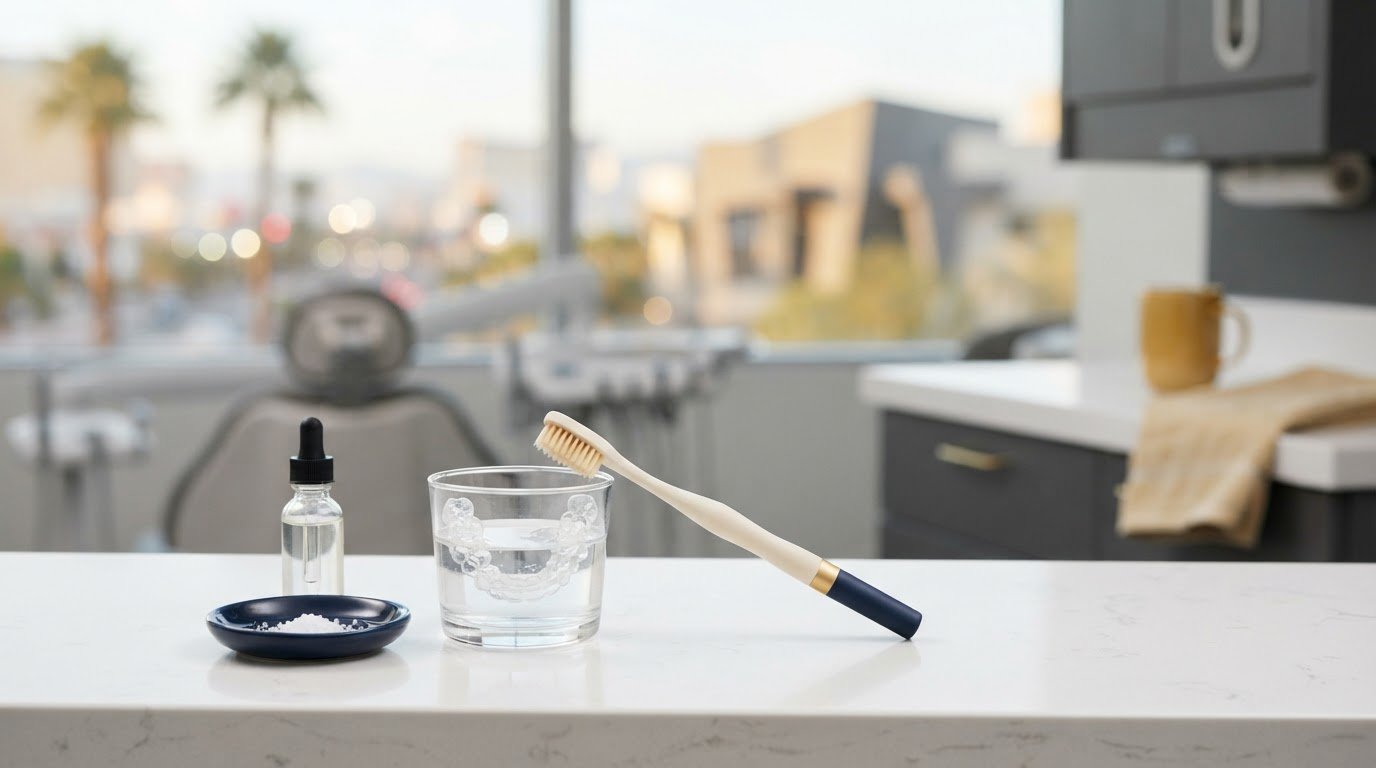
How to clean Invisalign aligners comes down to a gentle routine: rinse them with lukewarm water whenever you remove them, then clean them with Invisalign Cleaning Crystals or clear, unscented liquid soap and a soft brush. For crystals, dissolve one packet in warm water, soak the aligners for 15 minutes, and rinse them thoroughly. Avoid hot water and abrasive toothpaste, which can damage or scratch the trays.
It’s understandable to want your aligners fresh and clear without damaging them. The good news is that careful cleaning can be simple. A few everyday habits help remove buildup and keep your trays comfortable to wear.
This guide explains how to use cleaning crystals, wash aligners with clear liquid soap, and brush them gently. You’ll also learn which common cleaning mistakes to avoid, so you can care for your aligners confidently as part of your daily routine.
Key Takeaways
- Rinse aligners whenever you remove them, and build regular cleaning into your daily routine.
- Learn the simple steps for preparing Invisalign Cleaning Crystals and soaking aligners for 15 minutes.
- Choose gentle cleaning methods to help keep aligners clear and avoid damage from hot water or abrasive toothpaste.
- Use a soft-bristled toothbrush with clear, unscented liquid soap and gentle pressure.
- Know which signs may mean your aligners need extra attention and how to care for them without harsh scrubbing.
How do I clean my Invisalign aligners?
Dirty Invisalign aligners can contribute to tooth decay, staining, and bad breath. Since they’re worn 20-22 hours a day, rinse them after removal and clean them regularly to help manage buildup and bacteria.
-
Rinse Aligners After Removing Them
Rinse each aligner whenever you take it out, including before meals. This washes away saliva and loose debris before they dry on the plastic. Hold the tray over a clean sink and rinse both the inside and outside. Check for visible food particles or a sticky film. If you spot either, rinse again before putting the aligner in its case or starting another cleaning step.
-
Use Lukewarm Water for Rinsing
Run lukewarm water over both sides of the aligner after removing it. Keep the water comfortable, not hot: very hot water can warp and damage the tray. Cool water also works for a quick rinse. Rinse only as long as needed to clear residue. If warm water isn’t available, use cool water rather than waiting until the tray dries.
-
Follow a Daily Rinsing and Brushing Routine
Rinse aligners each time you remove them, then clean them at least twice a day. A practical routine is to rinse them after taking them out in the morning and evening, then brush gently during those cleaning sessions. Use a soft brush and light pressure, not forceful scrubbing. Regular care removes residue before it builds up. Afterward, check the tray for cloudiness, stains, or lingering odor.
-
Rinse Aligners After Soaking
After soaking aligners in a cleaning solution, rinse every surface thoroughly with lukewarm water before wearing them again. This removes remaining solution from the tray. For Invisalign Cleaning Crystals, dissolve one packet in warm water, soak the aligners for 15 minutes, then rinse them well. Don’t put the trays back in directly from the soaking cup. Check that no visible residue remains before reinserting them.
Cloudiness, stickiness, stains, or odor after rinsing can mean your aligners need extra cleaning. Follow a regular routine instead of waiting for buildup to become obvious. Rinse after removal, clean the trays consistently, and rinse thoroughly after soaking. If residue remains, repeat the gentle cleaning steps rather than scrubbing harder or reaching for an abrasive product.
Soaking aligners with Invisalign cleaning crystals
Invisalign Cleaning Crystals offer a soaking option for aligner care. Follow the packet directions, use warm rather than hot water, and rinse the plastic thoroughly afterward.
-
Soak Aligners in Cleaning Crystals
Dissolve one packet of Invisalign Cleaning Crystals in warm water, then place the aligners in the solution. Soak them for 15 minutes, following the package directions for preparation and timing. Warm water helps dissolve the crystals; hot water can damage aligner plastic. After soaking, rinse both sides thoroughly with lukewarm water before wearing the trays again. Check for visible particles or solution residue before reinserting them.
-
Use Cleaning Crystals for Periodic Soaking
Use cleaning crystals once or twice a week, or as directed by your orthodontic team. A periodic soak complements, but does not replace, regular rinsing and brushing. Each packet is intended for single use. Don’t save or reuse a prepared solution unless the product directions say it is safe. Store unused packets in a cool, dry place.
-
Soak Aligners in Cleaning Solution
Prepare a fresh cleaning solution each time you soak aligners with crystals. Let the crystals dissolve before placing the trays in the water, so undissolved particles don’t sit against the plastic. Follow the specified soak time, then rinse the aligners thoroughly. Don’t leave them in the solution longer than directed; soaking for over an hour can weaken the plastic.
-
Include Soaking in Deep Cleaning
Include soaking in your cleaning plan while keeping daily care consistent. Rinse aligners whenever you remove them and clean them regularly. Use crystal soaking once or twice a week, or follow your orthodontic team’s directions. Daily care doesn’t mean using crystals every day. They are for periodic use, and the package directions explain how to prepare the solution and how long to soak.
After every crystal soak, rinse away the solution before putting your aligners back in. For persistent stains or buildup, repeat your usual gentle cleaning steps instead of extending the soak beyond the directions. Keeping the packet instructions handy makes it easier to follow the same process each time, from dissolving the crystals to the final rinse.
Avoiding hot water and abrasive toothpaste
Diluted white vinegar and hydrogen peroxide solutions are described as soaking options, but they require careful preparation and thorough rinsing. Baking soda can be too gritty for direct scrubbing, so don’t use it like abrasive toothpaste.
- Keep hot water away from the aligners. Use cool or lukewarm water to rinse and warm, not hot, water to prepare a soak. Very hot water can warp and damage the plastic, changing the tray’s fit. If tap water feels hot against your hand, let it cool before rinsing or mixing a cleaning solution. Follow the product directions for soaking, then rinse the aligners thoroughly.
- Skip toothpaste and abrasive scrubbing. Toothpaste is made for brushing teeth, but its abrasive ingredients can scratch aligners and make them look cloudy. Scratches can also make the surface harder to clean. Don’t use a toothpaste-covered toothbrush to remove buildup from a tray. Save toothpaste for your teeth and clean aligners gently, without forceful scrubbing.
- Avoid bleach, harsh detergents, and colored or scented soap. Bleach and harsh detergents can damage aligners and irritate your mouth. Colored or scented soap may leave an unpleasant taste, and dyes could stain the plastic. Choose clear, unscented soap to wash aligners. If soap leaves an odor or residue, rinse the tray thoroughly before wearing it again instead of using another product to mask the taste.
- Use household soak ingredients cautiously. A diluted white-vinegar soak may help with light mineral buildup or mild cloudiness; diluted hydrogen peroxide is another described soaking option. Rinse thoroughly afterward. Baking soda can be too gritty to scrub directly onto aligners, so don’t rub dry powder or a rough paste across the plastic. Vinegar, peroxide, and baking soda are not substitutes for the cleaning-crystal package directions.
For routine cleaning, choose a soft brush and clear, unscented liquid soap instead of toothpaste or harsh cleaners. Rinse gently, then inspect the tray for scratches, cloudiness, or stains before wearing it again. Avoiding harsh products protects the aligner’s surface and helps prevent cleaning residue from remaining against your teeth.
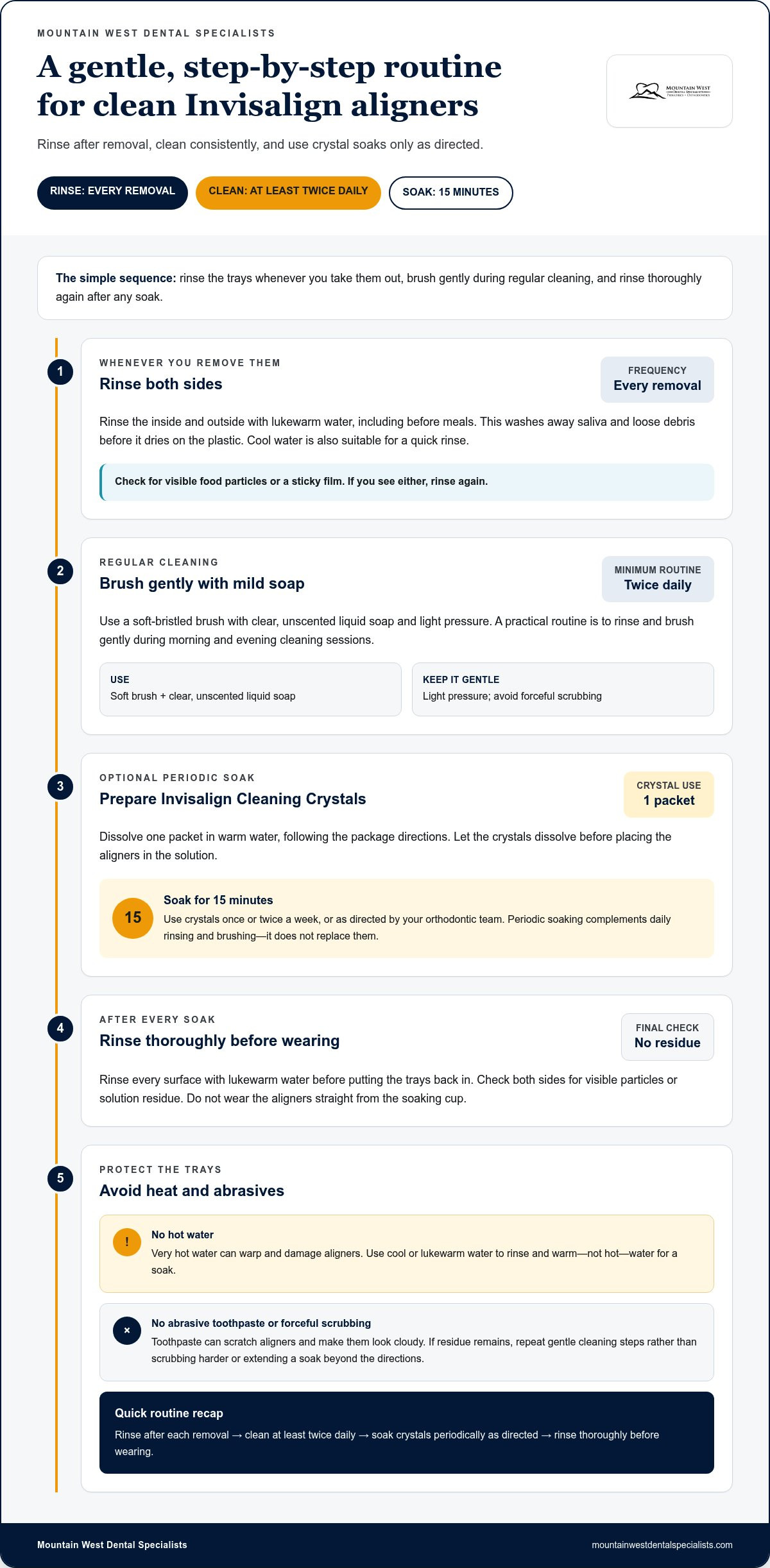
Brushing aligners safely
Brush gently to remove residue without scratching the tray. Keep aligner care separate from tooth care: each needs its own brushing routine.
- Use a soft-bristled toothbrush on the aligners. Wet the brush and move it lightly over the inside and outside surfaces. Gentle pressure lifts loose buildup without rough scrubbing. A hard-bristled brush can scratch the plastic, making aligners more visible and harder to clean. Check the edges and grooves for trapped particles, but don’t press harder if residue remains. Rinse the tray after brushing.
- Brush your teeth before putting aligners back in. Brush at least twice a day, including after waking and before bed. Brushing removes food residue and plaque before the trays cover your teeth again. Floss daily to clear spaces a toothbrush may miss. Then rinse your aligners and reinsert them over clean teeth. This routine helps limit trapped debris and keep your breath fresher during treatment.
- Clean your teeth after meals before reinserting the trays. Brush after eating when you can, then place the aligners back over clean teeth. If brushing isn’t possible, rinse thoroughly with mouthwash before reinserting them. Don’t use the aligners to cover teeth with food particles still present. For example, after lunch, clean your teeth before returning the trays to your mouth. Keep your aligners out while eating.
- Keep brushing and flossing consistent throughout treatment. Aligners are worn for 20-22 hours a day, so food debris left on teeth can remain under the trays. Brush your teeth at least twice per day and floss daily, even when your mouth feels clean. A steady morning and evening routine is easier to maintain than waiting for visible buildup. Rinse the trays after removal, then brush them gently as needed.
Use separate brushing routines for your teeth and trays: toothpaste belongs on your teeth, while aligners need gentle cleaning. If residue remains after brushing, rinse the tray instead of scrubbing harder. Consistent toothbrushing, daily flossing, and cleaning after meals help prevent debris from being trapped beneath the aligners.
Now Care Dental advises returning Invisalign® aligners only after brushing and flossing, on clean teeth. Brush after meals, or rinse thoroughly with mouthwash if brushing is not possible; brush at least twice a day and floss daily.
Cleaning aligners with a soft-bristled toothbrush and clear liquid soap
Clear, unscented antibacterial soap and a soft-bristled toothbrush provide a gentle way to clean aligners. Use light pressure, then rinse thoroughly with lukewarm water before wearing them again.
-
Clean Aligners With a Soft-Bristled Brush
Wet a soft-bristled toothbrush and gently brush the aligner’s inner and outer surfaces. Follow its curves and grooves, where saliva or small particles may collect. Use light strokes rather than firm scrubbing. A hard-bristled brush can scratch the plastic, making trays more visible and harder to clean. After brushing, inspect the edges and rinse away loosened residue before wearing the aligners.
-
Use Unscented, Clear Soap
Choose clear, unscented soap before cleaning your aligners. Colored soap may stain the plastic, while scented soap can leave an unpleasant taste. Avoid products with strong fragrances or visible dyes. If you’re choosing between two bottles at home, select the plain, clear option. Rinse the aligner thoroughly afterward so soap residue doesn’t remain against your teeth.
-
Clean Aligners With Clear Liquid Soap
Apply clear liquid soap to a damp toothbrush, then brush each aligner gently. Work over a clean sink and hold the tray securely to avoid dropping it. Clean both sides, including the surfaces that sit against your teeth. Rinse thoroughly with lukewarm water until the tray no longer feels slippery. Don’t use toothpaste on the aligner, because abrasives can scratch the plastic.
-
Use Clear Antibacterial Soap
Use clear, unscented antibacterial soap as a gentle cleaning option for aligners. Brush lightly instead of relying on a long soak to loosen buildup. Colored or scented soap may affect the tray’s appearance or leave an unwanted taste. After brushing, rinse thoroughly before wearing the aligners again. This method can also suit retainers when their care instructions allow the same gentle approach.
Keep soap and aligner care simple: choose clear, unscented liquid soap, use a soft brush, and finish with a thorough rinse. For support with aligner care and treatment, connect with an orthodontic team.
Now Care Dental advises using a soft toothbrush and gentle pressure to clean Invisalign® aligners, and warns that regular toothpaste may scratch them. Keep your strokes light, guiding the bristles over the tray rather than pressing into it. Brush the inner and outer surfaces, following the aligner’s shape, and pay attention to grooves and edges. The goal is to clean the plastic without harsh scrubbing. A soft brush, clear liquid soap, and careful rinsing keep the method simple; toothpaste isn’t needed.
While cleaning, hold the aligner securely and work over a clean sink. Apply soap to a damp brush, then clean both sides with gentle strokes. Rinse with lukewarm water until the soap is gone and the surface no longer feels slippery. Before putting the tray back in, check its edges and surfaces for residue. If it still feels soapy, rinse it again. Light pressure and clear, unscented soap help prevent scratches, visible staining, and unwanted taste. Finish with a thorough rinse every time.
Mountain West Dental Specialists: Orthodontic Braces and Aligners
Mountain West Dental Specialists provides orthodontic braces and aligners for patients considering treatment or seeking guidance with aligner care. The team can explain how aligners fit into your orthodontic options and what to expect from treatment. Bring questions about wearing and cleaning your trays or maintaining your routine, so your next steps feel clear and manageable. If you’re exploring aligners for yourself or your family, the practice can discuss orthodontic treatment in a supportive setting. To talk about braces and aligners, contact Mountain West Dental Specialists in Las Vegas or visit mountainwestdentalspecialists.com.
Make aligner care part of your treatment plan
Knowing how to clean Invisalign aligners gives you a practical starting point, but your care routine should also fit into everyday life. Notice which moments make cleaning easiest, such as after breakfast or before bed, and keep your supplies where you’ll use them. A routine that works at home, school, or work is easier to follow consistently.
If you’re considering aligners or want help understanding orthodontic options, a conversation with a dental team can help you identify a next step. Mountain West Dental Specialists provides orthodontic braces and aligners, pediatric dental checkups, and tongue-tie release in Las Vegas. These services support families at different stages of dental care, while orthodontic treatment can address questions about aligner care and treatment planning.
Contact Mountain West Dental Specialists to discuss your orthodontic questions and take a thoughtful next step. With a manageable routine and guidance that fits your needs, you can feel more prepared to care for your smile.
Frequently Asked Questions
How often should you clean Invisalign aligners?
Clean your aligners at least twice a day and rinse them each time you remove them. Make those separate steps in your routine: a quick rinse after lunch clears loose residue, while a full cleaning fits naturally into morning and evening toothbrushing. If you notice odor, stickiness, or visible film between cleanings, clean the trays instead of waiting for the next scheduled session.
What is the best way to clean Invisalign aligners step by step?
For how to clean Invisalign aligners, follow a simple sequence: rinse the trays, gently brush them with clear, unscented soap, then rinse thoroughly again. If you use Invisalign Cleaning Crystals, prepare the solution as directed, soak the trays for the specified time, and rinse afterward. Inspect the inside grooves before reinserting the trays. This final check can catch food particles a quick rinse might miss.
Can you clean Invisalign aligners with toothpaste or a toothbrush?
You can brush aligners, but use a soft-bristled toothbrush without toothpaste. Toothpaste abrasives can scratch the plastic and leave it cloudy; a soft brush and gentle strokes clean without abrasive paste. Use a separate toothbrush for aligner care if that helps distinguish it from your regular toothbrush. Rinse the trays afterward, especially around the edges where soap or debris can collect.
Can you use Invisalign cleaning crystals, denture tablets, or retainer cleaners?
Use Invisalign Cleaning Crystals according to the packet directions, including the specified soak time. Denture tablets and other retainer cleaners vary, so use them only if their product directions say they are suitable for clear aligners. Don’t assume every retainer formula suits Invisalign trays. Follow each product’s instructions, and don’t reuse a crystal solution unless the directions say it is safe.
What should you avoid when cleaning Invisalign aligners?
Avoid very hot water, abrasive toothpaste, bleach, and harsh detergents. These can damage the aligner surface or plastic, while colored or scented soap may leave stains, taste, or fragrance. Don’t scrub with a hard-bristled toothbrush or rub baking soda directly onto the trays. For example, when cleaning away from home, choose lukewarm water and a gentle method instead of a harsh bathroom cleaner.
How do you remove stains, cloudiness, or odor from Invisalign aligners?
If you notice stains, cloudiness, or odor after rinsing, start with a gentle, thorough cleaning. A diluted white-vinegar soak may help with light mineral buildup or mild cloudiness; rinse thoroughly afterward. Don’t use other types of vinegar, which can stain aligners. If the tray still looks cloudy or smells after cleaning, avoid more vigorous scrubbing, which can scratch the plastic.
How should you clean Invisalign aligners while traveling?
Pack your aligner case and a soft toothbrush so your trays have a clean place to go during meals or while traveling. Rinse them after removal, and clean them with clear, unscented soap when you have access to a sink. If you can’t brush your teeth after eating, rinse your mouth and aligners thoroughly before reinserting them. Keep aligners out while eating or drinking anything other than water.