
What if a crossbite or crowded teeth is a reason to ask a question, not proof your child needs an appliance? If you’re searching for a palatal expander for kids Las Vegas, it’s understandable to wonder whether your child’s bite is developing as it should and whether treatment could make talking or eating uncomfortable. Visible signs can be worth discussing, but they can’t diagnose a narrow upper jaw at home.
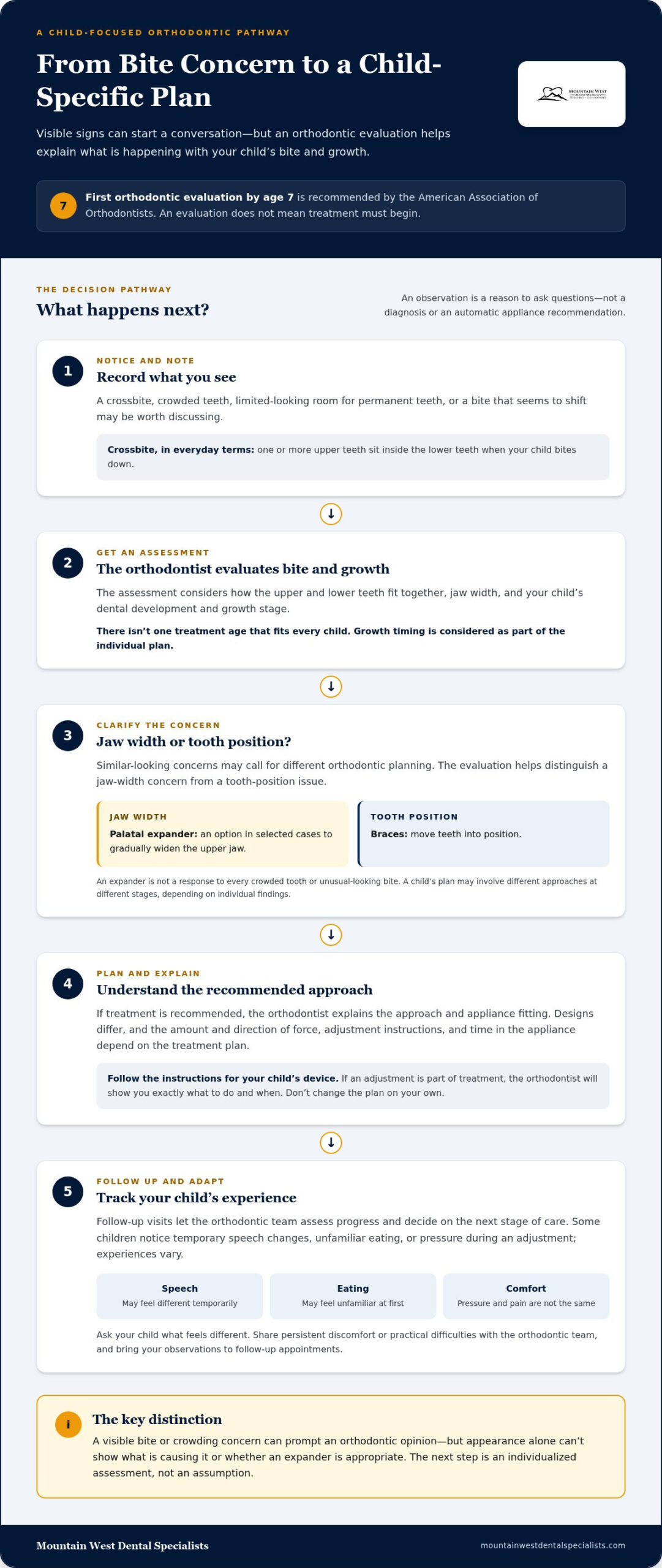
The American Association of Orthodontists recommends a first orthodontic evaluation by age 7. That visit doesn’t mean treatment has to begin. It gives an orthodontist a chance to assess your child’s bite and growth, then explain whether monitoring or treatment makes sense. The next step is a personalized evaluation, not a symptom checklist.
In this guide, you’ll learn which signs may prompt an assessment, what an orthodontic evaluation and treatment plan can involve, and what children may experience as they adjust to an expander. At Mountain West Dental Specialists, pediatric and orthodontic care come together in one family-focused Las Vegas practice, where careful planning can help you understand your child’s options.
Key Takeaways
- A crossbite, crowding, or a shifting bite may be worth discussing, but signs alone can’t tell you whether your child needs an expander.
- Learn how an expander may guide upper-jaw width and what temporary changes in speech or eating your child could experience.
- Jaw-width concerns and tooth-position concerns can call for different orthodontic planning. An assessment helps distinguish them.
- Before an evaluation for a palatal expander for kids Las Vegas, note what you’ve observed and bring your child’s questions.
- Mountain West Dental Specialists brings pediatric and orthodontic care together with Dr. Keaton Tomlin and orthodontist Dr. Allison Tomlin.
Palatal Expander for Kids in Las Vegas: What It Does and Which Signs May Matter
If your child’s teeth don’t seem to meet evenly, it’s natural to wonder whether the upper jaw is developing as expected. A palatal expander is one orthodontic option used in selected cases to widen the upper jaw. It isn’t a response to every crowded tooth or unusual-looking bite. A parent’s observation is a reason to ask questions, not a diagnosis.
A palatal expander is an orthodontic appliance that gradually widens the upper jaw; braces move teeth into position. An orthodontist may consider an expander when jaw width is part of the concern, while braces address tooth position. A child’s plan may involve different approaches at different stages, depending on individual findings. For a general overview of the appliance and its use in orthodontics, see Palatal Expander on Wikipedia.
What concerns might lead a parent to ask about an expander?
A crossbite is one reason to seek an orthodontic opinion. In everyday terms, it’s when one or more upper teeth sit inside the lower teeth as your child bites down, rather than outside them. You might notice this when the teeth meet, but appearance alone doesn’t reveal what’s causing the bite or which treatment, if any, is appropriate.
Crowding or the impression that permanent teeth have limited room can also be worth mentioning. These observations don’t confirm that the upper jaw is narrow, and they don’t automatically mean an expander is needed. An orthodontist assesses how the upper and lower teeth relate to each other and considers jaw width in context. That distinction keeps a visible sign from turning into an assumption about treatment.
Why does growth timing matter for children?
Children’s jaws and teeth change as they grow, so an orthodontist considers development when discussing whether and when to treat. Growth stage can influence how an approach is planned, but there isn’t one treatment age that fits every child. A concern may call for an evaluation and a discussion of options, rather than an immediate appliance.
During an assessment, the orthodontist looks at how the bite fits together and considers relevant growth factors alongside your child’s dental development. This helps distinguish a jaw-width concern from a tooth-position issue, which may need different planning. An evaluation is a way to understand your child’s situation, not an automatic commitment to treatment.
If you’re researching a palatal expander for kids Las Vegas families may encounter, focus on the question behind the visible sign: what is happening with this child’s bite and growth? For broader context on orthodontic evaluations and care, explore this Las Vegas orthodontist guide. Bringing your observations to an orthodontist can turn uncertainty into a clearer, child-specific discussion.
How a Palatal Expander Works and What Your Child May Experience
Understanding what treatment may feel like can help your child approach it with less uncertainty. An expander’s purpose is to guide upper-jaw widening when that approach fits the treatment plan. Appliance designs differ, so don’t assume your child’s device will look or work exactly like someone else’s.
Depending on its design, an orthodontic appliance is positioned in the mouth to apply gradual pressure that guides the upper jaw wider as a child grows. The amount and direction of force, how the appliance is adjusted, and how long it stays in place depend on the orthodontist’s plan. This process is different from simply moving teeth into a new position.
What happens when an expander is fitted and adjusted?
Treatment generally begins with an examination and planning. The orthodontist considers your child’s bite and the concern being addressed, then explains the recommended approach and how the appliance will be fitted. Follow-up visits let the team assess progress and decide on the next stage of care.
Instructions depend on the appliance and your child’s plan. If an adjustment is part of treatment, the orthodontist will show you exactly what to do and when. Don’t rely on instructions meant for another child or device, and don’t change the plan on your own. Ask the team to demonstrate any steps and explain what to do if you’re unsure.
Can an expander affect eating, speaking, or comfort?
It can take time to get used to having an appliance in the mouth. Some children notice a temporary change in speech or find eating unfamiliar at first. Others may describe pressure during an adjustment. Pressure and pain aren’t the same experience, and children’s responses vary. Your child may need patience and reassurance while adapting.
Keep the conversation open. Ask your child what feels different, and share persistent discomfort or practical difficulties with the orthodontic team so they can guide you based on the appliance and treatment plan. Don’t assume every concern is part of normal adjustment, but remember that an unfamiliar feeling doesn’t automatically mean something is wrong.
Before treatment begins, agree on a simple way for your child to tell you what they’re experiencing, such as whether talking, eating, or the appliance itself feels uncomfortable. Bring those observations to follow-up appointments. Clear communication helps the orthodontist understand how your child is adapting and whether the plan needs attention.
If you’re considering a palatal expander for kids Las Vegas, an individualized conversation can clarify what the appliance is intended to do and what support your child may need. Discuss your child’s orthodontic questions with the team at Mountain West Dental Specialists.
Does Your Child Need a Palatal Expander or Another Orthodontic Approach?
It’s natural to look for a clear answer when you notice something about your child’s bite. The same visible concern can have different causes, so an orthodontist looks beyond appearance to understand what’s happening with the jaw and teeth. Knowing the questions considered during an assessment can help you follow the decision without turning observations into a home diagnosis.
Appliance choice depends on examination findings, growth, and treatment goals. Expansion is considered when the plan addresses upper-jaw width. Braces focus on tooth position. Those concerns can overlap, but they aren’t interchangeable.
This isn’t a scoring chart. Crowded teeth alone don’t determine treatment. Some children with crowding may not need expansion, while an orthodontist may identify other factors that aren’t obvious from a parent’s view. The assessment brings the details together before options are discussed.
How does an orthodontist decide whether expansion fits?
The orthodontist examines the bite, upper jaw, tooth spacing, and your child’s development as a whole. Imaging may support treatment planning when clinically appropriate. At Mountain West Dental Specialists, Cone Beam CT imaging supports greater precision, safety, and confidence in treatment planning. It’s one part of a careful evaluation, not a stand-alone answer.
Could braces or another approach still be part of the plan?
Yes. An expander and braces address different considerations, and they may be recommended at different stages if both jaw width and tooth position need attention. Expansion doesn’t guarantee that braces will be unnecessary later, prevent extractions, or shorten treatment. The orthodontist can explain the purpose of each recommended step and how it fits your child’s goals.
If you’re researching a palatal expander for kids Las Vegas families may consider, bring your questions to an orthodontic evaluation rather than relying on a checklist. A clear explanation of the findings can help you understand whether expansion, another approach, monitoring, or a combination of care best fits your child.
How to Prepare for a Child’s Palatal Expander Evaluation in Las Vegas
A little preparation can make an orthodontic evaluation more organized for you and your child. You don’t need to arrive with a diagnosis or know which treatment is right. Your observations, questions, and your child’s perspective give the orthodontist useful context for assessing the bite and relevant growth factors before discussing options.
Before the visit, jot down what you’ve noticed and bring relevant dental history or previous orthodontic recommendations. A short note on your phone is enough. Consider this checklist:
- The concern: Describe the bite or spacing issue in your own words, such as “the top teeth seem to sit behind the bottom teeth when my child bites.”
- When you notice it: Note whether it appears during meals, in photos, or whenever your child closes their teeth together.
- Your child’s questions: Give your child a chance to mention anything they’re curious or worried about.
- Relevant history: Bring dental information that may help explain previous care, along with any earlier orthodontic recommendations.
What should parents bring up during the evaluation?
Share your observations without trying to interpret their cause. Then ask what the examination shows and which options, if any, fit your child’s needs. You may want to discuss how growth affects timing, what follow-up could involve, and how to support your child if treatment is recommended. If an explanation feels unfamiliar, ask for it in everyday language. You deserve to understand the reasoning, not just the name of an appliance.
The orthodontist will assess how the teeth meet and consider your child’s development before outlining next steps. An evaluation is a chance to learn about your child’s bite and growth, not an automatic commitment to begin treatment. You can also ask what the team will monitor if treatment isn’t recommended right away.
How can you help your child feel ready?
Keep your explanation simple and reassuring: “We’re going to have someone look at how your teeth fit together and answer our questions.” Avoid promising that the visit won’t feel strange or that treatment won’t be needed. Instead, let your child know they can speak up and ask questions. Listening without dismissing a worry can help them feel included.
After the evaluation, talk through what you learned together and write down any follow-up questions. If you’re considering a palatal expander for kids Las Vegas families may encounter, a personalized assessment can replace guesswork with clear information about your child’s options. Arrange an orthodontic evaluation in Las Vegas with Mountain West Dental Specialists.
Discuss Your Child’s Palatal Expander Options with a Las Vegas Orthodontist
If you’re unsure what a bite concern means for your child, an orthodontic evaluation can give you a clearer, child-specific picture. The goal is to understand what the examination shows and discuss appropriate options, not to assume an expander is automatically needed. Bring your questions and leave with a better sense of what, if anything, may be useful next.
Mountain West Dental Specialists is a Tomlin family-owned Las Vegas practice with pediatric and orthodontic care under one roof. Dr. Keaton Tomlin is a pediatric dentist, and Dr. Allison Tomlin is an orthodontist. This coordinated setting offers a family-focused way to discuss your child’s dental development and orthodontic needs.
What makes a family-focused orthodontic evaluation reassuring?
A thoughtful evaluation starts with your child’s individual bite, development, and concerns. The orthodontist can explain what the findings mean in clear language, how different options relate to your child’s needs, and whether monitoring or treatment is appropriate. Planning is personalized. No appliance or outcome should be assumed before the assessment.
Technology can contribute to planning when it’s appropriate for the evaluation. Cone Beam CT imaging supports greater precision, safety, and confidence in treatment planning. It helps inform the clinical picture; it doesn’t replace the orthodontist’s examination or promise a particular result.
Families can also discuss practical considerations as part of planning. Mountain West Dental Specialists offers flexible pricing options, including zero-interest in-house financing. The team can explain the available options as you consider the care recommended for your child, without making the discussion about a one-size-fits-all treatment plan.
What is the next step for Las Vegas families?
If you have questions about your child’s bite or jaw, scheduling an evaluation is a practical next step. You don’t need to decide in advance whether an expander is the answer. Bring your observations and your child’s questions. The appointment is an opportunity to understand the findings and talk through options together.
For parents researching a palatal expander for kids Las Vegas, a conversation with an orthodontist can replace online guesswork with guidance based on the child in front of them. Call Mountain West Dental Specialists at (702) 899-3600 to discuss an evaluation. When you’re ready, schedule an orthodontic evaluation and take the next step at a pace that feels comfortable for your family.
Take the Next Step with Confidence
You don’t have to decide whether an appliance is right for your child before speaking with an orthodontist. Use the evaluation to understand what your child’s bite needs now and what can be monitored over time. That perspective can make the next decision feel more manageable, whatever the assessment recommends.
If you’re considering a palatal expander for kids Las Vegas families may ask about, choose a next step that gives your child room for an individualized conversation. Bring forward the questions that matter most to your family, and take time to understand the options before making a treatment decision.
Arrange your child’s orthodontic visit with Mountain West Dental Specialists and begin with a clear, supportive discussion. One thoughtful conversation can help your family move forward with greater confidence.
Frequently Asked Questions
Is a palatal expander painful for kids?
Children’s experiences vary. Your child may notice pressure or a temporary adjustment sensation, especially around changes to the appliance, rather than feeling the same thing throughout treatment. Children may describe discomfort differently. If your child has ongoing or concerning discomfort, share what they’re experiencing with the orthodontic team. The team can explain the instructions for your child’s appliance and advise you on appropriate next steps.
How long does a child usually wear a palatal expander?
There isn’t one wear duration that applies to every child. The timeline depends on your child’s growth, the orthodontic findings, the appliance selected, and the overall treatment plan. At the planning visit, ask how the team will track progress and what follow-up appointments are expected. The orthodontist can explain the anticipated schedule for your child and discuss any changes if the plan needs to be adjusted.
Can a palatal expander change a child’s speech?
Some children notice temporary speech changes as they get used to an appliance, while others have a different experience. Notice whether particular sounds or everyday conversations seem difficult for your child, without assuming the cause. If speech concerns persist or interfere with your child’s comfort, bring them up at follow-up. The orthodontic team can offer guidance based on the appliance and your child’s adjustment.
What foods should kids avoid with a palatal expander?
Food guidance depends on the appliance your child has and the orthodontist’s instructions. Rather than relying on a universal avoid list, ask which foods could damage the device or become caught in its parts. Keep the care instructions handy so everyone helping with meals can follow the same guidance. If the appliance appears damaged after eating, contact the orthodontic team for advice instead of trying to fix it yourself.
What happens if a child’s palatal expander feels loose?
Don’t force, adjust, or remove the appliance yourself. Contact the orthodontic team for instructions, especially if it has shifted, come detached, or is causing discomfort. Describe what you noticed and when it started, then follow the team’s guidance. Avoid testing the appliance or attempting a home repair, since the orthodontist needs to advise you based on your child’s specific device.
Can a child still need braces after using a palatal expander?
Yes, braces may still be part of a child’s care because an expander and braces address different orthodontic considerations. Expansion doesn’t guarantee braces won’t be needed later. Further treatment depends on your child’s bite, tooth positions, development, and treatment goals. Ask the orthodontist how the plan may evolve as your child grows and responds to care. That conversation can help you understand the purpose of each stage without assuming the final plan in advance.
At what age should a child be evaluated for orthodontic concerns?
The right timing depends on your child’s development and the concern being assessed, so one age shouldn’t be treated as a diagnosis or deadline for treatment. Mountain West Dental Specialists’ general guidance recommends an orthodontic visit around age seven. An evaluation can help clarify what’s happening, but it doesn’t automatically mean an appliance or treatment is needed. If you’re considering a palatal expander for kids Las Vegas families ask about, an individualized assessment can help answer your questions.