
What if your child’s braces timeline depends less on age and more on their teeth and bite? If you’re wondering how long do kids wear braces, you’re not alone. It’s natural to want an estimate when treatment may affect school schedules, sports, and family routines. The answer depends on the individual treatment plan, so there isn’t one countdown that fits every child.
An orthodontist considers the concern being addressed, your child’s development, and how treatment progresses. Following care instructions and attending monitoring visits also matter. A personalized assessment is a more useful starting point than comparing your child’s progress with a sibling’s or friend’s.
This guide explains the usual treatment timeline, why it can change, and how practical habits at home can support steady progress. Mountain West Dental Specialists provides orthodontic care for children in Las Vegas, with treatment planned around each child’s needs. Knowing what to expect can help your family prepare while keeping school, activities, and daily routines in view.
Key Takeaways
- Many children wear braces for about 18 to 24 months, but how long do kids wear braces depends on individual treatment needs and progress.
- Learn what typically happens from the first orthodontic evaluation through active treatment and brace removal.
- Understand why the type and complexity of a child’s tooth or bite concerns can matter more than age alone.
- Find out which family habits can support progress and what to do if an appliance problem comes up.
- Prepare for an orthodontic evaluation by considering your child’s concerns, goals, and possible treatment stages.
How long do kids wear braces? Understand the usual timeline
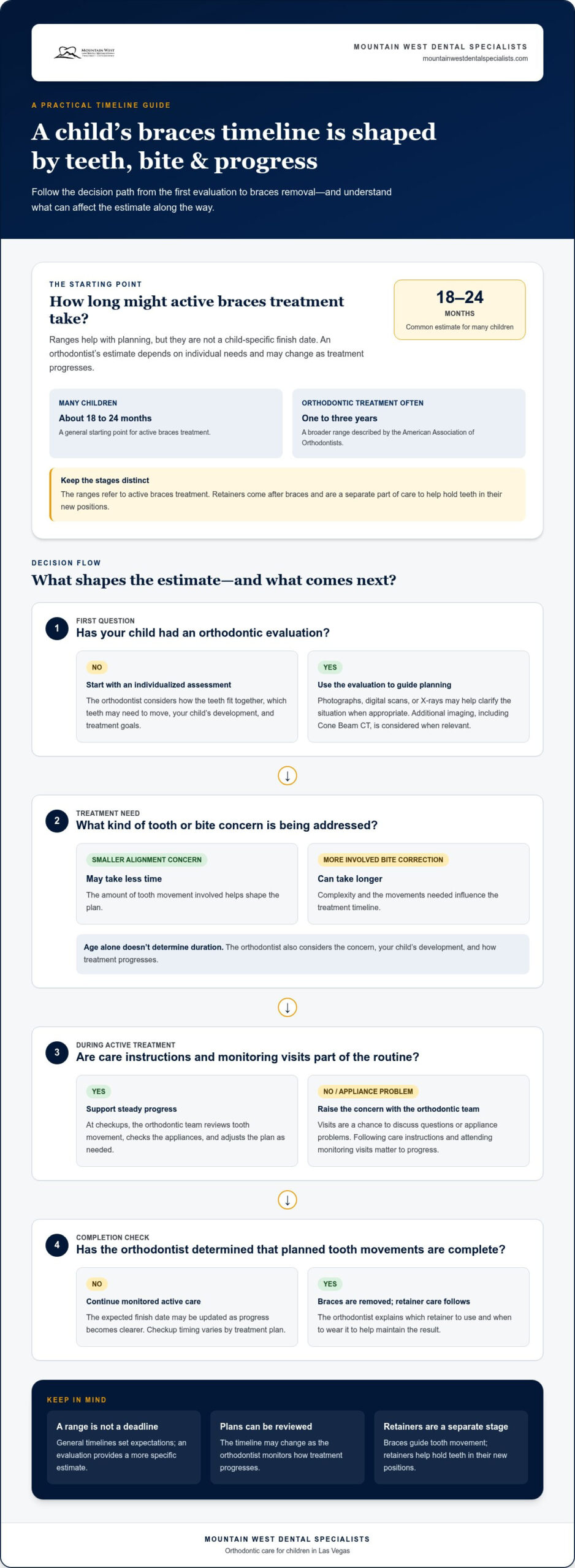
Many children wear braces for about 18 to 24 months. Treat that as a general starting point, not a promise or a child-specific prediction. Some plans take less time, while others take longer, depending on the teeth and bite concerns being addressed and how treatment progresses.
The American Association of Orthodontists describes treatment duration as variable, with orthodontic treatment often taking one to three years. These ranges can help families set expectations, but they don’t identify a child’s exact finish date. A general range describes what’s common; an orthodontist’s estimate takes your child’s needs into account and may change as treatment progresses.
What is the typical braces timeline for children?
The 18-to-24-month estimate refers to active braces treatment, when brackets and wires guide teeth into position. A smaller alignment concern may take less time, while a more involved bite correction can take longer. Braces apply controlled pressure to move teeth; this overview of orthodontic braces explains the appliance and its basic function.
After braces come off, retainers help hold teeth in their new positions. Retainer wear is a separate part of care and isn’t included in the active-treatment estimate. Your child’s orthodontist will explain which retainer to use and when to wear it. Keeping these stages separate can make the overall process clearer: braces guide tooth movement, while retainers help maintain the result.
When can a family expect a more specific estimate?
A more specific estimate comes after an orthodontic evaluation. The orthodontist considers how the teeth fit together, which teeth need to move, your child’s development, and the goals of treatment. Depending on the clinical assessment, records such as photographs, digital scans, or X-rays may help clarify the situation and guide planning.
At Mountain West Dental Specialists, an individualized assessment helps families understand the recommended treatment and its likely stages. If you’re exploring orthodontic care in Las Vegas, the practice’s guide to choosing the best orthodontist in Las Vegas can help you consider what matters in a provider relationship. Bring your questions and concerns to the evaluation, including how the estimate may be reviewed during treatment. Think of the timeline as a planning guide, not a fixed deadline.
How braces treatment progresses from the first assessment to removal
Knowing the main treatment milestones can make braces easier to plan around, even though each child’s path is different. If you’re asking how long do kids wear braces, it helps to understand what happens along the way, not just the estimated finish date. Braces move teeth gradually under professional monitoring, with the plan guided by your child’s needs and progress.
The steps below provide a general framework. The records gathered and the timing of visits can vary according to the orthodontic plan.
- Assessment and conversation: The orthodontist examines your child’s teeth and bite, listens to your concerns, and discusses treatment goals. This is a good time to raise practical questions about school, meals, sports, and other activities.
- Records and treatment planning: If clinically appropriate, the orthodontic team gathers records such as photographs, digital scans, or X-rays to assess tooth positions and plan movement. Additional imaging, including Cone Beam CT, is considered when relevant to the individual assessment. The team explains the recommended approach and what to expect before treatment begins.
- Braces placement and active care: When the plan is ready, braces are placed and your child follows the care instructions at home. Periodic checkups allow the orthodontist to assess tooth movement and make adjustments as needed. The team can review progress, address concerns, and refine the plan if the teeth aren’t responding as expected.
- Completion and next steps: When the orthodontist determines that the planned tooth movements are complete, braces are removed. The team then explains how to care for the newly aligned teeth, including the retainer plan to help maintain their position.
What happens before braces are placed?
The first visit is an opportunity to assess more than one crooked tooth. The orthodontist considers the bite, tooth positions, and your child’s needs, then explains possible treatment goals. Diagnostic records are selected according to clinical need, so not every child needs the same images or tests. You can also discuss how treatment may fit into your family’s routine and ask what information will help shape the estimate.
What happens during active braces treatment?
At checkups, the orthodontic team reviews how teeth are moving and whether the appliances are working as intended. Adjustments may change the pressure or direction of movement. These visits are also a chance to discuss questions or appliance problems. Visit timing varies by treatment plan, and the expected finish date may be updated as your child’s progress becomes clearer.
For families in Las Vegas, an individualized orthodontic assessment with Mountain West Dental Specialists can clarify the next steps and connect the treatment plan to your child’s needs.
Why some children wear braces longer than others
Two children can begin orthodontic treatment at a similar age and still have different timelines. Age alone doesn’t determine how long treatment takes. The orthodontist also considers what needs to change, the amount of tooth movement involved, your child’s development, and how treatment progresses over time.
Treatment duration depends on clinical and practical factors, not a child’s age alone. A child’s teeth and jaws are still developing, but growth affects treatment planning differently for each child. The orthodontist assesses whether growth is relevant to the bite or alignment concern, rather than assuming that a younger or older child will finish sooner.
How do bite concerns and case complexity affect treatment time?
A plan for mild crowding may involve different tooth movements from a plan to correct how the upper and lower teeth meet. Some children need several teeth guided into position; others have concerns involving spacing, the bite, or more than one area. Those differences shape treatment goals and steps, so the same timeline can’t be assigned to every child.
The orthodontist builds the plan around the movements needed and monitors how the teeth respond. Treatment may take longer if the original goals are more involved or progress calls for changes. An individual assessment is the way to identify which factors apply to your child.
Can missed visits or broken braces change the timeline?
Scheduled monitoring visits give the orthodontic team a chance to assess tooth movement and make adjustments. When visits are missed, the team has fewer opportunities to check progress and keep the plan moving as intended. A damaged bracket or wire may need attention before treatment can continue as planned. Let the orthodontic team know about appliance problems so they can advise you on next steps.
A disruption doesn’t mean anyone has failed. Children are active, schedules get busy, and appliances can be damaged. The team can explain whether an issue affects the plan and whether the estimate needs to be updated.
Other practical factors can influence progress, too. Following the orthodontist’s instructions helps appliances work as planned. Inconsistent wear of prescribed elastics or other appliances may affect the intended tooth movements. With braces, caring for the appliance and reporting problems helps the team respond appropriately.
- What needs correction: The number and type of tooth or bite movements affect treatment goals.
- How the child develops: Growth and changing teeth matter when they’re clinically relevant to the individual plan.
- How treatment unfolds: Progress, attendance, and appliance issues can lead the team to adjust the sequence or estimate.
If your child’s timeline changes, ask the orthodontist what has changed in the treatment plan and what the next milestone is. Understanding the reason can help your family focus on the steps ahead rather than comparing your child’s progress with another child’s.
How parents can help keep a child’s braces treatment on track
Parents can’t control every clinical factor that affects treatment, and a child’s progress isn’t a test of how well a family is doing. Still, support with daily care, instructions, and appointments helps the orthodontic team monitor treatment and respond when something changes. If you’re wondering how long do kids wear braces, these manageable habits are more useful than trying to rush the process.
Which daily habits support orthodontic treatment?
Help your child follow the oral hygiene routine recommended by the orthodontic team. Brushing carefully around braces and cleaning as instructed supports a healthy mouth during treatment. Make the routine predictable, such as brushing after breakfast and before bed, so it’s easier to remember.
Follow the team’s appliance-care guidance, including advice about foods that could damage braces. If a bracket or wire becomes loose or broken, contact the orthodontic team for instructions instead of trying to repair or adjust it at home. Explain what happened and whether your child is uncomfortable so the team can guide you on the next step.
- Use your child’s care plan: Follow the orthodontist’s directions for cleaning, elastics, and other appliances rather than relying on general online tips.
- Make the routine predictable: Keep oral-care supplies where your child can use them and build brushing into familiar daily habits.
- Speak up about problems: Tell the team about a damaged appliance, persistent discomfort, or difficulty following an instruction.
How can families make appointments easier to manage?
Orthodontic visits are part of treatment because they let the team review progress and adjust care when needed. Keep scheduled appointments and, where practical, note visit dates alongside school, activities, and family commitments. If a conflict comes up, contact the practice about rescheduling rather than simply missing a checkup.
Help your child prepare to describe what has changed since the last visit. A short note on a phone or calendar can capture questions about comfort, eating, cleaning, or an appliance issue before they’re forgotten. Your child doesn’t need to have all the answers; sharing what they’ve noticed gives the orthodontic team useful context.
Small disruptions happen. If your child has missed an instruction, damaged an appliance, or finds a care step difficult, bring it up without blame. The team can clarify the recommendation and discuss whether the treatment plan needs attention. Consistency helps, but families aren’t expected to control every part of tooth movement or predict the exact finish date.
For individualized orthodontic treatment for children, learn about orthodontic care at Mountain West Dental Specialists in Las Vegas.
What to expect when discussing your child’s braces timeline in Las Vegas
An orthodontic evaluation can turn a broad question about braces into a conversation about your child’s needs. If you’re searching “how long do kids wear braces,” bring that question along with any concerns about your child’s teeth, bite, or daily routine. The orthodontist can explain the treatment goals, possible stages, and factors that shape the estimated timeline.
Mountain West Dental Specialists is a family-owned practice led by Dr. Keaton Tomlin and Dr. Allison Tomlin. The practice provides orthodontic care planned around each child. An estimate is a guide, not a fixed deadline. As treatment progresses, the orthodontic team reviews how your child’s teeth are responding and can revisit expectations when needed.
What questions can parents bring to an orthodontic evaluation?
You don’t need to arrive with technical knowledge. A few practical questions can help you understand the plan and prepare for what comes next. Consider asking:
- Which features of my child’s teeth or bite have the greatest effect on the estimated duration?
- What treatment stages do you expect, and what is the goal of each one?
- How will the team monitor progress, and when might we revisit the estimate?
- How could treatment fit around school, sports, music, or other regular activities?
- What daily care instructions should our family be ready to follow?
Share what matters to your family, too. If your child has a busy activity schedule or feels worried about discomfort, raising that early gives the orthodontist a chance to explain what to expect and discuss relevant care instructions. Writing down questions beforehand can make the visit feel less overwhelming.
How does an individualized plan help set expectations?
A child’s estimate should reflect their teeth, bite, development, and treatment goals, rather than an average alone. The orthodontic team uses examination findings and diagnostic records selected for the child’s clinical needs to build a plan. Cone Beam CT imaging may be considered when clinically appropriate and relevant to planning; it isn’t automatically needed for every child.
Ask how the team will explain progress and what changes could lead to a revised estimate. This helps you distinguish a planned adjustment from a concern and gives your family a clearer way to follow treatment. If you’re comparing care options in Las Vegas, consider how clearly the orthodontist explains your child’s needs, treatment stages, and ongoing monitoring. A guide to choosing an orthodontist can also help families think through what they value in care.
You don’t need to predict the finish date before taking the first step. Schedule an orthodontic evaluation with Mountain West Dental Specialists to discuss your child’s needs and receive an individualized treatment plan.
Take the next step with confidence
Your child doesn’t need to know every detail of treatment before getting started. A first conversation can turn questions about how long do kids wear braces into a clearer understanding of what may fit your child’s needs and daily life.
As you prepare, consider what would help your child feel comfortable and involved. You might talk together about questions they want answered, routines they’re concerned about, or what they hope to learn at an evaluation. Feeling heard can make the process more manageable for both of you.
Mountain West Dental Specialists welcomes families seeking orthodontic care for children in Las Vegas. Schedule an orthodontic evaluation for your child to discuss their needs and possible next steps with the team.
With a thoughtful plan and caring support, your family can approach treatment one step at a time.
Frequently Asked Questions
Is 12 too young to get braces?
No, age 12 isn’t automatically too young for braces. Many children are assessed around this stage, but readiness depends on tooth development, the bite, and orthodontic goals, not a birthday alone. An evaluation can clarify whether treatment is appropriate now or whether monitoring makes more sense. If you’re asking how long do kids wear braces, the same assessment helps set an estimate for your child.
Can a child get braces if they still have baby teeth?
Yes, a child may receive orthodontic treatment while some baby teeth remain if an orthodontist finds a specific reason to address a developing concern. That doesn’t mean every child with baby teeth needs braces or that treatment will look the same as it does for a teenager. The orthodontist can explain whether early treatment is suitable, what it aims to address, and how the plan relates to incoming permanent teeth.
Do kids need to wear a retainer after braces?
Retainers are commonly recommended after braces to help keep teeth from shifting as they settle into their new positions. The orthodontist will explain the type of retainer and when your child should wear it. Help your child keep it in its case when it’s out of their mouth instead of wrapping it in a napkin at lunch. If it feels uncomfortable or gets lost, contact the orthodontic team for guidance.
Are braces painful for children?
Braces can cause temporary soreness or pressure, especially after placement or an adjustment, but children experience this differently. Softer foods may be more comfortable while the mouth adapts, and orthodontic wax may help if a bracket rubs, when used as directed. Follow the orthodontist’s advice about comfort care. If pain is severe, persistent, or linked to an injury or damaged appliance, contact the orthodontic team rather than waiting for the next visit.
Can my child play sports while wearing braces?
Yes, children can generally continue playing sports with braces, but protecting the mouth is important. Ask the orthodontist which mouthguard is appropriate for your child’s appliance and sport, since a poor fit may not provide suitable protection. Keep the mouthguard clean and bring it to appointments if its fit changes as teeth move. After a collision or blow to the face, follow the sport’s safety guidance and contact the orthodontic team if braces are damaged or your child has pain.
What should we do if a bracket breaks during treatment?
If a bracket comes loose, let the orthodontic team know and describe whether it’s still attached to the wire or causing irritation. Don’t pull it off, bend the wire, or use household glue. If the bracket is rubbing, orthodontic wax may help protect the area while you wait for instructions. Keep the next scheduled visit unless the team advises otherwise, and ask whether the problem needs attention sooner.
Are clear aligners always faster than braces for kids?
No, clear aligners aren’t always faster than braces. Treatment time depends on your child’s orthodontic needs, the planned tooth movements, and whether the aligners are worn as directed. For example, a child who regularly leaves aligners out may not follow the intended treatment sequence. Aligners also aren’t suitable for every case. An orthodontic evaluation in Las Vegas can help determine which option fits your child’s needs and routine.