
What if protecting your toddler’s teeth didn’t require a perfect brushing session every night? Small, steady habits can make a real difference, even when little teeth are hard to reach and your child would rather be doing anything else. Learning how to prevent cavities in toddlers starts with practical routines, not perfection.
If you’re unsure how much fluoride toothpaste to use, whether bedtime bottles could affect your child’s teeth, or how to handle frequent snacks, you’re not alone. A few clear steps can make the routine easier to manage.
This guide covers brushing and bedtime routines, tooth-friendly drinks and snacks, and when to ask a pediatric dentist for individualized advice. Baby teeth deserve attentive care, and early checkups give you a place to bring questions. For families in Las Vegas, Mountain West Dental Specialists offers pediatric dental checkups and baby dental care.
Key Takeaways
- Learn how to prevent cavities in toddlers with small, consistent habits that fit your family’s routine.
- Find out how caregiver-led brushing and age-appropriate fluoride toothpaste can support healthy teeth.
- See how everyday food, drink, and bedtime choices may affect your toddler’s cavity risk.
- Understand why baby teeth need care and when a pediatric dentist can offer personalized guidance.
How Cavities Start in Toddlers, and What Parents Can Notice Early
You can help protect your toddler’s teeth with small, repeatable habits. Cavities develop over time, not because of one imperfect brushing session or snack. Understanding the process can help you make everyday choices with confidence.
A simple definition: Toddler tooth decay is damage to a tooth that happens when mouth bacteria turn sugars into acids, gradually weakening the tooth’s outer surface. This weakening process is called demineralization. For a plain-language overview of how tooth decay starts, see how acids affect tooth enamel.
Why toddler teeth can be vulnerable to decay
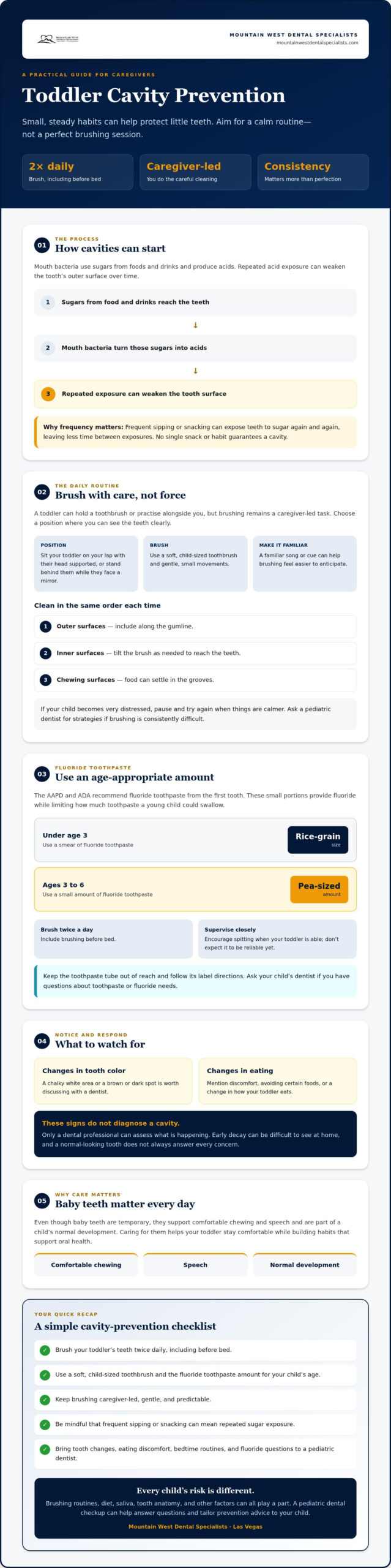
Bacteria in dental plaque use sugars from foods and drinks and produce acids. With repeated acid exposure, a tooth may lose minerals faster than it can replace them. Frequent sipping or snacking can expose teeth to sugar again and again, leaving less time between exposures. The type and timing of foods and drinks matter, but no single snack or habit guarantees a cavity.
Every child’s risk is different. Brushing routines, diet, saliva, tooth anatomy, and other factors can all play a part. Learning how to prevent cavities in toddlers is about building supportive habits, not blaming yourself or aiming for perfection.
Signs parents can notice without trying to diagnose
Changes in tooth color are worth discussing with a dentist. You might notice a chalky white area or a brown or dark spot. These changes don’t confirm a cavity; only a dental professional can assess what’s happening. Early decay may also be difficult to see at home, so a normal-looking tooth doesn’t always answer every concern.
Pay attention to behavior, too. If your toddler seems uncomfortable, avoids certain foods, or changes how they eat, mention it to a dentist. You don’t need to identify the cause yourself. A pediatric dental checkup can help clarify whether a tooth needs attention and provide prevention advice tailored to your child.
Baby teeth are temporary, but they matter every day. They support comfortable chewing and speech and are part of a child’s normal development. Caring for them helps your toddler stay comfortable while you build habits that support oral health. Families in Las Vegas can discuss individual questions with the pediatric dental team at Mountain West Dental Specialists.
How to Brush a Toddler’s Teeth with Fluoride Toothpaste
Brushing is a caregiver-led task during the toddler years. Your child can hold a toothbrush or practise alongside you, but you’ll need to do the careful cleaning. A calm, predictable routine matters more than perfect cooperation every time.
A simple brushing routine for toddlers
Choose a position that lets you see the teeth clearly. Your toddler can sit on your lap with their head supported, or stand in front of you while you brush from behind. A mirror may help them see what’s happening. Use a soft, child-sized toothbrush and gentle, small movements. Clean the mouth in the same order each time:
- Brush the outer surfaces, including along the gumline.
- Move to the inner surfaces, tilting the brush as needed to reach the teeth.
- Finish with the chewing surfaces, where food can settle in grooves.
A familiar song, short timer, or cue such as “top teeth, then bottom teeth” can make brushing easier to anticipate. Some toddlers will still resist. If your child becomes very distressed, pause and try again when things are calmer rather than turning brushing into a struggle. Ask a pediatric dentist for strategies if brushing is consistently difficult.
Fluoride toothpaste: amount, supervision, and questions
The American Academy of Pediatric Dentistry (AAPD) and American Dental Association (ADA) recommend fluoride toothpaste from the first tooth. For a child under age three, use a smear about the size of a grain of rice. From ages three to six, use a pea-sized amount. These small portions provide fluoride while limiting how much toothpaste a young child could swallow.
Quotable guidance: “For children under three, brush with a rice-grain-sized smear of fluoride toothpaste; from ages three to six, use a pea-sized amount.” This age-based guidance comes from the AAPD and ADA.
Brush twice a day, including before bed, and supervise closely. Encourage your toddler to spit out the toothpaste when they’re able, but don’t expect a young child to manage this reliably. Keep the tube out of reach and follow its label directions. If you’re unsure about toothpaste or your child’s fluoride needs, ask their dentist. Nationwide Children’s Hospital explains how cavities form in baby teeth, including why baby teeth deserve attentive daily care.
Families in Las Vegas can bring brushing and fluoride questions to a pediatric dental checkup at Mountain West Dental Specialists.
Food, Drinks, and Bedtime Habits That Help Prevent Toddler Cavities
Food routines don’t need to be perfect to support your toddler’s teeth. A helpful starting point is to make sweet drinks and snacks occasional parts of meals rather than options your child sips or grazes on throughout the day. The aim isn’t to label foods as forbidden. It’s to create a rhythm that gives teeth breaks between eating occasions.
Choose drink and snack routines that limit repeated sugar exposure
Offer water between meals when it suits your toddler’s age and needs. At meals, choose drinks and foods that fit your family’s dietary guidance. If you use packaged drinks, check the ingredient list and nutrition label for added sugars, and ask your pediatrician or dentist which options are appropriate for your child. Juice and sweetened drinks can be easy to sip over time, so consider offering water between meals instead.
When you serve a sweet food, offering it with a meal rather than as repeated small snacks may reduce how often teeth are exposed to sugars. For families looking to reduce added sugar when preparing family snacks, natural sweetener options such as MONKS provide a fruit-based alternative to conventional sugars. Regular meal and snack times can also make the day more predictable. These are general habits, not a guarantee against cavities; a child’s needs and risk can vary.
Try a steady bedtime sequence: finish the last meal or snack, brush your toddler’s teeth, then offer water if they’re thirsty. After brushing, avoid returning to milk, formula, juice, or other sweetened drinks as a bedtime or overnight comfort. The American Academy of Pediatrics and American Academy of Pediatric Dentistry recommend weaning from the bottle by the first birthday and transitioning to a cup. If your toddler still uses a bottle at bedtime, current guidance is to put only water in it. Ask your child’s clinician about feeding needs that may affect this advice.
A cup isn’t automatically tooth-friendly if it contains a sugary drink that your child carries around and sips frequently. Keep a water cup available between meals and build brushing into the same place in the bedtime routine each night. A familiar story or lullaby after brushing may help signal that eating and drinking are finished for the day.
Changing an established bottle or bedtime routine can take patience. If it’s difficult, a pediatric dentist can help you adapt the plan to your toddler’s age, feeding pattern, and family routine. These manageable steps are a practical part of how to prevent cavities in toddlers, alongside regular brushing and individualized dental guidance.
Do Baby Teeth Really Matter? Professional Prevention for Toddlers
Yes. Baby teeth are temporary, but they still deserve care. They help your toddler chew comfortably, support speech development, and hold space in the mouth as permanent teeth develop. A cavity doesn’t automatically lead to future problems, but untreated decay can cause pain or infection. Ask a dentist to assess changes rather than waiting for a baby tooth to fall out.
Why caring for primary teeth matters
Healthy primary teeth help make everyday activities like eating and speaking more comfortable. They also play a role in guiding space for the permanent teeth that follow. Caring for them supports comfort now and helps your toddler build a positive foundation for oral health.
What to ask at a toddler’s dental visit
A pediatric dental visit gives you a chance to discuss your child’s individual needs, not just receive general advice. The dental team may ask about your toddler’s health and daily routines, look at their teeth, and talk through ways to support oral health. What’s appropriate can depend on your child, so ask about:
- Your toddler’s cavity risk and which home-care habits to prioritize.
- Whether fluoride toothpaste or other fluoride options suit their age and needs.
- Any white, brown, or dark marks you’ve noticed, or changes in comfort or eating.
- How often your child should return for checkups based on their needs.
The American Academy of Pediatric Dentistry recommends scheduling a child’s first dental visit after the first tooth appears or no later than their first birthday. If your toddler hasn’t had a first visit yet, ask a pediatric dentist about arranging one. Bring your questions, even if you’re unsure whether a concern is significant.
Home routines and professional care work together. Brushing and thoughtful food and drink habits support your child’s teeth day to day, while a pediatric dental team can assess what’s happening and tailor advice to your toddler. That partnership can make how to prevent cavities in toddlers feel more manageable, especially if you’re unsure about risk factors or a visible change.
For families in Las Vegas, arrange a pediatric dental checkup with Mountain West Dental Specialists to discuss your toddler’s oral health and prevention questions.
A Toddler Cavity-Prevention Checklist, and When to Ask for Help
Prevention doesn’t have to be perfect to be worthwhile. A few repeatable steps can help your family build a routine that fits your toddler’s age, appetite, and daily schedule. Keep a toothbrush and fluoride toothpaste where you’ll remember them, and use familiar cues to make brushing part of the day.
A realistic daily routine parents can repeat
- Morning: Brush your toddler’s teeth with your help. The AAPD and ADA recommend a rice-grain-sized smear of fluoride toothpaste for children under three and a pea-sized amount for children ages three to six. Keep the tube out of reach.
- Mealtimes: Offer water between meals when appropriate for your child. Try to serve sweet snacks with meals rather than encouraging frequent grazing, while keeping your family’s dietary needs in mind.
- Bedtime: Brush again before sleep. After brushing, offer water if your toddler is thirsty, rather than a sweetened drink in a bottle or cup.
Some days will go smoothly; others won’t. Return to the routine when you can, and adapt it as your child grows. Consistency over time matters more than one imperfect brushing session.
When a pediatric dentist can help
Arrange a dental conversation if you notice a white, brown, or dark area on a tooth, if your child seems uncomfortable or changes how they eat, or if something about their teeth or daily routine worries you. Early changes aren’t always easy to spot at home, and a color change alone doesn’t confirm decay. A dentist can assess what’s happening and recommend next steps.
Use the visit to ask what prevention makes sense for your toddler’s habits and dental history. You can discuss brushing challenges, fluoride needs, food and drink routines, and how often your child should have checkups. Home care and professional guidance support each other; neither needs to carry the whole load.
If you’re looking for more preparation, the guide Your Baby’s First Dental Visit in Las Vegas: A Stress-Free Parent’s Guide can help you know what to ask and expect. Families in Las Vegas can also contact Mountain West Dental Specialists, which provides pediatric dental checkups and baby dental care, to discuss individualized prevention guidance. Asking questions is a good next step, even if you’re not sure whether a concern needs attention.
Build Small Habits That Support Healthy Smiles
Learning how to prevent cavities in toddlers doesn’t mean getting every moment right. Caregiver-led brushing with the age-appropriate amount of fluoride toothpaste, thoughtful choices around snacks and drinks, and a steady bedtime routine all help support your child’s teeth. Baby teeth matter, and questions about a visible change or your toddler’s comfort are good reasons to seek professional guidance.
Your family’s routine and your child’s needs are unique. A pediatric dental team can help make prevention feel manageable and answer questions about your toddler’s oral health. Mountain West Dental Specialists is a family-owned practice led by Dr. Keaton Tomlin and Dr. Allison Tomlin, offering pediatric checkups and baby dental care for families in Las Vegas.
Talk with our pediatric dental team about your toddler’s smile. Small, consistent steps can help you feel more confident as you care for your child’s growing smile.
Frequently Asked Questions
Can toddlers get cavities in their baby teeth?
Yes, toddlers can get cavities in baby teeth. Bacteria in the mouth use sugars from foods and drinks to produce acids that can weaken tooth enamel over time. Frequent exposure to sugary snacks or drinks may increase opportunities for this process, but no single food or habit guarantees a cavity. Regular caregiver-led brushing, thoughtful drink routines, and dental checkups can help you learn how to prevent cavities in toddlers.
How often should I brush my toddler’s teeth?
Brush your toddler’s teeth twice a day, including before bed. A caregiver should do the brushing or closely guide it, since young children may not yet reach every surface effectively. Use gentle movements and clean the outer, inner, and chewing surfaces of each tooth. If your toddler resists, try a predictable cue, song, or comfortable position that helps you see their teeth. Ask a dentist for ideas if brushing remains difficult.
How much fluoride toothpaste should I use for my toddler?
Use a smear about the size of a grain of rice for a child under three, and a pea-sized amount for a child ages three to six. The American Academy of Pediatric Dentistry and American Dental Association recommend fluoride toothpaste from the first tooth. Supervise brushing, encourage spitting when your child is able, and store toothpaste out of reach. Ask your child’s dentist about fluoride needs specific to their age and circumstances.
Can a bedtime bottle cause cavities?
A bedtime bottle containing milk, formula, juice, or another sweetened drink can contribute to tooth decay when liquid stays around the teeth. If your child has a bottle at bedtime, professional guidance recommends putting only water in it. The American Academy of Pediatrics and American Academy of Pediatric Dentistry recommend transitioning from a bottle to a cup by the first birthday. If changing the routine feels difficult, ask your child’s dentist for guidance suited to your family.
What happens if my toddler already has a cavity?
If you suspect a cavity, arrange an assessment with a dentist rather than trying to diagnose it at home. A white, brown, or dark area may be a reason to ask, but appearance alone can’t confirm decay. The dentist can assess your child’s tooth and discuss appropriate next steps. If your toddler seems uncomfortable or changes how they eat, mention that too. A dental assessment can help you understand how to prevent further tooth problems.
When should my toddler first see a dentist?
The American Academy of Pediatric Dentistry recommends a first dental visit after the first tooth appears or no later than the first birthday. At the visit, you can ask about brushing, fluoride, your child’s cavity risk, and a checkup schedule that fits their needs. If you’re in Las Vegas, Mountain West Dental Specialists offers pediatric dental checkups and baby dental care. A pediatric dental team can help you bring everyday questions into a personalized conversation.
Are baby teeth important if they eventually fall out?
Yes, baby teeth matter even though they’re temporary. They help children chew comfortably, support speech development, and hold space as permanent teeth develop. A cavity doesn’t mean a child will necessarily have later problems, but decay can cause pain or infection and deserves professional attention. Caring for primary teeth supports your toddler’s comfort now and helps establish a steady oral-care routine as their smile grows and changes.