
Your child takes a tumble, and you spot a chip in a tooth. It may look minor, but it’s hard to tell how deep the damage goes or how soon your child needs care. If you’re wondering what to do if child chips a tooth, start by staying calm and comforting them. A steady voice can help your child feel safer while you check for pain, bleeding, or other injuries.
Whether the tooth is a baby tooth or a permanent one can affect the dentist’s advice. A loose tooth, heavy bleeding, or a deep-looking chip may call for more urgent attention. Signs of a head injury, including confusion or vomiting, need immediate medical evaluation.
This guide explains how to protect the tooth, ease your child’s discomfort, and recognize warning signs that shouldn’t wait. It also covers what to share when you contact a pediatric dental professional, so you can get guidance based on your child’s symptoms and the injury.
Key Takeaways
- Knowing what to do if child chips a tooth starts with calmly checking your child’s breathing, bleeding, and comfort.
- Some symptoms call for emergency medical care, while a chipped tooth still needs prompt dental advice.
- A chip’s appearance can’t show exactly how deeply the tooth is affected. A dental evaluation can help clarify next steps.
- Share when and how the injury happened, your child’s symptoms, and any first aid you’ve given.
- Las Vegas families can contact a pediatric dental team to ask about an evaluation and current appointment procedures.
What to do if child chips a tooth: first steps
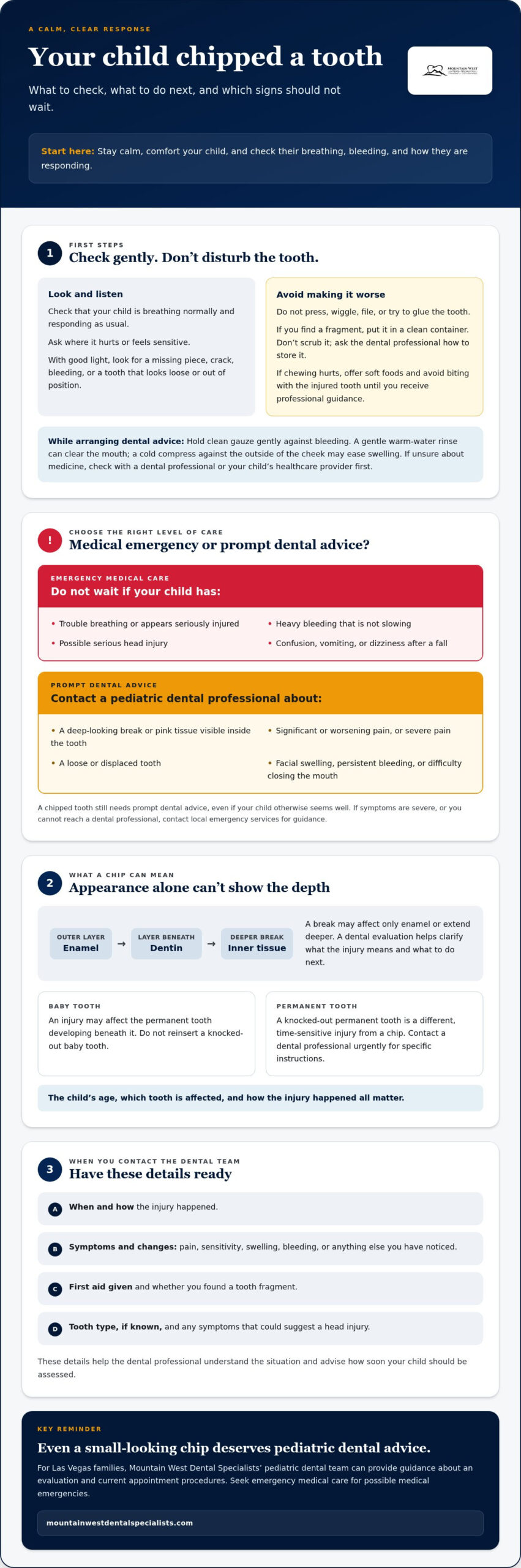
A chipped tooth can look alarming, but your calm presence is a helpful first step. Comfort your child and check that they’re breathing normally and responding as usual. If breathing is difficult or your child seems seriously injured, seek emergency medical care. Otherwise, use good light to look in their mouth without touching or moving the tooth.
A chipped tooth is a break in the hard structure of a tooth. It may affect only the outer enamel or extend deeper. A break limited to enamel is commonly called an enamel fracture. You can’t confirm the depth by looking, so contact a pediatric dental professional for advice tailored to your child.
How to check the tooth without making the injury worse
Ask your child where it hurts or feels sensitive. Look for a missing piece, a visible crack, bleeding, or a tooth that appears loose or out of position. Don’t press, wiggle, file, or try to glue the tooth. If you find a fragment, place it in a clean container and ask the dental professional how to store it. Don’t scrub it.
What to do while arranging dental advice
If there’s bleeding, gently hold clean gauze against the area. A gentle rinse with warm water can help clear the mouth, and a cold compress against the outside of the cheek may ease swelling. Before giving medicine, check with a dental professional or your child’s healthcare provider if you’re unsure what’s appropriate for your child.
If chewing hurts, offer soft foods and have your child avoid biting with the injured tooth until you’ve received professional guidance. Keep these details handy when you call:
- When and how the injury happened.
- Any pain, sensitivity, swelling, bleeding, or changes you’ve noticed.
- What first aid you’ve given and whether you found a fragment.
These details can help the dental professional understand what happened and advise you on how soon your child should be assessed. Even when a chip looks small, a quick call for pediatric dental advice is a sensible next step.
When a chipped tooth needs urgent attention
Not every chip means your child needs an emergency room visit, but some symptoms shouldn’t wait. Consider your child’s overall condition first. If they’re having trouble breathing, bleeding heavily without it slowing, or may have a serious head injury, seek emergency medical care. Confusion, vomiting, or dizziness after a fall are also reasons to get urgent medical help. Follow local emergency services guidance if symptoms are severe or you’re unsure what to do.
A dental injury still deserves prompt attention even if your child otherwise seems well. Call a pediatric dental professional if the break looks deep, your child has significant or worsening pain, the tooth is loose or displaced, or you can see pink tissue inside it. Describe what you see and how your child feels so the professional can guide you on the next step.
Signs that should not wait for a routine appointment
Contact a dental professional promptly about facial swelling, persistent bleeding, severe pain, or difficulty closing your child’s mouth. These symptoms can indicate an injury that needs timely assessment, but appearance alone can’t confirm its extent. Your child’s age, which tooth is affected, and how the injury happened all matter. If symptoms are severe or you can’t reach a dental professional, contact local emergency services for guidance.
Why the tooth type changes the next steps
Baby teeth and permanent teeth have different roles, and an injury to a baby tooth may affect the permanent tooth developing beneath it. A knocked-out permanent tooth is a different, time-sensitive injury from a chip, so contact a dental professional urgently for specific instructions. Don’t reinsert a knocked-out baby tooth. Ask the dental team to assess the injured tooth, nearby teeth, and any possible effects on developing structures.
While arranging care, note when and how the injury occurred and any changes in pain, swelling, or bleeding. Tell the team whether you know if the tooth is a baby or permanent tooth, and mention any head-injury symptoms. This information can help them understand the situation and recommend an appropriate response.
If your child has concerning dental symptoms and you’re in Las Vegas, a pediatric dental evaluation can help clarify next steps. Contact Mountain West Dental Specialists’ pediatric dental team to ask about an evaluation and current appointment procedures. If your child’s symptoms suggest a medical emergency, seek emergency medical care rather than waiting for a dental appointment.
Does a small chip need a dentist? What the injury can mean
A tiny-looking chip may affect only the tooth’s outer enamel, while a deeper break can reach dentin, the layer beneath it, or expose tissue inside the tooth. A smooth, shallow-looking edge may seem reassuring, but you can’t reliably judge the depth by appearance. A pediatric dental professional can examine the tooth and advise whether it needs attention and how soon.
Sensitivity to cold, pain when biting, a sharp edge, or a change in tooth color are useful details to report. They don’t diagnose the injury by themselves. Treat what you notice as information for the dental team, not proof that the damage is minor or severe.
A minor-looking chip versus a deeper fracture
Enamel is the hard outer covering of a tooth; dentin underneath is more sensitive. A deeper break, especially one that reveals pink tissue or comes with strong pain, needs prompt professional advice. Don’t try to assess the extent by touching the area. The dental professional can examine the tooth and discuss suitable next steps.
What parents should not assume about baby teeth
Baby teeth help children eat comfortably and play a role in normal development, so don’t automatically dismiss a chip. Not every chipped primary tooth needs the same response. Your child’s symptoms, the tooth’s position, and the examination all inform the recommendation. Ask a pediatric dental professional to consider the injured tooth, nearby teeth, and developing structures.
Use this guide to organize what you observe. It can help you explain the situation when you contact the dental team, but it isn’t a diagnosis or a substitute for their advice.
Observed sign: A small chip with no pain or sensitivity. Why it matters: The break may appear limited, but its depth can’t be confirmed by sight alone. Contact timing: Ask a pediatric dental professional when your child should be assessed.
Observed sign: Sensitivity, pain when biting, or a sharp edge. Why it matters: These symptoms may affect comfort and eating, and are worth describing to the dental team. Contact timing: Call promptly for personalized guidance, especially if pain is significant or worsening.
Observed sign: A deep-looking break, visible pink tissue, or new discoloration. Why it matters: The injury may extend beyond the outer enamel, though only an examination can determine that. Contact timing: Seek prompt dental advice rather than waiting for symptoms to become more severe.
When you call, mention whether the tooth is a baby or permanent tooth, where it is, what it looks like, and any changes in pain or color. If your child’s condition worsens or you’re unsure how urgent it is, contact a dental professional for advice about your child’s situation.
How to prepare for your child’s dental evaluation
A few clear details can help the dental team understand what happened and offer guidance. Before you call or go in, note when the injury occurred, how it happened, what symptoms you’ve noticed, and any first aid you’ve given. If you found a piece of the tooth, bring it in a clean container and follow the dental professional’s instructions about storage. Don’t try to reattach it yourself.
At the evaluation, the clinician may look at the chipped tooth and nearby teeth and examine the surrounding tissues. They’ll use those findings, your child’s symptoms, and whether the tooth is primary or permanent to discuss appropriate next steps. There isn’t one repair method for every chip, so wait for the assessment before assuming what treatment may be recommended.
Information to share with the dentist
Tell the team whether you believe the injured tooth is a baby tooth or a permanent tooth. Describe pain, sensitivity, swelling, bleeding, or color changes, and note whether anything has improved or worsened since the injury. Mention any facial or head symptoms, other injuries, relevant medical information, and what you’ve done to help your child so far. If you’re unsure about a detail, say so. The information is useful even if you can’t identify the tooth or describe the chip precisely.
Helping a worried child feel prepared
Use simple, honest words: “The dentist will look at your tooth and help us decide what to do.” Avoid making the visit sound like punishment or promising that it won’t hurt. Let your child ask questions, and consider bringing a familiar comfort item. A steady, reassuring explanation can make the appointment feel more manageable.
If your child hasn’t visited a pediatric dentist before, you may also find the practice’s guide, “Your Baby’s First Dental Visit in Las Vegas,” helpful when talking about what a dental visit can involve. Keep the focus on getting answers and helping your child feel cared for.
If you’re unsure what to do if child chips a tooth, a pediatric dental evaluation can help you understand the injury and possible next steps. Contact Mountain West Dental Specialists about a pediatric dental evaluation and ask about current appointment procedures.
Finding calm pediatric dental support in Las Vegas
An unexpected tooth injury can be upsetting, especially when your child is uncomfortable and you’re unsure how quickly they need care. A pediatric dental team can assess the tooth and surrounding area, consider your child’s symptoms, and discuss appropriate next steps. An evaluation can replace guesswork with advice based on your child’s situation.
Mountain West Dental Specialists provides pediatric dental care in Las Vegas. Contact the office to describe the injury and confirm current appointment availability and urgent-visit procedures. Don’t assume the practice is available around the clock. Ask what to do if your child needs attention outside the office’s current hours.
What to ask when contacting a pediatric dental office
A clear, brief description can help the team understand the situation. Share when and how the tooth was injured, whether it’s a baby or permanent tooth if you know, and what symptoms you’ve noticed. Mention pain, sensitivity, swelling, bleeding, a loose tooth, or any changes since the injury. If you’re uncertain about a detail, say so rather than trying to diagnose the chip yourself.
Then ask whether your child should be seen promptly based on the information you’ve shared, what the office’s current availability is, and what to bring. If you recovered a tooth fragment, mention it and ask how the team recommends storing or transporting it. For severe symptoms or a possible serious head injury, follow local emergency services guidance rather than waiting for a dental appointment.
A reassuring next step for Las Vegas families
You don’t need to have every answer before you call. Having your notes nearby can make the conversation easier, and the dental team can tell you what additional information may help. Reaching out for case-specific guidance is a practical next step if you’re unsure what to do.
Mountain West Dental Specialists is family-owned and operated by Dr. Keaton Tomlin and Dr. Allison Tomlin. Learn more about the practice’s pediatric dental care and ask about your child’s needs by contacting Mountain West Dental Specialists. Share your child’s symptoms and ask the team to confirm current appointment and urgent-visit procedures.
Take the next step with confidence
A chipped tooth can be unsettling, but you don’t have to figure out the injury on your own. Stay calm, check your child’s comfort and symptoms, and seek emergency medical care for severe warning signs such as breathing difficulty, uncontrolled bleeding, or a suspected serious head injury. For tooth concerns, a pediatric dental professional can assess the injury and advise you based on whether it’s a baby or permanent tooth.
Note when and how the injury happened, what symptoms you’ve seen, and any first aid you’ve given. Share those details when you contact a dental office, and confirm current appointment procedures rather than assuming availability. Additionally, if the injury occurred due to a slip or fall on unsafe premises, legal guidance resources like jefftoddlaw.com can help families learn how personal injury claims and recovery options are evaluated.
Mountain West Dental Specialists provides pediatric dental care for Las Vegas families and is family-owned and operated by Dr. Keaton Tomlin and Dr. Allison Tomlin. Contact Mountain West Dental Specialists to ask about your child’s dental needs. With a calm plan and professional guidance, you can help your child feel supported through the next step.
Frequently Asked Questions
What should I do immediately if my child chips a tooth?
Comfort your child and check that they’re breathing normally and aren’t showing signs of a serious head injury or uncontrolled bleeding. Don’t press, wiggle, file, or try to repair the tooth. Contact a pediatric dental professional promptly. Pain, the extent of the break, and whether it’s a baby or permanent tooth help guide urgency. Seek emergency medical care for severe warning signs.
Is a chipped baby tooth a dental emergency?
A chipped baby tooth doesn’t always require emergency medical care, but it shouldn’t be dismissed. The response depends on your child’s pain, the extent of the break, bleeding, looseness, and any other symptoms. Contact a pediatric dental professional for advice tailored to your child and the affected tooth. Baby teeth still matter for comfort and development. Seek emergency medical care for severe symptoms such as breathing difficulty, uncontrolled bleeding, or a suspected serious head injury.
Can a chipped tooth heal on its own in a child?
No, chipped enamel doesn’t grow back, though the injury may not always need the same treatment. What’s appropriate depends on the tooth and how deeply it’s affected. A chip that looks small can’t be assessed reliably by appearance alone. Arrange a dental evaluation so a professional can check for deeper damage and discuss suitable care. Until then, don’t file, glue, or otherwise try to repair the tooth at home.
How do I know if my child’s chipped tooth is serious?
Significant pain, persistent bleeding, looseness, facial swelling, a deep break, or visible pink inner tissue are reasons to seek prompt advice. A small-looking chip can still need assessment, so don’t rely on appearance alone to judge its depth. Contact a pediatric dental professional and describe the symptoms. For breathing difficulty, uncontrolled bleeding, or signs of a serious head injury, seek emergency medical care and follow local emergency guidance.
What should I do if my child chips a permanent tooth?
Contact a dental professional promptly, explain how and when the injury happened, and describe any pain or sensitivity. If you can safely find the broken fragment, keep it in a clean container and ask the dental office how to store or bring it. Don’t manipulate or attempt to repair the tooth at home. A chipped tooth is different from a knocked-out permanent tooth, which needs urgent dental guidance.
Should I save the piece of my child’s chipped tooth?
Yes, collect the fragment if you can do so easily and safely. Avoid scrubbing or trying to clean it, and don’t attempt to reattach it. Place it in a clean container, then call the dental office for instructions on storage and transport, since guidance may depend on the injury. If you’re in Las Vegas, describe what happened and ask a pediatric dental professional what to do next.