
What if your baby’s feeding struggles involve more than latch alone? Painful breastfeeding, clicking sounds during feeds, or slow weight gain can be stressful, and a tongue-tie may be one possible factor. These signs don’t confirm a tongue-tie, but they’re worth discussing with a qualified clinician. If you’re researching infant frenectomy Las Vegas, it’s natural to want clear answers before considering a procedure for your baby.
You’re right to ask whether a release is necessary and what it could mean for feeding, sleep, and development. Not every infant with a tongue-tie needs treatment, so a careful assessment matters. This guide explains how tongue-tie is evaluated, what to ask about laser and other release methods, and what families should know about potential benefits and limitations, including claims about sleep and airway health.
You’ll also find questions to help you prepare for a conversation with a specialist. At Mountain West Dental Specialists, the Tomlin family’s pediatric and airway-focused approach gives Las Vegas families a place to discuss concerns and understand their options.
Key Takeaways
- Learn how tongue-tie and lip-tie can restrict oral movement and potentially affect feeding function.
- Understand what a frenectomy involves and what to ask when comparing laser and other release methods.
- Explore questions to ask about your baby’s assessment, procedure, and recovery.
- See how Mountain West Dental Specialists’ family-owned, airway-focused pediatric practice may help guide your questions about infant frenectomy Las Vegas.
- Discuss possible speech, dental, and sleep benefits as individual considerations, not guaranteed outcomes.
Understanding Tongue and Lip Ties in Infants
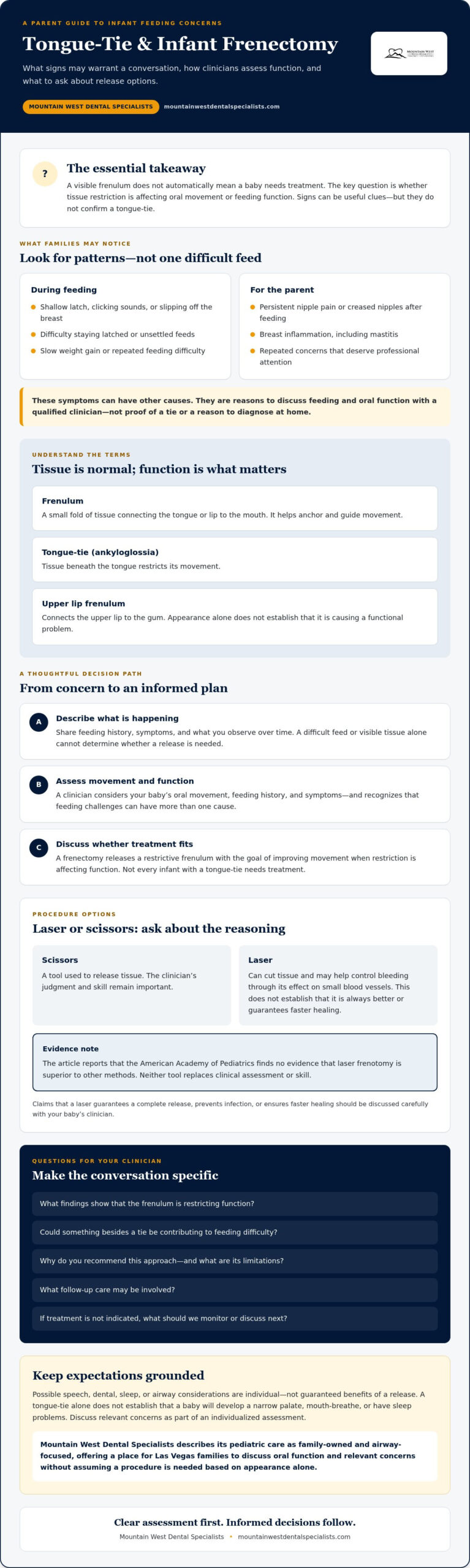
A frenulum is a small fold of tissue connecting the tongue or lip to the mouth. These tissues are normal and help anchor and guide movement. The concern is whether a frenulum is restrictive enough to limit function, not simply whether it is visible or appears short.
Ankyloglossia, commonly called tongue-tie, occurs when the tissue beneath the tongue restricts its movement. A maxillary labial frenulum connects the upper lip to the gum. The term “lip-tie” is often used when that tissue seems to limit upper-lip movement, though appearance alone doesn’t establish a problem. For an overview of Ankyloglossia (tongue-tie), see this reference. Restricted tethered oral tissues (TOTs) may interfere with an infant’s ability to move the tongue or lips effectively during feeding.
During nursing or bottle-feeding, limited movement may contribute to a shallow latch, clicking sounds, slipping off the breast, or difficulty staying latched. A parent may experience nipple pain or notice creased nipples after a feed. These signs can have other causes, too, so treat them as clues to discuss with a qualified clinician, not proof of a tie. Frenula also have a healthy role: they support oral structures while allowing the flexible movement needed for feeding and, later, other mouth functions.
Signs Your Baby Might Need an Evaluation
Look for patterns rather than judging from one difficult feed. An infant who repeatedly slides off the breast, seems unsettled during feeds, or shows colic-like behavior may benefit from an assessment of oral function and feeding. Persistent nipple pain, creasing, or breast inflammation such as mastitis deserves attention from an appropriate healthcare professional. These symptoms aren’t specific to tongue-tie, and an evaluation can help identify what may be contributing.
There’s no need to assume every tie will cause later problems, or that waiting automatically leads to speech or airway issues. Effects vary, and not every infant needs treatment. If concerns continue, ask about an assessment rather than trying to diagnose a restriction at home.
The Connection Between TOTs and Infant Airway Health
The tongue’s resting position and movement are part of oral function and may be considered when assessing palate development. However, a tongue-tie alone doesn’t establish that a baby will develop a narrow palate, mouth-breathe, or have sleep problems. Evidence and individual circumstances matter, so discuss these possibilities without treating them as inevitable outcomes.
Mountain West Dental Specialists brings an airway-focused perspective to pediatric care. For families exploring an infant frenectomy Las Vegas evaluation, that means discussing oral function and relevant airway concerns as part of an individualized assessment, rather than assuming a procedure is needed based on appearance alone.
What is an Infant Frenectomy? The Modern Approach
An infant frenectomy releases a restrictive frenulum, the tissue connecting the tongue or lip to the mouth. The goal is to improve movement when a clinician determines that restriction is affecting function. A visible frenulum alone isn’t enough to show that a release is needed. A thoughtful evaluation considers your baby’s oral movement, feeding history, and symptoms, while recognizing that feeding challenges can have more than one cause.
Families considering an infant frenectomy in Las Vegas may encounter scissors and laser techniques. A laser can cut tissue and may also help control bleeding through its effect on small blood vessels. That doesn’t establish that a laser is always better or that healing will be faster. The American Academy of Pediatrics reports no evidence that laser frenotomy is superior to other methods. Review the Children’s Hospital of Philadelphia’s overview of tongue tie, and bring questions about options, benefits, and limitations to your baby’s clinician.
Laser vs. Scissors: Why Technology Matters
Scissors and lasers are different tools for releasing tissue. Neither replaces the clinician’s judgment or skill. A laser’s tissue-sealing effect may mean less bleeding during a procedure, but outcomes depend on the individual baby, the restriction, and the technique. Claims that a laser guarantees a complete release of a “posterior tie,” prevents infection, or ensures faster healing should be discussed carefully rather than taken for granted. Ask what findings support treatment, which method is recommended, and what follow-up care may involve.
The Role of the Pediatric Dental Specialist
Infant oral anatomy is small and delicate, so experience assessing babies matters. A clinician should explain how they evaluate tongue or lip movement and feeding function, what the procedure can realistically address, and when treatment isn’t indicated. Mountain West Dental Specialists is a family-owned practice led by Dr. Keaton and Dr. Allison Tomlin, with a focus on airway-aware care. The practice uses modern technology, but an individualized functional assessment should guide whether a release is appropriate.
If your baby already sees a lactation consultant or another feeding professional, ask how their observations can inform the dental evaluation and whether the care team should coordinate. A release may not resolve every feeding concern on its own. Families considering infant tongue-tie release care can use an initial discussion to understand the assessment process and make an informed choice without feeling rushed.
The Las Vegas Choice: Why Mountain West Dental Specialists?
Choosing where to ask about an infant frenectomy involves more than finding a provider who performs a release. Look for a team that listens to your concerns, explains its reasoning, and considers your baby’s needs without rushing you toward a procedure. Mountain West Dental Specialists is a family-owned pediatric and orthodontic practice in Las Vegas, led by Dr. Keaton and Dr. Allison Tomlin.
For families exploring infant frenectomy Las Vegas care, a thoughtful conversation can make a complicated decision more manageable. You should leave understanding what the evaluation found, whether treatment may help, and what alternatives or follow-up questions to consider. You can also ask how the practice supports a comfortable experience for infants and caregivers, and what to expect at each step.
Meet the Tomlins: A Dedicated Family Team
As a husband-and-wife team, Dr. Keaton and Dr. Allison Tomlin bring a family perspective to pediatric care. Their practice combines pediatric dentistry and orthodontics with a focus on airway management, so you can discuss your baby’s oral function in the context of growth and development. That doesn’t mean a tongue-tie release will prevent future orthodontic or airway concerns. It means you can ask how a recommendation fits your child’s individual needs and long-term care.
Clear explanations matter, especially when your baby is involved. Before consenting to a procedure, ask what signs support the recommendation, what outcomes are realistic, and how the team will guide you through care. Stanford Medicine’s resource on the frenotomy procedure can also help you prepare questions for a clinician.
A Holistic View of Pediatric Oral Health
A whole-child perspective looks beyond a quick release to understand function and context. Airway-focused pediatric care can include discussion of oral development and breathing concerns when relevant, while avoiding assumptions that a visible frenulum causes a particular problem. Diagnostic tools should be selected based on clinical need. Cone Beam CT imaging is available at the practice, but it isn’t automatically required for an infant frenectomy. Ask the clinician whether imaging is indicated and why.
Mountain West Dental Specialists is located on S. Cimarron Road in Las Vegas. If you’d like to learn more about the practice’s approach, explore pediatric and airway-focused care and note the questions you want answered before making a decision.
Procedure & Recovery: What Parents Should Expect
Knowing the likely steps can make an appointment feel less daunting. The process depends on your baby and the clinician’s approach, so ask the office to explain its plan before treatment. A visit typically includes reviewing your baby’s health and feeding concerns, examining oral movement, and giving you time to ask questions. If a release is recommended and you choose to proceed, the clinician should explain how your baby will be positioned and comforted, what you may see, and how to follow the aftercare instructions.
Some families ask about feeding soon after a release. Check whether your clinician recommends offering a breast or bottle in the office, and whether a feeding professional should be involved. A first feed can provide an opportunity to observe your baby, but it doesn’t guarantee an immediate change in latch or comfort. For infant frenectomy Las Vegas care, make sure you leave with clear written guidance and a way to ask follow-up questions.
Active Wound Management and Exercises
Post-procedure advice varies. Some clinicians recommend specific tongue movements or wound stretches; others may take a different approach. Don’t assume exercises are always required, and don’t begin them based on online instructions. Ask your baby’s clinician to demonstrate any recommended movement, explain its purpose, and provide an individualized schedule. There isn’t one schedule for every infant, and the evidence for routine wound stretching is limited.
If exercises are prescribed, keep the moment calm and brief, and follow the clinician’s technique rather than forcing your baby’s mouth. You might pair the routine with cuddling or a soothing feed if advised. If your baby seems unusually distressed or you’re unsure you’re doing it correctly, pause and contact the care team for guidance.
The Healing Timeline
In the first day or two, follow the specific instructions you receive for feeding, comfort, and checking the treated area. Some tenderness may occur, and the clinician can explain what healing should look like after your baby’s procedure. Ask in advance which symptoms require a call. Contact the care team promptly if bleeding continues, your baby’s discomfort worsens, a fever develops, or feeding becomes difficult.
Feeding changes can take time and aren’t guaranteed. Some families notice differences quickly, while others need continued feeding support and follow-up to assess progress. Keep track of latch, feeding comfort, and concerns to discuss at the recommended check-in. Before leaving, confirm how follow-up is arranged and whom to contact with questions. To discuss your baby’s evaluation and care plan, contact Mountain West Dental Specialists.
Long-Term Benefits: Beyond Breastfeeding
Parents often wonder whether releasing a restrictive frenulum could affect more than feeding. Tongue movement plays a role in oral function, but a frenectomy shouldn’t be presented as a guaranteed way to change speech, jaw growth, sleep, or breathing. The decision should be based on your child’s function and needs, with realistic expectations about what a release can and can’t address.
Speech sounds require coordinated movement of the tongue and other structures. If a child has difficulty with certain sounds, a clinician can assess whether limited tongue mobility may be contributing. A release alone doesn’t guarantee clearer speech, and speech concerns may need evaluation and support from other qualified professionals. Apply the same care to sleep and airway questions: ask for an individual assessment rather than assuming a tongue-tie is the cause of mouth breathing or sleep disruption.
Supporting Proper Jaw and Palate Growth
The tongue’s resting position against the roof of the mouth is one part of oral development. Some clinicians consider tongue mobility alongside palate shape, bite, and breathing, but a tie doesn’t automatically cause a narrow palate, crowded teeth, or a future need for braces or aligners. Nor is a frenectomy a proven way to prevent orthodontic treatment. If you have concerns as your child grows, ask how pediatric dental checkups and orthodontic evaluations can monitor development over time.
Mouth breathing can have different causes, so don’t assume a release will prevent it or resolve related concerns. A pediatric clinician can consider your child’s symptoms and decide whether further assessment is appropriate. At a practice with an airway-management focus, families can raise questions about breathing and oral development as part of the broader conversation, without treating a procedure as a guaranteed airway solution.
A Lifetime of Healthy Smiles
Establishing a trusted dental home early gives you a familiar place to ask questions as your child’s needs change, from baby dental care to later orthodontic considerations. Early attention means evaluating concerns and discussing options, not automatically choosing surgery. If a release is recommended, ask how the team will assess progress and what other support may be useful.
For families considering infant frenectomy Las Vegas care, the Tomlin family’s pediatric and orthodontic practice offers a place to discuss your child’s needs with a long-term perspective. A clear, individualized evaluation can help you make an informed decision without feeling pressured.
Take the Next Step with Confidence
Feeding challenges can feel overwhelming, but you don’t have to sort through every concern on your own. A careful evaluation can help determine whether restricted oral tissue is affecting your baby’s function and whether a frenectomy is appropriate. Not every tie needs treatment, and possible effects on sleep, speech, or dental development should be considered individually, not promised as outcomes.
If you’re considering an infant frenectomy in Las Vegas, look for a team that answers your questions clearly and considers your child’s needs beyond the procedure itself. Mountain West Dental Specialists is a family-owned practice led by Dr. Keaton and Dr. Allison Tomlin, with a specialized pediatric and airway focus at its S. Cimarron Road location.
Take a calm, informed next step. Schedule a Compassionate Consultation for Your Infant Today to discuss your concerns and learn about your options. You’re advocating for your baby by asking questions, and clear guidance can help you move forward with greater confidence.
Frequently Asked Questions
How do I know if my baby’s tongue-tie is severe enough for a frenectomy?
Severity is judged by how much tongue movement is restricted and whether that restriction affects function, not by appearance alone. Signs such as persistent latch difficulty, clicking during feeds, or nipple pain can prompt an evaluation, but they can have other causes. A qualified clinician should consider your baby’s oral movement, feeding history, and overall needs before recommending treatment. Not every baby with a tongue-tie needs a frenectomy.
Is the laser frenectomy procedure painful for my infant?
Your baby may experience discomfort, and no procedure should be described as completely painless. Ask the clinician how discomfort is assessed and managed, what comfort measures are used, and what to expect afterward. The method and your infant’s response can vary. A discussion before treatment can help you understand the plan and feel prepared to comfort your baby during recovery.
How long does the actual laser release take?
The release itself may be brief, but the full appointment also includes reviewing your baby’s history, assessing oral function, explaining the plan, and discussing aftercare. Timing can vary depending on your baby’s needs and the clinician’s approach. Ask the office how much time to allow for the visit and whether feeding or follow-up guidance is included, rather than planning around the procedure alone.
Will my insurance cover an infant frenectomy in Las Vegas?
Coverage varies by plan, the reason for treatment, and how the procedure is billed. Before scheduling, contact your insurer and ask whether infant tongue-tie release is covered, what documentation may be needed, and whether the provider is in network. You can also ask the Las Vegas practice for information to help verify benefits. Confirm any expected out-of-pocket responsibility directly with your insurer and provider.
What happens if we choose not to treat the tongue-tie?
If the restriction isn’t causing functional problems, a clinician may recommend monitoring rather than treatment. If feeding or other concerns continue, your baby’s needs can be reassessed over time. A tongue-tie doesn’t automatically lead to speech, sleep, airway, or dental problems, so don’t assume that delaying a release will cause them. Discuss possible benefits, limitations, and alternatives with your child’s clinician before deciding.
Can a tongue-tie grow back after a frenectomy?
The tissue can heal in a way that limits movement again, sometimes called reattachment, so follow-up and aftercare instructions matter. Ask your clinician what healing changes to watch for and whether specific exercises are recommended for your baby. Don’t start stretches or alter the care plan based on general online advice. If movement or feeding concerns persist or return, contact the treating clinician for an assessment.
When can I nurse my baby after the procedure?
Ask your baby’s clinician when to offer a breast or bottle, since guidance may depend on the procedure and your infant’s individual needs. Some families may be advised to feed soon afterward, but timing and the first-feed plan should come from the treating team. Feeding right away doesn’t guarantee an immediate improvement. Follow the instructions you receive, and seek guidance if your baby has trouble feeding afterward.
Do we need to see a lactation consultant after the frenectomy?
A lactation consultant isn’t automatically required, but their support may be helpful if breastfeeding remains painful, your baby has difficulty latching, or you want help adjusting feeding after the release. A frenectomy doesn’t address every possible cause of feeding challenges. Ask your clinician whether coordinating with a lactation professional makes sense for your family, and share feeding observations with both members of your care team.