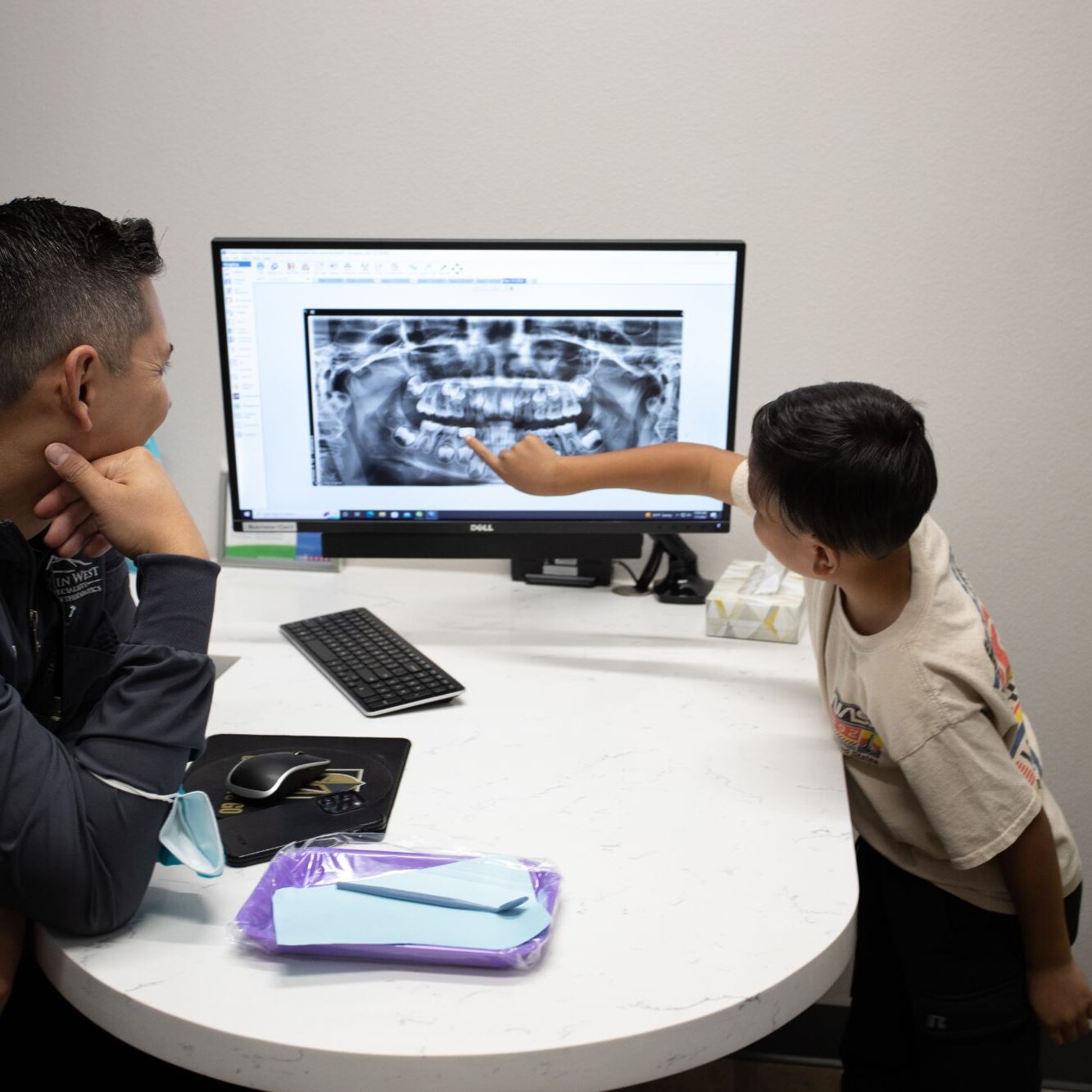
How safe is in-office pediatric dental surgery? For healthy children treated by a trained pediatric dental specialist who follows AAPD sedation guidelines, it is considered very safe. Safety comes down to three things: careful case selection, the right sedation depth, and continuous monitoring by a trained team. Here’s what parents should understand first.
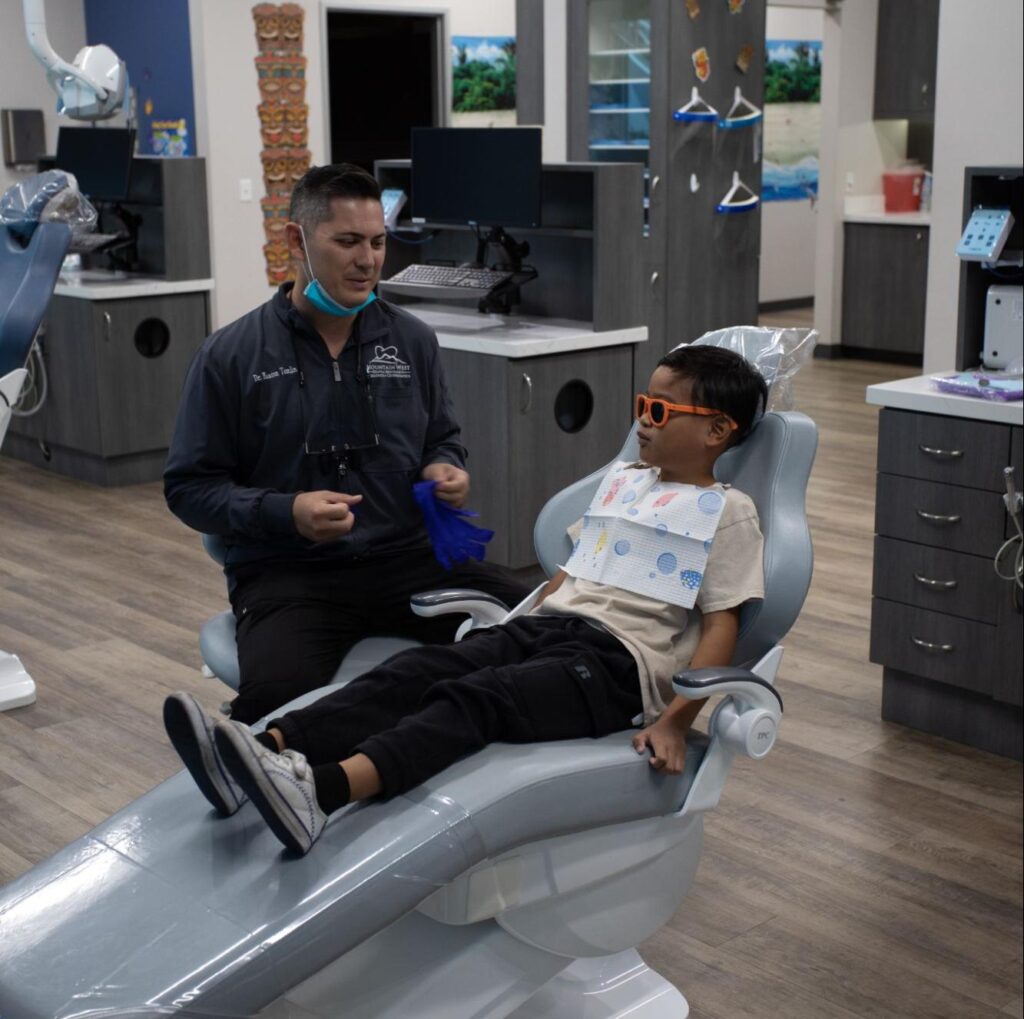
What Is In-Office Pediatric Dental Surgery?
In-office pediatric dental surgery is treatment completed in your child’s dental home under sedation dentistry instead of in a hospital operating room. It typically covers multiple fillings, crowns, extractions, pulp therapy, or a laser frenectomy finished in one visit. The word “surgery” describes the treatment itself, while most parent safety questions really center on the sedation.
Here’s what’s usually included in a single in-office session:
- Multiple fillings across several teeth at once
- Stainless steel or tooth-colored crowns for teeth with large areas of decay
- Pulp therapy (often called a baby root canal) to save a badly damaged tooth
- Extractions of teeth that can’t be restored
- Laser frenectomy for tongue-tie or lip-tie release
- Space maintainers placed after an early tooth loss
Are All Sedation Levels the Same?
Sedation dentistry isn’t one single thing. It’s a spectrum, and where your child lands on that spectrum shapes every safety decision that follows.
- Nitrous oxide (laughing gas) for mild relaxation, with effects that fade within minutes
- Oral sedation dentistry using weight-based medication given before treatment begins
- IV sedation administered and adjusted throughout the visit
- General anesthesia, where your child is fully asleep with a protected airway
Why Does This Option Exist?
Some children simply cannot sit through four or five separate visits. Others are two years old with early childhood decay across eight teeth. Asking a toddler to cooperate through that much chair-side treatment often creates lasting anxiety about dentistry.
Consolidating care into one sedated visit protects your child emotionally as much as clinically. Dr. Keaton Tomlin, D.M.D., evaluates each child individually before recommending any sedation approach, because the goal is always the lightest option that will actually work.
How In-Office Pediatric Surgery Works: Safety Protocols Step by Step
Safety in an in-office setting is built on documented protocols, not luck. Before any medication is given, your child goes through a health screening and airway assessment. During treatment, a trained second team member watches monitors continuously. Afterward, your child must meet specific recovery standards before going home.
1. What Happens During Pre-Op Screening and Health Review?
Your child’s medical history gets reviewed line by line: current medications, allergies, asthma, heart conditions, and any prior reaction to anesthesia. The team also checks tonsil size and airway anatomy, since large tonsils can complicate breathing under deeper sedation.
Children are then assigned an ASA physical status classification. ASA I and II describe healthy children or those with mild, well-controlled conditions, and those are the kids best suited for in-office care. Every dose is calculated by weight, never estimated.
2. Why Do Fasting (NPO) Instructions Matter?
You’ll receive specific instructions about when your child must stop eating and drinking. This isn’t a formality. Sedation relaxes the reflexes that normally keep stomach contents out of the lungs, and an empty stomach removes that risk.
If your child accidentally eats breakfast, call before you leave the house. The visit gets rescheduled, and that’s the correct decision every single time.
3. Who Administers the Sedation and Anesthesia?
Ask this question directly. Depending on the sedation level, medication may be given by:
- A pediatric dental specialist with permitting for minimal or moderate sedation
- A dentist anesthesiologist who focuses solely on the airway and vital signs
- A CRNA working alongside the treating specialist
For deeper sedation, having a separate provider dedicated to anesthesia is the safer structure, because no one is splitting attention between the teeth and the monitors.
4. What Does Continuous Monitoring Track?
Throughout treatment, your child is connected to equipment tracking:
- Pulse oximetry for oxygen saturation
- Capnography for exhaled carbon dioxide, which flags breathing changes early
- Blood pressure at set intervals
- ECG for heart rhythm during deeper sedation
A trained team member records these readings on a timed log. Nobody relies on memory.
5. How Is the Team Prepared for Emergencies?
Well-run sedation programs prepare for problems that rarely happen. That means reversal agents on hand, positive-pressure oxygen, an AED, a stocked emergency kit, and a written protocol every team member has rehearsed.
According to the American Academy of Pediatric Dentistry and the American Academy of Pediatrics, offices providing sedation should maintain age-appropriate emergency equipment and conduct regular emergency drills.
6. What Happens During Recovery and Discharge?
Your child rests in a recovery area, monitored until vital signs are stable, breathing is unlabored, and responsiveness returns to baseline. Discharge happens against written criteria, not a clock.
You’ll leave with instructions for the rest of the day and a number to call with questions.
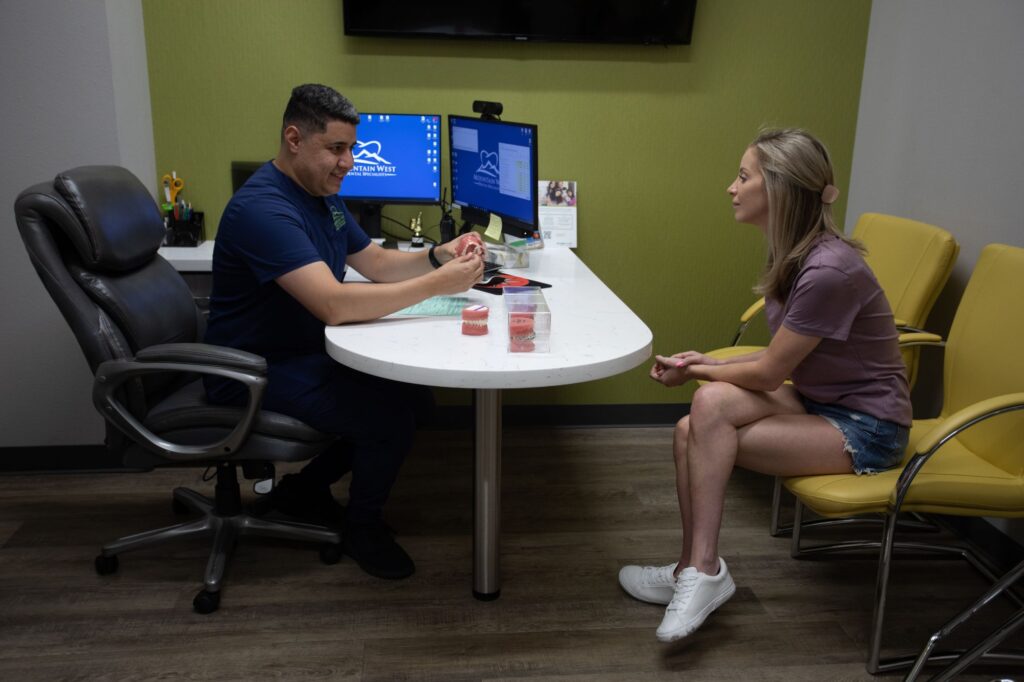
Benefits of Completing Treatment In-Office
For the right child, finishing everything in one sedated visit offers real advantages over spreading treatment across months.
- One visit instead of five. Everything gets completed in a single session, which means one day off school and one day off work for you.
- Lower total cost. Hospital operating room charges and separate anesthesia billing add up quickly, and in-office care skips those line items entirely.
- A familiar setting. Your child recovers in the same dental home they already know, with the same team faces. That familiarity matters more than parents expect.
- Faster scheduling. Operating room block time can mean waiting months while decay keeps progressing. In-office scheduling typically moves much faster.
- Parent presence. In many cases you can stay with your child as sedation begins and be right there when they wake up.
There’s a longer-term benefit too. Children who go through one calm, well-managed experience often return for routine checkups without dread. Children who endure repeated difficult visits frequently carry that anxiety into adulthood.
In-Office vs. Hospital Operating Room: Which Is Safer?
Both settings are safe when guidelines are followed. The honest answer is that the setting matters less than the match between the child and the setting. Case selection drives outcomes.
| Factor | In-Office (Your Dental Home) | Hospital Operating Room |
|---|---|---|
| Sedation depth | Nitrous oxide, oral, or IV sedation | General anesthesia with a protected airway |
| Monitoring | Pulse oximetry, capnography, blood pressure, ECG, trained observer | Full hospital anesthesia team and equipment |
| Cost | Lower, no hospital charges | Higher, adds operating room and anesthesia billing |
| Wait time | Often weeks | Often months for block time |
| Best candidate | Healthy child, ASA I or II | Complex medical history, airway concerns, very young children |
| Parent presence | Often permitted at induction and recovery | Usually limited |
When Is the Hospital the Better Call?
A hospital operating room is the safer environment when a child has:
- Obstructive sleep apnea or significantly enlarged tonsils
- A cardiac condition, congenital syndrome, or airway abnormality
- Severe or poorly controlled asthma
- Significant obesity
- Extensive treatment needs combined with very young age
- Special healthcare needs requiring full airway protection
Recommending the hospital isn’t a downgrade. It’s the same judgment call that keeps in-office care safe for everyone else.
How Do Sedation and Anesthesia Options Compare?
| Option | What It Does | Typical Use | Your Child’s Awareness |
|---|---|---|---|
| Nitrous oxide | Light relaxation, clears in minutes | Mild nerves, shorter visits | Awake and responsive |
| Oral sedation dentistry | Drowsy and relaxed | Moderate anxiety, younger children | May doze, limited memory |
| IV sedation | Deeper and adjustable | Extensive treatment in one session | Usually no recall |
| General anesthesia | Fully asleep, airway protected | Very young or special healthcare needs | No awareness or memory |
The right choice is the lightest level that lets the treatment be completed safely and completely.
What Affects the Cost of In-Office Pediatric Dental Surgery
Cost comes down to how deep the sedation goes, how long your child needs it, and how much treatment gets finished in that single session. The setting matters too, since staying in your dental home avoids hospital charges altogether. Insurance handles anesthesia inconsistently, so ask for written numbers before anything is scheduled.
Sedation type and duration are the biggest cost drivers, since anesthesia is usually billed in timed increments rather than as a flat fee. The number and complexity of the treatments completed during the session make up the rest. Insurance coverage varies widely, so a written treatment plan and pre-authorization should come before scheduling.
| Cost Driver | How It Affects Your Total |
|---|---|
| Sedation level | Nitrous oxide costs least; IV sedation and general anesthesia cost most |
| Time under sedation | Billed in increments, so longer sessions cost more |
| Number of teeth treated | More fillings, crowns, or extractions raise the treatment portion |
| Treatment complexity | Pulp therapy and crowns cost more than simple fillings |
| Provider structure | An in-house permitted provider versus a contracted dentist anesthesiologist changes billing |
| Setting | Hospital operating rooms add charges that in-office care avoids |
What About Insurance?
Dental insurance often covers the restorative treatment while handling anesthesia differently. Medical policies sometimes cover anesthesia for very young children or those with special healthcare needs, particularly when documentation supports medical necessity.
Ask your dental home to submit for pre-authorization on both the dental and medical side. It takes extra time upfront and prevents surprises later.
At Mountain West Dental Specialists, families receive a written plan with every cost explained before treatment is scheduled, along with access to zero-interest in-house financing and flexible pricing options.
Which Children Are Good Candidates for In-Office Surgery?
Not every child needs sedation dentistry, and not every child who needs it belongs in a dental office setting. A free consult sorts this out before anything is scheduled.
Who Are Strong Candidates?
- Generally healthy children with an ASA I or II classification
- Kids with extensive treatment needs that would otherwise require many separate visits
- Children whose anxiety makes chair-side care unproductive
- Little ones too young to understand or cooperate with instructions
- Children with a strong gag reflex that interferes with treatment
- Some children with special healthcare needs, evaluated individually
When Would We Refer to a Hospital?
- Diagnosed or suspected obstructive sleep apnea
- Enlarged tonsils or other airway concerns
- Significant obesity
- Severe asthma or frequent respiratory infections
- Cardiac conditions or certain congenital syndromes
- A history of a complication during previous anesthesia
What Does the Free Consult Cover?
Bring a complete list of your child’s medications, supplements, and allergies. Mention any snoring, mouth breathing, or restless sleep, since those details change the recommendation.
Dr. Keaton Tomlin, D.M.D., reviews growth, behavior, treatment needs, and health history together, then recommends the lightest effective approach. Sometimes that’s simply nitrous oxide and a shorter appointment.
What to Look For in a Team That Treats Kids Every Day
Deciding on sedation dentistry for your child is a big call, and you shouldn’t have to make it from a search results page. A free consult gives you a real assessment of your child’s health, treatment needs, and the safest setting to complete care.
Mountain West Dental Specialists is family-owned and operated by Dr. Keaton Tomlin, D.M.D., a pediatric dental specialist, and Dr. Allison Tomlin, D.M.D., M.S., an orthodontic specialist. Our team holds memberships with the American Board of Pediatric Dentistry (ABPD), the American Academy of Pediatric Dentistry (AAPD), the Nevada Dental Association (NDA), the American Dental Association (ADA), and the American Association of Orthodontists (AAO).
Families trust us with everything from baby dental care to sedation dentistry, all under one roof, so your child’s records, history, and treatment plan stay in one place. That continuity makes it easier to compare options, revisit questions weeks later, and keep every part of your child’s care coordinated by a team that already knows them well.
Your family should be part of the mountain west family. Learn more about a free consult and let’s talk through your options together. We can’t wait to care for your smile.
Frequently Asked Questions About Pediatric Dental Sedation Safety
Is dental sedation safe for a 3-year-old?
Yes, for healthy three-year-olds, sedation dentistry is considered safe when doses are calculated by weight and monitoring follows AAPD and AAP guidelines. Younger children do require closer attention because their airways are smaller and their reserve is lower. That’s exactly why the pre-op screening and continuous monitoring standards exist.
What are the actual risks and complication rates?
The most common issues are minor and short-lived: nausea, vomiting, prolonged drowsiness, or a temporary drop in oxygen levels that the team corrects immediately. Serious complications are rare in properly screened children treated with appropriate monitoring.
Will my child feel or remember anything?
Local anesthetic numbs the treatment area regardless of sedation level, so your child shouldn’t feel discomfort during the visit. With oral or IV sedation, most children remember little or nothing. Under general anesthesia, there’s no awareness or memory of the treatment at all.
How long does recovery take, and what side effects are normal?
Nitrous oxide wears off within minutes. Oral and IV sedation usually leave a child groggy and unsteady for several hours, with full return to normal often taking the rest of the day. Mild nausea, a sore mouth, and extra sleepiness are all expected, though vomiting that won’t stop or trouble breathing warrants an immediate call.
Can my child eat or drink before the visit?
No, not without following the fasting instructions you’re given. Solid food, milk, and formula have different cutoff times than clear liquids, and your team will spell out exactly when each must stop. Following these instructions precisely is one of the most important safety steps you control as a parent.
What questions should I ask the sedation provider before consenting?
Ask these five, and expect clear answers:
- Who will administer and monitor the sedation, and what are their credentials?
- What monitoring equipment will be used, including capnography?
- What emergency medications and equipment are on site?
- How often does your team practice emergency drills?
- What are the specific discharge criteria before we go home?
A confident team welcomes these questions, and any hesitation is your signal to keep looking.