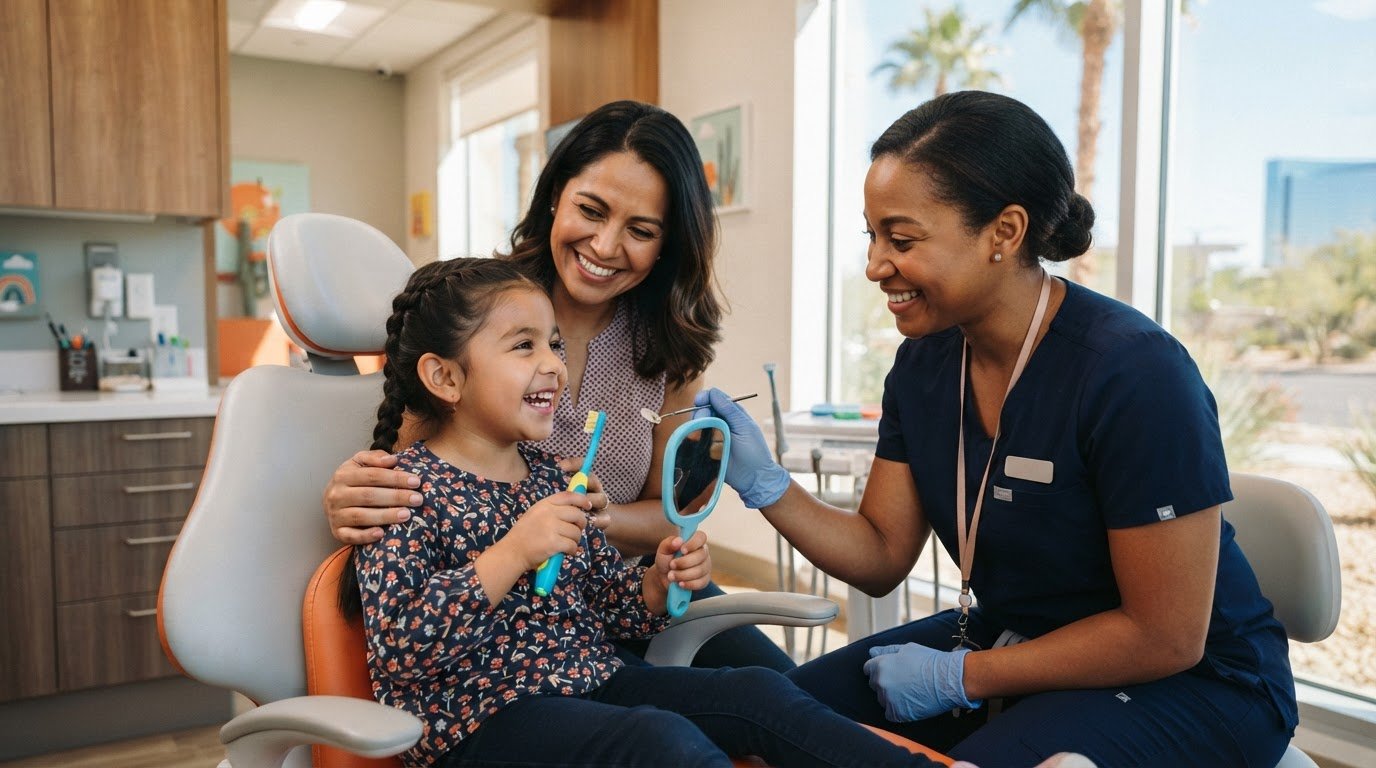
What if a dental visit felt more like a familiar adventure than an unknown test? Learning how to make dental visits fun for kids starts with small steps that help your child know what to expect and feel included. New surroundings, people, and sensations can be unsettling, and it’s understandable if you feel nervous too.
You don’t need to promise a perfect visit or rely on a one-size-fits-all reward. A little preparation, a calm and honest explanation, and choices suited to your child’s age and personality can help build comfort and confidence over time.
This guide offers practical ways to make oral care and dental visits feel more familiar, from playful practice at home to preparation on appointment day. You’ll also learn how to respond to worries without adding pressure and when to ask a pediatric dental team for guidance tailored to your child’s needs.
Key Takeaways
- A successful visit can mean your child feels safe and involved, even if they’re quiet or unsure.
- To practice how to make dental visits fun for kids, try a pretend checkup with a toy and let your child decide how to join in.
- During the appointment, follow the dental team’s guidance and ask whether a comfort item or quiet distraction is suitable.
- Afterward, ask what surprised your child and what they’d like to know next time.
- If your child has recurring worries or distress, tell the pediatric dental team what you’ve noticed and ask what to expect.
Start with realistic expectations: what makes dental visits feel fun for kids?
A positive dental visit doesn’t have to mean constant smiles or laughter. It can mean your child feels safe, listened to, and included, even if they’re quiet or still unsure. That’s a more useful measure of “fun” than expecting a child to enjoy every moment of an unfamiliar appointment.
Children may arrive curious, cautious, or full of questions, and their reactions can change from one visit to the next. Your role isn’t to make every worry disappear. Calm, honest encouragement lets your child know their feelings are welcome and that you’ll help them understand what’s happening.
Why familiarity can make a dental visit easier
New places and sensations can feel less mysterious when a child has heard a simple explanation or tried a pretend checkup at home. A familiar phrase such as “the dentist will look at your teeth” gives them a starting point. Play can help, but it isn’t a test: some children will eagerly take turns, while others prefer to watch or ask questions. Pediatric dentistry is a specialty focused on children’s oral health; you can read more about Pediatric dentistry for background.
Encouragement makes room for your child’s experience. “I can see you’re wondering what will happen” acknowledges a feeling; “There’s nothing to be scared of” may unintentionally dismiss it. You can be upbeat without insisting that your child feel excited. Let their questions guide how much you explain, and give them time to respond.
Set expectations without creating pressure
Use short, truthful explanations suited to your child’s age and understanding. You might say, “We’re going to a dentist who checks teeth. You can ask questions, and I’ll be there with you.” Avoid promising that the visit won’t hurt or that your child will love it, since you can’t know exactly how they’ll feel. Scary details, threats, and shame can add pressure instead of reassurance.
If your child asks something you can’t answer, it’s fine to say, “I’m not sure. We can ask the dental team together.” That response is honest and shows that questions are welcome. Keep the conversation open, then let your child decide whether they want to talk more, play, or take things one step at a time. The goal of how to make dental visits fun for kids isn’t to script a perfect reaction; it’s to help your child feel respected and prepared.
How to prepare your child for a dental visit: a simple plan
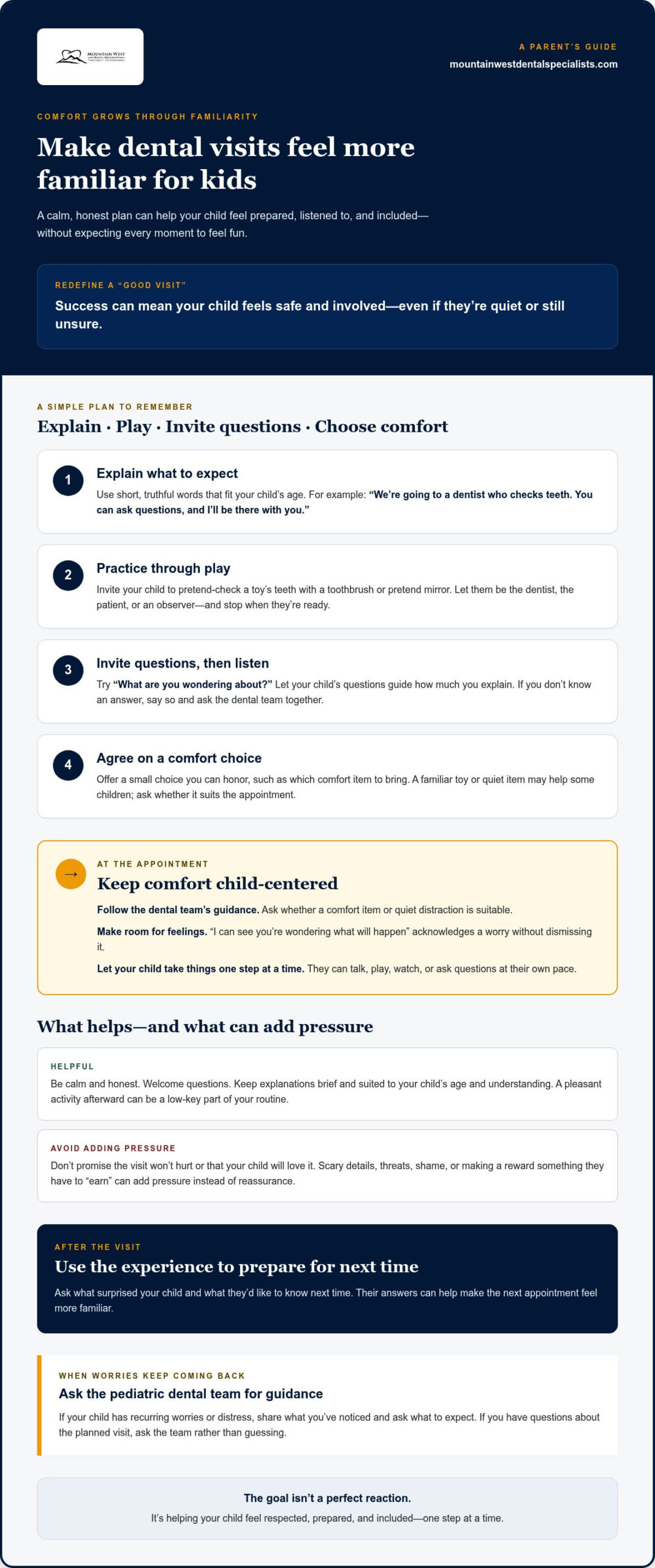
A little preparation can make the appointment feel more familiar without turning it into a big event. Adjust the timing to your child: a younger child may benefit from a brief explanation close to the visit, while an older child may want time to talk things through. A simple sequence to remember is: explain, play, invite questions, and agree on a comfort choice.
Use pretend play and child-led choices
Try a short pretend checkup with a favorite toy. Your child might look at the toy’s teeth with a toothbrush or pretend mirror, then choose to be the dentist, the patient, or an observer. Follow their lead. If they lose interest or prefer to watch, let the play end there. The goal is familiarity, not rehearsing every detail or making your child perform.
Offer a small choice you can genuinely honor, such as which comfort item to bring. A familiar stuffed toy or another quiet item may help your child feel settled, though it won’t suit every child or appointment. You could also agree on a simple activity afterward, like visiting a favorite playground or reading together, if that fits your family’s routine. Keep it low-key rather than making the visit feel like something your child has to “earn.”
Talk about the appointment in age-appropriate language
Use familiar words and keep the explanation brief. For example: “We’re going to the dentist so they can check your teeth. You can ask questions.” An older child may appreciate more context, while a toddler may only need a short reminder. Avoid describing procedures you haven’t confirmed with the dental team, and don’t surprise your child with a detailed explanation at the last moment.
Ask, “What are you wondering about?” instead of assuming you know what feels difficult. Your child may be concerned about the people, the room, or simply what happens next. Listen first, answer honestly, and say when you’re unsure. If you have questions about the planned visit, contact the dental team beforehand instead of guessing.
Here’s a flexible preparation plan. Spread it across a few days or use only the steps that fit your child:
- Explain: Tell your child where they’re going and that the visit is for a dental checkup.
- Play: Invite them to practice looking at a toy’s teeth, with no pressure to join in.
- Invite questions: Make space for what they’re curious or uncertain about.
- Choose comfort: Agree on a suitable item to bring or a pleasant activity afterward.
These small choices can make how to make dental visits fun for kids more personal than relying on a generic reward. Las Vegas families looking for guidance about a child’s checkup can explore pediatric dental care as one resource.
What to do during the appointment to keep kids engaged
Your calm presence can help your child feel supported, but the dental team should guide what happens during care. Follow their instructions, and let them know if your child seems uncomfortable or needs a moment. You can help your child participate without directing every step or expecting them to act a certain way.
Help your child feel included without taking over
When the dental team invites your child to speak, give them time to ask a question or share a preference. If your child is very young or doesn’t want to answer, you can offer a simple prompt, then let the team lead. Speak to your child rather than discussing them as though they aren’t there. A calm “You can tell us if you have a question” keeps the door open without demanding a response.
Some children enjoy a familiar toy or quiet distraction; others find extra objects distracting. Check with the dental team before bringing out toys, offering a snack, or using anything that could get in the way of care. What’s appropriate may depend on what’s happening during the appointment. If your child has a comfort item, mention it and ask when it can be used.
Use encouragement that recognizes effort
Notice specific moments rather than labeling the whole visit as good or bad. You might say, “You asked a clear question,” or “You told us when you needed a moment.” Sincere, proportionate praise recognizes effort without making cooperation a condition of your affection. Your child deserves reassurance whether they feel confident, hesitant, or somewhere in between.
Participation doesn’t have one look. A child can be engaged by listening, asking a question, sharing a preference, or simply taking in what’s happening; they don’t have to sit perfectly still or smile. If the dental team suggests a pause or a different approach, follow their guidance and offer quiet support. Avoid urging your child to continue before the clinician is ready.
For a child who’s curious, you might invite them to ask what happens next. For a child who prefers less attention, staying nearby and speaking gently may be enough. There’s no need to fill every quiet moment with reassurance or entertainment. Let the team set the pace, and check in with your child in a simple, unhurried way.
In practice, how to make dental visits fun for kids often means helping them feel included while respecting their individual way of coping. Small efforts count, even if the appointment feels quiet rather than playful. Your child’s needs can change during the visit, so stay flexible and let the dental team know what you’re noticing.
After the visit: make the next dental appointment feel more familiar
The visit is over, but a gentle follow-up can help your child make sense of what happened. Choose a calm moment rather than questioning them as soon as you leave. Ask what felt comfortable, what surprised them, or what they’re still wondering about. A younger child may answer with a few words or through play; an older child may want to talk more. Let their response set the pace.
Talk about the visit without grading your child
Listen without correcting or dismissing your child’s account. If they say something felt strange or uncomfortable, acknowledge it and ask what they mean. Notice specific efforts, too: “You told me what you were wondering” or “You asked for a pause.” Avoid describing the visit as a success only if your child stayed still or seemed cheerful. One difficult moment doesn’t predict how the next appointment will go.
If something seemed especially challenging, make a note while it’s fresh. Before a future visit, share useful observations with the dental team, such as what your child was concerned about or what helped them feel supported. That gives the team helpful context without asking your child to repeat or relive the experience.
Make oral care playful between appointments
At home, a favorite song during toothbrushing or a short pretend game about caring for a toy’s smile can make an everyday routine more enjoyable. Keep play safe and age-appropriate, and avoid demonstrations that might encourage your child to put objects in their mouth or try unfamiliar tools. The purpose is to make oral care feel familiar, not to recreate a dental appointment in detail.
After the visit, you might choose a pleasant, non-food activity, such as reading a favorite book or spending time together at a nearby park, if it suits your family. It doesn’t need to be a prize for “being good.” A relaxed routine can mark the day without suggesting that dental care is something frightening a child must endure.
Keep expectations flexible. A song or game may make brushing more enjoyable, but it can’t guarantee that every appointment will feel easy. Children’s interests and comfort can change, so follow what works for your child now. This steady, low-pressure approach is one practical part of how to make dental visits fun for kids over time.
If you’d like guidance about your child’s checkups, you can explore pediatric dental care with Mountain West Dental Specialists.
When to ask a Las Vegas pediatric dentist for extra support
You don’t have to wait until a child’s worry feels overwhelming to ask the dental team for guidance. Repeated distress before or during visits, a specific concern your child brings up often, or questions you can’t answer are all reasonable reasons to reach out. Asking ahead can help you understand what to expect and share information that may help the team get to know your child.
What to share when you contact a pediatric dental team
Keep the conversation practical and collaborative. Describe what your child has said, which parts of a visit seem difficult, and what has helped them feel more comfortable in other settings. You can also mention preferences, such as whether your child likes to know what comes next or would rather hear a brief explanation. You don’t need to diagnose the cause of their worry or suggest a clinical approach.
Useful questions might include:
- “Could you explain what my child should expect during this checkup?”
- “How can I prepare my child using language that fits their age?”
- “Is there anything you’d like us to know or bring up before the appointment?”
It’s also fine to say when you don’t know what would help. Sharing your observations gives the team a starting point for a conversation tailored to your child, without promising that every concern can be resolved in advance.
Find pediatric dental care in Las Vegas
For families in Las Vegas, Mountain West Dental Specialists is a family-owned practice led by Dr. Keaton Tomlin and Dr. Allison Tomlin. The practice offers pediatric dental checkups and baby dental care, with an office on S. Cimarron Road. These details can help you identify a local resource as you consider where to seek guidance for your child’s dental care.
Learning how to make dental visits fun for kids doesn’t mean you have to manage every worry on your own. A pediatric dental team can answer questions about its checkups and help you understand what to expect. If you’d like to learn more, explore pediatric dental care at Mountain West Dental Specialists at your own pace.
Make the next visit a little more familiar
Helping your child feel comfortable doesn’t require a perfectly cheerful appointment. Start with simple, honest explanations, invite questions, and let your child take part in ways that suit their age and temperament. Afterward, listen without grading how they did, and share useful observations with the dental team if you have concerns.
These small, steady steps are at the heart of how to make dental visits fun for kids: build familiarity, offer support without pressure, and remember that children show comfort in different ways. If your child needs extra guidance, asking the dental team what to expect is a sensible next step.
Mountain West Dental Specialists is a family-owned practice led by Dr. Keaton Tomlin and Dr. Allison Tomlin. The Las Vegas practice offers pediatric dental checkups and baby dental care. You can explore pediatric dental care for your family and learn more at your own pace.
With patience and a little preparation, each visit can become a more familiar part of caring for your child’s smile.
Frequently Asked Questions
How can I make my child’s first dental visit fun?
Make the first visit feel familiar, not like a performance your child has to pass. Explain simply that the dentist will check their teeth, and invite them to play a pretend checkup with a toy if they’re interested. Let your child ask questions or observe instead of taking part. A positive visit can mean feeling supported and included, even if your child is quiet or uncertain.
What should I tell my child before a dental appointment?
Use brief, honest words that fit your child’s age, such as, “We’re going to the dentist so they can check your teeth.” Let your child know you’ll listen to their questions, and answer only what you know. Avoid scary details, threats, or promises that the visit won’t hurt or feel strange. If you’re unsure what will happen, ask the dental team rather than guessing about procedures.
Can I bring a toy or comfort item to my child’s dental visit?
A familiar toy or comfort item may suit your child, but check with the dental team before bringing it out during care. Some items can distract from what the clinician needs to do, and what’s appropriate may depend on the appointment. Mention the item ahead of time and ask when it might be useful. A quiet, familiar object may be reassuring, but it’s also fine if your child doesn’t want one.
How do I make a nervous child feel more comfortable at the dentist?
Ask what your child is worried about instead of assuming, then listen without brushing off their concern. Explain the visit in simple, truthful language and let the dental team know what your child has said or what has helped before. To learn how to make dental visits fun for kids, focus on familiarity and choices rather than pressure. Las Vegas families can also ask a pediatric dental team what to expect.
What should I do if my child cries at the dentist?
Stay calm and reassure your child that it’s okay to have feelings. Don’t shame them or insist that they stop crying. Let the dental team know what you’re noticing and follow their guidance about whether to pause or adjust what’s happening. Crying doesn’t mean your child has failed or that every future visit will be the same. Afterward, listen to what felt difficult and share relevant observations before a future appointment.
Should I reward my child after a dental visit?
You can choose a pleasant, non-food activity afterward if it fits your family’s routine, but a reward isn’t required. Avoid framing it as payment for enduring something frightening or as a prize for perfect cooperation. Instead, recognize a specific effort, such as asking a question or sharing a concern. A warm conversation, a favorite book, or time together can mark the day without making your child’s comfort conditional on their behavior.
When should a child first visit a pediatric dentist?
The American Academy of Pediatric Dentistry and the American Dental Association recommend a first dental visit within six months after the first tooth appears, or by the child’s first birthday. An early visit gives families a chance to discuss their child’s oral health and care. In Las Vegas, Mountain West Dental Specialists offers pediatric dental checkups and baby dental care. Contact a dental team if you have questions about timing for your child.